Amalfi Coast

Plan your Amalfi Coast
trip with AI

Get a complete personalized itinerary in seconds. Hotels, flights, activities and hidden gems — all planned by Tony AI.

Plan my Amalfi Coast trip →

Why visit Amalfi Coast?

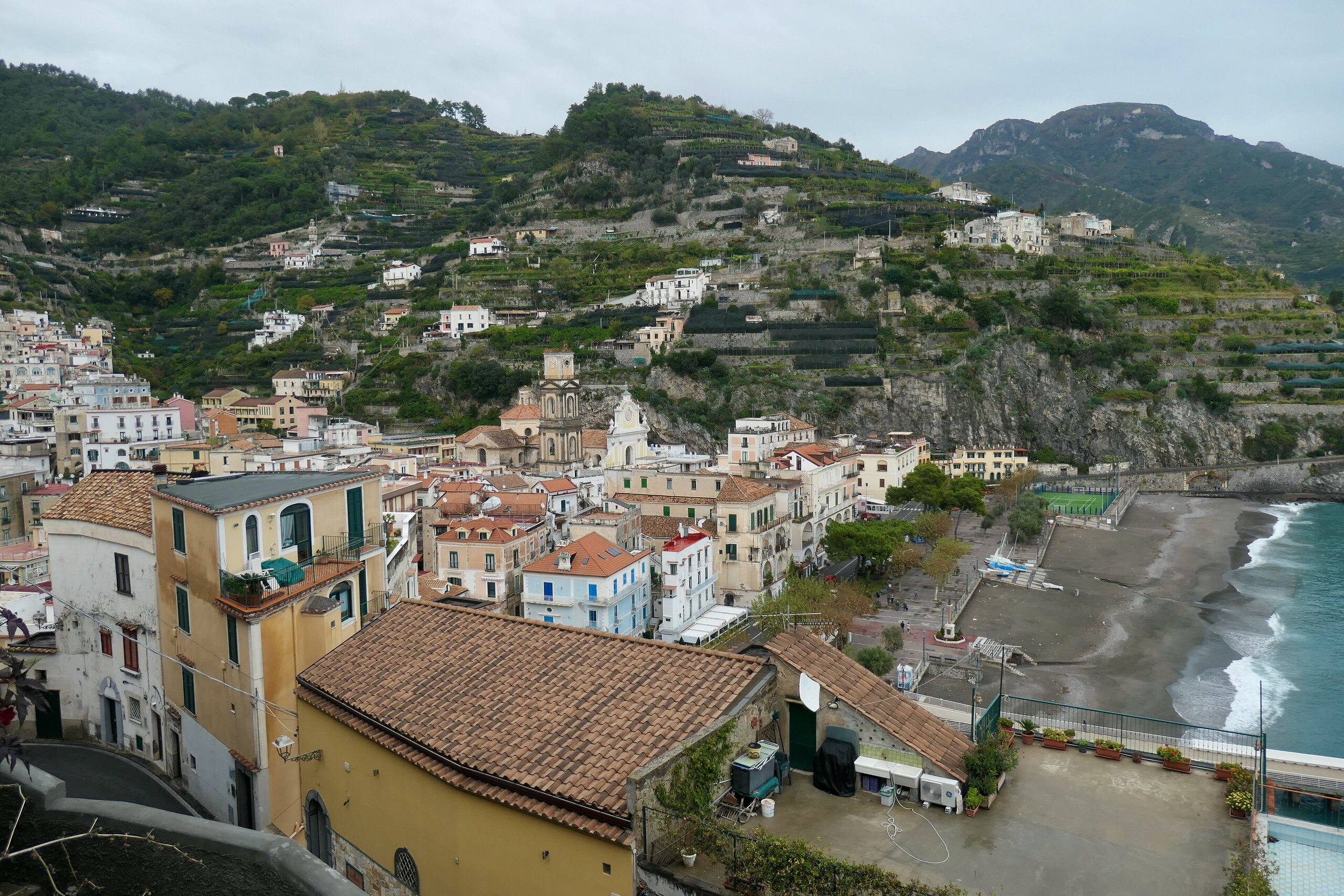
The Amalfi Coast is a rugged vertical landscape where the Lattari Mountains plunge directly into the Tyrrhenian Sea. Begin in Positano, navigating the steep, terracotta-colored stairways that define its iconic architecture before heading to the Fiordo di Furore, a dramatic sea arch carved into the cliffs. Lunch requires a plate of Scialatielli ai Frutti di Mare, a thick pasta local to the region, followed by a visit to the terraced gardens of Villa Cimbrone in Ravello, which offer an unobstructed horizon line from the Terrace of Infinity. The coastline demands a slow pace, allowing the scale of the precipices to truly sink in as you travel between the pastel-hued dwellings.

Continue toward the town of Amalfi to inspect the 9th-century Duomo di Amalfi, characterized by its striking striped Byzantine facade and intricate bronze doors cast in Constantinople. Conclude your trip in Praiano, a quieter hillside village perfect for watching the sun dip behind the Faraglioni rocks of Capri. Before departing, visit a local vendor for a glass of authentic Limoncello di Sorrento, crafted from the oversized, thick-skinned lemons grown in the terraced groves of the Valle delle Ferriere. The combination of ancient maritime history and high-altitude Mediterranean flora creates a singular sensory experience found nowhere else in Amalfi Coast.

Plan your Amalfi Coast trip with Tony AI

Tony AI creates personalized day-by-day itineraries based on your budget, travel style and interests. No more hours of research — get your perfect Amalfi Coast plan in seconds.

Book your Amalfi Coast trip

Our own Amalfi Coast trips

Organised by Lia’s Travel, our licensed Greek travel agency — booked directly, no middleman.

See all our trips →

Operated by Lia’s Travel · liastravel.com

Everything for your Amalfi Coast trip

Book flights, stays, tours and more — all in one place

More options: Kiwi.com · Oojo · seats.aero · Arangrant · eSky · lastminute.com · Megabon · QEEQ · AutoEurope · Hertz · GetTransfer · Suntransfers · Saily · Yesim · GigSky · Klook · EF Ultimate Break · EF Adventures · AirHelp Plus · CruiseDirect · Travelpro

Local partners in Italy: UNA Italian Hospitality

Travel insurance for Europe & Schengen tripsAffiliate partner – we may earn a commission
Compare prices →

Popular experiences in Amalfi Coast

The things travellers book most here. You pay the same price as booking direct.

Top tours & activities in Amalfi Coast

Rent a car in Amalfi Coast

Compare rental cars from local and international companies, with free cancellation on most bookings.

Compare car rentals in Amalfi Coast
Start planning with Tony →

When to go to Amalfi Coast

The best months for Amalfi Coast are May, June, September and October. Highs then sit around 25°C, crowds are medium at peak, and a week here is expensive.

Jan
13°
low 6°
15 wet days
Feb
14°
low 6°
9 wet days
Mar
15°
low 7°
13 wet days
Apr
17°
low 9°
13 wet days
May
22°
low 14°
12 wet days
Jun
28°
low 19°
7 wet days
Jul
31°
low 22°
5 wet days
Aug
30°
low 21°
10 wet days
Sep
27°
low 19°
7 wet days
Oct
23°
low 15°
8 wet days
Nov
18°
low 12°
18 wet days
Dec
15°
low 9°
13 wet days
Highlighted = best monthsNumber = average daytime highBar = how wet the month is

Temperatures and wet days are measured, not estimated: ERA5 reanalysis for , at Amalfi, Amalfi Coast. Source: Open-Meteo.

Planning Amalfi Coast

Best time to visit Amalfi CoastMonth by month, measuredWhere to stay in Amalfi CoastWhich area suits youHow many days you needWhat fits in a short or long stay

Amalfi Coast: practical tips

Getting in, getting around and what a day costs — checked by our editors.

From the airport

The primary gateway is Naples International Airport (NAP). From there, travelers typically take a shuttle bus or taxi to Naples Centrale station, taking about twenty minutes. Trains run to Sorrento in roughly one hour, where regional buses connect to coastal towns. Alternatively, seasonal ferries operate from the port of Naples to various coastal villages, with journey times ranging from one to two hours depending on the specific destination and sea conditions.

Getting around

Public bus networks connect most coastal villages, though buses are often crowded during peak seasons. Ferries provide the most scenic and efficient transit between major towns, particularly from spring to autumn. Roads are narrow and winding, making car hire challenging for inexperienced drivers. Walking is essential for exploring historic centers, which often feature steep staircases and pedestrian-only zones throughout the rugged terrain.

Where to base yourself

  • Positano — Travelers seeking iconic cliffside views, luxury boutique experiences, and a vibrant, upscale seaside atmosphere.
  • Amalfi — Visitors wanting a central historic hub with excellent maritime transport connections and medieval architectural sites.
  • Ravello — Those who prefer peaceful gardens, classical music venues, and dramatic elevated panoramas above the sea.
  • Praiano — Quiet seekers who desire authentic local charm and long sunset views away from the massive crowds.

Full guide to where to stay in Amalfi Coast →

What a day costs

Budget€80–120
Mid-range€150–250
Comfort€400+

Per person per day, excluding flights. A rough guide, not a quote.

Money and tipping

The currency is the Euro (EUR). Credit and debit cards are widely accepted at hotels, restaurants, and shops, though smaller vendors may prefer cash. Carrying small denominations is useful for local buses or small purchases. Tipping is not mandatory, as service charges are often included, but leaving a small cash gratuity for exceptional restaurant service is appreciated.

More questions about Amalfi Coast

How many days do you need in Amalfi Coast?

Four to five days are sufficient to experience the primary coastal towns and enjoy a boat excursion. Staying for a full week allows for a more relaxed pace, enabling you to explore hiking trails like the Path of the Gods or visit inland villages without feeling rushed by the frequent transport transfers.

Is Amalfi Coast safe for tourists?

The region is generally very safe for international tourists. The most common issues are petty crimes like pickpocketing in crowded areas or on busy buses. Travelers should remain aware of their belongings in tourist-heavy spots and exercise caution on narrow, winding roads if driving, as traffic congestion and aggressive local drivers are standard occurrences.

Is English widely spoken in Amalfi Coast?

English is widely spoken across the hospitality sector, including hotels, restaurants, and tourist information centers. You will encounter few communication barriers in major towns. Learning basic Italian phrases is considered polite and is helpful when interacting with older generations in smaller, more residential villages where the English proficiency level might be slightly lower.

Can you drink the tap water in Amalfi Coast?

Yes, the tap water is safe to drink throughout the region. Most towns maintain high standards for public water quality. Many locals and tourists carry reusable bottles to refill at the public fountains found in many town squares.

What are the best day trips from Amalfi Coast?

The island of Capri is a popular boat excursion for its famous sea caves and upscale shopping. Pompeii and Herculaneum are accessible via rail from the Sorrento area, offering profound archaeological insights. Additionally, the city of Salerno provides a different perspective of the coastline, featuring an extensive promenade and significant historic cathedrals nearby.

Amalfi Coast — common questions

When is the best time to visit Amalfi Coast?

The best months for Amalfi Coast are May, June, September and October. Highs then sit around 25°C, crowds are medium at peak, and a week here is expensive.

What is the weather like in Amalfi Coast?

July is the warmest month, with daytime highs around 31°C. January is the coolest, around 13°C by day and 6°C at night. November is the wettest, with about 18 wet days. Figures are measured averages, not estimates.

What is Amalfi Coast known for?

Amalfi Coast is best known for beaches, nature, mountains, architecture, food and luxury. The things people come for: Duomo di Amalfi, Villa Cimbrone, Positano, Fiordo di Furore, Faraglioni.

Who is Amalfi Coast best suited to?

Amalfi Coast works particularly well for couples, first-time visitors and luxury. That is based on what there is to do there, not on who books it most.

What can you book in advance in Amalfi Coast?

The experiences that sell out first are food tours, cooking classes, day trips, skip-the-line tickets, walking tours and night tours. You can check availability and prices on our booking partners below — you pay the same as booking direct.

Do I need a visa for Italy?

That depends on your passport and how long you are staying, so there is no single answer. TonyPlan has a visa and entry checker — put in your nationality and it tells you what applies to you.

Get the Amalfi Coast guide as a PDF

Why to go, the best months with real measured temperatures, which area to stay in, and what flights cost right now — in one file you can read on the plane. Free.

We will also send new guides and itineraries as we publish them. No fixed schedule, and you can unsubscribe from any email.

Planning Amalfi Coast?

Best time to visitIs it expensive?On a budgetIs it safe?How many days

Compare Amalfi Coast with

Sorrento

Free tools for your Amalfi Coast trip

Budget calculatorPacking listFlight time & jet lagTrip countdown
Food tours in Amalfi Coast: what to eat & tours compared →

Getting to nearby places

To Capri (ferry)To Matera (car)To Puglia (car)To Sorrento (ferry)