Home › Guadalajara › How many days
How many days in Guadalajara? 3 days, Orozco's murals, mariachi and Tequila
By Tony Panopoulos · travel-agency planner in Greece · Updated
Guadalajara is Mexico's second city and the home of several things the world thinks of as simply Mexican: mariachi, tequila, the broad-brimmed charro hat and the folk dance called the jarabe tapatío. It is less visited than Mexico City and Oaxaca, which keeps prices low and the centre local. Give it three days: one for the colonial core and José Clemente Orozco's murals, one for the craft town of Tlaquepaque and the restaurants of Colonia Americana, and one in the blue agave fields around Tequila.
Short answer
Two days covers the historic centre, the Hospicio Cabañas and an evening in Tlaquepaque. The third day goes to the town of Tequila and its distilleries, about 1.5 hours away.
The 3-day plan, day by day
Day 1: Historic centre and the Hospicio Cabañas
Morning. Start at the Cathedral, begun in the 16th century, whose yellow-tiled spires were rebuilt after an 1818 earthquake. Around it are four squares in the shape of a Latin cross; walk into the Palacio de Gobierno (free) to see Orozco's mural of Miguel Hidalgo with a flaming torch over the stairs.
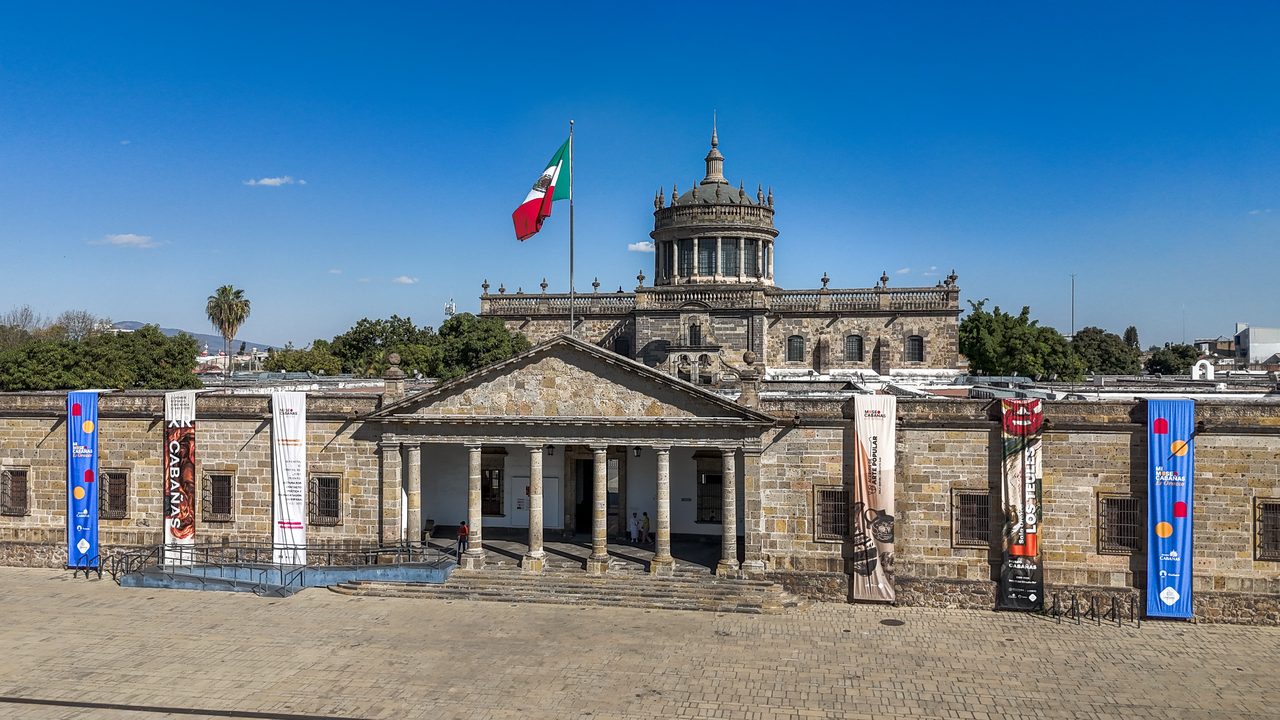
Afternoon. Walk 15 minutes east along the Plaza Tapatía promenade, past the Teatro Degollado, to the Hospicio Cabañas, a 19th-century orphanage and UNESCO site (about MX$100-150; closed Mondays). Its chapel holds Orozco's 1930s frescoes, including the Man of Fire in the dome; lie on the benches to look up.
Evening. Visit the Mercado San Juan de Dios next door, a three-storey market, for a torta ahogada (pork sandwich drowned in tomato and chilli sauce, about MX$70-100). Then walk to the Plaza de los Mariachis, where bands play to tables; one song costs about MX$150-250.
Most museums close on Mondays. On Sunday mornings, a long stretch of avenue is closed to cars for the Vía RecreActiva for cyclists and walkers.
Day 2: Tlaquepaque and Colonia Americana
Morning. Take metro Line 3 or a ride-share 20-25 minutes south-east to San Pedro Tlaquepaque, a former village of potters and glassblowers. Walk the pedestrian Calle Independencia for ceramics, furniture and galleries, and see the Pantaleón Panduro Museum of national ceramics (free).
Afternoon. Lunch at El Parián, the large covered courtyard of restaurants in the centre of Tlaquepaque, where mariachis play in the afternoons. Order birria (goat or beef stewed with chilli) and a cazuela, a citrus and tequila punch served in a clay pot.
Evening. Go back to Colonia Americana, the early-20th-century neighbourhood west of the centre, for Avenida Chapultepec: street food, mezcal bars and craft beer. Cocktails cost about MX$120-200.
Neighbouring Tonalá holds a large crafts street market on Thursdays and Sundays, cheaper than Tlaquepaque.
Day 3: Day trip: Tequila
Morning. Drive or take a tour about 1.5 hours north-west to Tequila, a small town in a UNESCO-listed agave landscape. Many visitors take the José Cuervo Express train from Guadalajara instead (from about MX$2,500-4,000 with tastings and distillery visit), or the cheaper buses from the Nueva Central Camionera (about MX$150-200 each way).
Afternoon. Tour a distillery in town: La Rojeña (José Cuervo) and Sauza are central, while smaller family distilleries offer more personal visits (about MX$300-700 with tastings). See how the jimadores cut the agave hearts, which are roasted, crushed and fermented.
Evening. Try a cantarito, tequila with citrus and grapefruit soda in a clay cup, at a roadside stand in Amatitán on the way back.
Only spirits made from blue agave in Jalisco and a few nearby areas can be called tequila. Look for '100% agave' on the label.
Only have 2 days?
With 2 days, do Day 1 as written and spend the morning of Day 2 in Tlaquepaque, with the evening on Avenida Chapultepec. You lose Tequila.
Got extra days?
A 4th day can go to Lake Chapala and the village of Ajijic (about 1 hour), with its malecón and art galleries, or to Zapopan for the Basilica of Our Lady of Zapopan and the Bosque de la Primavera forest. Puerto Vallarta is about 4.5-5 hours by car.
Where to stay in Guadalajara
| Budget | Area | Why | Typical double/night |
|---|---|---|---|
| Budget | Centro Histórico | Hostels and simple hotels near the cathedral, close to Line 3. | MX$600-1,100 |
| Mid-range | Colonia Americana / Lafayette | Design hotels and the city's best restaurants and bars on foot. | MX$1,500-2,800 |
| Mid-range | Tlaquepaque | Small boutique hotels in old houses, quiet after dark. | MX$1,300-2,400 |
| Comfort | Providencia / Andares | Upscale towers with pools near the luxury shopping district. | MX$3,000-6,000 |
Getting around
The historic centre is walkable. Mi Tren light rail Line 3 links Zapopan, the centre and Tlaquepaque, with a single fare of about MX$10-12; Lines 1 and 2 run north-south and east-west. Uber and DiDi work well and are cheap: most rides in the city cost MX$60-150. From the Miguel Hidalgo airport, about 20 km south, a ride-share or authorised taxi takes 30-45 minutes and costs about MX$350-550. Traffic is heavy at rush hours.
What to eat in Guadalajara
Guadalajara has its own dishes. Try the torta ahogada, eaten with a spoon; birria, often for breakfast with consommé; carne en su jugo, beef stewed in its juice with beans and bacon, at Karne Garibaldi, once listed as the world's fastest-serving restaurant; and pozole. For dessert, jericalla, a baked custard invented in Guadalajara. The street drink is tejuino, fermented corn with lime and salt, sold from carts for about MX$30-40. Tacos cost MX$15-30 each; a restaurant meal with drinks is MX$300-600.
Best time to visit
November to April is dry and sunny, with highs of 24-28°C and cool nights. May is the hottest month, often above 32°C. The rainy season, roughly June to September, brings short heavy storms in the afternoons. In late August and early September the city hosts the International Mariachi and Charrería Festival, and in October the Fiestas de Octubre and the huge Romería pilgrimage of the Virgin of Zapopan on 12 October.
Month-by-month weather for Guadalajara →
What a day costs
| Budget | Mid-range | Comfort | |
|---|---|---|---|
| Bed (per person, sharing a double) | MX$400 | MX$1,000 | MX$2,200 |
| Food & drink | MX$350 | MX$700 | MX$1,400 |
| Sights & tickets | MX$100 | MX$400 | MX$1,200 |
| Local transport | MX$50 | MX$200 | MX$500 |
| Total per person, per day | about MX$900 | about MX$2,300 | about MX$5,300 |
Approximate 2026 prices in Mexican pesos; Jalisco adds a lodging tax of a few per cent to hotel bills on top of 16% VAT, which is usually included in the quoted rate.
Before you go
Common questions
Is Guadalajara safe for tourists?
The tourist areas, including the historic centre, Colonia Americana, Providencia and Tlaquepaque, are generally safe by day and in the evening, with normal city precautions. Use Uber or DiDi at night rather than street taxis, avoid displaying expensive phones, and check your government's travel advice for the state of Jalisco, which also covers rural areas you are unlikely to visit.
Is the Tequila train worth it?
The José Cuervo Express is a comfortable, all-inclusive day with tastings on board, a distillery tour and a show, but it is expensive and runs on set days. If you prefer to see more than one brand, take a bus or a small-group tour and visit an independent distillery as well as one of the big names. Either way, do not drive after the tastings.
Where can I see real mariachi?
At the Plaza de los Mariachis by the San Juan de Dios market, at El Parián in Tlaquepaque in the afternoon, and at the International Mariachi Festival in late August and early September. Guadalajara is the capital of the state where mariachi began, and UNESCO lists it as intangible heritage. Ask the price per song before the band starts.
What is the best way to get to Lake Chapala?
By car or ride-share it takes about 1 hour south of the city. Chapala buses leave from the old bus station (Antigua Central Camionera) every 30 minutes or so. Base yourself in Ajijic, a few kilometres west of Chapala town, for cobbled streets, murals and lakeside restaurants. It is popular with retirees from the US and Canada, so prices are slightly higher.
How this guide was made
Compiled by TonyPlan from official tourism, transport and attraction sources and on-the-ground travel knowledge. Prices are approximate for 2026 and change with season; anything we could not confirm is marked as approximate.
Some links on this page are partner links. If you book through them TonyPlan may earn a commission; the price you pay is the same. How we make money.