Home › Czech Republic › How many days
How many days in the Czech Republic? 7 days: Prague, Bohemia and Moravia
By Tony Panopoulos · travel-agency planner in Greece · Updated
Most visitors see only Prague, but the country is small, the trains are cheap and the best towns are under three hours away. Give it seven days: three for Prague and a day trip to Kutná Hora, two in South Bohemia around Český Krumlov, and two in Moravia for Brno and the chateaux and wine cellars of Lednice-Valtice. Go one way and fly out of Prague or nearby Vienna.
Short answer
Five days covers Prague, Kutná Hora and Český Krumlov. Seven adds Moravia, which is quieter, cheaper and drinks wine rather than beer.
The 7-day plan, day by day
Day 1: Prague Old Town and the Jewish Quarter
Morning. Be on Charles Bridge at 7:00, before the crowds. Then walk 10 minutes to Old Town Square and the Astronomical Clock, which performs on the hour. The Old Town Hall tower is about 300-350 Kč.
Afternoon. Visit Josefov, the Jewish Quarter, 5 minutes north along Pařížská street. One ticket (about 500-600 Kč) covers the Old Jewish Cemetery and several synagogues, including the painted Spanish Synagogue; all are closed on Saturdays and Jewish holidays.
Evening. Eat in a beer hall such as U Pinkasů or Lokál, where a half-litre of Pilsner costs about 70-90 Kč. Order svíčková, beef in cream sauce with dumplings, for about 250-300 Kč.
Never change money at street kiosks advertising '0% commission'; use ATMs of real banks and decline the conversion offer.
Day 2: Prague Castle and Malá Strana
Morning. Take tram 22 up to Prague Castle and buy the main circuit ticket (about 450-550 Kč). It covers St Vitus Cathedral, the Old Royal Palace and Golden Lane; allow 3 hours.
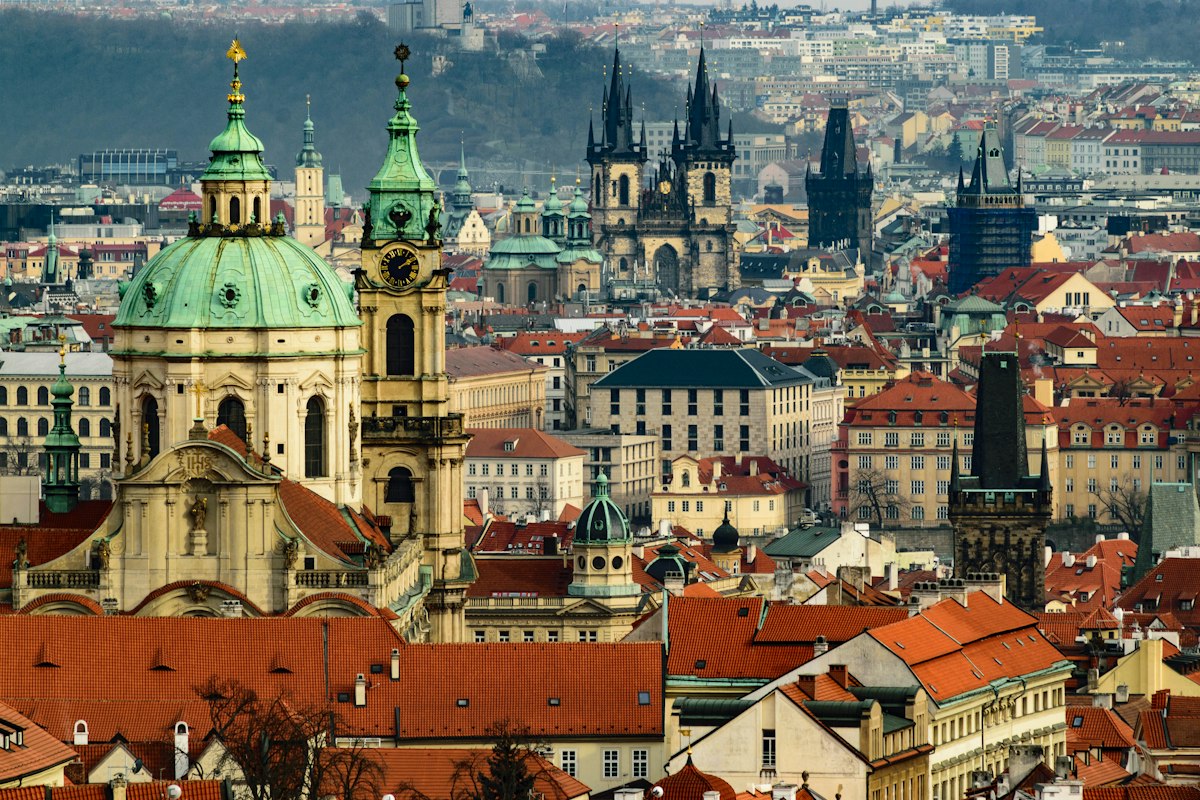
Afternoon. Walk down Nerudova street into Malá Strana to see the baroque St Nicholas Church and the Wallenstein Garden (free). Then climb or take the funicular up Petřín Hill for the view from its lookout tower.
Evening. Cross to Letná Park for the beer garden with the best view over the Vltava bridges. Alternatively, take the metro to Vinohrady for wine bars and modern Czech cooking.
A 24-hour public transport ticket (about 120 Kč) covers trams, metro and the Petřín funicular; buy in the PID Lítačka app.
Day 3: Day trip to Kutná Hora
Morning. Take the train from Praha hlavní nádraží to Kutná Hora (about 1 hour, roughly 120-150 Kč). Start at the Sedlec Ossuary, decorated with the bones of some 40,000 people (about 200-300 Kč; book a time slot in summer).
Afternoon. Take a local train or bus to the old town for St Barbara's Cathedral, a Gothic masterpiece built on silver money. Then visit the Italian Court, the medieval mint, where guided tours take about 45 minutes.
Evening. Return to Prague and walk the riverside Náplavka embankment, with moored boats and bars. On Saturday mornings it hosts a farmers' market.
The station is Kutná Hora hlavní nádraží, near Sedlec; the old town is 3 km away, so use the short shuttle train to Kutná Hora město.
Day 4: Český Krumlov
Morning. Take a direct RegioJet or FlixBus coach from Prague (about 3 hours, 250-400 Kč). Drop your bag and walk the old town inside its tight bend of the Vltava.
Afternoon. Climb the painted castle tower (about 150-200 Kč) and walk through the castle courtyards to the cloak bridge and the terraced castle gardens. Guided tours of the interiors cost about 300-400 Kč and run April to October.
Evening. Have dinner at a riverside terrace in the old town, where a main costs about 250-400 Kč. Afterwards, walk the empty lanes once the day-trippers have left.
Stay the night: by 17:00 the coach tours leave and the town becomes a different, much quieter place.
Day 5: Rafting the Vltava, then via Telč to Brno
Morning. Rent a canoe or raft for a 1.5-2 hour float down the Vltava from Český Krumlov. Boats cost about 500-900 Kč and run from May to September.
Afternoon. Head to Brno, about 3 hours by car with a stop at Telč, a UNESCO town square of Renaissance gabled houses. By public transport it takes 4.5-5 hours via České Budějovice.
Evening. Arrive in Brno, the second city, and eat at a modern bistro around Náměstí Svobody. Afterwards, try one of the cocktail bars, such as Bar, který neexistuje, known across the country.
If you are not driving, skip Telč and take the train via České Budějovice and Jihlava; book on the České dráhy app.
Day 6: Brno
Morning. Tour Villa Tugendhat by Mies van der Rohe, a UNESCO site (about 400-500 Kč; book weeks ahead). Then walk to Špilberk Castle with its casemates.
Afternoon. Visit the Capuchin Crypt with its naturally mummified monks, the Cabbage Market (Zelný trh) and the underground Labyrinth beneath it. Then climb Petrov hill to the Cathedral of Sts Peter and Paul.
Evening. Moravia is wine country, so order a glass of Pálava or Ryzlink rýnský at a wine bar for 60-90 Kč. The streets around Jakubské náměstí have the liveliest bars.
The Cathedral bells ring noon at 11:00, a tradition from the Swedish siege of 1645.
Day 7: Lednice-Valtice and back to Prague
Morning. Take the train 1 hour south to Břeclav and a bus to Lednice. Its neo-Gothic chateau sits in a huge English park with a minaret and greenhouse (tours about 300-400 Kč).
Afternoon. Cycle 7 km through the Lednice-Valtice cultural landscape (UNESCO) to Valtice. Taste wines at the National Wine Salon in the chateau cellars, about 500-600 Kč for a guided tasting.
Evening. Take the train back to Prague from Břeclav, about 3-3.5 hours. Alternatively, continue 1 hour to Vienna for your flight.
Rent bikes in Lednice or Valtice; the whole area is flat and cut by marked cycle routes between vineyards.
Only have 5 days?
With 5 days, do Days 1 to 4 and return to Prague from Český Krumlov on Day 5. You lose Moravia.
Got extra days?
Add Plzeň (1.5 hours from Prague) for the Pilsner Urquell brewery tour, the spa towns of Karlovy Vary and Mariánské Lázně, or hiking in Bohemian Switzerland National Park near the Pravčická Gate rock arch.
Where to stay in Czech Republic
| Budget | Area | Why | Typical double/night |
|---|---|---|---|
| Budget | Žižkov / Holešovice (Prague) | Cheaper, local streets and pubs, 10-15 minutes by tram from the Old Town. | 1,200-2,200 Kč |
| Mid-range | Nové Město / Vinohrady (Prague) | Walk to the Old Town, with metro and trams at the door. | 2,500-4,500 Kč |
| Mid-range | Old town of Český Krumlov | Guesthouses in old burgher houses inside the river bend. | 2,000-3,800 Kč |
| Comfort | Malá Strana / Old Town (Prague) | Baroque palaces turned hotels under the castle, near Charles Bridge. | 5,500-12,000 Kč |
Getting around
Trains (České dráhy, RegioJet, Leo Express) and coaches link all the towns cheaply; book on the apps for the lowest fares. Prague to Brno is about 2.5 hours for 200-400 Kč. In Prague, a 30-minute ticket is about 30 Kč and a 90-minute ticket about 40 Kč, valid on metro, trams and buses. From the airport, bus 59 (the former 119) to Nádraží Veleslavín metro or the Airport Express to the main station take 30-40 minutes. Driving on motorways needs an electronic vignette.
What to eat in Czech Republic
Czech food is hearty: svíčková (beef sirloin in vegetable cream sauce with dumplings), vepřo knedlo zelo (roast pork, dumplings and sauerkraut), guláš and fried cheese (smažený sýr). Lunch menus (polední menu) cost 180-250 Kč in pubs. Beer is cheaper than water in many places: tankové Pilsner Urquell, Kozel and Budvar from České Budějovice. Avoid the trdelník stands in Prague; it is a tourist invention. In Moravia, drink local wine and eat koláče, sweet filled pastries.
Best time to visit
May to June and September, with highs of 18-24°C and fewer crowds than summer. July and August are warm (around 25-30°C) and Prague is at its busiest. December brings Christmas markets on Old Town and Wenceslas Squares. Winter is cold, around 0°C, and many chateaux close their interiors from November to March.
Month-by-month weather for Czech Republic →
What a day costs
| Budget | Mid-range | Comfort | |
|---|---|---|---|
| Bed (per person, sharing a double) | 700 Kč | 1,700 Kč | 4,000 Kč |
| Food & drink | 600 Kč | 1,100 Kč | 2,200 Kč |
| Sights & tickets | 300 Kč | 700 Kč | 1,200 Kč |
| Local transport | 150 Kč | 300 Kč | 800 Kč |
| Total per person, per day | about 1,750 Kč | about 3,800 Kč | about 8,200 Kč |
Approximate 2026 prices in Czech koruna; Prague charges a local accommodation fee of about 50 Kč per person per night, and other towns charge smaller amounts.
Before you go
Common questions
Do they use the euro in the Czech Republic?
No. The currency is the Czech koruna (Kč or CZK). Cards and contactless payments work almost everywhere, including trams. Some places accept euros, but at a bad rate. When paying by card or using an ATM, always choose to be charged in koruna, not your home currency.
Is Prague too crowded?
The Charles Bridge, Old Town Square and the castle are crowded from 10:00 to 17:00 in summer. Visit them early or late, and spend middays in Vinohrady, Letná, Vyšehrad or Karlín, where Praguers live. Outside July, August and December weekends, it is far calmer.
Train or car for this route?
Trains and coaches work well for Prague, Kutná Hora, Český Krumlov and Brno. A car helps only on Day 5 for Telč and for small villages. If you rent one, buy the electronic motorway vignette online, and remember drink-driving limits are zero.
How much should I tip?
Round up or add about 10% in restaurants if service was good, and tell the waiter the total you want to pay when you hand over the card or cash. Leaving coins on the table is less usual. In pubs, rounding up the bill is enough.
How this guide was made
Compiled by TonyPlan from official tourism, transport and attraction sources and on-the-ground travel knowledge. Prices are approximate for 2026 and change with season; anything we could not confirm is marked as approximate.
Some links on this page are partner links. If you book through them TonyPlan may earn a commission; the price you pay is the same. How we make money.