How many days in Cuba? 8 days through Havana, Viñales and Trinidad
By Tony Panopoulos · travel-agency planner in Greece · Updated
Cuba rewards slow travel and punishes tight schedules: buses run late, fuel and power cuts come and go, and the best moments happen on a casa's rooftop or in a bar with a son band. Give it eight days on the classic triangle: three in Havana, one in the tobacco valley of Viñales, and three in Trinidad with a stop in Cienfuegos. Sleep in casas particulares, private homes that are cheaper and better fed than most state hotels.
Short answer
Five days covers Havana and Viñales, or Havana and Trinidad, but not both. Eight days lets you see the city, the countryside and the colonial south with travel days that do not wreck the trip.
The 8-day plan, day by day
Day 1: Old Havana's four squares
Morning. Walk Habana Vieja, a UNESCO site, square by square: Plaza de Armas with its book market, Plaza de la Catedral, Plaza de San Francisco and the restored Plaza Vieja. Allow 3 hours on foot with stops.
Afternoon. Walk Calle Obispo to the domed Capitolio and the Gran Teatro, then visit the Museo de la Revolución in the former presidential palace (a few US dollars or the peso equivalent).
Evening. Join the habaneros on the Malecón sea wall at sunset, then hear live son in a bar off Obispo or in a casa de la música. Dinner in a paladar, a private restaurant, costs about US$15-25.
Power cuts are common in 2026. Carry a torch, a power bank and some water, and pick casas with a generator or solar backup if you can.
Day 2: Vedado, classic cars and the fortresses
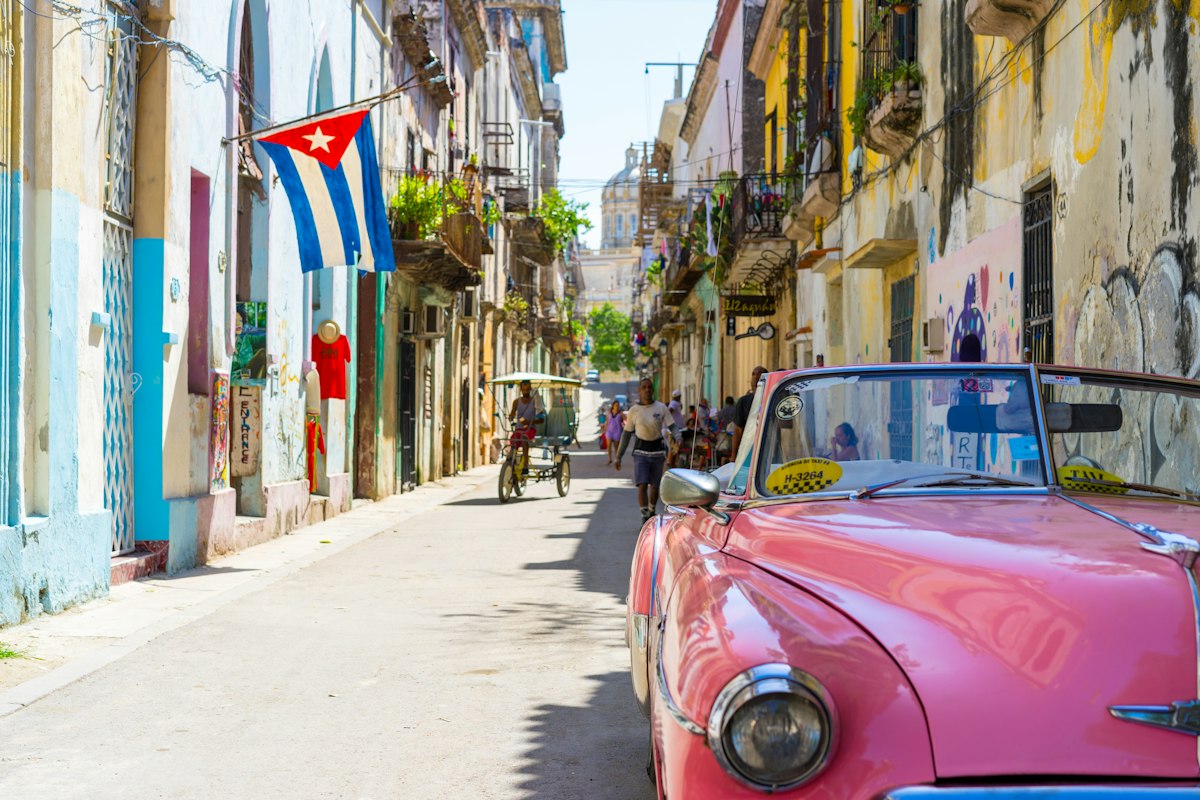
Morning. Take a classic convertible tour (about US$40-60 an hour for the car) through Vedado to the Plaza de la Revolución, with the steel portraits of Che Guevara and Camilo Cienfuegos, and the 1930 Hotel Nacional on its bluff.
Afternoon. Ride out to Fusterlandia in Jaimanitas, a neighbourhood covered in ceramic mosaics by the artist José Fuster (free, tips welcome), about 30 minutes west.
Evening. Cross the bay to the La Cabaña fortress for the cañonazo, a cannon fired at 21:00 by soldiers in 18th-century uniform. Later, if it is open, go to the Fábrica de Arte Cubano in Vedado, an arts club in an old oil factory.
Agree the price, duration and route of a classic car ride before you get in, and pay at the end.
Day 3: Havana's backstreets and rum
Morning. Walk the less restored streets of Centro Habana and the Chinatown arch on Calle Zanja, then visit the Museo Nacional de Bellas Artes, Cuban art section (closed Mondays).
Afternoon. Sample rum at the Museo del Ron near the harbour, or cross by the small ferry to the village of Regla. Rest at the casa; Havana days are hot.
Evening. Hear jazz or Afro-Cuban music; the Callejón de Hamel in Centro has rumba on Sunday around midday, and venues in Vedado play late on weekends.
Book onward transport today. Viazul buses sell out; shared taxis (colectivos) are faster and cost about US$25-35 per seat to Viñales.
Day 4: To Viñales and the tobacco valley
Morning. Leave Havana early for Viñales, about 3 hours west by colectivo or Viazul bus. The valley is ringed by mogotes, steep limestone hills rising out of red soil.
Afternoon. Ride a horse or walk (guided, about US$20-30 for 3 hours) through tobacco fields to a farm where a farmer rolls a cigar and explains the drying barns. Stop at the Los Jazmines viewpoint for the panorama.
Evening. Eat a farmhouse dinner at your casa (about US$10-15 for pork, rice, beans, salad and fruit), then a mojito on the main street of the village.
The valley is best at golden hour. Ask your casa to arrange a guide; independent hikers are often stopped and directed to official trails.
Day 5: Viñales caves, back to Havana
Morning. Visit the Cueva del Indio, where a short boat ride runs along an underground river (a few dollars), before the valley heats up.
Afternoon. Take a colectivo back to Havana, about 3 hours. A direct ride to Cienfuegos exists but takes 6-7 hours.
Evening. An easy evening in Havana before the drive south.
Long transfers in Cuba often run late; never plan a flight for the day you leave a provincial town.
Day 6: Cienfuegos to Trinidad
Morning. Leave at 8:00 for Cienfuegos, about 3.5-4 hours. Walk the Parque José Martí, see the Teatro Tomás Terry (1890), then drive 1h30 along the coast to Trinidad.
Afternoon. Climb the bell tower of the Museo de la Lucha Contra Bandidos for the view over red roofs to the sea, and walk the cobbles around the Plaza Mayor, preserved from the 19th-century sugar boom.
Evening. Drink a canchánchara, rum with honey and lime, at the bar of the same name, then dance salsa on the Casa de la Música steps beside the church.
Trinidad's cobbles are rough river stones; wear shoes with grip, especially after rain.
Day 7: Valle de los Ingenios and Playa Ancón
Morning. Visit the Valle de los Ingenios, the sugar valley of some 50 former mills worked by enslaved Africans. At Manaca Iznaga, climb the 45-metre slave-watch tower; a tourist train from Trinidad runs when fuel allows.
Afternoon. Take a taxi 15-20 minutes to Playa Ancón, a long white Caribbean beach, for swimming and snorkelling (taxi about US$10-15 each way).
Evening. Eat lobster or shrimp in a Trinidad paladar (about US$15-25) and listen to son at the Casa de la Trova.
For hiking instead, the Topes de Collantes park in the Escambray mountains, about 45 minutes away, has waterfalls such as El Nicho and Salto del Caburní.
Day 8: Back to Havana, via Santa Clara
Morning. Leave Trinidad by colectivo for Havana, about 4.5-5 hours. Ask for the route via Santa Clara if you want to stop at the Che Guevara Mausoleum and the armoured train monument (closed Mondays).
Afternoon. Arrive in Havana and spend the last hours on the Prado promenade or at the Hotel Inglaterra terrace on Parque Central.
Evening. Final dinner on a rooftop in Old Havana or Vedado. The airport is about 30-40 minutes by taxi (about US$25-35).
Keep a full day between your return to Havana and any international flight if you can.
Only have 5 days?
With 5 days, do Havana for three days and Viñales for two, or Havana for two and go straight to Trinidad for three. Doing both in five days means two long transfers in a row.
Got extra days?
Add two nights in the beach town of Playa Larga or Playa Girón on the Bay of Pigs for snorkelling, the Zapata swamp and its crocodiles, or fly east to Santiago de Cuba and Baracoa for the island's Afro-Caribbean music and mountains.
Where to stay in Cuba
| Budget | Area | Why | Typical double/night |
|---|---|---|---|
| Budget | Casas particulares, Centro Habana | Private rooms in family homes, breakfast for a few dollars. | US$25-45 |
| Mid-range | Casas in Old Havana / Vedado | Renovated rooms with backup power, hosts who arrange taxis. | US$50-100 |
| Mid-range | Casas in Trinidad and Viñales | Rooftop terraces, home-cooked dinners, guides on call. | US$30-60 |
| Comfort | Boutique hotels, Old Havana | Restored colonial buildings with pools and generators. | US$150-350 |
Getting around
Between towns, choose Viazul buses (book online or at the station; Havana-Viñales about US$15-20, Havana-Trinidad about US$25-30) or faster colectivos, shared old cars your casa can book for about US$25-45 per seat. Fuel shortages can delay both. In Havana, official taxis, bicitaxis and coco-taxis cost US$5-15 for most rides; agree the price first. Car hire is expensive and often unavailable.
What to eat in Cuba
The best meals are at casas particulares and paladares, private restaurants. Order ropa vieja (shredded beef), lechón (roast pork), moros y cristianos (black beans and rice), yuca con mojo and tostones (fried plantain). On the coast, lobster costs less than in most countries, about US$15-25. Breakfast at the casa is usually US$5-8 with fruit, eggs and coffee. Drink mojitos and daiquiris (El Floridita claims the original), and Cristal or Bucanero beer. Bring medicines from home.
Best time to visit
November to April is the dry season, warm at 25-29°C and the best time to visit. May to October is hot and humid at 30-33°C with heavy afternoon rain, and hurricane season peaks from August to October. Carnival comes in July in Santiago, and Havana's jazz festival is usually in January.
Month-by-month weather for Cuba →
What a day costs
| Budget | Mid-range | Comfort | |
|---|---|---|---|
| Bed (per person, sharing a double) | US$18 | US$40 | US$120 |
| Food & drink | US$20 | US$35 | US$70 |
| Sights & tickets | US$10 | US$25 | US$50 |
| Local transport | US$10 | US$25 | US$60 |
| Total per person, per day | about US$60 | about US$125 | about US$300 |
Approximate 2026 prices; most tourist services are priced in US dollars or euros because the Cuban peso (CUP) fluctuates widely, so bring clean cash in small notes. Some casas add a small charge for breakfast and dinner.
Before you go
Common questions
Can I use my bank card in Cuba?
Often not. Cards issued by US banks do not work, and many other cards fail on the patchy network. Bring enough cash in euros or US dollars for the whole trip, in clean, untorn notes, and change only small amounts into pesos. Some casas and hotels accept card payments abroad or online transfers in advance.
What documents do I need?
Most visitors need a tourist card or e-visa, often sold by the airline, plus travel medical insurance. Fill in the D'Viajeros online form within 72 hours before arrival. Rules for US citizens are stricter: travel must fit an authorised category such as support for the Cuban people. Check current rules with your airline before you fly.
How bad are the power cuts?
They vary by region and month and can last many hours, especially outside Havana. They affect air conditioning, Wi-Fi, fridges and water pumps. Choose casas with a generator or solar backup, carry a power bank and torch, and keep plans flexible. Many travellers still have a good trip, but expect discomfort.
Is there internet in Cuba?
Yes, but it is slow and unreliable. Buy a tourist SIM from the state company ETECSA at the airport or an office, or use an eSIM that works in Cuba, and ask your casa about Wi-Fi. Download offline maps and your bookings before you arrive.
How this guide was made
Compiled by TonyPlan from official tourism, transport and attraction sources and on-the-ground travel knowledge. Prices are approximate for 2026 and change with season; anything we could not confirm is marked as approximate.
Some links on this page are partner links. If you book through them TonyPlan may earn a commission; the price you pay is the same. How we make money.