Where to stay in Cuba
Cuba’s geography dictates your experience; the island is long, thin, and dominated by Havana, which serves as the primary gateway. Coastal towns offer proximity to beaches, while the colonial interior focuses on history and tobacco production. Choosing where to stay involves balancing the intense, crumbling urban energy of Havana against the slower, humid, and agrarian pace of the provinces, keeping in mind that inter-city travel requires significant time due to aging infrastructure.
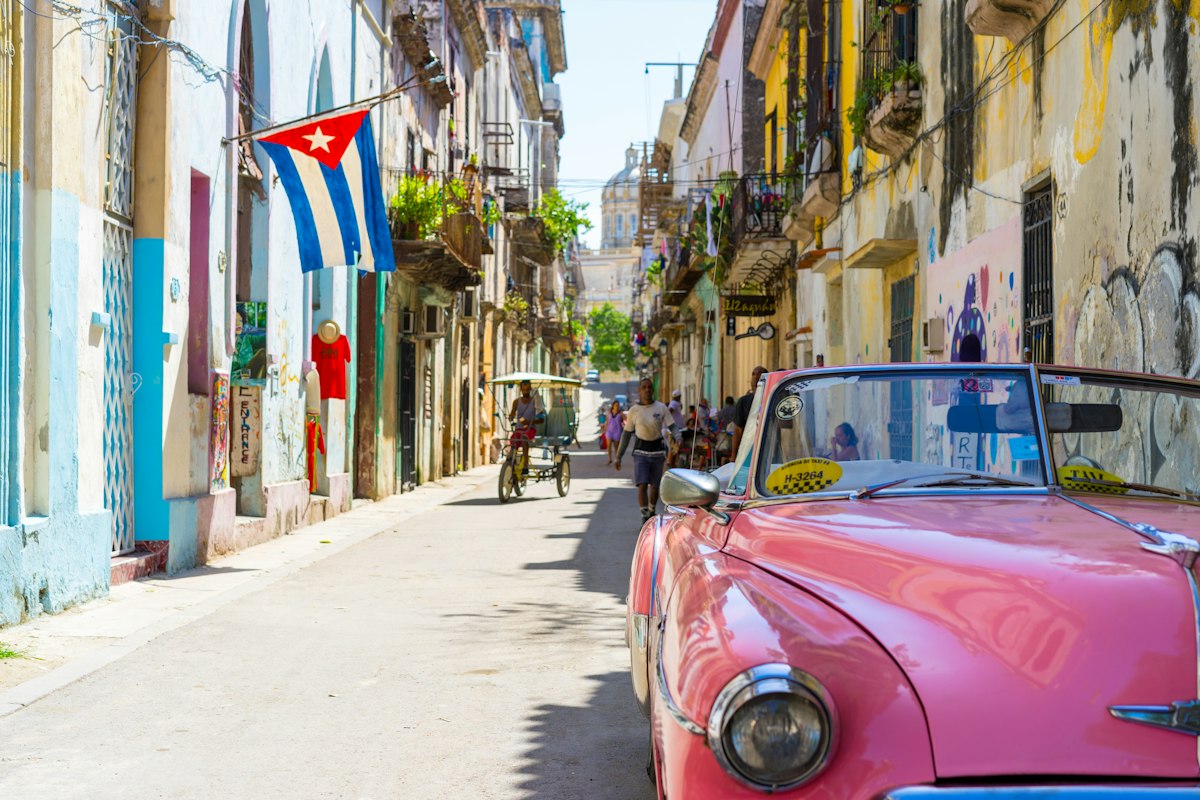
Habana Vieja
This is a dense grid of preserved 16th-century buildings and narrow, pedestrian-heavy streets. You can easily walk to the Plaza de la Catedral, the Castillo de la Real Fuerza, and the iconic Obispo street. It is loud, vibrant, and constant, feeling like an open-air museum where the history is lived in daily by locals.
Vedado
Vedado is spacious and gridded, filled with 1950s mansions and government buildings. It is highly walkable, leading you directly to the Malecón seawall, the Hotel Nacional de Cuba, and the vibrant Coppelia park. It feels less frantic than the old center, offering a glimpse into the actual daily rhythm of Havana residents away from the primary tourist path.
Viñales
The town centers around a main street, making it entirely walkable for access to local casas particulares and tobacco farms. You can walk straight into the Valley of Viñales to explore the prehistoric mural or hike to various tobacco drying houses. It is quiet, misty in the mornings, and centered on agricultural life rather than urban bustle.
Rent a car in Cuba
Compare rental cars from local and international companies, with free cancellation on most bookings.
Compare car rentals in CubaOne thing to think about
Avoid staying in major all-inclusive resorts on the outskirts of cities like Varadero if you want to experience authentic Cuban life. These areas are disconnected, rely heavily on shuttle transport, and offer a sanitized, insulated environment that lacks the character found in local town centers.
Once you have a bed
The things that sell out first in Cuba are the small-group tours and the skip-the-line tickets.
Top tours & activities in Cuba
Common questions
Do I need to worry about the lack of internet access?
Public Wi-Fi is limited to specific parks and hotel lobbies using ETECSA cards. Most casas particulares do not have reliable high-speed data. Download offline maps and have your itineraries printed before arrival. Accepting that you will be disconnected for large parts of the day is essential for a stress-free trip here.
Is it difficult to travel between different cities?
Moving across the island is a slow process. State-run Viazul buses are reliable but book out weeks in advance. Private taxis are faster but significantly more expensive. Never assume you can simply hop on public transport; always arrange your inter-city transfer at least 48 hours ahead of time to avoid getting stranded.
What currency should I carry for daily expenses?
The economy is complex; while the official currency is the Peso, the informal economy relies heavily on foreign cash. Carry small denominations of US Dollars or Euros to pay for meals and private services. Avoid using ATMs, which are frequently empty or broken, and ensure you have enough physical cash for your entire stay.
Hotel links go to Booking.com. If you book through them TonyPlan earns a small commission — the price you pay is exactly the same.