Home › Seville › How many days
How many days in Seville? 3 days of palaces, tapas and flamenco
By Tony Panopoulos · travel-agency planner in Greece · Updated
Seville is Andalusia at its most theatrical, and three days is enough to see it without rushing in the heat. The two monuments that need booking, the Real Alcázar and the Cathedral with the Giralda, sit side by side; the rest of the city is for walking: the lanes of Santa Cruz, Plaza de España in María Luisa Park, and across the river in Triana, the old quarter of potters and flamenco singers. Add a fourth day for Córdoba, 45 minutes away by high-speed train.
Short answer
Two days covers the Alcázar, the Cathedral, Plaza de España and a flamenco show. The third day adds Triana, Las Setas and a slower tapas crawl.
The 3-day plan, day by day
Day 1: Real Alcázar and Barrio Santa Cruz
Morning. Book the first Real Alcázar slot at 9:30 (about €15-16, timed). The 14th-century Palacio de Don Pedro is Mudéjar work by Muslim craftsmen for a Christian king: the Courtyard of the Maidens and the Hall of Ambassadors. Leave an hour for the gardens, used as Dorne in Game of Thrones.
Afternoon. Get lost in Barrio Santa Cruz, the former Jewish quarter: Callejón del Agua along the Alcázar wall, Plaza de Santa Cruz and Plaza de Doña Elvira. Rest through the hottest hours, as Sevillanos do: shops and many bars close from about 14:00 to 17:00.
Evening. Flamenco: the small Casa de la Memoria in Santa Cruz holds hour-long shows in a courtyard (about €25, book ahead); the bigger tablaos add dinner. Then tapas at Bodega Santa Cruz (Las Columnas), where the bill is chalked on the bar in front of you.
From about mid-June to mid-September, plan everything outdoors before 12:00 and after 19:30. Afternoon temperatures often pass 38°C.
Day 2: The Cathedral, the Giralda and Plaza de España
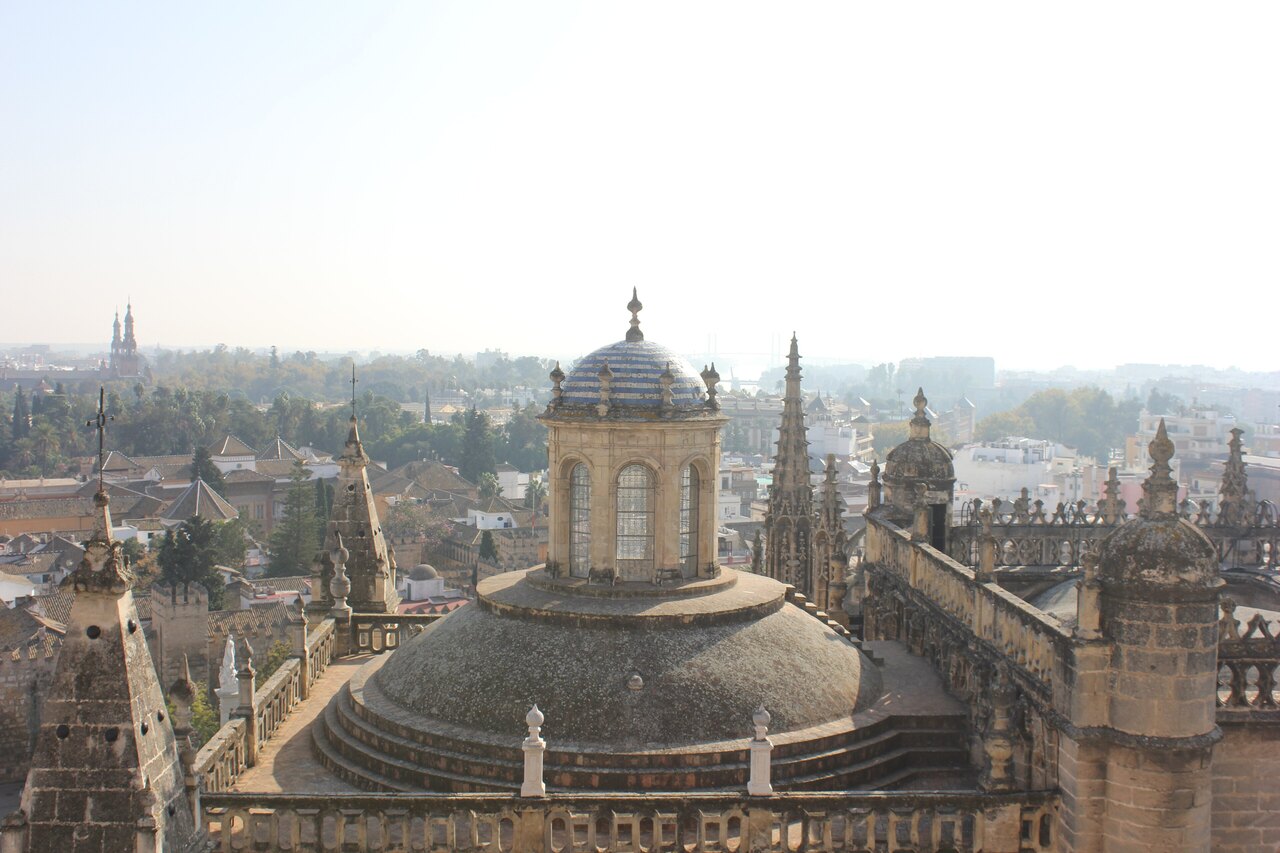
Morning. Seville Cathedral (about €13-14, including the Giralda) is the largest Gothic cathedral in the world. See Columbus's tomb, carried by four kings, and climb the Giralda, the former minaret, by 35 ramps designed for a horseman. Exit through the Patio de los Naranjos.
Afternoon. Walk 15 minutes south past the Torre del Oro to María Luisa Park and Plaza de España, built for the 1929 Ibero-American Exhibition, with tiled alcoves for every Spanish province (free). Rowing boats on the canal cost a few euros.
Evening. Take the tram or walk back to Calle Mateos Gago below the Giralda for tapas with a cathedral view, then continue to El Rinconcillo on Calle Gerona, said to be Seville's oldest bar (1670).
Plaza de España is most beautiful in the late afternoon light, when the brick glows red and the tour groups have gone.
Day 3: Triana, Las Setas and the river
Morning. Cross the Triana bridge (Puente de Isabel II) to the Mercado de Triana, built over the ruins of the Castillo de San Jorge, where the Inquisition had its headquarters; the castle museum below the market is free. Walk Calle Alfarería and Calle Callao for the ceramic workshops and tile shops.
Afternoon. Visit Casa de Pilatos, a 16th-century palace mixing Mudéjar, Gothic and Renaissance styles, quieter than the Alcázar (about €12-18 depending on floors visited).
Evening. Go up the Metropol Parasol (Las Setas), the world's largest wooden structure, for the walkway at sunset (about €15). Then eat in the Alfalfa and Feria neighbourhoods, where locals go.
On Thursday mornings, the El Jueves flea market on Calle Feria has run since the Middle Ages.
Only have 2 days?
With 2 days, do Day 1 and Day 2. You lose Triana and Las Setas, though you can see Las Setas on the second evening.
Got extra days?
Take the AVE high-speed train to Córdoba (about 45 minutes) for the Mezquita-Catedral, a cathedral built inside a forest of 856 columns, and the flower-filled patios of the Judería. Cádiz (1h40 by train) is the best beach-and-old-town day trip.
Where to stay in Seville
| Budget | Area | Why | Typical double/night |
|---|---|---|---|
| Budget | Triana / Macarena | Local neighbourhoods, cheaper, 15-20 minutes on foot to the Cathedral. | €70-110 |
| Mid-range | Santa Cruz | Next to the Alcázar and the Cathedral; lanes are quiet at night. | €120-200 |
| Mid-range | Centro / Alfalfa | Central, full of tapas bars, shopping streets of Sierpes and Tetuán. | €110-180 |
| Comfort | Palace hotels near the Cathedral | Rooftop pools with Giralda views, useful in summer. | €220-450 |
Getting around
Walk: almost everything is within 25 minutes on foot, and the old centre's lanes are too narrow for traffic. The tram runs from Plaza Nueva past the Cathedral to San Bernardo, and buses cost about €1.40. Seville has a large bike-share system (Sevici) and flat cycle lanes. From the airport, the EA bus reaches the centre in about 35 minutes for around €4-5; a taxi has a fixed fare of about €25-30.
What to eat in Seville
Seville is a tapas city: order one or two at a time standing at the bar, at €3-5 each. Look for salmorejo (a thick, cold tomato and bread cream topped with egg and ham), espinacas con garbanzos (spinach with chickpeas and cumin, a Moorish heritage), carrillada (slow-cooked pork cheeks), montadito de pringá (a small roll of slow-cooked meats), and pescaíto frito, fried fish. Good jamón ibérico de bellota costs €15-25 a plate. Drink a cold cerveza (Cruzcampo is the local brand), tinto de verano (red wine with lemon soda) or a chilled manzanilla sherry from Sanlúcar. Lunch is from 14:00 and dinner after 21:00; the kitchens close in between.
Best time to visit
March to May and October to November, with highs of 20-28°C. Spring brings Semana Santa (Holy Week) processions and the Feria de Abril, two weeks later: both spectacular, with hotel prices doubled. July and August are among the hottest in Europe, often above 38°C. Winter is mild (around 16°C) and orange trees are in fruit.
Month-by-month weather for Seville →
What a day costs
| Budget | Mid-range | Comfort | |
|---|---|---|---|
| Bed (per person, sharing a double) | €40 | €80 | €170 |
| Food & drink | €20 | €40 | €80 |
| Sights & shows | €15 | €40 | €60 |
| Local transport | €2 | €5 | €20 |
| Total per person, per day | about €80 | about €165 | about €330 |
Approximate 2026 prices. Andalusia has no tourist tax at the time of writing; a city tax for Seville has been discussed, so check if you travel in 2027.
Before you go
Common questions
How far ahead should I book the Alcázar?
In spring and autumn, 1-2 weeks ahead for a morning slot. Buy only from the official site; resellers charge more for the same ticket.
Is Seville too hot in summer?
In July and August, afternoons regularly pass 38-40°C. It is doable if you follow the Sevillano rhythm: sights early, a siesta, and life after sunset.
Where should I see flamenco?
Small venues with seated, hour-long shows (Casa de la Memoria, Casa del Flamenco) or a peña in Triana. Free shows in bars are informal and can be wonderful.
Is a day trip to Córdoba worth it?
Yes. The Mezquita is one of the most remarkable buildings in Europe and the AVE takes only 45 minutes. Go early, as it is very hot by midday.
How this guide was made
Written by hand, without AI, from experience planning Spain trips. Prices are approximate for 2026; confirm on the official Real Alcázar, Seville Cathedral, Las Setas and Renfe websites before booking.
Some links on this page are partner links. If you book through them TonyPlan may earn a commission; the price you pay is the same. How we make money.