Home › Food tours › Busan
Food tours in Busan: what to eat and which tour to book
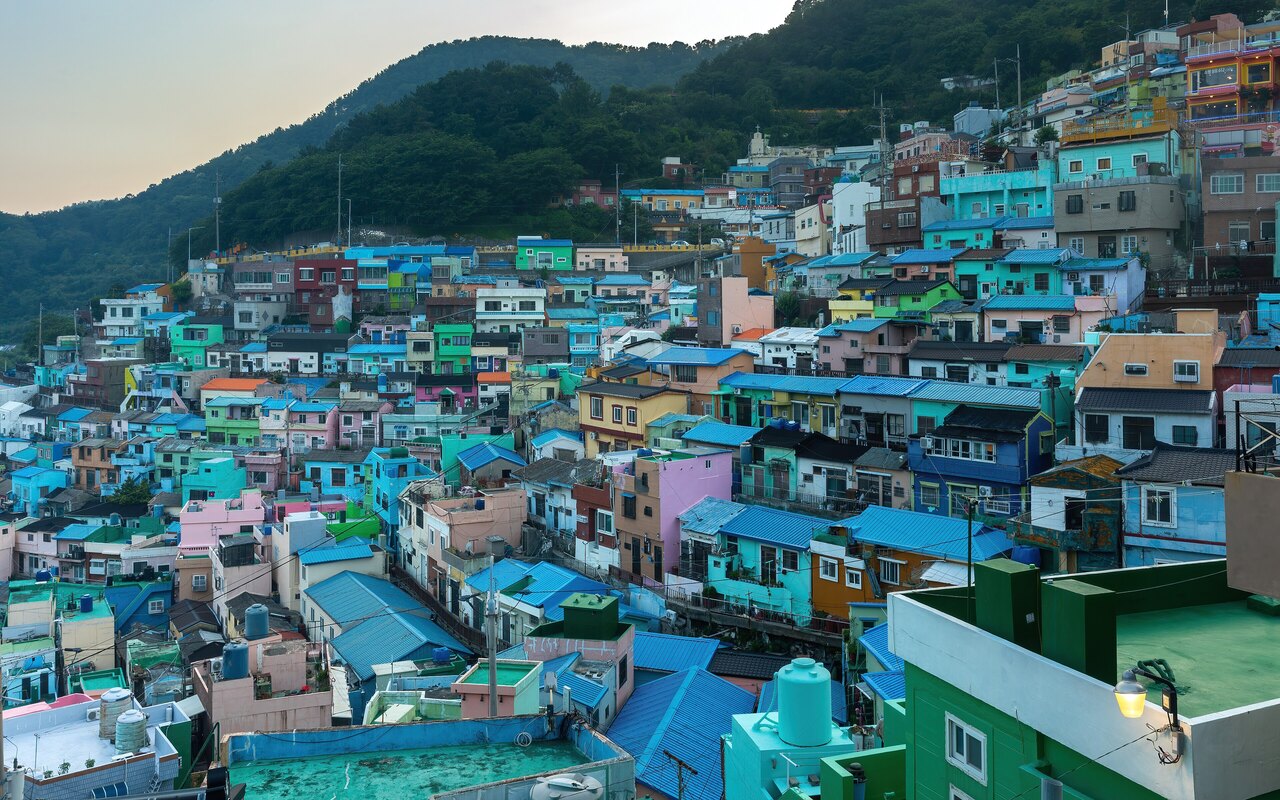
Busan is a port city and eats like one. Raw fish (hoe) bought at Jagalchi Market and eaten upstairs, fish cakes (eomuk) on skewers in hot broth, and grilled clams and eel along the shore are the seafood side. The other side is the cheap, filling food the city is known for across Korea: dwaeji gukbap (pork and rice soup), milmyeon (cold wheat noodles) and ssiat hotteok, the seed-stuffed pancake sold on BIFF Square. Most of the old food streets sit close together around Nampo-dong, with Seomyeon, Haeundae and Gwangalli as the other main areas to eat.
Use this page to decide what to order and where, with rough prices in won and euros. The tours shown are real GetYourGuide listings, with prices as seen when we checked; confirm the price and meeting point on the booking page before you pay.
What to eat in Busan
| Dish | What it is | Where to eat it | Typical price* |
|---|---|---|---|
| Pork and rice soup 돼지국밥 (dwaeji gukbap) | Milky pork-bone broth with sliced pork, served with rice, chives, salted shrimp and kimchi so you season it yourself. Busan's signature everyday meal, eaten at any hour. | The dwaeji gukbap alley in Seomyeon and gukbap shops all over the city, many open late or around the clock. | roughly ₩10,000–13,000 (about €6–8) a bowl |
| Cold wheat noodles 밀면 (milmyeon) | Busan's version of naengmyeon, made with wheat flour instead of buckwheat: chewy noodles in an icy, slightly sweet-sour beef broth (mul) or with a spicy sauce (bibim). | Specialist milmyeon shops across the city; especially popular in summer. | roughly ₩9,000–12,000 (about €5.50–7.50) |
| Seed-filled sweet pancake 씨앗호떡 (ssiat hotteok) | A fried hotteok pancake with a brown-sugar filling, cut open and stuffed with sunflower and pumpkin seeds and nuts. Hot and sticky; eat it standing. | Street stalls on BIFF Square in Nampo-dong, where it is most associated, and around Gukje Market. | about ₩2,000–3,000 (€1.25–2) each |
| Busan fish cake 부산어묵 (Busan eomuk) | Fish paste pressed into sheets, rolls or croquettes, either on skewers in broth or as filled 'bakery-style' fish cakes. Busan is the home of several large eomuk makers, such as Samjin Eomuk in Yeongdo. | Market stalls in Bupyeong (Kkangtong) Market and Gukje Market, and fish-cake shops in Nampo-dong and Yeongdo. | about ₩1,000–2,000 per skewer; filled fish cakes roughly ₩2,000–4,000 each |
| Raw fish at the market 회 (hoe) | You choose a live fish (flatfish, sea bream, rockfish) at a ground-floor stall, it is sliced, and you eat it at a restaurant upstairs with lettuce, garlic, chilli paste and often a spicy fish-bone soup (maeuntang) at the end. | Jagalchi Fish Market in Nampo-dong, and Millak raw fish centre near Gwangalli Beach. | very variable by fish and weight; roughly ₩40,000–80,000 (€25–50) for two, plus a per-person table charge upstairs |
| Octopus, tripe and prawn stew 낙곱새 (nakgopsae) | A spicy shallow stew of small octopus (nakji), beef tripe (gopchang) and prawns (saeu), cooked at the table and eaten over rice. | Specialist restaurants, several of them in Nampo-dong and Seomyeon. | roughly ₩13,000–18,000 (€8–11) per person |
| Dongnae green onion pancake 동래파전 (Dongnae pajeon) | A thick pancake packed with spring onions and seafood, made with rice and glutinous rice batter and egg; a local style from the Dongnae area, usually shared with makgeolli. | Traditional restaurants in Dongnae, north of the centre; seafood pancakes (haemul pajeon) are also sold in markets everywhere. | roughly ₩20,000–35,000 (€12–22) for a large shared pancake |
| Spicy glass-noodle salad 비빔당면 (bibim dangmyeon) | Sweet-potato glass noodles tossed with fish cake, spinach, pickled radish and a chilli sauce; a cheap market snack. | Street-food alleys in Gukje Market and around Bupyeong Market. | roughly ₩4,000–6,000 (€2.50–4) |
Where to eat: markets and neighbourhoods
Jagalchi Fish Market
Korea's best-known seafood market, on the harbour in Nampo-dong: outdoor stalls run by the 'Jagalchi ajummas' and a large modern building with live-fish tanks on the ground floor and raw-fish restaurants upstairs.
BIFF Square and Gukje Market
Pedestrian streets next to Jagalchi with ssiat hotteok stalls, fish-cake shops, and Gukje Market's food alleys for bibim dangmyeon, gimbap and pancakes. Good for a cheap grazing walk.
Bupyeong Kkangtong Market
An old market known for canned and imported goods, fish cakes and side dishes, with an evening night market of food stalls.
Seomyeon
Busan's main downtown shopping and nightlife area, with the dwaeji gukbap alley, Korean barbecue, pojangmacha-style bars and late-night food.
Gwangalli and Millak
Beachfront strip facing the Gwangan Bridge, lined with raw-fish restaurants, grilled-shellfish places and bars; the Millak raw fish centre works like a smaller, more local Jagalchi.
Haeundae Market
A short covered market street near Haeundae Beach with tteokbokki, fish cakes, fried snacks and seafood restaurants; convenient if you stay in Haeundae.
Food tours in Busan compared
Every tour below is a real listing on GetYourGuide or Viator, checked on 2 Oct 2026. Prices move with season and group size, so treat them as a guide and confirm on the booking page.
| Tour | Length | Price* | Group | Best for | |
|---|---|---|---|---|---|
| Busan: Small-Group Traditional Korean Food Cooking Class | 3 hours | from €104 per person | max 10 | Travellers who want to cook the dishes again at home; easiest option for dietary needs, since you control the ingredients. | Check dates |
| Busan: Food Market Tour, Smash Seafoods and Street Foods | 3 hours | from €55 per person | — | Morning people who want to see where locals shop and taste produce at the source. | Check dates |
| Taste of Busan: Eat Like a Local Street Food & Seafood | 2.5 hours | from €56 per person | — | First-timers on a budget who want to try many cheap dishes in one go. | Check dates |
| Busan: Gukje and Jagalchi Market Food Tour with Tastings | 2 hours | from €44 per person | — | Morning people who want to see where locals shop and taste produce at the source. | Check dates |
| Busan: Sky Capsule, Local Street Food and Sunset/Night Views | 9 hours | from €68 per person | — | Evening eaters who want dinner and drinks rolled into one, plus the city after dark. | Check dates |
| Busan: Night Tour with Jagalchi Market and Skywalk | 6 hours | from €67 per person | max 7 | Evening eaters who want dinner and drinks rolled into one, plus the city after dark. | Check dates |
Busan: Small-Group Traditional Korean Food Cooking Class
On GetYourGuide · run by Korean Cooking Class BAPSANG in Busan
- Length
- 3 hours
- Price
- from €104 per person
- Rating
- 5.0 ★ from 77 reviews (on 3 Oct 2026)
- Group size
- max 10
- Included
- Ingredients to cook with Utensils & apron to use during the class Meal including dessert Water Recipes to take home Pickup and drop-off
- Suits
- Travellers who want to cook the dishes again at home; easiest option for dietary needs, since you control the ingredients.
- Starts
- Hoabin Busan Haeundae
Busan: Food Market Tour, Smash Seafoods and Street Foods
On GetYourGuide · run by Social Tour(Korean Hug You)
- Length
- 3 hours
- Price
- from €55 per person
- Rating
- 4.8 ★ from 151 reviews (on 3 Oct 2026)
- Suits
- Morning people who want to see where locals shop and taste produce at the source.
- Starts
- Jagalchi Station
Taste of Busan: Eat Like a Local Street Food & Seafood
On GetYourGuide · run by Some Day in Busan
- Length
- 2.5 hours
- Price
- from €56 per person
- Rating
- 5.0 ★ from 95 reviews (on 3 Oct 2026)
- Suits
- First-timers on a budget who want to try many cheap dishes in one go.
- Starts
- 대한민국 부산광역시 중구 구덕로 73
Busan: Gukje and Jagalchi Market Food Tour with Tastings
On GetYourGuide · run by Lecirt
- Length
- 2 hours
- Price
- from €44 per person
- Rating
- 4.6 ★ from 28 reviews (on 3 Oct 2026)
- Included
- Local guide Food tasting at Gukje Market Cultural insights Personal expenses
- Suits
- Morning people who want to see where locals shop and taste produce at the source.
- Starts
- Jagalchi Station Exit 7 16:50
Busan: Sky Capsule, Local Street Food and Sunset/Night Views
On GetYourGuide · run by TOURSTORY Korea
- Length
- 9 hours
- Price
- from €68 per person
- Rating
- 5.0 ★ from 25 reviews (on 3 Oct 2026)
- Included
- Air-conditioned transportation Professional English-speaking tour guide Blueline Park Sky Capsule ticket Busan’s signature street foods (e.g., banana milk or sweet rice drink, seed hotteok) Meals and other personal ex…
- Suits
- Evening eaters who want dinner and drinks rolled into one, plus the city after dark.
- Starts
- Meeting point may vary depending on the option booked.
Busan: Night Tour with Jagalchi Market and Skywalk
On GetYourGuide · run by Lecirt
- Length
- 6 hours
- Price
- from €67 per person
- Rating
- 4.7 ★ from 19 reviews (on 3 Oct 2026)
- Group size
- max 7
- Suits
- Evening eaters who want dinner and drinks rolled into one, plus the city after dark.
- Starts
- 자갈치역
Some links on this page are partner links. If you book through them TonyPlan earns a small commission — the price you pay is exactly the same.
Street food, sit-down or a cooking class?
Street food
Street food in Busan is mostly market and stall food: fish-cake skewers, hotteok, tteokbokki, gimbap and bibim dangmyeon, eaten standing or on a stool. The densest area is the walk from Jagalchi through BIFF Square and Gukje Market to Bupyeong Kkangtong Market. Most stalls take cash and Korean cards; foreign cards work in more places than before but not everywhere.
Sit-down meals
Sit-down meals are often single-dish restaurants (a gukbap shop, a milmyeon shop, a barbecue place) with free refillable side dishes (banchan). For raw fish, the usual system is buying at a market stall and paying a separate per-person charge to eat upstairs. Many restaurants need a minimum of two people for barbecue or stews.
Cooking classes
Cooking classes are fewer than in Seoul. Where they exist they usually cover kimchi, bulgogi, japchae or pancakes, sometimes with a market visit. Check the location, since some are outside the centre, and whether the class is in English.
How much to budget for food
| Style | Per person, per day* |
|---|---|
| Budget (street food, markets) | ₩30,000–45,000 (about €19–28): market snacks, a gukbap and a milmyeon |
| Mid-range (one sit-down meal a day) | ₩60,000–90,000 (about €38–56): barbecue or nakgopsae dinner with drinks |
| Splurge (tasting menus, wine) | ₩150,000+ (about €95+): a raw-fish feast or high-end Korean restaurant |
Vegetarian, halal and gluten-free
Vegetarian & vegan: Hard. Broths are usually made from anchovy, beef or pork, and kimchi normally contains fish sauce or salted shrimp. Temple food restaurants and a small number of vegetarian places are the safest option. Learn 'gogi ppaego juseyo' (please leave out the meat), but it will not remove fish stock.
Halal: Limited. There is a mosque in Busan (in Geumjeong-gu) with a few halal and Middle Eastern or South Asian restaurants nearby, and some halal-friendly places in the tourist areas. Pork is common in markets and soups, so check carefully. Seafood restaurants are the easiest option, but cooking wine and shared grills are common.
Gluten-free: Difficult. Soy sauce, gochujang, doenjang and fish cakes usually contain wheat, and milmyeon is a wheat noodle. Plain rice, raw fish without sauce and grilled meat without marinade are the safest choices. Carry a written card in Korean explaining that you cannot eat wheat (mil).
Food scams and tourist traps to avoid
- Raw fish weighed and priced at the stall without a clear total, especially for visitors who don't speak Korean. Agree the total price for the fish before it is killed, compare two or three stalls, and ask for the price on a calculator or phone screen.
- A separate upstairs charge (table, side dishes and seasoning, often called sangcharim) and extra charges for the spicy soup at the end, which surprise people who thought the fish price was everything. Ask the stall how much the upstairs restaurant charges per person and whether maeuntang (spicy soup) is included before you go up.
- Seafood and shellfish listed at 'market price' (시가, sigga) in beach-area restaurants, with a bill much higher than expected. Ask for the price of the size you want before ordering anything marked 시가.
Top tours & activities in Busan
Rent a car in Busan
Compare rental cars from local and international companies, with free cancellation on most bookings.
Compare car rentals in BusanPlan the rest of your Busan trip
Staying near the markets saves time and taxi money — most food tours start in the old centre.
Common questions
Do I need to tip in Busan?
No. Tipping is not part of Korean culture and is not expected in restaurants, markets or cafés; the price on the menu is what you pay, and service is not added. Upmarket hotel restaurants may include a service charge on the bill. On a guided food tour you can thank a guide with a small tip if you wish, but it is not standard practice.
How does eating raw fish at Jagalchi work?
You pick a live fish at a stall on the ground floor and agree a price, the stall slices it, and you take it (or are taken) to a restaurant upstairs. That restaurant charges a per-person fee for the table, side dishes, sauces and lettuce, and usually extra for rice and the spicy fish-bone soup made from the leftovers. Ask both prices before you start.
Is street food in Busan safe?
Generally yes. Market stalls have high turnover and food is usually cooked or reheated in front of you. Raw seafood carries more risk, so eat it at busy places and avoid it if you are pregnant or have a weak immune system. Tap water is treated and considered safe, though most Koreans drink filtered or bottled water.
What should I eat if I only have one day?
Start with dwaeji gukbap for breakfast or lunch, walk from Jagalchi Market through BIFF Square (ssiat hotteok) and Gukje Market (fish cakes, bibim dangmyeon), and have milmyeon in the afternoon. In the evening, go to Gwangalli for grilled shellfish or raw fish by the beach, or Seomyeon for barbecue.
How much should I budget for food per day?
On a budget, about ₩30,000–45,000 (€19–28) covers market snacks, a bowl of gukbap and a plate of noodles. A comfortable day with a barbecue or stew dinner and a few drinks is about ₩60,000–90,000 (€38–56). Raw-fish dinners vary widely with the fish chosen, so expect ₩50,000 or more per person once table charges are added.
Can I pay by card at the markets?
Restaurants and most shops take cards, including foreign ones in many places, and Korean transport cards work in convenience stores. Small market stalls and street carts often prefer cash, so carry some won in small notes. Some stalls accept bank transfer only from Korean accounts, which won't help visitors.
* Prices are approximate, gathered on 2 Oct 2026 from menus, markets and the booking pages linked above. They change with season and exchange rates.