Where to stay in Busan
Busan is a linear coastal city wedged between mountains and the East Sea. Because the city sprawls, your choice of stay dictates your entire rhythm: stay east for beaches and nightlife, or central for traditional markets and transport connectivity. Public transit is efficient, but choosing the wrong district can lead to hour-long subway commutes, so prioritize proximity to Line 1 or 2 to maximize your exploration time across this sprawling port metropolis.
Haeundae
This is Busan’s glossy coastal hub, defined by the sweeping Haeundae Beach. It is intensely walkable, packed with international hotel chains, sushi spots, and pubs. You are steps from the Sea Life Aquarium and the trendy cafes of Dalmaji-gil Hill. It feels frantic, neon-lit, and unapologetically modern, providing a seamless base if you prefer resort-style infrastructure over authentic grit.
Gwangalli
Centering around the Gwangandaegyo Bridge, this area is best for evening strolls along the sand. The streets are lined with independent roasteries, craft beer bars, and raw fish restaurants. It is highly walkable and feels less corporate than Haeundae. You are within a short cab ride of the Millak Waterfront Park, where locals gather to eat fresh sashimi by the water.
Seomyeon
Seomyeon is the beating heart of Busan. It feels industrial and relentless, dominated by the massive Lotte Department Store and endless subterranean shopping malls. It is the best place to access all subway lines, making day trips effortless. You are surrounded by thousands of eateries, karaoke rooms, and bars that stay open until dawn, offering a raw, authentic urban experience.
Nampo-dong
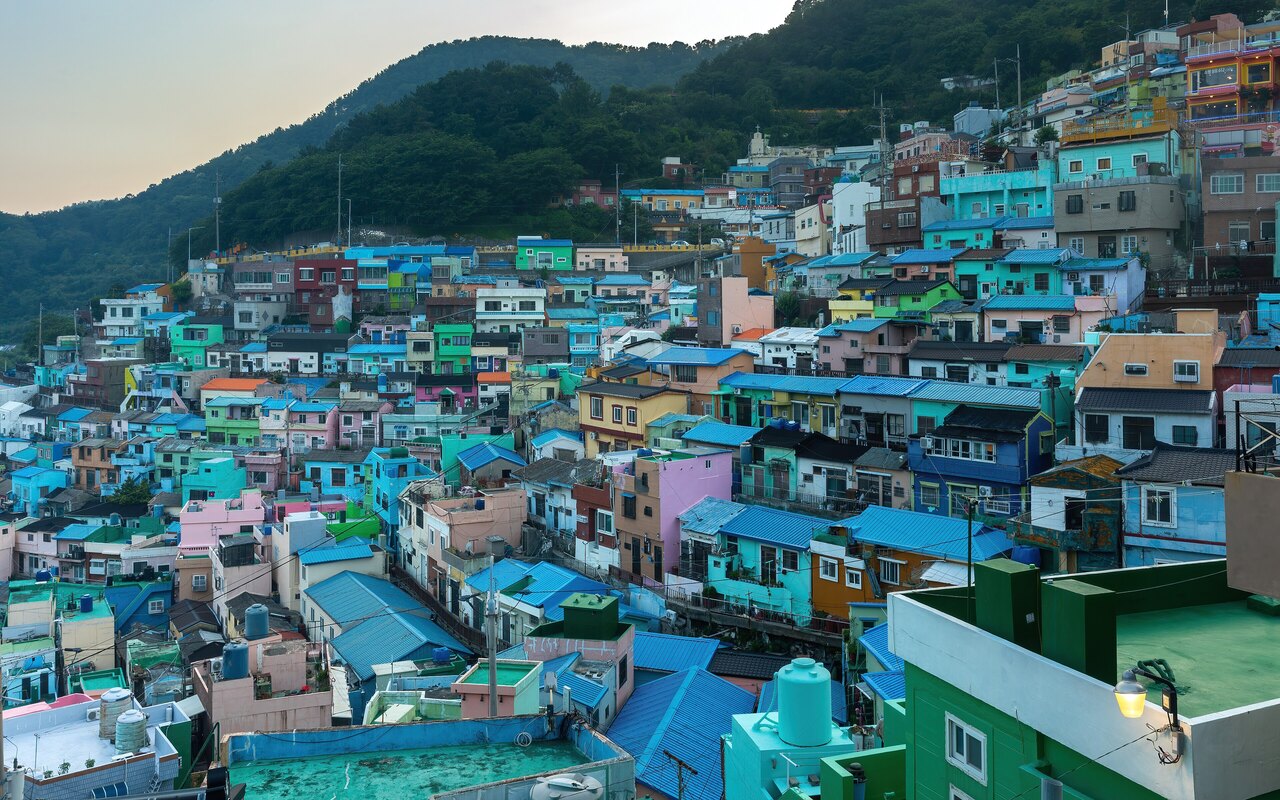
Located near the bustling port, Nampo-dong is dense with history. You can walk to the Jagalchi Fish Market, BIFF Square, and the colorful Gukje Market. The area feels older and more frantic, characterized by street food vendors and narrow alleys. It is the most culturally vibrant district for those who prefer heritage, texture, and immediate access to the waterfront over modern skyscrapers.
Songjeong
Songjeong offers a much slower pace. It is defined by its surf schools and laid-back coffee culture, feeling more like a beach town than a city district. It is walkable and far quieter, though it relies on the Donghae line to reach the city center. It’s perfect for a slower itinerary focusing on sun, surf, and basic seaside comfort.
Rent a car in Busan
Compare rental cars from local and international companies, with free cancellation on most bookings.
Compare car rentals in BusanOne thing to think about
Avoid booking accommodation too far inland in the northern districts like Geumjeong. While cheaper, you will spend significant time on the subway commuting to the coast, where the actual tourist infrastructure is located. It is exhausting and limits your spontaneous evening plans near the water.
Once you have a bed
The things that sell out first in Busan are the small-group tours and the skip-the-line tickets.
Top tours & activities in Busan
Common questions
Is the subway the best way to get around Busan?
Yes, the subway is exceptionally clean, efficient, and clearly marked in English. Most major landmarks, from Nampo-dong’s markets to Haeundae’s beach, are directly accessible via Lines 1 or 2. It is far more reliable than the bus system, which can be confusing for newcomers and prone to significant traffic delays during rush hour.
Do I need to carry cash while exploring Busan?
While Korea is highly digitized, keep cash for traditional markets like Jagalchi or Gukje, where smaller street food vendors often prefer it. Most restaurants and hotels accept international credit cards, but having some Won ensures you can buy snacks from street stalls or pay for small bus fares if your T-money card runs low.
What is the best way to travel from the airport to the city center?
The Gimhae Light Rail is the fastest and cheapest option, connecting directly to the main subway network at Sasang Station. From there, you can easily transfer to reach your chosen district. Taxis are available but expensive for long distances, and traffic into the city center can be heavy, making the rail system the smarter choice.
Hotel links go to Booking.com. If you book through them TonyPlan earns a small commission — the price you pay is exactly the same.