How many days in Warsaw? 3 days: the rebuilt Old Town, the Royal Route and Praga
By Tony Panopoulos · travel-agency planner in Greece · Updated
About 85% of Warsaw was destroyed by the end of the Second World War, and the Old Town you see today was rebuilt from paintings, photographs and drawings, so carefully that UNESCO listed it in 1980. The city's story is the reason to visit: give it three days, one for the Old Town and the Royal Route, one for the two great museums of the war and Jewish history, and one for the parks and palaces and the old working-class district of Praga across the Vistula. Warsaw is spread out, but the metro and trams are fast and cheap.
Short answer
Two days covers the Old Town, the Royal Route, Łazienki Park and the Warsaw Rising Museum. A third day adds POLIN, Praga and Wilanów Palace.
The 3-day plan, day by day
Day 1: The Old Town and the Royal Route
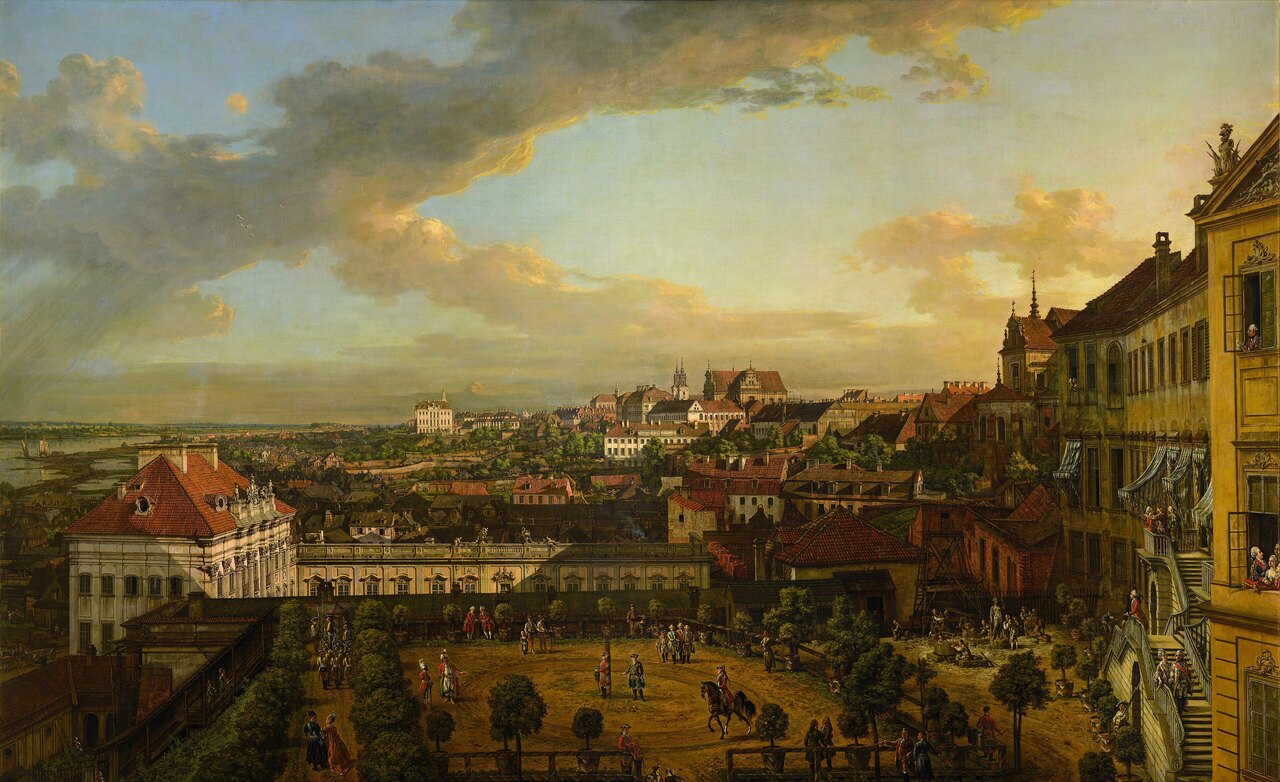
Morning. Start at Castle Square with the Sigismund's Column from 1644, then visit the Royal Castle (about zł 45-50; check for free days), rebuilt from 1971 to 1984, with Canaletto's views of Warsaw that helped the reconstruction. Walk to the Old Town Market Square and the Museum of Warsaw (about zł 25-30), whose film on the destruction is worth the visit.
Afternoon. Walk out through the red-brick Barbican into the New Town, then south along the Royal Route: Krakowskie Przedmieście, with the Presidential Palace, the University and the Church of the Holy Cross, where Chopin's heart is kept in a pillar, and Nowy Świat.
Evening. Eat at a milk bar (bar mleczny), the subsidised canteens of the communist era: Bar Bambino or Bar Prasowy serve pierogi, soup and cutlets for zł 20-35. Or dine in the Old Town for zł 60-100.
The Old Town is quietest before 10:00. Come back after dark, when the market square is lit and the crowds have gone.
Day 2: The Warsaw Rising Museum and POLIN
Morning. Visit the Warsaw Rising Museum (about zł 35; closed on Tuesdays) in a former tram power station in Wola, telling the 63 days of the 1944 uprising against German occupation. Allow 2-3 hours, and see the replica Liberator bomber and the sewer passage.
Afternoon. Take a tram to POLIN, the Museum of the History of Polish Jews (about zł 45), built on the site of the wartime ghetto, covering a thousand years of Jewish life in Poland. Opposite stands the Monument to the Ghetto Heroes. Allow 2-3 hours.
Evening. Go up to the 30th-floor terrace of the Palace of Culture and Science (about zł 35), Stalin's 'gift' from 1955, for the view over the new skyline. Then dinner at Hala Koszyki, a restored 1900s market hall with restaurants and bars, mains zł 40-70.
The Chopin Museum in the Ostrogski Palace (about zł 30-40) limits visitors per hour; book a slot online.
Day 3: Łazienki, Wilanów and Praga
Morning. Walk through Łazienki Park, Warsaw's largest park, with peacocks and red squirrels, to the Palace on the Isle (about zł 30-40). From mid-May to September, free Chopin concerts are played at the Chopin Monument on Sundays at 12:00 and 16:00.
Afternoon. Take bus 116 or 180 south (about 30 minutes) to Wilanów Palace (about zł 40-50), the baroque summer residence of King Jan III Sobieski, often called the 'Polish Versailles', with formal gardens. Then cross the Vistula to Praga.
Evening. In Praga, visit the Neon Museum (about zł 25-30) in the Soho Factory complex, with signs from the communist era, then walk Ząbkowska Street for bars in pre-war tenements. Finish at the Vistula boulevards in summer.
Praga was the part of Warsaw least damaged in the war, so its streets show what pre-war Warsaw looked like.
Only have 2 days?
With 2 days, do the Old Town and the Royal Route on Day 1, and the Warsaw Rising Museum with Łazienki Park on Day 2. You lose POLIN, Praga and Wilanów.
Got extra days?
A 4th day can go to the Copernicus Science Centre on the Vistula, to Żelazowa Wola, Chopin's birthplace (about 1 hour west), or to Kampinos Forest for walks. Kraków is about 2h20 away by express train.
Where to stay in Warsaw
| Budget | Area | Why | Typical double/night |
|---|---|---|---|
| Budget | Śródmieście Południowe / Praga | Hostels and apartments close to trams and the metro. | zł 200-350 |
| Mid-range | Old Town / Krakowskie Przedmieście | Walk to the Old Town, the Royal Route and the river. | zł 400-650 |
| Mid-range | Śródmieście (Centrum) | Business hotels near the central station and the Palace of Culture. | zł 350-600 |
| Comfort | Royal Route / central five-star hotels | Historic and grand hotels on Krakowskie Przedmieście and around the centre. | zł 800-1,800 |
Getting around
Warsaw has two metro lines, trams and buses run by ZTM. A 20-minute ticket costs about zł 3.40, a 75-minute one about zł 4.40, and a 24-hour ticket about zł 15. You can tap a contactless card on the ticket machines or use the Jakdojade app. From Chopin Airport, the S2 and S3 trains reach the centre in about 25 minutes, or take bus 175; a taxi or Bolt/Uber costs about zł 40-60. The centre to the Old Town is a 20-minute walk.
What to eat in Warsaw
Polish food is hearty and cheap. Try pierogi (dumplings with potato and cheese, meat or cabbage), żurek (sour rye soup with sausage and egg, often in a bread bowl), bigos (hunter's stew), placki ziemniaczane (potato pancakes) and schabowy (pork cutlet). At a milk bar, a full meal costs zł 25-40; in a restaurant, zł 60-100. Sweet treats: pączki (doughnuts) and szarlotka (apple cake). Polish vodka, beer and craft beer bars are everywhere.
Best time to visit
May to September: 18-25°C, long days, the free Sunday Chopin concerts and open-air life on the Vistula boulevards. Summer can bring heat waves. Autumn is colourful in the parks. Winter is cold (-5 to 2°C) and grey, but the Old Town has a Christmas market and an ice rink. Warsaw commemorates the uprising on 1 August at 17:00, when the city stops for a minute.
Month-by-month weather for Warsaw →
What a day costs
| Budget | Mid-range | Comfort | |
|---|---|---|---|
| Bed (per person, sharing a double) | zł 120 | zł 250 | zł 600 |
| Food & drink | zł 80 | zł 160 | zł 320 |
| Sights & tickets | zł 40 | zł 90 | zł 150 |
| Local transport | zł 15 | zł 25 | zł 80 |
| Total per person, per day | about zł 255 | about zł 525 | about zł 1,150 |
Approximate 2026 prices in Polish złoty; Poland has no national tourist tax, but some hotels add a small local fee.
Before you go
Common questions
Is the Old Town really a copy?
It is a reconstruction, built after 1945 from paintings, photographs, architectural drawings and the original rubble where possible. Canaletto's 18th-century views of Warsaw were used as references. UNESCO listed it in 1980 as an exceptional example of reconstruction. The Museum of Warsaw explains the process.
Do I need to book museums?
For the Warsaw Rising Museum and POLIN, booking online helps at weekends and in summer, but tickets are usually available. The Chopin Museum limits visitors per hour, so book ahead. Most museums close one day a week, often Monday or Tuesday, so check before planning.
Is Warsaw expensive?
It is cheaper than most Western European capitals. A milk bar meal costs zł 25-40, a beer zł 15-25, and public transport is very cheap. Hotels are good value outside summer weekends. Prices are rising, but Warsaw is still one of the best-value capitals in the European Union.
Can I pay by card?
Yes, almost everywhere, including market stalls and transport machines. Contactless payment is the norm. Poland uses the złoty, not the euro; some shops accept euros at a poor rate. Withdraw złoty from bank ATMs and avoid the Euronet machines, which often charge high fees.
How this guide was made
Compiled by TonyPlan from official tourism, transport and attraction sources and on-the-ground travel knowledge. Prices are approximate for 2026 and change with season; anything we could not confirm is marked as approximate.
Some links on this page are partner links. If you book through them TonyPlan may earn a commission; the price you pay is the same. How we make money.