Home › Valencia › How many days
How many days in Valencia? 3 days of paella, the Turia gardens and the City of Arts
By Tony Panopoulos · travel-agency planner in Greece · Updated
Valencia, Spain's third city, combines a medieval old town, a 9 km park in a former riverbed, futuristic architecture and a long city beach, and it is the home of paella. Three days covers the Ciutat Vella (old town) with the Cathedral and the Central Market, the Turia gardens and the City of Arts and Sciences, and a trip to the Albufera lagoon, where rice for paella grows. It is flat, sunny and easy to explore by bike.
Short answer
Two days covers the old town and the City of Arts and Sciences. The third adds the beach and the Albufera, with a real paella.
The 3-day plan, day by day
Day 1: The old town
Morning. Visit the Mercado Central, one of Europe's largest fresh-food markets, in a 1928 Modernist building of iron, glass and tiles. Opposite, see the Lonja de la Seda (Silk Exchange, UNESCO), a Gothic trading hall with twisted columns.
Afternoon. Visit the Cathedral, whose chapel holds a chalice venerated as the Holy Grail, and climb the Miguelete bell tower (207 steps). See the Plaza de la Virgen and the Torres de Serranos, a medieval city gate.
Evening. Have tapas in the Barrio del Carmen, with street art and bars, and drink agua de Valencia (cava, orange juice, gin and vodka).
On Thursdays at noon, the Water Tribunal, the oldest court in Europe, meets outside the cathedral's Apostles' Door to settle irrigation disputes.
Day 2: The Turia gardens and the City of Arts and Sciences
Morning. Rent a bike and ride through the Jardín del Turia, a 9 km park in the old riverbed of the Turia, diverted after a flood in 1957. Stop at Gulliver Park, a huge playground shaped like Gulliver.
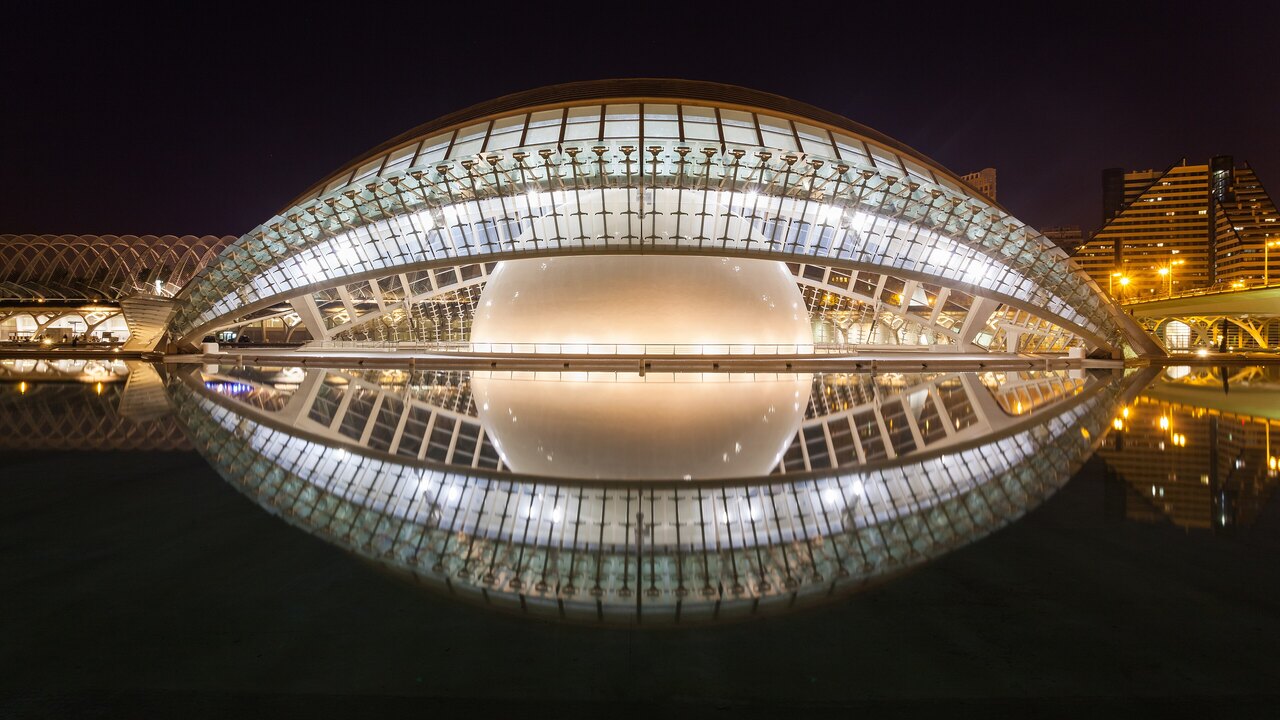
Afternoon. Reach the City of Arts and Sciences by Santiago Calatrava and Félix Candela: the Hemisfèric (IMAX), the Science Museum, and the Oceanogràfic, Europe's largest aquarium (about €35-40), with sharks, belugas and Mediterranean habitats.
Evening. Watch the buildings light up over the water at dusk.
The buildings can be admired for free from outside; buy combined tickets if you visit several.
Day 3: The beach and the Albufera
Morning. Walk or ride to the Malvarrosa and Las Arenas beaches, wide sandy beaches 20 minutes from the centre by tram, and see the colourful fishermen's houses of El Cabanyal.
Afternoon. Go to the Albufera Natural Park (about 20-30 minutes), a freshwater lagoon among rice fields. Take a traditional boat ride (about €5-8) and eat paella valenciana (with chicken, rabbit and beans) in the village of El Palmar.
Evening. Watch the sunset over the Albufera lagoon, one of the most beautiful in Spain.
Valencians eat paella at lunch, not dinner. Restaurants that cook it to order take 20-30 minutes.
Only have 2 days?
With 2 days, do Days 1 and 2, and have paella on the beach.
Got extra days?
With more time, take a day trip to Xàtiva (castle), Sagunto (Roman theatre), or the Bocairent caves, or continue along the coast to Altea and Alicante.
Where to stay in Valencia
| Budget | Area | Why | Typical double/night |
|---|---|---|---|
| Budget | Ruzafa / near Joaquín Sorolla station | Lively, cheap, good food and bars. | €60-100 |
| Mid-range | Ciutat Vella | Walk to everything in the old town. | €110-200 |
| Mid-range | Ruzafa | Trendy area with cafés and restaurants. | €100-180 |
| Comfort | Old town palaces / beachfront | Historic and sea-view hotels. | €220-450 |
Getting around
Valencia is flat: walk the centre and use Valenbisi bikes or rentals for the Turia gardens. The Metrovalencia (metro and tram) connects the airport (about 25 minutes) and the beach. Buses go to the Albufera. The AVE high-speed train reaches Madrid in about 1 hour 50 minutes.
What to eat in Valencia
Try paella valenciana, arroz a banda (rice cooked in fish stock), arroz negro (with squid ink) and fideuà (with noodles instead of rice). For breakfast or a snack, have horchata (a cool drink made from tiger nuts) with fartons (sweet pastries), especially in Alboraya. Try esgarraet (salt cod and roasted peppers). A menú del día lunch costs €13-18; paella for two €30-45.
Best time to visit
March to June and September to November are pleasant (20-28°C). Summer is hot and humid (30-32°C), good for the beach. Las Fallas (15-19 March) fills the city with giant satirical sculptures that are burned on the last night, with fireworks and huge crowds.
Month-by-month weather for Valencia →
What a day costs
| Budget | Mid-range | Comfort | |
|---|---|---|---|
| Bed (per person, sharing a double) | €35 | €75 | €180 |
| Food & drink | €25 | €45 | €90 |
| Sights & activities | €10 | €35 | €70 |
| Local transport | €4 | €8 | €25 |
| Total per person, per day | about €75 | about €165 | about €365 |
Approximate 2026 prices. The Valencian region introduced a tourist tax, later suspended; check whether a nightly charge applies when you book.
Before you go
Common questions
Is Valencia better than Barcelona?
It is smaller, cheaper, less crowded and more relaxed, with an excellent beach and food; Barcelona has more famous architecture and nightlife.
Where should I eat paella?
In the Albufera villages (El Palmar) or the restaurants on the Malvarrosa beach, at lunchtime. Avoid places with pictures of paella outside.
Is Valencia good for families?
Very: the Oceanogràfic, Gulliver Park, the Science Museum, the beach and the flat bike paths.
When is Las Fallas?
Every year from 15 to 19 March; hotels book up early and prices rise.
Do I need to rent a bike?
It is the best way to see the Turia gardens and reach the beach and the City of Arts and Sciences.
How do I get to Valencia?
By plane (Valencia airport), or by high-speed train from Madrid (about 2 hours) and Barcelona (about 3-3.5 hours).
Is the Holy Grail really there?
The cathedral holds a 1st-century stone cup that the Church venerates as the Grail. Historians debate it; it is worth seeing either way.
Is the City of Arts and Sciences worth paying for?
The outdoor walk is free and impressive. Inside, the Oceanogràfic is excellent for families and marine life lovers; the Science Museum is hands-on and good with children. Combined tickets for the museum, Hemisfèric and Oceanogràfic save money if you visit more than one.
Can I visit Valencia on a weekend?
Yes: in two days you can see the old town, the Central Market (closed on Sundays), the Turia gardens and the City of Arts and Sciences, and have paella on the beach. Plan the market for Saturday morning.
What is horchata?
A sweet, cold drink made from tiger nuts (chufas) grown around Alboraya, north of Valencia. It is served in horchaterías with fartons, long sugary buns for dipping. Horchatería Santa Catalina and Daniel in Alboraya are historic places to try it.
Is Valencia good for a beach holiday?
Yes: the city beaches of Las Arenas, Malvarrosa and Patacona are wide and sandy, with restaurants and promenades. For quieter beaches with pine forests, go south to El Saler and La Devesa in the Albufera park.
How this guide was made
Written by hand, without AI, from experience planning Spain trips. Prices and tax rules are approximate for 2026; confirm on the official Visit Valencia, Oceanogràfic and Albufera websites before booking.
Some links on this page are partner links. If you book through them TonyPlan may earn a commission; the price you pay is the same. How we make money.