Home › Uzbekistan › How many days
How many days in Uzbekistan? 8 days, Tashkent, Samarkand, Bukhara and Khiva
By Tony Panopoulos · travel-agency planner in Greece · Updated
Uzbekistan holds the great cities of the old Silk Road, and since fast trains and visa-free entry arrived it has become easy to visit. The route runs east to west: Tashkent, then Samarkand with its turquoise domes, Bukhara with its old trading streets, and the walled town of Khiva in the desert. Eight days gives each its time, with a flight back to Tashkent at the end. Visit tiled monuments in the early morning and late afternoon, when the light warms the colours and the heat eases.
Short answer
Five days covers Tashkent, Samarkand and Bukhara by fast train. Eight adds a slower day in each city and the long trip west to Khiva, the best-preserved of all.
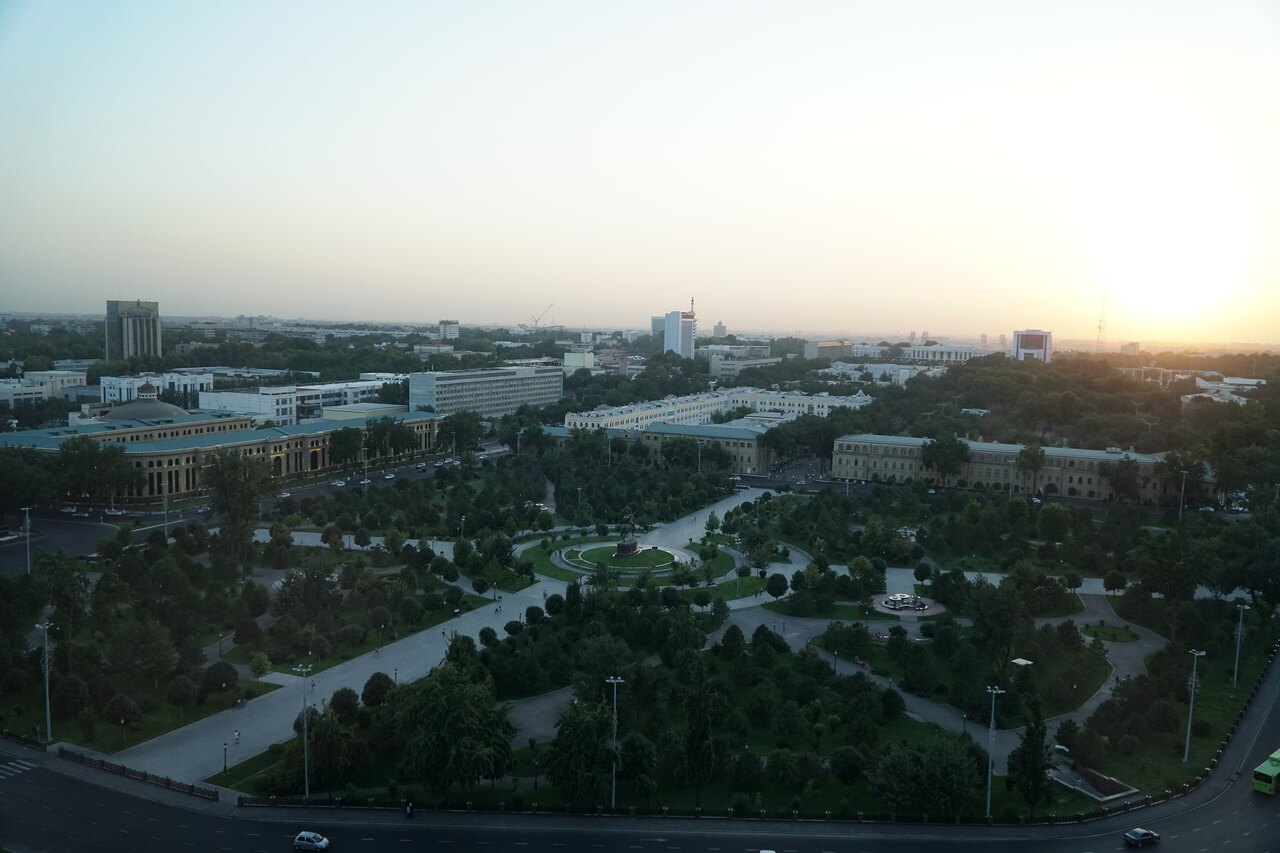
The 8-day plan, day by day
Day 1: Tashkent: bazaar, old city and metro
Morning. Start at the Chorsu Bazaar, under a huge green dome, for dried fruit, nuts, spices and fresh non bread. Walk 15 minutes to the Khast Imam complex, which holds one of the oldest Qurans in the world, the 7th-century Uthman Quran.
Afternoon. Ride the Tashkent Metro, whose Soviet-era stations such as Kosmonavtlar and Alisher Navoi are decorated with chandeliers, ceramics and mosaics (a ride costs a few thousand so'm). Visit Amir Timur Square and the State Museum of Applied Arts.
Evening. Eat plov at the Central Asian Plov Centre (Besh Qozon), where it is cooked in giant cauldrons, mostly at lunchtime (about UZS 50,000-70,000), or at a teahouse in the evening.
Book the Afrosiyob fast trains ahead on the official railway site or app; seats sell out in spring and autumn.
Day 2: Samarkand: the Registan and Gur-e-Amir
Morning. Take the Afrosiyob fast train from Tashkent to Samarkand (about 2h10, roughly UZS 200,000-350,000). Visit Gur-e-Amir, the mausoleum of Timur (Tamerlane), with its ribbed blue dome and gold-leaf interior.
Afternoon. Enter the Registan (about UZS 75,000-100,000), three madrasas from the 15th to 17th centuries facing a central square, each covered in tilework. Climb up inside the Ulugh Beg Madrasa if a guard offers (for a tip).
Evening. Come back after dark: the Registan is lit up every night, and there is sometimes a sound and light show. Dinner of shashlik kebabs and salads costs UZS 80,000-150,000.
Visit the Registan twice: once at opening for photographs without crowds, and once at night.
Day 3: Samarkand: Shah-i-Zinda and Bibi-Khanym
Morning. Walk the avenue of mausoleums at Shah-i-Zinda (about UZS 40,000-60,000), a street of tiled tombs from the 11th to 19th centuries, many with the best tilework in Central Asia.
Afternoon. Visit the Bibi-Khanym Mosque, once one of the largest mosques in the Islamic world, and the Siab Bazaar next door, for round Samarkand bread and dried fruit. Take a taxi to the Ulugh Beg Observatory, where the 15th-century astronomer built a giant meridian arc.
Evening. Visit the Konigil paper mill in the late afternoon, 15 minutes away, where silk paper is made by hand, or eat in a family home restaurant in the old Jewish quarter.
Samarkand has a modern centre built by the Russians and an old city; stay near the Registan to walk everywhere.
Day 4: To Bukhara: Lyabi-Hauz and the trading domes
Morning. Take the Afrosiyob train from Samarkand to Bukhara (about 1h40), then a taxi 15 minutes to the old town. Leave your bags at a guesthouse in a restored merchant's house.
Afternoon. Start at Lyabi-Hauz, a 17th-century square around a pool shaded by old mulberry trees, then walk through the trading domes, covered bazaars where hat makers, money changers and jewellers worked, and now craftsmen sell knives, carpets and suzani embroidery.
Evening. Eat at one of the restaurants by the Lyabi-Hauz pool, then watch a folk dance and fashion show in the Nadir Divan-Begi Madrasa (about UZS 60,000-100,000).
Bukhara's old town is compact and pedestrian; almost every sight is within 15 minutes' walk.
Day 5: Bukhara: the Ark and the Kalyan minaret
Morning. Visit the Ark (about UZS 50,000-70,000), the fortress of the emirs of Bukhara for over 1,000 years. Then walk to the Po-i-Kalyan square, with the 47-metre Kalyan Minaret of 1127, which Genghis Khan is said to have spared, and the Mir-i-Arab Madrasa.
Afternoon. Walk 15 minutes to the Samanid Mausoleum, a 10th-century tomb of patterned brick, one of the oldest buildings in Central Asia, then the four small towers of Chor Minor.
Evening. Watch the sun set on the Kalyan Minaret from a rooftop café, then dinner of plov or shurpa (soup) for UZS 60,000-120,000.
Ask your guesthouse to book the long train or a flight to Khiva for the next day; daily options are limited.
Day 6: Bukhara's palaces, then west to Khiva
Morning. Take a taxi 15 minutes to Sitorai Mohi-Hosa, the summer palace of the last emir, mixing Russian and Uzbek styles. Then visit the Bahauddin Naqshband shrine, a Sufi pilgrimage site, 20 minutes away.
Afternoon. Take the train from Bukhara to Khiva (about 6-7 hours) or a car across the Kyzylkum Desert (about 6 hours), with views of the Amu Darya river at the end.
Evening. Arrive in Khiva and walk the walls of the Itchan Kala, the inner town, at dusk; stay inside the walls if you can.
Carry water and snacks on the desert drive; services are sparse between Bukhara and Khiva.
Day 7: Khiva: Itchan Kala
Morning. Buy the Itchan Kala ticket (about UZS 150,000-200,000, valid for most museums for two days) at the West Gate. See the unfinished turquoise Kalta Minor minaret, the Kunya-Ark fortress and the Juma Mosque, with its forest of 213 carved wooden pillars.
Afternoon. Climb the Islam Khodja Minaret, the tallest in Khiva, for the view of the mud-brick town, then visit the Tash Khauli Palace with its blue-tiled courtyards and the harem.
Evening. Watch sunset from the walls of the Kunya-Ark or a rooftop café, as the domes turn gold.
Khiva is very hot in summer, above 40°C; walk early and late, and shelter in the museums at midday.
Day 8: Desert fortresses and the flight home
Morning. Take a half-day tour to the desert fortresses of ancient Khorezm, such as Ayaz Kala and Toprak Kala, about 1.5 hours north (about US$40-70 for a car).
Afternoon. Return to Khiva, then take a taxi 30 minutes to Urgench airport for a flight to Tashkent (about 1h30).
Evening. Last dinner in Tashkent, in the Yunusabad or city-centre restaurants, before your international flight.
Domestic flights from Urgench fill quickly; book them when you book your trip.
Only have 5 days?
With 5 days, spend one day in Tashkent, two in Samarkand and two in Bukhara, flying home from Bukhara. You lose Khiva and the desert fortresses.
Got extra days?
Add a day trip from Samarkand to Shahrisabz, the birthplace of Timur, with the ruins of the Ak-Saray Palace, a night in a yurt camp near Lake Aydarkul, or the Fergana Valley for silk weaving in Margilan and the ceramics of Rishtan.
Where to stay in Uzbekistan
| Budget | Area | Why | Typical double/night |
|---|---|---|---|
| Budget | Family guesthouses in old towns | Courtyard rooms with breakfast in Samarkand, Bukhara and Khiva. | UZS 250,000-500,000 |
| Mid-range | Bukhara Lyabi-Hauz / Samarkand Registan | Boutique hotels in old merchant houses, walking distance to everything. | UZS 600,000-1,200,000 |
| Mid-range | Khiva Itchan Kala | Small hotels inside the walls, some in former madrasas. | UZS 500,000-1,000,000 |
| Comfort | Tashkent and Samarkand international hotels | Modern hotels with pools and spas, including the Silk Road Samarkand resort. | UZS 1,500,000-3,500,000 |
Getting around
The Afrosiyob fast trains link Tashkent, Samarkand and Bukhara (about 2h10 and 1h40); regular trains run to Khiva (6-7 hours from Bukhara). Book on the Uzbekistan Railways site or app. In cities, Yandex Go taxis are cheap (most rides UZS 15,000-40,000). Domestic flights link Urgench and Bukhara with Tashkent in about 1h30. Citizens of the EU, UK, US and many other countries can visit visa-free for up to 30 days or more.
What to eat in Uzbekistan
Plov, rice cooked with lamb, carrots and spices, is the national dish, best at lunchtime. Try samsa (baked meat pastries), manti (steamed dumplings), lagman (hand-pulled noodles), shashlik and non, round bread stamped with patterns. In Khiva, eat shivit oshi, green dill noodles. Green tea is served everywhere, free with meals. A meal in a local restaurant costs UZS 50,000-120,000. Cards are increasingly accepted, but carry cash for bazaars and small cafés.
Best time to visit
April to May and September to October are the best, with highs of 20-30°C. Summer (June-August) is very hot, often above 40°C in Bukhara and Khiva. Winter (December-February) is cold, near freezing, but sites are empty. Navruz, the spring new year on 21 March, brings festivals and special dishes like sumalak.
Month-by-month weather for Uzbekistan →
What a day costs
| Budget | Mid-range | Comfort | |
|---|---|---|---|
| Bed (per person, sharing a double) | UZS 200,000 | UZS 450,000 | UZS 1,200,000 |
| Food & drink | UZS 150,000 | UZS 300,000 | UZS 600,000 |
| Sights & tickets | UZS 80,000 | UZS 150,000 | UZS 300,000 |
| Local transport | UZS 100,000 | UZS 200,000 | UZS 500,000 |
| Total per person, per day | about UZS 530,000 | about UZS 1,100,000 | about UZS 2,600,000 |
Approximate 2026 prices in Uzbek so'm (about UZS 12,500 to US$1), with trains and the domestic flight averaged over the trip; hotels add a small tourist tax per person per night and register your stay with the authorities.
Before you go
Common questions
Do I need a visa for Uzbekistan?
Many nationalities, including EU, UK, US, Canadian and Australian citizens, can enter visa-free for a set number of days, usually 30 days or more. Others can apply for an e-visa online. Hotels and guesthouses register your stay; keep the registration slips they give you, as they may be checked when you leave.
How do I book trains in Uzbekistan?
Use the official Uzbekistan Railways website or app, which accepts foreign cards, or ask your hotel or a local agency. Tickets open about 30-45 days ahead and Afrosiyob seats sell out in high season. Bring your passport to the station; security checks take time, so arrive at least 30 minutes early.
What should I wear?
Uzbekistan is a secular country with a Muslim majority. In cities, normal clothes are fine, but cover shoulders and knees in mosques and mausoleums; women may want a scarf for some religious sites. Bring a hat and light, loose clothing in summer, and warm layers in spring and autumn evenings.
Is it easy to pay and get cash?
Cards work in many hotels and restaurants in the main cities, but bazaars, taxis and small cafés often want cash. ATMs in Tashkent, Samarkand and Bukhara accept foreign cards; some give US dollars. Exchange money at banks or official booths. The so'm has many zeros, so check notes carefully.
How this guide was made
Compiled by TonyPlan from official tourism, transport and attraction sources and on-the-ground travel knowledge. Prices are approximate for 2026 and change with season; anything we could not confirm is marked as approximate.
Some links on this page are partner links. If you book through them TonyPlan may earn a commission; the price you pay is the same. How we make money.