How many days in Sweden? 7 days by train, Stockholm to Gothenburg and Malmö
By Tony Panopoulos · travel-agency planner in Greece · Updated
Sweden is long, about 1,600 km from Malmö to the Arctic, so a first week works best along the southern rail triangle. Give it seven days: three in Stockholm, two in Gothenburg on the west coast, and two in Malmö and Lund in the far south. Fast SJ trains link all three in 2.5-4.5 hours, and almost everything is payable by card.
Short answer
Five days covers Stockholm and Gothenburg. Seven adds Malmö and Lund, and leaves a free morning for Stockholm's archipelago by boat.
The 7-day plan, day by day
Day 1: Stockholm: Gamla Stan and the Royal Palace
Morning. Start in Gamla Stan, the medieval island old town, at Stortorget, the square with the painted merchant houses. The Royal Palace (about SEK 200) has more than 600 rooms and the changing of the guard in the outer courtyard, usually around 12:15 on weekdays and 13:15 on Sundays in summer.
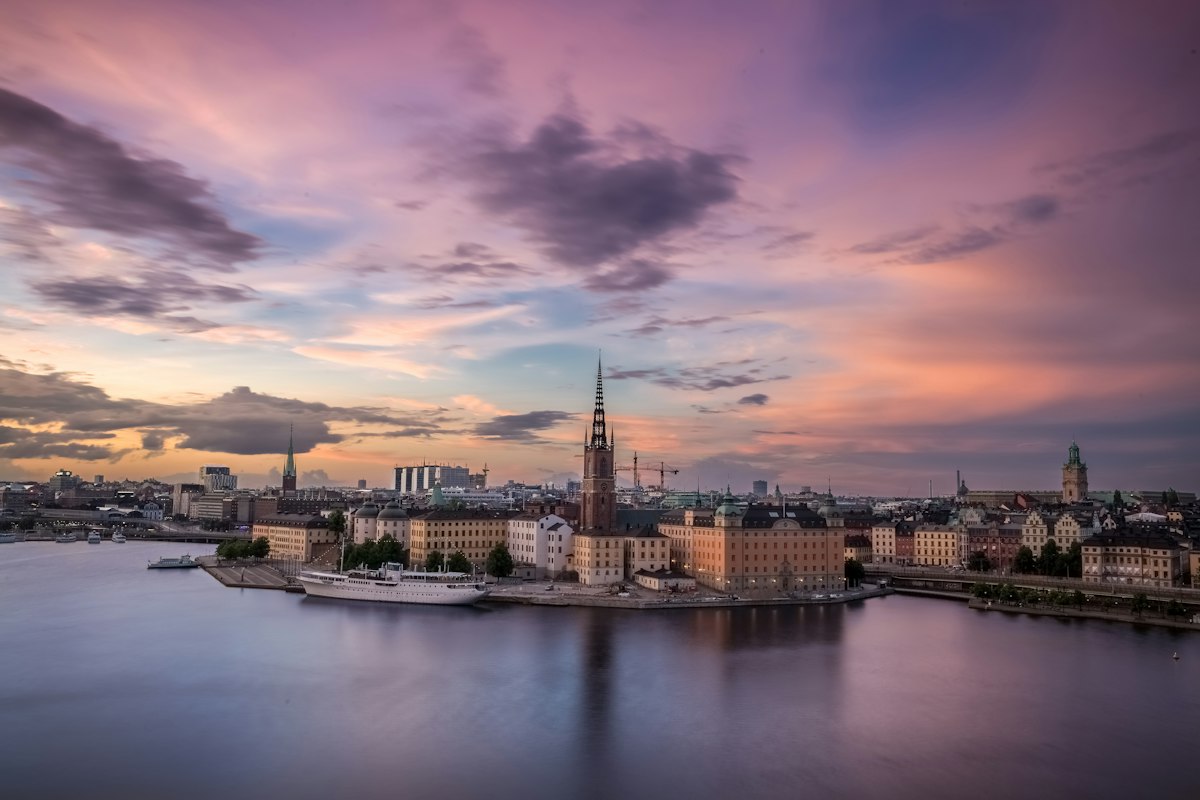
Afternoon. Visit the Nobel Prize Museum on Stortorget (about SEK 150), then walk 10 minutes to Riddarholmen for the waterside view across to the City Hall. Wander the narrow lanes of Västerlånggatan and Mårten Trotzigs gränd, only 90 cm wide at its narrowest.
Evening. Cross to Södermalm and walk up to Monteliusvägen, a cliff path with the classic sunset view over the old town. Eat in the SoFo blocks south of Folkungagatan, where a main costs SEK 200-300.
Stockholm is cashless in practice: museums, buses and even market stalls take only cards or phone payments.
Day 2: Djurgården: Vasa Museum and Skansen
Morning. Take tram 7 or the ferry from Slussen to Djurgården and be at the Vasa Museum at opening (about SEK 230). The 17th-century warship sank on its maiden voyage in 1628 and was raised almost intact in 1961; allow 1.5 hours.
Afternoon. Walk 10 minutes to Skansen, the open-air museum of old Swedish farmhouses and Nordic animals such as elk and brown bears (about SEK 200-300 depending on season). Fans can spend an hour at ABBA The Museum next door.
Evening. Take the ferry back to Slussen and go to the City Hall area or Norrmalm for dinner. Fotografiska, the photography museum on the Södermalm waterfront, stays open late, often until 23:00.
The SL travel card covers the Djurgården ferry from Slussen; a 72-hour card costs about SEK 330.
Day 3: Archipelago morning and Uppsala
Morning. Take a Waxholmsbolaget boat from Strömkajen to Vaxholm, about 1 hour among the granite islands of the Stockholm archipelago. Walk round the wooden summer houses and the fortress, and have cinnamon buns at the harbour.
Afternoon. Return by boat or bus and take the train from Stockholm Central to Uppsala, about 40 minutes. See Uppsala Cathedral, the largest church in Scandinavia, and walk to the burial mounds of Gamla Uppsala, about 4 km north, or the Linnaeus Garden.
Evening. Have dinner by the Fyris river among the student nations. Late trains back to Stockholm run until about midnight.
Archipelago boats run most often from mid-June to mid-August; check the Waxholmsbolaget timetable otherwise.
Day 4: Train west to Gothenburg: Haga and Liseberg
Morning. Take an early SJ train from Stockholm Central to Gothenburg, about 3h15. Fares start around SEK 300-500 if booked weeks ahead and rise sharply closer to departure.
Afternoon. Walk 15 minutes from the station across the canals to Haga, the old workers' district of wooden houses, and order a Hagabullen, a cinnamon bun the size of a plate, at Café Husaren. Continue to Feskekôrka, a fish market hall built to look like a church.
Evening. Spend the evening at Liseberg, the largest amusement park in Scandinavia (entry from about SEK 200, ride passes extra). Or walk the boulevard Avenyn to Götaplatsen and its Poseidon statue.
Liseberg closes in some weeks of spring and autumn and reopens for Christmas from mid-November.
Day 5: Gothenburg's southern archipelago
Morning. Take tram 11 from the centre to Saltholmen, about 30 minutes, then a ferry into the car-free southern archipelago; the ferries are included in a normal Västtrafik ticket. Styrsö and Vrångö have red boathouses, rocky swimming spots and walking trails.
Afternoon. Return to the city for the Röhsska design museum or the free Göteborgs Konstmuseum at Götaplatsen. The art museum has a strong collection of Nordic painting.
Evening. Eat west-coast seafood: prawns, crayfish in late summer and oysters from the Bohuslän coast, about SEK 250-400 for a main. The Magasinsgatan area has relaxed bars in old warehouses.
Buy tickets on the Västtrafik To Go app; a 24-hour pass is about SEK 140 and covers trams and archipelago ferries.
Day 6: South to Malmö
Morning. Take the train from Gothenburg to Malmö, about 2h30-3h. Walk from Malmö Central through Gamla Staden to Stortorget and the smaller, cobbled Lilla Torg, lined with 16th-century timbered houses.
Afternoon. Visit Malmöhus Castle, Scandinavia's oldest surviving Renaissance castle, with the city museums inside (about SEK 50-80). Then walk 30 minutes to the Västra Hamnen district and the twisting Turning Torso tower, 190 metres tall.
Evening. Swim or sauna at Ribersborgs Kallbadhus, the 1898 open-air bathhouse on a pier (about SEK 90), with the Öresund Bridge to Denmark on the horizon. Dinner in the Möllevången district is cheap and multicultural.
Copenhagen is only 35-40 minutes away by train across the Öresund Bridge; a day trip is easy, but carry your passport, as checks can apply.
Day 7: Lund and Ales Stenar
Morning. Take the train 10-15 minutes to Lund, a university town founded around 990. Lund Cathedral has a 15th-century astronomical clock that plays at 12:00 and 15:00 (13:00 and 15:00 on Sundays); the crypt is a forest of carved pillars.
Afternoon. Take the train to Ystad (about 1 hour) for its half-timbered streets. A bus or taxi then reaches Ales Stenar at Kåseberga, a ship-shaped ring of 59 standing stones above the Baltic.
Evening. Eat smoked fish at the Kåseberga harbour shack. From Malmö, Copenhagen Airport is only 20 minutes by train for your flight home.
Copenhagen Airport is often cheaper and better connected than flying home from Stockholm, so consider an open-jaw ticket.
Only have 5 days?
With 5 days, spend three in Stockholm and two in Gothenburg, flying home from Landvetter. You lose Malmö, Lund and the south coast.
Got extra days?
In winter, fly north to Kiruna or take the night train to Abisko for the northern lights (about 17 hours by train from Stockholm). In summer, add Gotland by ferry for the walled town of Visby, or a canoe trip in Värmland.
Where to stay in Sweden
| Budget | Area | Why | Typical double/night |
|---|---|---|---|
| Budget | Stockholm Södermalm hostels / Gothenburg Linné | Hostels and boat hostels such as the af Chapman ship; cheaper areas with good food. | SEK 700-1,200 |
| Mid-range | Stockholm Norrmalm near Central Station | Arlanda Express and SJ trains at the door, 10 minutes' walk to Gamla Stan. | SEK 1,400-2,200 |
| Mid-range | Gothenburg Inom Vallgraven / Malmö Gamla Staden | Inside the old moat or old town, walking distance to stations and canals. | SEK 1,200-2,000 |
| Comfort | Stockholm Östermalm / waterfront hotels | Grand hotels facing the Royal Palace, design hotels near Stureplan. | SEK 2,800-6,000 |
Getting around
From Stockholm Arlanda airport, the Arlanda Express takes 18 minutes to Central (about SEK 330 one way) and the Flygbussarna coach about 45 minutes for less. In cities, SL (Stockholm), Västtrafik (Gothenburg) and Skånetrafiken (Malmö) run trams, metro and buses, with single tickets about SEK 40-45 bought on the apps. Between cities, SJ trains are fast and comfortable; book on sj.se well ahead. Driving is only worth it for the north or the countryside.
What to eat in Sweden
Swedish food is simple and seasonal. Take fika, a coffee break with a kanelbulle (cinnamon bun, about SEK 35-45), every afternoon. Order köttbullar (meatballs) with lingonberries and mashed potato, gravlax, and a räksmörgås, the open prawn sandwich. At lunch, look for dagens lunch, a weekday set menu with salad, bread and coffee for SEK 130-160. Alcohol is expensive: a beer in a bar is SEK 80-100, and stronger drinks to take away are sold only at Systembolaget shops.
Best time to visit
June to August, with highs of 20-25°C and nearly 20 hours of daylight around Midsummer (the Friday between 19 and 25 June, when many Swedes leave the cities). May and September are cooler and calmer. Winter is dark, from about 6 hours of daylight in Stockholm in December, and cold, but it is the season for northern lights in Lapland.
Month-by-month weather for Sweden →
What a day costs
| Budget | Mid-range | Comfort | |
|---|---|---|---|
| Bed (per person, sharing a double) | SEK 450 | SEK 900 | SEK 1,800 |
| Food & drink | SEK 350 | SEK 600 | SEK 1,100 |
| Sights & tickets | SEK 150 | SEK 350 | SEK 550 |
| Local transport | SEK 100 | SEK 180 | SEK 400 |
| Total per person, per day | about SEK 1,050 | about SEK 2,030 | about SEK 3,850 |
Approximate 2026 prices in Swedish kronor, excluding intercity trains (about SEK 300-900 per journey); Sweden has no tourist tax, and VAT is already included in prices.
Before you go
Common questions
Is Sweden very expensive?
It is cheaper than Norway and roughly in line with Denmark. Hotels and alcohol are the big costs; food can be reasonable if you eat the weekday lunch menus, which cost SEK 130-160 with salad and coffee. Many museums and parks are cheap or free.
Do I need cash in Sweden?
Almost never. Sweden is one of the most cashless countries in the world, and many shops, cafés and buses do not accept notes at all. A contactless debit or credit card, or a phone wallet, works everywhere. Carry a backup card in case one is declined, especially for train tickets bought in apps.
Can I see the northern lights on this trip?
Not in the south. The aurora is reliably visible only well north of the Arctic Circle, in places like Abisko and Kiruna, from about September to March on clear nights. You would need to add a flight or the long night train from Stockholm, and allow at least three nights to give the weather a chance.
Should I go at Midsummer?
Midsummer Eve is Sweden's biggest party, with maypole dancing, herring and schnapps, best seen at Skansen in Stockholm or in the countryside. But many shops, restaurants and offices close for the long weekend, and city streets go quiet. Book transport and rooms early if you want to join a celebration outside town.
How this guide was made
Compiled by TonyPlan from official tourism, transport and attraction sources and on-the-ground travel knowledge. Prices are approximate for 2026 and change with season; anything we could not confirm is marked as approximate.
Some links on this page are partner links. If you book through them TonyPlan may earn a commission; the price you pay is the same. How we make money.