Home › South Africa › How many days
How many days in South Africa? 9 days, Cape Town, Kruger and Johannesburg
By Tony Panopoulos · travel-agency planner in Greece · Updated
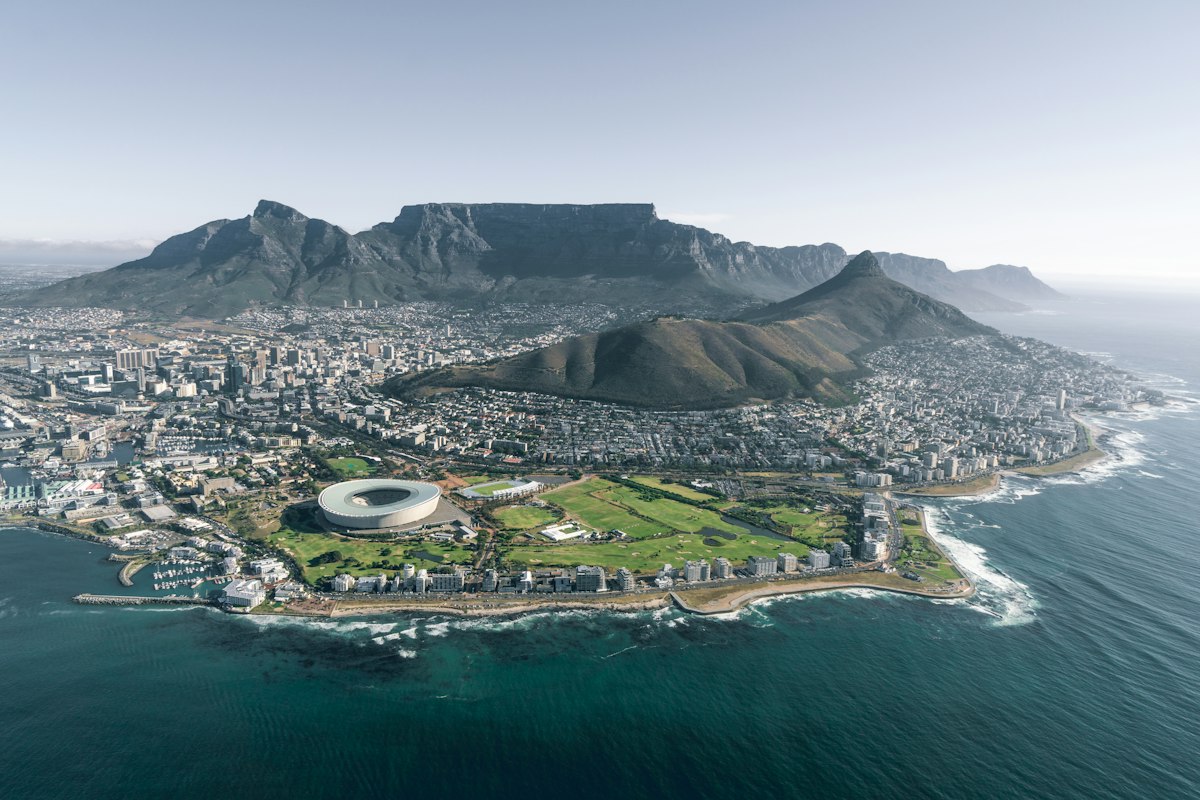
South Africa is big, so the classic first trip uses one flight to join its two highlights. Nine days gives four to Cape Town, with the mountain, the peninsula and the winelands, then a 2.5-hour flight to the Kruger area for three days of game drives and the canyons of the Panorama Route, finishing in Johannesburg with Soweto and the Apartheid Museum. Rent a car in both regions: distances are long, and the freedom to stop is half the pleasure.
Short answer
Seven days covers Cape Town in three days and Kruger in three, flying out from the Kruger area. Nine adds the winelands, the Panorama Route and a day in Johannesburg.
The 9-day plan, day by day
Day 1: Cape Town: Table Mountain and Bo-Kaap
Morning. Take the Table Mountain Aerial Cableway (about R450-500 return, rotating cars) up to 1,067 metres as soon as it opens on a clear, windless day. Walk the short trails on the flat summit for views of Lion's Head, the Atlantic and Robben Island.
Afternoon. Walk the cobbled streets of the Bo-Kaap, with its bright houses and the history of the Cape Malay community, and visit the Bo-Kaap Museum. Then go to the Company's Garden and the District Six Museum, about the forced removals of the 1970s.
Evening. Watch the sunset from Signal Hill, then eat at the V&A Waterfront or on Bree Street, where a main costs R180-300.
The cableway closes in strong wind, which often blows from the south-east in summer. Check its website on the morning and go on the first clear day.
Day 2: Cape Peninsula: penguins and Cape Point
Morning. Drive south about 45 minutes along False Bay to Boulders Beach in Simon's Town (about R200-250 for foreigners), where around 2,000 African penguins nest among granite boulders, viewed from boardwalks.
Afternoon. Continue 30 minutes to the Cape of Good Hope section of Table Mountain National Park (about R400-450). Ride the Flying Dutchman funicular or walk up to the old lighthouse at Cape Point, and look out for baboons, ostriches and eland.
Evening. Return along Chapman's Peak Drive (toll about R60-70), carved into cliffs above the Atlantic, and eat fish and chips in Hout Bay harbour.
Never leave food in sight in the car near Cape Point; baboons open doors and windows.
Day 3: Robben Island and Kirstenbosch
Morning. Take the ferry from the Nelson Mandela Gateway at the V&A Waterfront to Robben Island (about R600-650, 3.5-4 hours in total), where Mandela was held for 18 years. Former political prisoners lead tours of the prison.
Afternoon. Visit Kirstenbosch National Botanical Garden (about R250 for foreigners) on the eastern slopes of Table Mountain, with fynbos and proteas and the curved Boomslang canopy walkway.
Evening. In summer, Kirstenbosch holds Sunday sunset concerts on the lawns. Otherwise, eat in Woodstock or at the Kloof Street restaurants.
Robben Island ferries are cancelled in rough seas and sell out days ahead; book online early in your trip so you can rebook if needed.
Day 4: Stellenbosch and Franschhoek winelands
Morning. Drive about 45 minutes to Stellenbosch, the second-oldest town in South Africa, with oak-lined streets of Cape Dutch houses. Visit one or two estates, such as Spier or Delaire Graff; tastings cost about R100-200.
Afternoon. Take the Franschhoek Wine Tram (about R350-450), a hop-on hop-off tram and bus loop through vineyards founded by French Huguenots in the 1680s.
Evening. Have dinner in Franschhoek, known for some of the best restaurants in the country, with tasting menus at R900-1,800, then return to Cape Town with a driver.
South Africa's drink-driving limit is low and enforced. Use a tour, a driver or the wine tram instead of driving between tastings.
Day 5: Fly to Kruger
Morning. Fly from Cape Town to Kruger Mpumalanga International Airport near Mbombela (about 2h30) or straight to Skukuza inside the park, then pick up a rental car or a lodge transfer.
Afternoon. Enter Kruger National Park (about R500-550 per day for foreigners) through the Malelane, Crocodile Bridge or Phabeni gate, and drive slowly to your rest camp. Look for elephants and buffalo at waterholes.
Evening. Gate and camp hours are strict (closing around 17:30-18:30 depending on the month). Join a guided night drive from the camp (about R400-600) for hyenas, genets and maybe leopards.
Book Kruger rest camps such as Skukuza, Lower Sabie or Satara months ahead on the SANParks website; they fill quickly.
Day 6: Kruger: the southern game drives
Morning. Leave camp at gate opening (around 5:30 in summer) and drive the H4-1 road along the Sabie River between Skukuza and Lower Sabie, one of the best roads for leopard, lion and elephant.
Afternoon. Rest during the heat, then drive the S28 and H4-2 grasslands near Crocodile Bridge, good for rhino, cheetah and lions. Stop at Sunset Dam near Lower Sabie for hippos and crocodiles.
Evening. Braai (barbecue) at your camp; buy meat and wood at the camp shop.
Check the sightings boards at the rest camps each morning; they show recent big-cat sightings on a map.
Day 7: A private reserve day
Morning. Move to a lodge in the Sabi Sand or Timbavati, private reserves sharing unfenced borders with Kruger. Game drives in open vehicles leave at dawn, with a ranger and tracker who can drive off-road for sightings.
Afternoon. Take a walking safari with an armed ranger, learning to read tracks and dung, then rest at the lodge.
Evening. Afternoon drives end with sundowners in the bush and continue after dark with a spotlight. Private reserves are especially good for leopards.
Private lodges cost much more than Kruger rest camps (often R8,000-25,000 per person per night with all meals and drives), but one night shows you a different safari.
Day 8: The Panorama Route
Morning. Drive about 1.5 hours to Graskop and the Panorama Route along the edge of the Drakensberg escarpment. Stop at God's Window, then at Bourke's Luck Potholes, where rivers have carved round pools in the rock (about R100 each site).
Afternoon. Continue to the Three Rondavels viewpoint over the Blyde River Canyon, one of the largest canyons in the world. Lunch on Graskop's famous pancakes.
Evening. Stay in Graskop or the old gold-rush village of Pilgrim's Rest, or drive about 4 hours to Johannesburg.
Mist often fills the canyon in the morning; plan the viewpoints for late morning or afternoon.
Day 9: Johannesburg: Soweto and the Apartheid Museum
Morning. Visit the Apartheid Museum (about R200), whose entrance assigns you a 'white' or 'non-white' gate, and allow 2-3 hours. Then drive 20 minutes to Soweto.
Afternoon. In Soweto, walk Vilakazi Street, the only street in the world where two Nobel Peace Prize winners lived, visit the Mandela House (about R100-200) and the Hector Pieterson Memorial, about the 1976 student uprising.
Evening. Have dinner in Maboneng or Rosebank, then fly home from OR Tambo International.
Visit Soweto with a local guide or a tour; it adds context and safety. Bicycle tours from Soweto backpacker hostels are popular.
Only have 7 days?
With 7 days, do three days in Cape Town (Table Mountain, the peninsula, the winelands) and three in Kruger, flying out from Kruger. You lose Robben Island, the Panorama Route and Johannesburg.
Got extra days?
Add 4-5 days on the Garden Route from Cape Town to Port Elizabeth (Gqeberha), via Hermanus for whale watching (June-November), Knysna and the Tsitsikamma forest. Or add a safari in KwaZulu-Natal with the Drakensberg mountains.
Where to stay in South Africa
| Budget | Area | Why | Typical double/night |
|---|---|---|---|
| Budget | Cape Town City Bowl / Kruger rest camps | Guesthouses near Kloof Street; huts and safari tents inside Kruger. | R900-1,800 |
| Mid-range | Cape Town Sea Point / Green Point | Ocean promenade, restaurants and 10 minutes to the Waterfront. | R1,800-3,500 |
| Mid-range | Hazyview / Graskop | Lodges close to Kruger's southern gates and the Panorama Route. | R1,500-3,000 |
| Comfort | Sabi Sand lodges / Cape Town Waterfront | All-inclusive safari lodges, or luxury hotels with Table Mountain views. | R8,000-30,000 |
Getting around
Cape Town has the MyCiTi bus and cheap Uber rides (most within the city R60-150), but a rental car (about R400-800 a day) is best for the peninsula and the winelands. Fly Cape Town to the Kruger area (about 2h30) or to Johannesburg (about 2h). In Kruger, self-drive is allowed on paved and gravel roads at up to 50 km/h. Driving is on the left. Avoid driving between cities at night.
What to eat in South Africa
South African food is a mix of cultures. Try a braai (barbecue) with boerewors sausage, bobotie (spiced minced meat with an egg topping), Cape Malay curries in the Bo-Kaap, bunny chow (curry in a hollowed loaf), biltong (dried meat) and malva pudding. Seafood on the coast includes snoek and kingklip. The wines are excellent value, from chenin blanc to pinotage, often R60-120 a glass. A mid-range dinner with wine costs R350-600.
Best time to visit
Cape Town is best from October to April, warm and dry at 24-28°C, but windy. Kruger's dry season, May to October, is best for game viewing, as animals gather at water and the bush thins. Combining both, September to November and April to May work well. Winter (June-August) brings rain and 15-18°C to Cape Town, but sunny days in Kruger.
Month-by-month weather for South Africa →
What a day costs
| Budget | Mid-range | Comfort | |
|---|---|---|---|
| Bed (per person, sharing a double) | R500 | R1,200 | R4,500 |
| Food & drink | R350 | R700 | R1,500 |
| Sights & tickets | R300 | R650 | R1,200 |
| Local transport | R250 | R500 | R1,200 |
| Total per person, per day | about R1,400 | about R3,050 | about R8,400 |
Approximate 2026 prices in South African rand (about R18 to US$1), excluding the internal flights of about R1,500-3,500 each; hotels add a small tourism levy of about 1%, and tipping 10-15% in restaurants is expected.
Before you go
Common questions
Should I self-drive in Kruger or book a guided safari?
Both work. Self-driving in Kruger is easy and cheap, with good roads, rest camps and maps, and it lets you set your own pace. Guided drives in open vehicles, from the rest camps or private lodges, see more with trained eyes and can go out at night. Many visitors self-drive by day and book a camp night drive.
Is South Africa safe for tourists?
Most visits go without problems, but crime is a real concern. Use Uber or taxis at night, keep valuables out of sight in cars, use ATMs inside shops, and avoid walking alone in empty areas after dark. Popular hiking trails on Table Mountain are safest in groups. Follow your hotel's local advice.
Do I need malaria tablets for Kruger?
Kruger and the Lowveld are in a low-to-moderate malaria area, mostly in the rainy season from October to May. Many visitors take tablets, others rely on repellent and long sleeves. Ask a travel clinic six weeks before you go. Cape Town and the winelands are malaria-free.
How do I see whales near Cape Town?
Southern right whales come to calve along the coast from about June to November, peaking in September and October. Hermanus, about 1.5 hours east of Cape Town, has cliff paths where you can watch them from shore. Boat trips run from Hermanus and Gansbaai, which is also known for great white shark cage diving.
How this guide was made
Compiled by TonyPlan from official tourism, transport and attraction sources and on-the-ground travel knowledge. Prices are approximate for 2026 and change with season; anything we could not confirm is marked as approximate.
Some links on this page are partner links. If you book through them TonyPlan may earn a commission; the price you pay is the same. How we make money.