How many days in Seoul? 4 days of palaces, markets and neighbourhoods
By Tony Panopoulos · travel-agency planner in Greece · Updated
Seoul mixes 600-year-old palaces, mountains you can hike from a subway stop and some of the most energetic nightlife and food in Asia. Four days fits it well: one for the Joseon palaces and the hanok village of Bukchon, one for markets and street food, one for the youth districts of Hongdae and Gangnam, and one for the DMZ or a mountain. The subway is excellent and cheap, and a T-money card does everything.
Short answer
Three days covers the palaces, the markets, Namsan and Hongdae. The fourth day adds the DMZ, which many visitors find the most memorable day of their trip.
The 4-day plan, day by day
Day 1: Gyeongbokgung, Bukchon and Insadong
Morning. Arrive at Gyeongbokgung (about ₩3,000; free if you wear a hanbok; closed on Tuesdays) for the opening and the changing of the royal guard at the main gate (several times a day). The National Folk Museum is inside the grounds.
Afternoon. Walk 15 minutes to Bukchon Hanok Village, lanes of traditional wooden houses still lived in. Visiting hours in the core lanes are now restricted (roughly 10:00-17:00), so keep your voice down and respect the signs. Continue to Insadong for tea houses and crafts, and Ikseon-dong's small hanok cafés.
Evening. Walk along the Cheonggyecheon stream, restored in 2005 and lit at night, to Gwanghwamun Square, then dinner in Jongno.
Rent a hanbok near the palace gates for about ₩15,000-30,000 for a few hours: palace entry becomes free and the photos are lovely.
Day 2: Changdeokgung, Gwangjang Market and Namsan
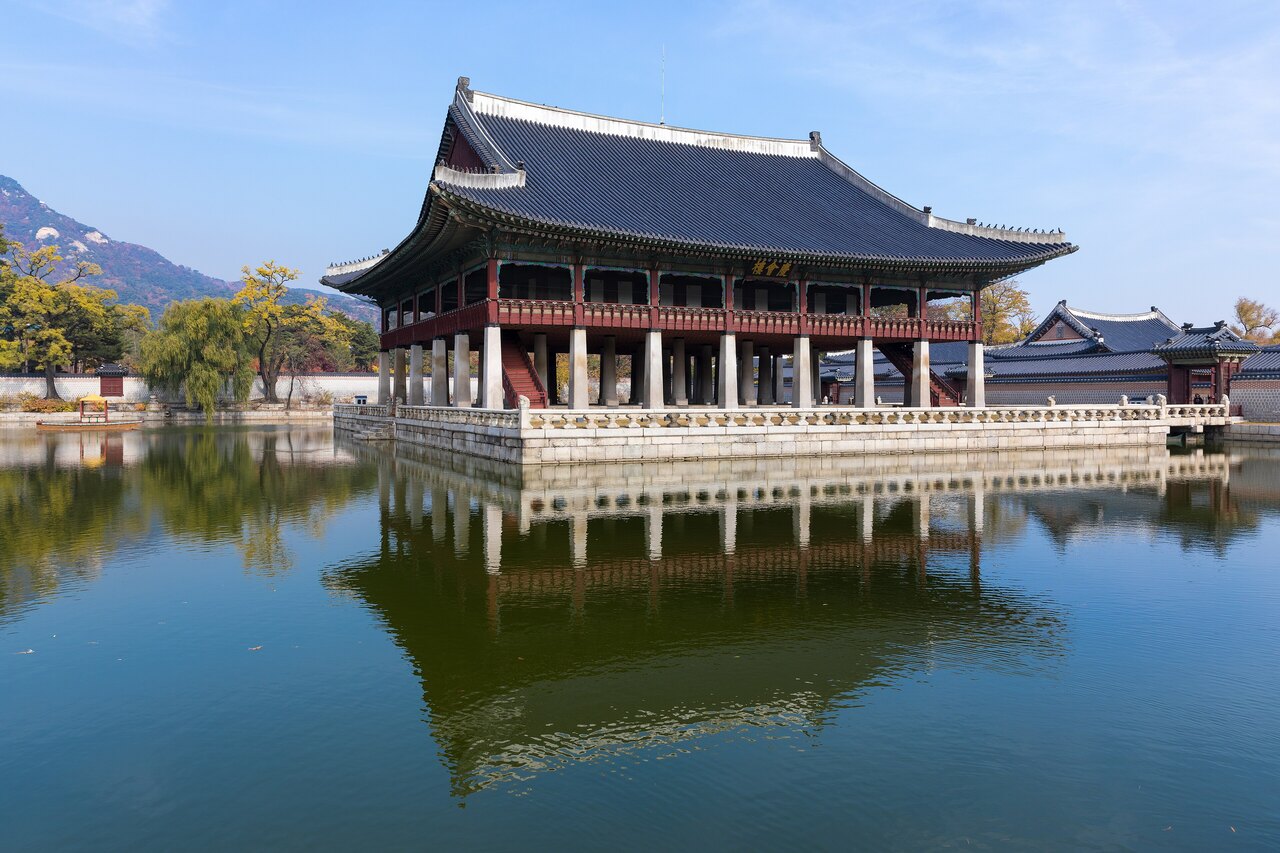
Morning. Book the guided tour of the Secret Garden (Huwon) at Changdeokgung (UNESCO), the most beautiful royal garden in Korea, with pavilions over ponds. Tours in English run a few times a day and sell out.
Afternoon. Walk to Gwangjang Market (founded 1905), the oldest market in Seoul, for bindaetteok (mung-bean pancakes, about ₩5,000), mayak gimbap and live octopus for the brave. Then shop in Dongdaemun around Zaha Hadid's Dongdaemun Design Plaza.
Evening. Take the cable car or walk up Namsan to the N Seoul Tower (observatory about ₩20,000-25,000) for the city at night, then down to Myeongdong for its evening street-food stalls.
Myeongdong's street-food stalls are fun but pricey for what they are. Gwangjang Market is better value for proper food.
Day 3: Hongdae, Han River and Gangnam
Morning. Visit the National Museum of Korea (free) in Yongsan, the largest museum in the country, with a gold crown from Silla and a 10-storey marble pagoda indoors. Allow 2-3 hours.
Afternoon. Cross to Gangnam: the Starfield Library in COEX Mall, with 13-metre bookshelves, and the Bongeunsa temple opposite the skyscrapers. Then the Lotte World Tower's Seoul Sky (about ₩30,000), 555 metres high.
Evening. Go to Hongdae, the university district, for buskers, K-pop dance crews and bars, or rent a mat in a Han River park (Yeouido or Banpo) for fried chicken and beer (chimaek) delivered to the riverbank. At Banpo Bridge, the Moonlight Rainbow Fountain runs in the warmer months.
Korean fried chicken can be delivered almost anywhere, including to a spot on the Han River lawn. Ask your hotel for help with the app.
Day 4: The DMZ (or Bukhansan)
Morning. Join a DMZ tour (about ₩80,000-150,000), about 1 hour north of Seoul: the Imjingak park, the Third Infiltration Tunnel dug by North Korea, and the Dora Observatory, which looks into the North. Bring your passport; tours that include the JSA (Panmunjom) have been suspended at times.
Afternoon. Return to Seoul by mid-afternoon. Visit the War Memorial of Korea for context, or relax in a jjimjilbang, a Korean bathhouse with saunas (about ₩15,000-20,000).
Evening. Korean barbecue for your last night: samgyeopsal (pork belly) grilled at the table, about ₩15,000-20,000 per portion, with soju.
If you prefer nature, hike Bukhansan National Park instead: the trail to Baegundae peak (836 m) takes about 3-4 hours return from Bukhansan-seong.
Only have 3 days?
With 3 days, do Days 1, 2 and 3. You lose the DMZ.
Got extra days?
With more time, take the KTX high-speed train to Busan (about 2.5 hours) for beaches and fish markets, or to Gyeongju for the ancient Silla capital.
Where to stay in Seoul
| Budget | Area | Why | Typical double/night |
|---|---|---|---|
| Budget | Hongdae / Sinchon | Guesthouses, nightlife, AREX train direct from the airport. | ₩70,000-110,000 |
| Mid-range | Myeongdong / Jongno | Walk to the palaces and markets, many subway lines. | ₩120,000-200,000 |
| Mid-range | Bukchon hanok stays | Sleep in a traditional house on heated floors. | ₩120,000-220,000 |
| Comfort | Gangnam / Jamsil | Modern towers, shopping and Lotte World. | ₩250,000-500,000 |
Getting around
Buy a T-money card at any convenience store and load cash; it works on subways, buses and taxis. Subway rides start at about ₩1,500. Use Naver Map or KakaoMap, which work far better in Korea than Google Maps. From Incheon Airport, the AREX express reaches Seoul Station in about 45 minutes; the all-stop train is slower and cheaper. Check whether your nationality needs a K-ETA before you fly.
What to eat in Seoul
Seoul's essentials: Korean barbecue (samgyeopsal pork belly or galbi), bibimbap, kimchi jjigae (kimchi stew, about ₩9,000-11,000), tteokbokki (spicy rice cakes), naengmyeon (cold buckwheat noodles in summer) and Korean fried chicken with beer. Meals come with free banchan, small side dishes that are refilled. At night, pojangmacha tents serve odeng and soju. Tipping is not expected. Many restaurants are designed for two or more diners; solo travellers do better at noodle and rice shops.
Best time to visit
April (cherry blossom, along Yeouido and Seokchon Lake) and October to early November (autumn foliage in the palaces and on Namsan), with highs of 15-22°C. Summer is hot, humid and rainy (monsoon in July). Winter is very cold (often below -5°C) but dry and clear.
Month-by-month weather for Seoul →
What a day costs
| Budget | Mid-range | Comfort | |
|---|---|---|---|
| Bed (per person, sharing a double) | ₩45,000 | ₩80,000 | ₩180,000 |
| Food & drink | ₩30,000 | ₩60,000 | ₩130,000 |
| Sights & tours | ₩10,000 | ₩40,000 | ₩90,000 |
| Local transport | ₩6,000 | ₩10,000 | ₩40,000 |
| Total per person, per day | about ₩90,000 | about ₩190,000 | about ₩440,000 |
Approximate 2026 prices in Korean won (about ₩1,500 to €1). Korea has no tourist tax; many hotels include VAT and service in the rate.
Before you go
Common questions
Do I need a K-ETA?
Many visa-exempt nationalities have needed a K-ETA (electronic travel authorisation), though it has been temporarily waived for some countries. Check the official K-ETA site for your passport before booking.
Is Seoul safe?
Very. Crime against tourists is rare, and the city is lively and safe late at night.
Which palace should I visit if I only have time for one?
Gyeongbokgung for size and the guard ceremony; Changdeokgung for the Secret Garden, the more beautiful but bookable-only experience.
Do I need cash?
Cards work almost everywhere, but you need cash to top up T-money in many stations and for some market stalls.
Is the DMZ tour safe?
Yes. Tours follow strict military rules and visit areas open to the public; tours can be cancelled at short notice when tensions rise.
How this guide was made
Written by hand, without AI, from experience planning Asia trips. Prices are approximate for 2026 in won; confirm on the official Royal Palaces, DMZ tour operators, AREX and K-ETA websites before booking.
Some links on this page are partner links. If you book through them TonyPlan may earn a commission; the price you pay is the same. How we make money.