Home › Food tours › Seoul
Food tours in Seoul: what to eat and which tour to book
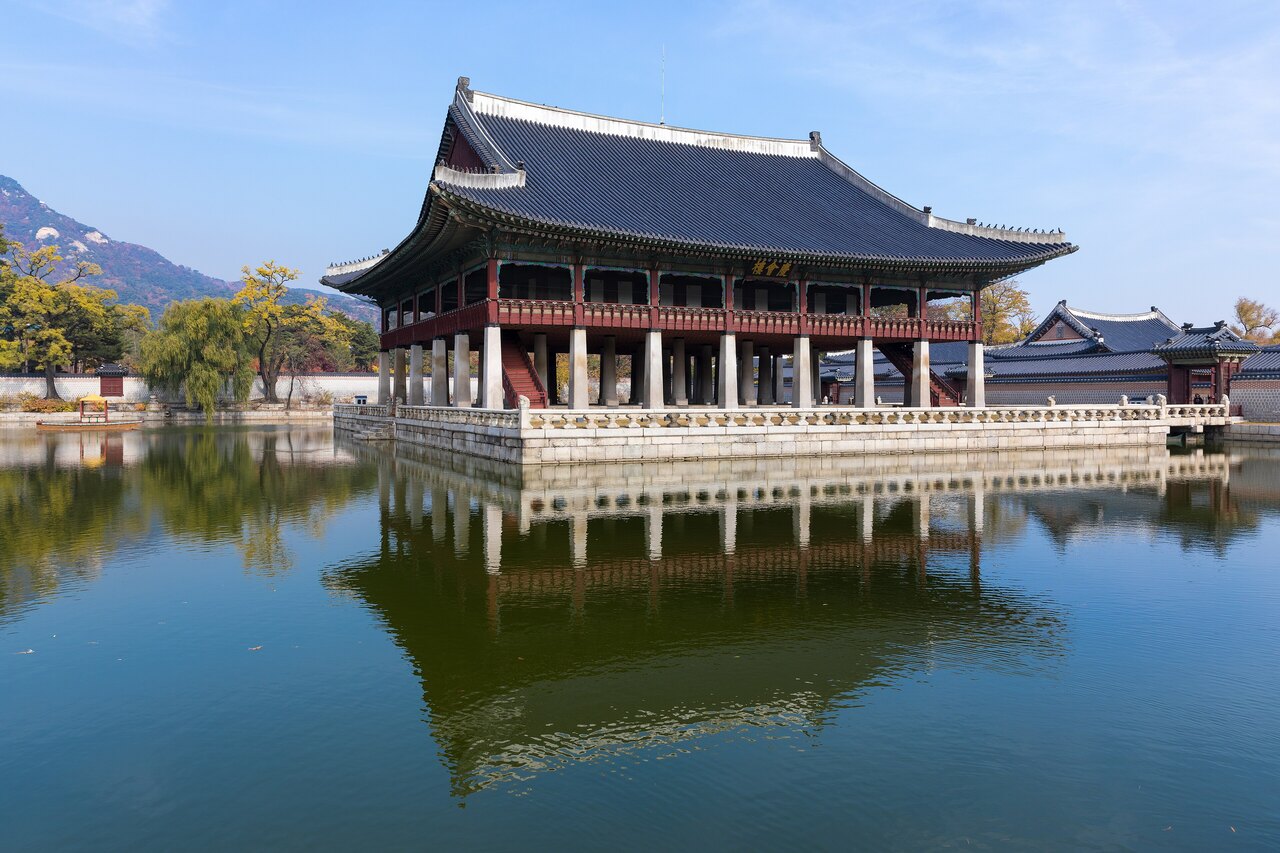
Eating in Seoul is built around sharing and around the table itself: a grill in the middle for samgyeopsal, a bubbling pot of jjigae, and a spread of free side dishes (banchan) that are refilled on request. Restaurants tend to specialise in one thing, and many dishes are served for a minimum of two people. Street food lives in traditional markets such as Gwangjang and Tongin and in the tent bars (pojangmacha) that appear in the evening, while neighbourhoods like Euljiro, Mangwon and Ikseon-dong mix old-school places with newer ones.
Use this page to know what to order, where to find it and what a normal price is. The tours shown are real GetYourGuide listings, with prices as seen when we checked them; confirm the current price and details on the booking page.
What to eat in Seoul
| Dish | What it is | Where to eat it | Typical price* |
|---|---|---|---|
| Grilled pork belly 삼겹살 samgyeopsal | Thick slices of pork belly grilled at the table, eaten wrapped in lettuce with garlic, ssamjang (bean and chilli paste) and kimchi. Usually ordered with soju. | Barbecue restaurants everywhere; Mapo and Euljiro have many long-running ones. Most require a minimum order of two portions. | about ₩15,000–20,000 (≈€10–13) per 150–200 g portion |
| Mung bean pancake 빈대떡 bindaetteok | Ground mung beans fried into a thick, crisp pancake with pork, kimchi and bean sprouts, dipped in soy and onion. Best eaten fresh from the griddle with makgeolli (rice wine). | Gwangjang Market's central food alley, where it is ground and fried in front of you. | about ₩5,000–8,000 (≈€3–5) each |
| Spicy rice cakes 떡볶이 tteokbokki | Chewy cylinders of rice cake simmered in a sweet, spicy gochujang sauce, often with fish cake and boiled egg. The most common street snack in Korea. | Market stalls, street carts and snack shops (bunsikjip); Sindang-dong has a whole street of tteokbokki restaurants. | about ₩4,000–6,000 (≈€2.50–4) a portion |
| Mini gimbap 마약김밥 mayak gimbap | Small, thin rolls of rice, pickled radish, carrot and spinach in seaweed, dipped in mustard-soy sauce. 'Mayak' means 'drug', a joke about how addictive it is. | Gwangjang Market stalls. | about ₩3,000–5,000 (≈€2–3) a plate |
| Korean fried chicken 치킨 chikin / 치맥 chimaek | Twice-fried chicken, plain and crisp or coated in a sweet-spicy yangnyeom glaze, eaten with beer ('chimaek'). Usually a whole chicken per order. | Chicken-and-beer bars in every neighbourhood; Hongdae and along the Han River parks for delivery picnics. | about ₩20,000–28,000 (≈€13–18) for a whole chicken |
| Stews 김치찌개 kimchi jjigae / 순두부찌개 sundubu jjigae | Hot, bubbling stews served with rice and banchan: kimchi jjigae with pork and aged kimchi, sundubu with very soft tofu and often seafood or an egg. | Small lunch restaurants around offices in Jongno, Gwanghwamun and Yeouido. | about ₩9,000–12,000 (≈€6–8) |
| Raw beef tartare 육회 yukhoe | Thin strips of raw beef seasoned with sesame oil and pear, topped with an egg yolk. A specialty of an alley in Gwangjang Market. | The yukhoe alley on the edge of Gwangjang Market. | about ₩18,000–25,000 (≈€12–16) a plate |
| Sweet filled pancake 호떡 hotteok | Yeasted dough pressed flat on a griddle and filled with brown sugar, cinnamon and chopped nuts; a winter favourite. | Street carts in Namdaemun, Insadong and Myeongdong, especially from autumn. | about ₩1,500–3,000 (≈€1–2) |
Where to eat: markets and neighbourhoods
Gwangjang Market
Opened in 1905 and one of Korea's oldest daily markets, with a central crossroads of food stalls selling bindaetteok, mayak gimbap, tteokbokki, sundae (blood sausage) and yukhoe. Thousands of other shops sell fabric and household goods.
Tongin Market
Small neighbourhood market west of Gyeongbokgung Palace with a 'dosirak cafe': you buy old-style coins and fill a lunch tray from different stalls. Known for oil tteokbokki (gireum tteokbokki).
Euljiro
Old printing and hardware district where 'Nogari Alley' fills with plastic tables, dried pollock and cheap beer in the evening; also long-running naengmyeon and barbecue places.
Mangwon Market
Local market near Hongdae with cheap fried chicken, croquettes, hotteok and dumplings, popular with residents and students rather than tour groups.
Namdaemun Market
Huge general market near Seoul Station with an alley of restaurants serving kalguksu (knife-cut noodles) and galchi jorim (braised hairtail fish), and hotteok carts.
Myeongdong street stalls
Evening carts selling grilled lobster tails, egg bread, skewers and sweets. Convenient and photogenic, but more expensive than markets.
Food tours in Seoul compared
Every tour below is a real listing on GetYourGuide or Viator, checked on 2 Oct 2026. Prices move with season and group size, so treat them as a guide and confirm on the booking page.
| Tour | Length | Price* | Group | Best for | |
|---|---|---|---|---|---|
| Seoul: Local Home Korean Cooking Class and Market Tour | 3.5 hours | from €93 per person | max 10 | Travellers who want to cook the dishes again at home; easiest option for dietary needs, since you control the ingredients. | Check dates |
| Seoul Street Food Market Tour | 2 hours | from €66 per person | — | Evening eaters who want dinner and drinks rolled into one, plus the city after dark. | Check dates |
| Seoul: Night Palace & Market Food Tour with Vehicle | 4 hours | from €70 per person | private | Couples, families or friends who want the route and pace set around them. | Check dates |
| Seoul: Guided Food & Market Tour with 8+ Tastings | 3 hours | from €85 per person | — | Morning people who want to see where locals shop and taste produce at the source. | Check dates |
| Seoul: Taste of Korea, Authentic Home Style Cooking Class | 3 hours | from €84 per person | max 10 | Travellers who want to cook the dishes again at home; easiest option for dietary needs, since you control the ingredients. | Check dates |
| Seoul Cooking Class: 8 Dishes, Secrets Behind Korean Flavor | 3 hours | from €97 per person | max 8 | Travellers who want to cook the dishes again at home; easiest option for dietary needs, since you control the ingredients. | Check dates |
Seoul: Local Home Korean Cooking Class and Market Tour
On GetYourGuide · run by HELLO K COOKING
- Length
- 3.5 hours
- Price
- from €93 per person
- Rating
- 5.0 ★ from 450 reviews (on 2 Oct 2026)
- Group size
- max 10
- Suits
- Travellers who want to cook the dishes again at home; easiest option for dietary needs, since you control the ingredients.
Seoul Street Food Market Tour
On GetYourGuide · run by Goodmate Travel
- Length
- 2 hours
- Price
- from €66 per person
- Rating
- 4.9 ★ from 1,515 reviews (on 2 Oct 2026)
- Included
- Sample 10 Local Delights Drinks Guide Pickup and Drop-off
- Suits
- Evening eaters who want dinner and drinks rolled into one, plus the city after dark.
- Starts
- 혜화경찰서 종로5가파출소
Seoul: Night Palace & Market Food Tour with Vehicle
On GetYourGuide · run by TRIPPER
- Length
- 4 hours
- Price
- from €70 per person
- Rating
- 4.9 ★ from 1,125 reviews (on 2 Oct 2026)
- Group size
- private
- Suits
- Couples, families or friends who want the route and pace set around them.
Seoul: Guided Food & Market Tour with 8+ Tastings
On GetYourGuide · run by Secret Food Tours
- Length
- 3 hours
- Price
- from €85 per person
- Rating
- 4.9 ★ from 495 reviews (on 2 Oct 2026)
- Suits
- Morning people who want to see where locals shop and taste produce at the source.
- Starts
- 407 Dongho-ro, Jongno-gu, Seoul, South Korea
Seoul: Taste of Korea, Authentic Home Style Cooking Class
On GetYourGuide · run by Hansik Korean Cooking Class
- Length
- 3 hours
- Price
- from €84 per person
- Rating
- 4.9 ★ from 248 reviews (on 2 Oct 2026)
- Group size
- max 10
- Included
- Home-style hands-on Korean cooking class A bottle of water Korean traditional snacks Tea and coffee Sikhye (Korean punch) Makgeolli (Korean rice wine) Korean desserts All ingredients and equipment Full-course meal wit…
- Suits
- Travellers who want to cook the dishes again at home; easiest option for dietary needs, since you control the ingredients.
- Starts
- 대한민국 서울특별시 종로구 자하문로 31-5
Seoul Cooking Class: 8 Dishes, Secrets Behind Korean Flavor
On GetYourGuide · run by Cooking Delight Seoul
- Length
- 3 hours
- Price
- from €97 per person
- Rating
- 5.0 ★ from 46 reviews (on 2 Oct 2026)
- Group size
- max 8
- Suits
- Travellers who want to cook the dishes again at home; easiest option for dietary needs, since you control the ingredients.
Some links on this page are partner links. If you book through them TonyPlan earns a small commission — the price you pay is exactly the same.
Street food, sit-down or a cooking class?
Street food
Street food is mostly in markets and on evening carts. Stalls in Gwangjang and Tongin have stools so you sit at the counter; Myeongdong carts are takeaway. Pojangmacha (tent bars) serve drinking food and soju late at night. Cards are increasingly accepted, but small stalls may prefer cash.
Sit-down meals
Many Korean restaurants specialise in one dish, and barbecue and stew places often require at least two portions. Banchan side dishes are free and refillable. You usually pay at the counter by the door on the way out, not at the table. Lunch sets around offices are the best value.
Cooking classes
Classes typically cover kimchi, bulgogi, japchae, tteokbokki or pajeon (savoury pancake), and often start with a market visit. They suit visitors who want to understand fermentation and the balance of gochujang, doenjang and soy that runs through Korean cooking.
How much to budget for food
| Style | Per person, per day* |
|---|---|
| Budget (street food, markets) | ₩25,000–40,000 (≈€16–26): market lunch, stew, convenience-store breakfast |
| Mid-range (one sit-down meal a day) | ₩60,000–100,000 (≈€40–65): barbecue dinner with soju, café, street snacks |
| Splurge (tasting menus, wine) | ₩200,000+ (≈€130+): Korean fine dining tasting menu or premium hanu beef |
Vegetarian, halal and gluten-free
Vegetarian & vegan: Harder than it looks. Kimchi usually contains fish sauce or salted shrimp, stews use anchovy stock and many banchan contain fish. Temple food (sachal eumsik) is fully plant-based, and restaurants around Jogyesa Temple serve it. Bibimbap without meat and egg can work if you ask, but check the broth. Search HappyCow for vegan places in Itaewon, Hongdae and Jongno.
Halal: Itaewon has Seoul Central Mosque and a cluster of halal restaurants, both Korean (halal bulgogi, fried chicken) and Middle Eastern or South Asian. Elsewhere pork is common and many sauces contain alcohol (soju or rice wine). The Korea Tourism Organization publishes a list of Muslim-friendly restaurants.
Gluten-free: Difficult. Soy sauce, gochujang and doenjang commonly contain wheat, and many noodles, pancakes and fried coatings are wheat-based. Plain grilled meat with salt, rice and some banchan are safer, but cross-contamination is common. Carry a Korean-language allergy card (milgaru allereugi).
Food scams and tourist traps to avoid
- Myeongdong cart prices: grilled lobster, scallops with cheese and large skewers can cost far more than market food for a small portion. Check the price sign before ordering. Eat a full meal at Gwangjang or Namdaemun and treat Myeongdong carts as a snack.
- Pushy stall owners in Gwangjang's central food alley calling visitors to sit down, then serving assorted plates without a clear price; Seoul city has acted against overcharging after complaints in recent years. Point at items on the posted menu, confirm the price per plate before eating and ask for a receipt if the total seems wrong.
- Being served a minimum two-portion order at barbecue restaurants when eating alone, and assuming it is a trick. This is a common house rule, not a scam. Solo diners can look for places advertising 1인분 (one portion) or eat at markets.
- Taxis from the airport or Myeongdong area quoting a fixed fare to restaurants instead of using the meter. Use the meter or a ride app such as Kakao T, and use the subway, which reaches almost every food area.
Top tours & activities in Seoul
Rent a car in Seoul
Compare rental cars from local and international companies, with free cancellation on most bookings.
Compare car rentals in SeoulPlan the rest of your Seoul trip
Staying near the markets saves time and taxi money — most food tours start in the old centre.
Common questions
Do I tip in Seoul?
No. Tipping is not customary in Korea and is not expected at restaurants, markets, cafés or in taxis. Some hotels and upscale restaurants add a service charge to the bill. Guides on tours run for international visitors may accept a tip, but it is optional; a thank-you is fine.
When is Gwangjang Market open?
The food stalls run roughly from morning until evening, often 9:00 to around 22:00 for the busiest food alley, though the textile shops close earlier and some close on Sundays. Hours vary by stall, so check current hours. Weekday late mornings are quieter; evenings and weekends get very crowded.
Is street food safe to eat?
Generally yes. Korean market food is cooked to order at high turnover, and hygiene standards are good. The main thing to watch is raw dishes such as yukhoe or raw seafood (hoe), which are best eaten at busy, specialist places. Bring hand sanitiser, as market stalls rarely have basins.
How much should I budget for food per day?
A budget day of market food, a stew lunch and convenience-store breakfast costs about ₩25,000–40,000. Mid-range with a barbecue dinner and drinks runs ₩60,000–100,000. Prices have risen noticeably since 2022; Korean barbecue is now one of the bigger items, and premium hanu beef costs several times more than pork.
Can I eat alone in Seoul?
Yes, and solo dining (honbap) is increasingly common. Noodle shops, gimbap shops, markets, convenience stores and stew restaurants all serve single portions. Barbecue and some hot-pot restaurants require two portions minimum; look for signs saying one-person portions are available, or order two and take leftovers if allowed.
Do I need cash?
Seoul is close to cashless: cards and T-money transport cards work almost everywhere, including many market stalls. Some older stalls and tent bars still prefer cash, so carry around ₩30,000–50,000 in notes. Foreign cards work at ATMs marked 'Global' and at most convenience stores.
* Prices are approximate, gathered on 2 Oct 2026 from menus, markets and the booking pages linked above. They change with season and exchange rates.