How many days in Oslo? 3 days of museums, the fjord and the forest
By Tony Panopoulos · travel-agency planner in Greece · Updated
Oslo is a compact capital at the head of a fjord, with forest and ski slopes inside the city limits and a waterfront transformed by new architecture: the Opera House, the MUNCH museum and the National Museum. Three days covers the waterfront and its museums, Vigeland Park and the Bygdøy peninsula by ferry, and Holmenkollen in the hills, with time for a floating sauna and a swim in the fjord. Norway is one of the most expensive countries in Europe, so the Oslo Pass and free sights matter.
Short answer
Two days covers the waterfront, the main museums, Vigeland and Bygdøy. The third adds Holmenkollen, a fjord cruise or a sauna.
The 3-day plan, day by day
Day 1: The waterfront: Opera, MUNCH and Akershus
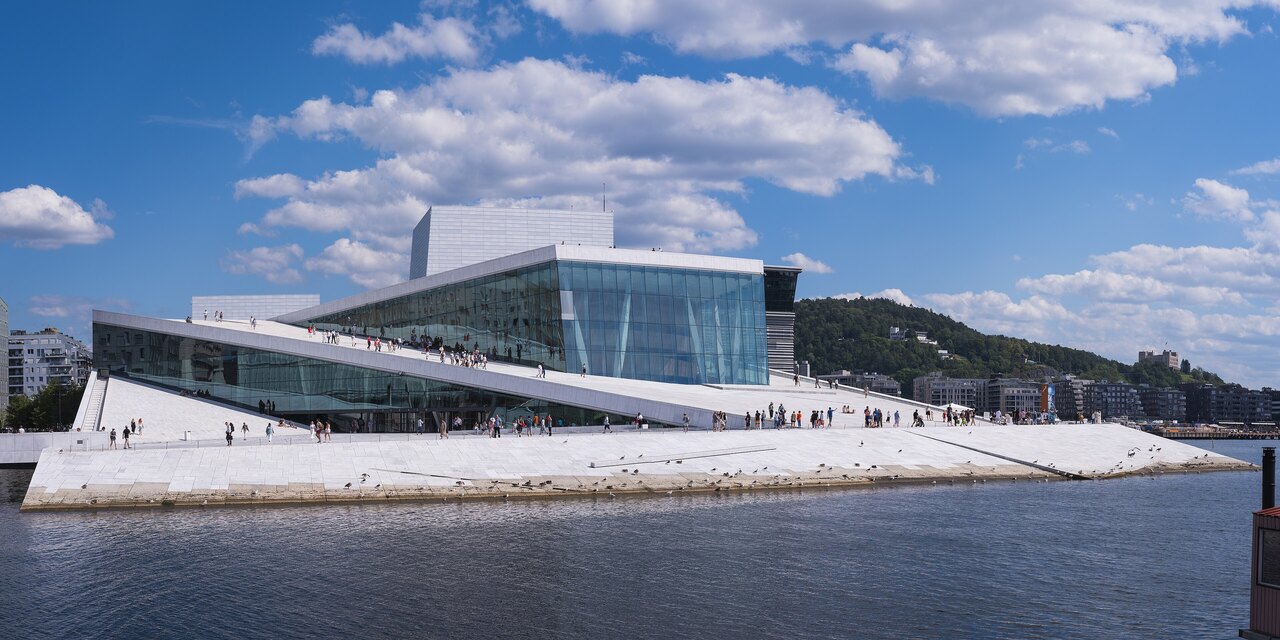
Morning. Walk up the sloping white marble roof of the Oslo Opera House (free), designed to look like a glacier rising from the fjord. Next door, the MUNCH museum (about NOK 185-200) shows The Scream in rotating versions and thousands of Edvard Munch's works across 13 floors.
Afternoon. Walk along the harbour to Akershus Fortress (free grounds), a medieval castle with views of the fjord, then to the National Museum (about NOK 200), Scandinavia's largest art museum, with another version of The Scream, design, crafts and a rooftop Light Hall.
Evening. Have dinner at Aker Brygge and Tjuvholmen, the modern waterfront, and see the Astrup Fearnley museum's Renzo Piano building. Then try a floating sauna in the fjord (about NOK 150-250 per person for a shared session) and a cold plunge.
The Oslo Pass includes public transport, most museums (MUNCH, the National Museum, Bygdøy's museums, Holmenkollen) and discounts; with three or four museums a day it pays off.
Day 2: Bygdøy and Vigeland Park
Morning. Take the ferry (April to October) or bus 30 to the Bygdøy peninsula: the Norwegian Folk Museum (open-air houses and a 13th-century stave church), the Fram Museum with the polar ship Fram, and the Kon-Tiki Museum with Thor Heyerdahl's balsa raft. The Viking ships are in the new Museum of the Viking Age, due to open in 2027; check before you go.
Afternoon. Return to the city and walk through Frogner Park to Vigeland Park (free, open 24 hours), with more than 200 sculptures by Gustav Vigeland, including the 14-metre Monolith of 121 human figures and the famous 'angry boy'.
Evening. Have dinner in Grünerløkka, the former working-class district turned into Oslo's trendiest area, with cafés, vintage shops and the Mathallen food hall by the Akerselva river.
Bygdøy has beaches (Huk, Paradisbukta) where locals swim in summer; bring a swimsuit.
Day 3: Holmenkollen and the Oslofjord
Morning. Take metro line 1 (about 25 minutes) to Holmenkollen, the ski jump that dominates the hills, with a Ski Museum (about NOK 160) and a viewing platform at the top of the jump. The zipline from the top is open in summer.
Afternoon. Return for a fjord cruise (about NOK 300-500 for 2 hours) among the islands of the Oslofjord, or take the cheaper public ferries from Aker Brygge to the islands of Hovedøya (monastery ruins) and Gressholmen.
Evening. Have a last dinner in the Bjørvika district, around the Opera House, and walk along the water.
In winter, you can toboggan the Korketrekkeren run from Frognerseteren down to Midtstuen and take the metro back up.
Only have 2 days?
With 2 days, do Day 1 and Day 2. You lose Holmenkollen and the fjord cruise.
Got extra days?
With more time, take the Norway in a Nutshell route to the western fjords (Flåm railway, Nærøyfjord cruise, Bergen), best over two days or with a night in Flåm or Bergen.
Where to stay in Oslo
| Budget | Area | Why | Typical double/night |
|---|---|---|---|
| Budget | Grønland / hostels near Oslo S | Cheaper, multicultural, near the central station. | NOK 1,100-1,700 |
| Mid-range | Sentrum (Karl Johans gate) | Walk to the Opera, the National Museum and the harbour. | NOK 1,700-2,800 |
| Mid-range | Grünerløkka | Neighbourhood life, cafés and bars. | NOK 1,500-2,500 |
| Comfort | Bjørvika / Tjuvholmen | Design hotels on the fjord. | NOK 3,000-6,000 |
Getting around
Use Ruter public transport (metro, trams, buses and city ferries); buy tickets in the app or with the Oslo Pass. The centre is walkable. From Oslo Airport Gardermoen, the Flytoget express reaches the central station in about 20 minutes; regional trains are cheaper and almost as fast. Norway is largely cashless.
What to eat in Oslo
Norwegian food is about fish and the outdoors: salmon and cod, fish soup, shrimp from the boats at Aker Brygge, reindeer and elk, and brunost, a sweet brown cheese sliced on bread and waffles. Try kanelboller (cinnamon buns) and skolebrød (cardamom buns with custard). Eating out is very expensive: a main course costs NOK 250-400 and a beer NOK 100 or more. Lunch at Mathallen or supermarket picnics save money.
Best time to visit
May to September, with highs of 17-22°C and very long days (around 19 hours of light in June). 17 May, Norway's Constitution Day, brings parades and national costumes. Winter is cold and dark but good for skiing and saunas; the city's ski trails are reachable by metro.
Month-by-month weather for Oslo →
What a day costs
| Budget | Mid-range | Comfort | |
|---|---|---|---|
| Bed (per person, sharing a double) | NOK 600 | NOK 1,100 | NOK 2,500 |
| Food & drink | NOK 400 | NOK 750 | NOK 1,500 |
| Sights & activities | NOK 200 | NOK 500 | NOK 900 |
| Local transport | NOK 50 | NOK 120 | NOK 300 |
| Total per person, per day | about NOK 1,250 | about NOK 2,470 | about NOK 5,200 |
Approximate 2026 prices in Norwegian kroner (about 11.5-12 NOK to €1). Alcohol is very expensive and sold in shops only at the state-run Vinmonopolet (beer in supermarkets).
Before you go
Common questions
Is the Oslo Pass worth it?
If you visit the National Museum, MUNCH and two Bygdøy museums plus public transport, yes. Calculate with your own list.
Can I see a fjord from Oslo?
Yes, the Oslofjord, by cruise or public ferry. The dramatic western fjords (Nærøyfjord, Geirangerfjord) are 5-7 hours away.
Where can I see The Scream?
Different versions are at MUNCH and the National Museum. Painted, drawn and printed versions rotate for conservation.
Is Oslo expensive?
Very. Save on food with lunch deals and supermarkets, and use the many free sights: the Opera roof, Vigeland Park, Akershus Fortress and the waterfront.
Can I swim in the fjord in Oslo?
Yes, in summer, at Sørenga, Bygdøy and the islands; the water reaches about 18-20°C in July and August. Floating saunas operate all year.
What is the best free view in Oslo?
The roof of the Opera House, which you can walk up at any time, looks over the fjord, the islands and the new Bjørvika district. Akershus Fortress and the Ekeberg sculpture park, a short tram ride away, are also free and have wide views.
How this guide was made
Written by hand, without AI, from experience planning Scandinavia trips. Prices and museum openings are approximate for 2026 in kroner; confirm on the official MUNCH, National Museum, Norsk Folkemuseum, Holmenkollen, Visit Oslo and Ruter websites before booking.
Some links on this page are partner links. If you book through them TonyPlan may earn a commission; the price you pay is the same. How we make money.