How many days in Osaka? 3 days of street food, the castle and easy day trips
By Tony Panopoulos · travel-agency planner in Greece · Updated
Osaka is Japan's kitchen and its friendliest big city: louder, cheaper and more casual than Tokyo. Three days covers the food districts of Dotonbori, Kuromon and Shinsekai, the castle and the skyline of Umeda, plus one day for Universal Studios Japan or the deer and temples of Nara, 40 minutes away. Osaka is also the best base for the Kansai region: Kyoto is 15 minutes by Shinkansen, Kobe 25 minutes, Himeji under an hour.
Short answer
Two days covers Dotonbori, the castle, Shinsekai and Umeda. The third adds Universal Studios or a day trip to Nara.
The 3-day plan, day by day
Day 1: Osaka Castle and the south: Kuromon and Dotonbori
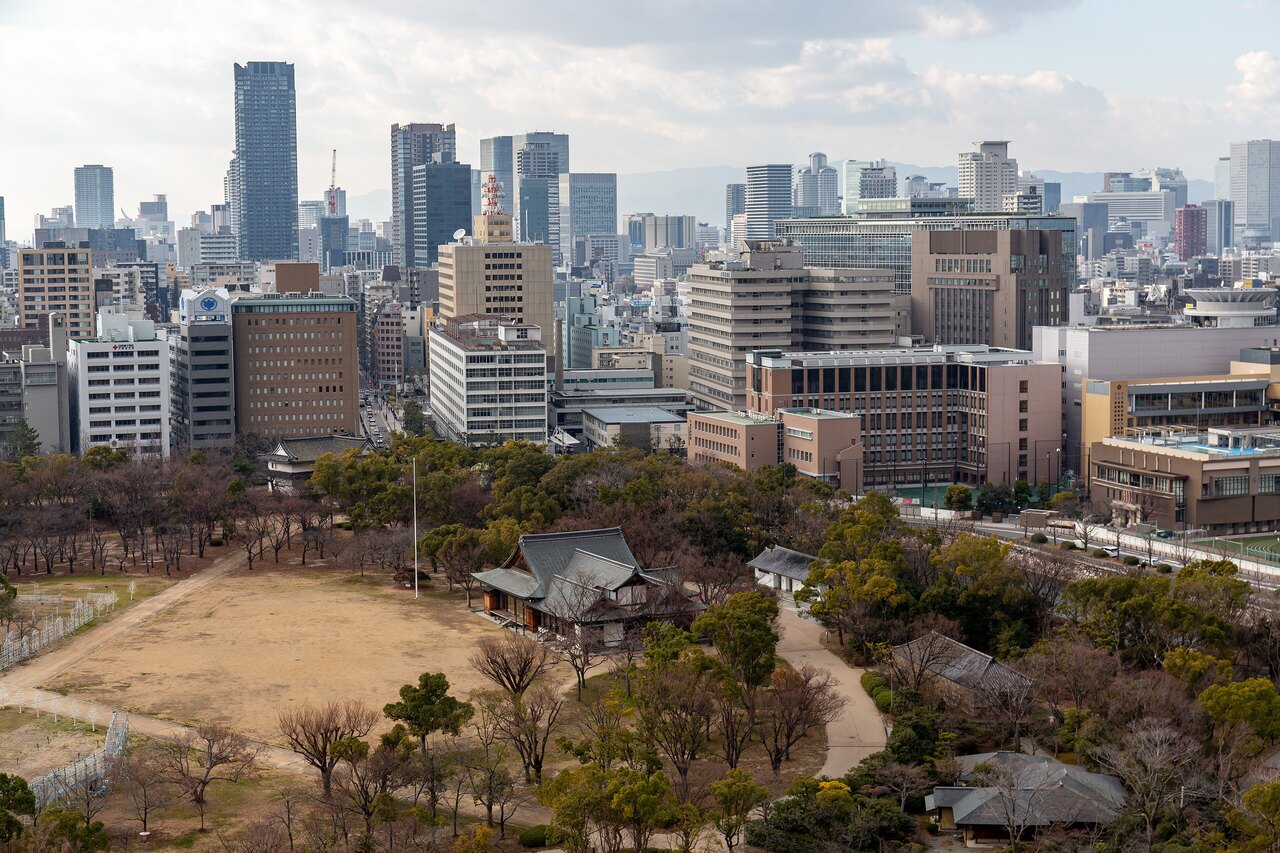
Morning. Go to Osaka Castle early. The grounds and moats are free; the main tower is a modern reconstruction (1931) with a museum and an 8th-floor observation deck (ticket around ¥600-1,200). The Nishinomaru Garden is the best cherry-blossom spot in spring.
Afternoon. Take the subway to Kuromon Market, 'Osaka's kitchen', for grilled scallops, wagyu skewers and fresh sushi (pricey but fun, from ¥500-3,000 a bite). Then walk to Namba and through the covered Shinsaibashi-suji shopping arcade.
Evening. Dotonbori at night: the neon canal, the Glico running man sign and queues for takoyaki (octopus balls, about ¥600-800 for 6-8) and okonomiyaki. Take the short Tombori river cruise (about ¥1,500) for the lights from the water.
Kuromon is busiest and most touristy at midday. Locals shop in the morning, and some stalls close by 17:00.
Day 2: Shinsekai, Sumiyoshi and Umeda
Morning. Take the Nankai line to Sumiyoshi Taisha, one of Japan's oldest shrines (3rd century), with an arched red bridge and a unique pre-Buddhist architecture style (free).
Afternoon. Go to Shinsekai, a retro district built in 1912 around the Tsutenkaku tower, for kushikatsu, deep-fried skewers of meat and vegetables (about ¥100-300 each). Then visit Den Den Town for anime, games and electronics.
Evening. Take the Midosuji line north to Umeda and go up the Umeda Sky Building's Floating Garden Observatory (about ¥2,000), an open-air ring 173 metres up, for sunset. Eat in the izakaya alleys under the railway tracks.
In kushikatsu restaurants, there is one rule: no double dipping in the shared sauce. Use a cabbage leaf to add more sauce.
Day 3: Universal Studios Japan (or Nara)
Morning. Universal Studios Japan (about ¥8,600-11,000 depending on the date) is a full day. Super Nintendo World requires a timed entry ticket or an Express Pass; book online and arrive before opening.
Afternoon. Alternatively, take the Kintetsu line from Namba to Nara (about 40 minutes): Todai-ji's Great Buddha, the deer of Nara Park and Kasuga Taisha.
Evening. Back in Osaka, visit Osaka Aquarium Kaiyukan (about ¥2,700), with a whale shark in its central tank, open until the evening, or have a last dinner in Namba's small streets.
USJ is busiest on weekends and Japanese school holidays. A weekday visit outside holidays can halve the waiting times.
Only have 2 days?
With 2 days, do Day 1 and Day 2. You lose USJ or Nara.
Got extra days?
With more time, take day trips to Kyoto (15 minutes by Shinkansen), Himeji Castle (about 1 hour), Kobe for beef and the harbour (25 minutes) or Koyasan's temple lodgings in the mountains (about 2 hours).
Where to stay in Osaka
| Budget | Area | Why | Typical double/night |
|---|---|---|---|
| Budget | Shin-Imamiya / Tennoji | Cheapest, direct trains to Kansai airport and Shinsekai. | ¥8,000-14,000 |
| Mid-range | Namba / Shinsaibashi | Walk to Dotonbori, Kuromon and the Nankai airport train. | ¥14,000-25,000 |
| Mid-range | Umeda | Main JR station, easy for Kyoto and day trips. | ¥16,000-28,000 |
| Comfort | Umeda towers / Nakanoshima | High-rise hotels with city views. | ¥35,000-80,000 |
Getting around
Use the Midosuji subway line (Umeda-Namba-Tennoji) and an ICOCA card or a phone wallet for all trains and buses (rides about ¥190-300). From Kansai Airport, the Nankai Rapi:t reaches Namba in about 35-40 minutes, and the JR Haruka reaches Tennoji and Shin-Osaka. The Shinkansen leaves from Shin-Osaka.
What to eat in Osaka
Osaka's motto is kuidaore, 'eat until you drop'. The classics: takoyaki (octopus balls), okonomiyaki (savoury cabbage pancake cooked on a griddle at your table, about ¥1,000-1,500), kushikatsu in Shinsekai, kitsune udon (udon with sweet fried tofu, invented in Osaka), negiyaki and butaman pork buns from 551 Horai. Conveyor-belt sushi is cheaper than in Tokyo. Izakayas under the Umeda tracks and in Ura-Namba serve beer and small plates late into the night. Tipping is not expected.
Best time to visit
Late March to early April (cherry blossom at Osaka Castle) and October to November (autumn), with highs of 15-24°C. June is the rainy season and July-August are hot and humid (around 33-34°C). Tenjin Matsuri (24-25 July) is one of Japan's three great festivals, with boats and fireworks on the river.
Month-by-month weather for Osaka →
What a day costs
| Budget | Mid-range | Comfort | |
|---|---|---|---|
| Bed (per person, sharing a double) | ¥5,000 | ¥10,000 | ¥28,000 |
| Food & drink | ¥3,000 | ¥6,000 | ¥15,000 |
| Sights & activities | ¥1,000 | ¥4,000 | ¥12,000 |
| Local transport | ¥700 | ¥1,200 | ¥3,500 |
| Total per person, per day | about ¥9,700 | about ¥21,000 | about ¥58,000 |
Approximate 2026 prices in yen. Osaka charges an accommodation tax per person per night on rooms above a set price; USJ tickets are extra.
Before you go
Common questions
Osaka or Kyoto as a base?
Osaka is cheaper, livelier at night and better for food and day trips; Kyoto is calmer and better for temples early in the morning. They are 15-30 minutes apart, so either works.
Is the Osaka Amazing Pass worth it?
It includes unlimited subway rides and free entry to many attractions such as the castle tower, Umeda Sky and the river cruise. With three or more of those in a day, it pays off.
How do I get into Super Nintendo World?
With a timed entry ticket distributed on the day in the USJ app, or with an Express Pass that includes it. On busy days, entry tickets run out by mid-morning.
Is Osaka good for families?
Very: USJ, the Kaiyukan aquarium, the castle and Nara's deer are all easy with children.
Is Osaka safe at night?
Yes. Dotonbori and Namba are busy until late. In the Nishinari area near Shin-Imamiya, streets are poorer but safe for visitors.
Is the JR Pass worth it for Osaka?
Not for Osaka alone: most of the city's useful lines are subways and private railways not covered by the national JR Pass. Regional passes such as the Kansai Area Pass can make sense if you add Kyoto, Nara, Himeji and Kansai airport in a few days.
Where is the best view of Osaka at night?
The Umeda Sky Building's open-air Floating Garden is the classic. Abeno Harukas, Japan's second-tallest building near Tennoji, has a glass-walled observation deck at 300 metres, and the Tsutenkaku tower in Shinsekai gives a retro view of the city's south.
How many days do I need for Osaka and Kyoto together?
Plan at least five days: two or three in Osaka for the food districts, the castle and Universal Studios or Nara, and two or three in Kyoto for the temples. Because the two cities are only 15-30 minutes apart by train, you can also stay in one and visit the other on day trips.
How this guide was made
Written by hand, without AI, from experience planning Japan trips. Prices are approximate for 2026 in yen; confirm on the official Osaka Castle, Universal Studios Japan, Umeda Sky Building and Nankai/JR West websites before booking.
Some links on this page are partner links. If you book through them TonyPlan may earn a commission; the price you pay is the same. How we make money.