How many days in Naxos? 4 days: Chora, mountain villages and the long beaches
By Tony Panopoulos · travel-agency planner in Greece · Updated
Naxos is the largest and greenest of the Cyclades and the one that feels least like a postcard set: it has farms, cheese, mountain villages of marble and the longest sandy beaches in the group. Four days fits it well: one for Chora, the Kastro and the Portara at sunset; one for the west-coast beaches; one for the interior villages (Halki, Filoti, Apeiranthos) and Mount Zas; and one to the tiny islands of Koufonisia or the north with its giant unfinished kouros. It is also cheaper than Santorini or Mykonos, and good for families.
Short answer
Three days covers Chora, the beaches and the mountain villages. The fourth adds Koufonisia, whose turquoise water is the brightest in the Aegean.
The 4-day plan, day by day
Day 1: Chora, the Kastro and the Portara
Morning. Walk up through the lanes of the old town to the Kastro, the walled Venetian quarter of the 13th century, with Catholic mansions still owned by old families. The Archaeological Museum occupies a 17th-century Jesuit school, with Cycladic figurines older than 3000 BC.
Afternoon. Swim at Agios Georgios, the sandy town beach with shallow water, 10 minutes' walk from the port; it is ideal for children.
Evening. Walk over the causeway to the islet of Palatia for the Portara, the 6-metre marble doorway of an unfinished temple of Apollo begun around 530 BC. Every evening people gather for the sunset through it. Dinner on the Chora waterfront or in the old town.
The Portara is free and never closes. Come back at sunrise for the same view without the crowd.
Day 2: The west-coast beaches
Morning. Take the bus or drive 10-15 minutes south to Agios Prokopios, a long golden beach with clear water, and walk on to Agia Anna.
Afternoon. Continue to Plaka, 4 km of sand with dunes and fewer facilities, and on to Mikri Vigla, where kitesurfers fill the north side in the summer wind and the south side stays calm.
Evening. Eat in Agia Anna's fish tavernas by the small harbour, then catch the last bus back to Chora (check times; they change by season).
On windy meltemi days, the west coast gets waves; the south coast beaches around Kastraki and Alyko are more sheltered.
Day 3: Mountain villages and Mount Zas
Morning. Drive into the Tragaea valley, full of olive groves and Byzantine chapels, to Halki, the old capital, where the Vallindras distillery has made kitron liqueur from citron leaves since 1896 (free tastings). Continue to Filoti.
Afternoon. From near Filoti, hike up Mount Zas (1,004 m), the highest peak of the Cyclades, about 1.5 hours up from the Agia Marina chapel, with the cave where Zeus was said to have been raised. Or drive on to Apeiranthos, a village paved and built entirely in marble, with four small museums.
Evening. Have dinner in Apeiranthos or Filoti: mountain tavernas serve local meat, potatoes and cheese at lower prices than on the coast. Return by car in daylight; mountain roads are narrow.
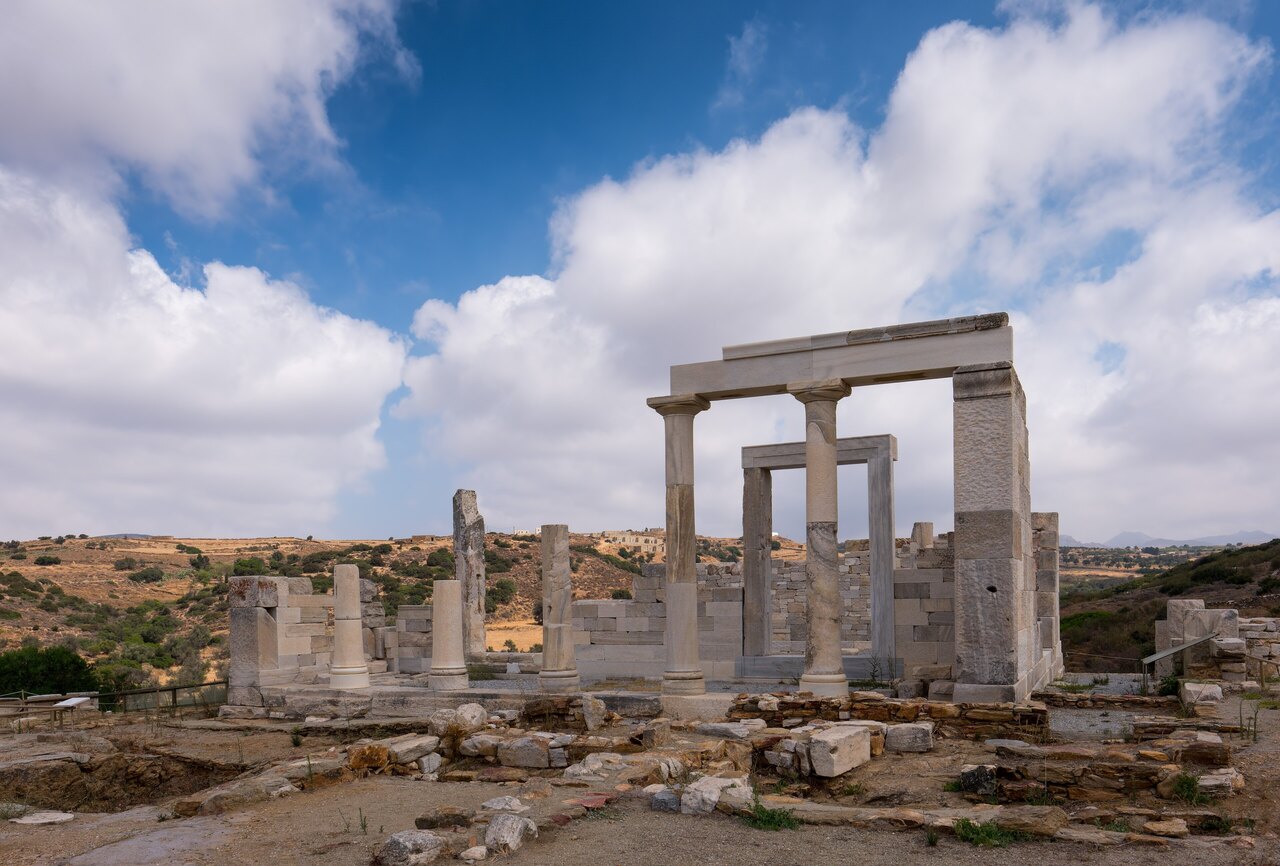
The Temple of Demeter near Sangri (6th century BC, a small fee) is on the way back and best in the late-afternoon light.
Day 4: Koufonisia (or the north and the kouroi)
Morning. Take the morning ferry from Naxos to Koufonisia (about 1-2 hours depending on the boat), the most popular of the Small Cyclades. Walk the coastal path from the harbour to Fanos, Italida and Pori beaches, with water of an almost unreal turquoise.
Afternoon. Swim at Pori or take a small boat to Kato Koufonisi. Return on the afternoon or evening ferry.
Evening. If you stay on Naxos instead, drive north to Apollonas for the 10-metre unfinished kouros lying in an ancient quarry, and the smaller kouros at Melanes, then swim at the quiet northern coves.
Check the return ferry carefully. If the wind cancels a boat, you may need to stay the night on Koufonisia.
Only have 3 days?
With 3 days, do Days 1, 2 and 3. You lose Koufonisia and the north.
Got extra days?
With more time, take a boat to the other Small Cyclades (Schinoussa, Iraklia, Donoussa) or combine Naxos with Paros, 40 minutes away by ferry.
Where to stay in Naxos
| Budget | Area | Why | Typical double/night |
|---|---|---|---|
| Budget | Chora (new town) | Port, buses and the town beach, cheapest rooms. | €50-90 |
| Mid-range | Agios Prokopios / Agia Anna | On the best beaches, 10-15 minutes by bus to Chora. | €80-150 |
| Mid-range | Chora old town / Kastro | Atmospheric lanes and sunset at the Portara. | €80-140 |
| Comfort | Plaka / Agios Prokopios resorts | Beachfront hotels with pools. | €180-400 |
Getting around
KTEL Naxos buses run frequently from the port in Chora to the west-coast beaches and less often to the mountain villages. A rental car or scooter is best for the interior and the north. Ferries from Piraeus take about 4-6 hours; Naxos is a hub for the Small Cyclades and has flights to Athens (about 40 minutes).
What to eat in Naxos
Naxos feeds itself: it is the most agricultural island in the Cyclades. Try graviera of Naxos (a protected cheese), arseniko (a sharp aged cheese), Naxos potatoes, said to be the best in Greece, and rosto, pork cooked in wine and garlic. Kitron liqueur comes in three strengths (green, clear and yellow). In the villages, look for kalogeros (aubergine, veal and cheese) and fresh galaktoboureko. A taverna dinner costs €15-25 per person, noticeably less than on Santorini or Mykonos.
Best time to visit
June and September are ideal, with warm sea (22-24°C) and fewer crowds. July and August are busy and windy. May and October are perfect for hiking, with wildflowers in spring. Many beach hotels close from November to April, but Chora stays alive all year.
Month-by-month weather for Naxos →
What a day costs
| Budget | Mid-range | Comfort | |
|---|---|---|---|
| Bed (per person, sharing a double) | €30 | €60 | €150 |
| Food & drink | €20 | €35 | €70 |
| Boats & activities | €10 | €30 | €60 |
| Transport (bus or car share) | €6 | €20 | €40 |
| Total per person, per day | about €65 | about €145 | about €320 |
Approximate 2026 high-season prices. Greece adds a per-room climate resilience fee each night, highest from April to October.
Before you go
Common questions
Naxos or Paros?
Naxos for long sandy beaches, mountain villages and a calmer, family atmosphere; Paros for prettier harbour villages and more nightlife. They are 40 minutes apart, so many people visit both.
Do I need a car in Naxos?
Not for Chora and the west-coast beaches, which have frequent buses. For the villages and the north, yes.
Is Naxos good for families?
Very: shallow sandy beaches like Agios Georgios and Agios Prokopios, and reasonable prices.
Can I visit Delos from Naxos?
Yes, on organised boat trips in summer, combined with Mykonos. It is a long day.
Where do I see the kouroi of Naxos?
Two unfinished archaic kouroi lie where they were carved: one at Melanes (about 5.5 m, in a garden near Flerio) and the giant one at Apollonas in the north (about 10 m). Both are free to visit and show how the marble statues were roughed out in the quarry before transport.
How this guide was made
Written by hand, without AI, by a travel-agency planner based in Greece. Prices, bus and ferry times are approximate for 2026; confirm with KTEL Naxos and the ferry operators before travelling.
Some links on this page are partner links. If you book through them TonyPlan may earn a commission; the price you pay is the same. How we make money.