Home › Montreal › How many days
How many days in Montreal? 3 days of Old Montreal, Mount Royal and bagels
By Tony Panopoulos · travel-agency planner in Greece · Updated
Montreal is the second-largest French-speaking city in the world and the most European city in North America, with cobbled streets, outdoor terraces and a strong food culture. Three days covers Old Montreal with the Notre-Dame Basilica, the Old Port, the views from Mount Royal, the colourful neighbourhoods of the Plateau and Mile End with their bagel shops, and the Olympic Park with the Botanical Garden. It is a city of festivals in summer and of the underground city in winter.
Short answer
Two days covers Old Montreal, Mount Royal and the Plateau. The third adds the markets, the Olympic Park and a festival or museum.
The 3-day plan, day by day
Day 1: Old Montreal and the Old Port
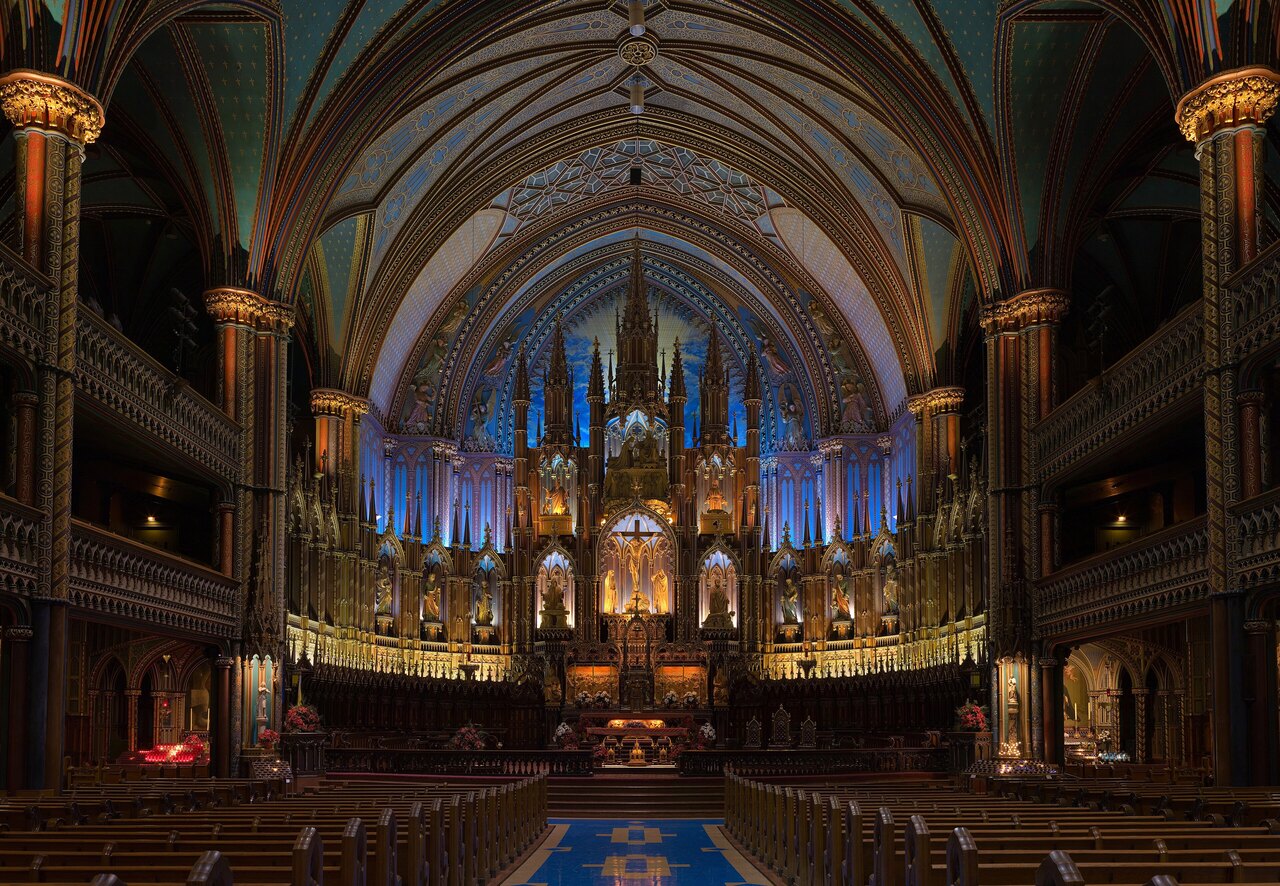
Morning. Visit the Notre-Dame Basilica (about C$16-17), a Gothic Revival church with a deep blue and gold interior. Walk through Place d'Armes, Place Jacques-Cartier and the cobbled Rue Saint-Paul.
Afternoon. Visit Pointe-à-Callière, the archaeology museum built on the site of the city's founding in 1642, then the Old Port: the Grande Roue (Ferris wheel), the Clock Tower and the river views. See Habitat 67, a famous 1967 housing complex of stacked concrete cubes.
Evening. See the 'AURA' light show in the Notre-Dame Basilica (about C$30-35), then have dinner in Old Montreal.
Old Montreal is beautiful at night, when the stone buildings are lit up.
Day 2: Mount Royal, the Plateau and Mile End
Morning. Walk up Mount Royal, the park designed by Frederick Law Olmsted (who also designed Central Park), to the Kondiaronk Belvedere for the view of downtown. Visit Saint Joseph's Oratory, Canada's largest church.
Afternoon. Walk through the Plateau Mont-Royal, with houses with exterior spiral staircases, and Mile End, with the rival bagel bakeries St-Viateur and Fairmount. Have a smoked meat sandwich at Schwartz's, open since 1928.
Evening. Have a drink on Boulevard Saint-Laurent or Rue Saint-Denis; on Sundays in summer, join the Tam-Tams drum circle at the George-Étienne Cartier monument.
The 'escaliers' (outdoor staircases) were designed to save space inside the houses.
Day 3: Markets, the Olympic Park and the museums
Morning. Visit the Jean-Talon Market in Little Italy, with Quebec cheeses, maple products and produce. Then the Olympic Park (1976): ride the funicular up the Montreal Tower, the world's tallest inclined tower.
Afternoon. Visit the Montreal Botanical Garden, one of the world's largest, with Chinese and Japanese gardens, and the Biodome or the Insectarium. Or visit the Montreal Museum of Fine Arts, downtown.
Evening. Explore the RÉSO (underground city), 32 km of tunnels connecting shops and metro stations, then have a final dinner downtown.
In winter, the underground city lets you move around without going outside.
Only have 2 days?
With 2 days, do Days 1 and 2.
Got extra days?
With more time, visit Quebec City (about 3 hours by train or car), the Laurentians and Mont-Tremblant, or the Eastern Townships for wine and cycling.
Where to stay in Montreal
| Budget | Area | Why | Typical double/night |
|---|---|---|---|
| Budget | Hostels / Plateau / Latin Quarter | Cheaper, lively, metro access. | C$120-200 |
| Mid-range | Downtown | Metro, underground city, museums. | C$200-350 |
| Mid-range | Old Montreal | Historic buildings, romantic streets. | C$250-400 |
| Comfort | Old Montreal boutique hotels | Historic stone buildings converted into luxury hotels. | C$400-800 |
Getting around
Use the metro (four lines) and buses, and BIXI bikes in summer; the city has many cycle lanes. Montréal-Trudeau Airport (YUL) is about 30-45 minutes by the 747 bus (24 hours) or taxi. A car is unnecessary in the city.
What to eat in Montreal
Try Montreal bagels (thinner, sweeter, boiled in honey water and baked in a wood oven), smoked meat, poutine (try La Banquise, open 24 hours), tourtière (meat pie), and maple treats; in spring, visit a cabane à sucre (sugar shack). Montreal has excellent French bistros and BYOB restaurants. A smoked meat sandwich costs C$15-20; a bistro dinner C$50-90.
Best time to visit
May to October is best. Summer is full of festivals: the Jazz Festival (late June-July), Just for Laughs (July) and the Formula 1 Grand Prix (June). Autumn brings colours on Mount Royal. Winters are very cold (−10 to −20°C), with festivals like Igloofest.
Month-by-month weather for Montreal →
What a day costs
| Budget | Mid-range | Comfort | |
|---|---|---|---|
| Bed (per person, sharing a double) | C$60 | C$140 | C$300 |
| Food & drink | C$40 | C$80 | C$160 |
| Sights & activities | C$15 | C$45 | C$100 |
| Local transport | C$5 | C$12 | C$40 |
| Total per person, per day | about C$120 | about C$275 | about C$600 |
Approximate 2026 prices in Canadian dollars. Sales taxes (GST + QST, about 15%) and a lodging tax are added to most prices; tips of 15-20% are expected in restaurants.
Before you go
Common questions
Do I need to speak French in Montreal?
No: most people speak English too, especially downtown. A 'bonjour' is appreciated.
Which bagel is better, St-Viateur or Fairmount?
Locals argue about it; try both. They are a few blocks apart in Mile End and open 24 hours.
Is Montreal good in winter?
Yes, if you dress warmly: the underground city, skating, festivals and sugar shacks in early spring.
Montreal or Quebec City?
Montreal is a big, multicultural city; Quebec City is a walled colonial town. Both are worth visiting, about 3 hours apart.
Is Montreal good for families?
Yes: the Biodome, the Science Centre, the Old Port and the Botanical Garden.
Do I need a car?
No for the city; for the Laurentians or the Eastern Townships, yes.
What is a sugar shack?
A farm where maple syrup is made, open in March and April, with a hearty meal and maple taffy on snow.
What is the underground city?
The RÉSO is a network of tunnels and passages, about 32 km long, connecting metro stations, shopping centres, offices, hotels and universities downtown. It lets people move around without going outside during the long, cold winter, and is mostly used for shopping and commuting.
Is Old Montreal walkable?
Very: it is compact, and its cobbled streets, from Place d'Armes to the Old Port, are best explored on foot. Wear comfortable shoes; the stones can be uneven. In summer, Rue Saint-Paul and the Old Port are lively until late.
Which festivals are worth planning around?
The Montreal International Jazz Festival (late June-early July), with many free outdoor concerts, Just for Laughs (July), Osheaga music festival (summer), the Canadian Grand Prix (June) and Montréal en Lumière (February). Hotels fill and prices rise during them.
Is Montreal expensive?
Less than Toronto or Vancouver, especially for food. Many restaurants allow you to bring your own wine (look for 'apportez votre vin'), which saves money. Hotels are expensive during summer festivals and the Grand Prix.
What is poutine and where should I try it?
A Quebec dish of fries covered with fresh cheese curds and hot gravy. Try classic versions at La Banquise (open 24 hours), Chez Claudette or Patati Patata; some restaurants serve luxury versions with foie gras or smoked meat.
How this guide was made
Written by hand, without AI, from experience planning Canada trips. Prices are approximate for 2026; confirm on the official Tourisme Montréal, Notre-Dame Basilica, Espace pour la vie and STM websites before booking.
Some links on this page are partner links. If you book through them TonyPlan may earn a commission; the price you pay is the same. How we make money.