How many days in Manila? 3 days, from Intramuros to Binondo and the bay
By Tony Panopoulos · travel-agency planner in Greece · Updated
Most travellers treat Manila as an airport between flights to Palawan or Cebu. Give it three days and it repays the effort: a walled Spanish city, the oldest Chinatown in the world, free national museums and a street-food culture that runs from dawn to midnight. The rule that matters here is traffic, not distance. Plan each day around one district, travel outside the 7:00-10:00 and 17:00-20:00 rush, and use Grab rather than trying to cross the city at peak hour.
Short answer
Two days covers Intramuros, the National Museum complex and Binondo. The third day adds Makati and BGC, the modern side of Metro Manila, or a ferry out to the war ruins of Corregidor.
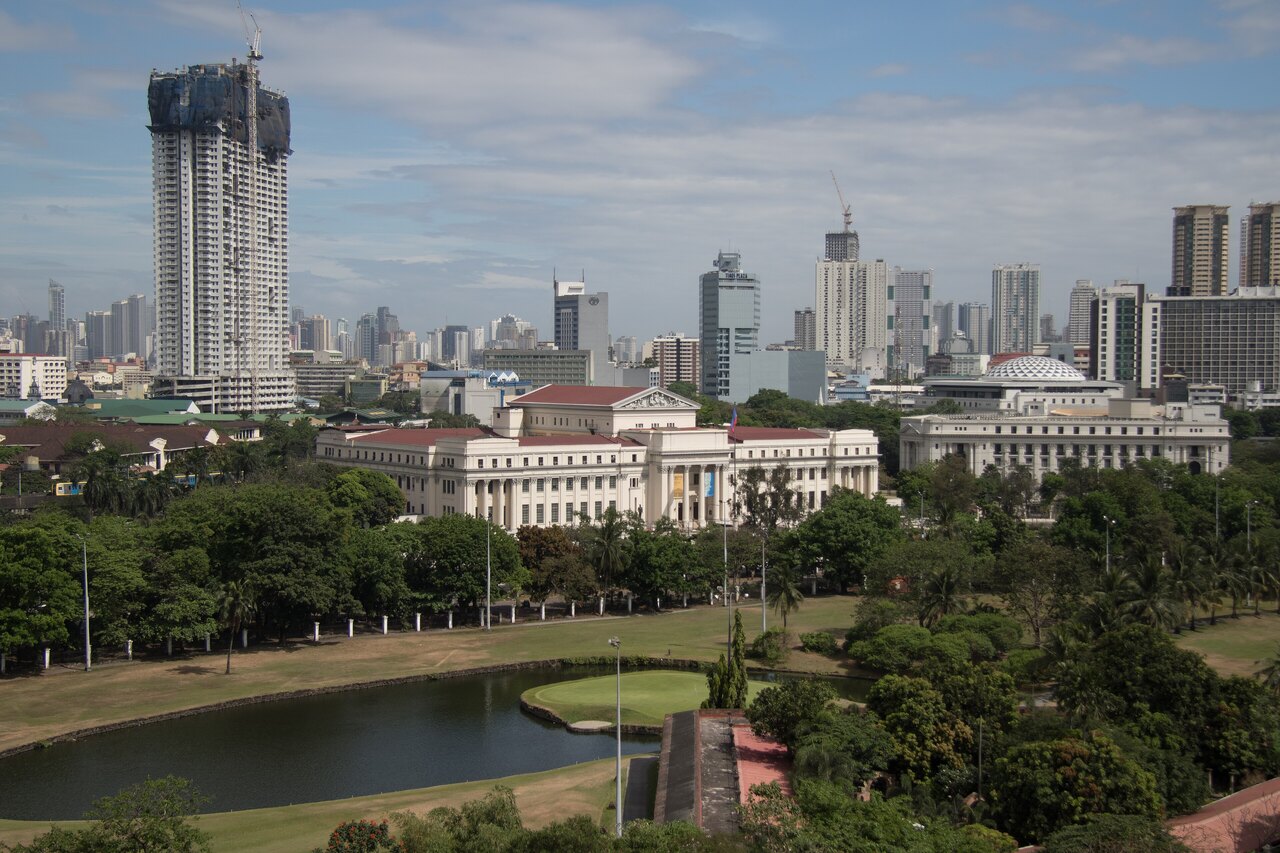
The 3-day plan, day by day
Day 1: Intramuros, the walled city
Morning. Start at Fort Santiago at 8:00, before the heat, where the gate fee is about ₱75. The Rizal Shrine inside traces the national hero's last days before his execution in 1896, and brass footprints mark his final walk. From there it is a 10-minute walk along General Luna Street to San Agustin Church, finished in 1607 and the oldest stone church in the country.
Afternoon. The San Agustin Museum next door (about ₱200) has cloisters, colonial religious art and a crypt; across the street, Casa Manila (about ₱75) recreates a wealthy 19th-century home. Hire a bamboo bike tour from Bambike (about ₱1,200 for 2 hours) or a kalesa horse cart to ride the 4.5 km of walls, and stop at Baluarte de San Diego, a round bastion with gardens.
Evening. Walk out through Puerta Real to Manila Bay, 15 minutes south, for sunset along Roxas Boulevard; the bay is famous for its orange skies from November to March. Eat in Malate, where Adriatico Street and Remedios Circle have grill bars serving sisig and grilled pork for ₱250-450 a plate.
Intramuros has little shade and midday heat often reaches 33°C. Carry water and do the outdoor walls first, the indoor museums after 11:00.
Day 2: National Museum, Binondo and Quiapo
Morning. The National Museum of Fine Arts and the National Museum of Anthropology face each other at the edge of Rizal Park and are both free (closed Mondays; reserve a slot online). In the Fine Arts building, the vast *Spoliarium* by Juan Luna fills a whole wall. Allow 2.5 hours for both, then cross the park past the Rizal Monument.
Afternoon. Take a Grab 15 minutes north across the Pasig River to Binondo, founded in 1594. Eat your way along Ongpin Street: pork-and-chive dumplings at Dong Bei, fried siopao at Shanghai Fried Siopao, hopia pastries at Eng Bee Tin. Each stop costs ₱80-250, and a guided food walk runs about ₱1,500-2,000 with tastings.
Evening. Walk 15 minutes to Quiapo Church, home of the Black Nazarene, and the camera shops of Hidalgo Street, then back to Escolta, the old commercial street where the 1928 First United Building hosts a weekend creative market. Dinner of pancit canton and lumpia in Binondo is ₱300-500.
Quiapo's streets are crowded and pickpocketing is common. Keep your phone in a front pocket, and avoid the area on Fridays around midday Mass if you dislike crowds.
Day 3: Makati, BGC and a modern Manila evening
Morning. On Saturdays, the Salcedo Community Market in Makati opens at 7:00 with longganisa, lechon and fresh mango; on Sundays the Legazpi Sunday Market is a few blocks away. Then visit the Ayala Museum (about ₱650, closed Mondays), where the dioramas tell Philippine history in 60 scenes and the gold gallery shows pre-colonial jewellery.
Afternoon. Walk through the shaded Ayala Triangle Gardens, then take a Grab 15-20 minutes to Bonifacio Global City (BGC), a planned district of wide pavements, street art and High Street's shops. The Mind Museum suits families (about ₱750); otherwise cool off in the malls, as many Manileños do.
Evening. Return to Poblacion in Makati, a grid of old streets now packed with small bars, craft beer and Filipino-fusion restaurants along Polaris and Felipe Streets. Expect ₱150-300 for a local San Miguel or Red Horse beer and ₱500-1,000 for dinner.
Book Grab cars a few minutes before you need them in Makati at 17:00-19:00, when waits can run 20 minutes and surge prices double.
Only have 2 days?
With 2 days, do Day 1 as written and combine the National Museum with Binondo on Day 2, skipping Quiapo. You lose the Makati markets, the Ayala Museum and Poblacion's nightlife.
Got extra days?
A 4th day suits Corregidor Island, the fortified island at the mouth of Manila Bay, with day tours by ferry from the Esplanade Seaside Terminal (about 1h15 each way, roughly ₱3,000-4,000 including lunch and the tram tour). Or drive about 2 hours south to Tagaytay for the ridge-top view over Taal Lake and its volcano, cooler air and bulalo beef soup.
Where to stay in Manila
| Budget | Area | Why | Typical double/night |
|---|---|---|---|
| Budget | Malate / Ermita | Cheap guesthouses near Manila Bay and a short ride to Intramuros; check reviews, as standards vary. | ₱1,500-3,000 |
| Mid-range | Makati (Legazpi & Salcedo Villages) | Walkable, safe, full of restaurants, and about 30-60 minutes from the airport depending on traffic. | ₱3,500-7,000 |
| Mid-range | Bonifacio Global City | Clean, modern and quiet at night, with wide pavements, but far from the old city. | ₱4,500-8,000 |
| Comfort | Roxas Boulevard / Makati towers | The historic Manila Hotel faces the bay; Makati's international hotels have pools and skyline views. | ₱9,000-20,000 |
Getting around
Use Grab for most trips; a ride from Makati to Intramuros costs about ₱300-500 and takes 30-60 minutes. The elevated LRT-1 runs along Taft Avenue past Ermita and Malate (₱15-35), and the MRT-3 follows EDSA through Makati, but both are packed at rush hour. Jeepneys cost about ₱13-15 a ride and are fun for short hops if you know the route. From NAIA airport, Grab or yellow airport taxis reach Makati in 30-90 minutes; allow 3 hours before an international flight.
What to eat in Manila
Filipino food is about sour, salty and grilled flavours. Try adobo (meat braised in vinegar and soy), sinigang (tamarind soup), sisig (chopped pork on a sizzling plate), kare-kare (oxtail in peanut sauce) and lechon roast pig. Breakfast is tapsilog: cured beef, garlic rice and a fried egg, about ₱150-250. For dessert, halo-halo layers shaved ice, beans, ube and leche flan; Razon's is a well-known chain. A carinderia (canteen) lunch costs ₱120-200; a sit-down dinner in Makati is ₱600-1,200. Tap water is not safe to drink, so buy bottled water.
Best time to visit
December to April is dry, with highs of 30-33°C; January and February are the most comfortable. April and May are the hottest months, often 35°C and humid. The rainy season runs from June to October, with typhoons that can flood streets and cancel flights, especially July to September. Holy Week (late March or April) empties the city and closes many offices, while Christmas season starts in September and fills the malls.
Month-by-month weather for Manila →
What a day costs
| Budget | Mid-range | Comfort | |
|---|---|---|---|
| Bed (per person, sharing a double) | ₱1,200 | ₱3,000 | ₱7,000 |
| Food & drink | ₱600 | ₱1,500 | ₱3,500 |
| Sights & tickets | ₱300 | ₱800 | ₱2,000 |
| Local transport | ₱200 | ₱600 | ₱1,500 |
| Total per person, per day | about ₱2,300 | about ₱5,900 | about ₱14,000 |
Approximate 2026 prices in Philippine pesos; hotels add 12% VAT and often a 10% service charge, so check whether a quoted rate is net.
Before you go
Common questions
Is Manila worth visiting or should I go straight to the islands?
If you are flying through anyway, spend at least two days. Intramuros, the free National Museum and Binondo's food streets explain much about the Philippines that the beaches do not. If your international flight connects directly to Cebu, El Nido or Siargao and you have under a week, skipping Manila is a reasonable choice.
Is Manila safe for tourists?
Mostly yes in Makati, BGC, Intramuros and the museum area, with ordinary city precautions. Petty theft is the main risk in crowded places like Quiapo, Divisoria and the LRT at rush hour. Use Grab instead of hailing unmetered taxis at night, keep phones out of sight on busy streets and avoid unlit side streets in Malate late at night.
How long does it take to get from the airport to the city?
It depends almost entirely on traffic. A Grab from NAIA to Makati takes about 30 minutes at night and can take 90 minutes at evening rush hour; to Intramuros or Malate, allow 45-90 minutes. Fares are typically ₱300-600. Check which terminal your flight uses, as transfers between NAIA terminals also go by road.
Do I need cash in Manila?
Yes, for jeepneys, markets, street food and small eateries. Cards work in malls, hotels and most Makati restaurants, and GCash is the local payment app, though it needs a Philippine number. Carry ₱2,000-3,000 in small notes; ATMs charge foreign cards about ₱250 per withdrawal, so take out larger amounts less often.
How this guide was made
Compiled by TonyPlan from official tourism, transport and attraction sources and on-the-ground travel knowledge. Prices are approximate for 2026 and change with season; anything we could not confirm is marked as approximate.
Some links on this page are partner links. If you book through them TonyPlan may earn a commission; the price you pay is the same. How we make money.