How many days in Kyoto? 4 days, starting every morning before the crowds
By Tony Panopoulos · travel-agency planner in Greece · Updated
Kyoto has some 1,600 temples and four days lets you see the dozen that matter without the coach-party hours. The city rewards early starters more than any other in Japan: Fushimi Inari at 7:00 and Arashiyama at 8:00 are different places from the same spots at 11:00. Group the sights into the east (Higashiyama and Gion), the north-west (Kinkaku-ji and Arashiyama), the south (Fushimi Inari) and a day out to Nara.
Short answer
Two days covers Fushimi Inari, Higashiyama and Arashiyama at a hurried pace. Four days adds the northern temples, a calm evening in Gion and Nara's deer park.
The 4-day plan, day by day
Day 1: Fushimi Inari and Higashiyama
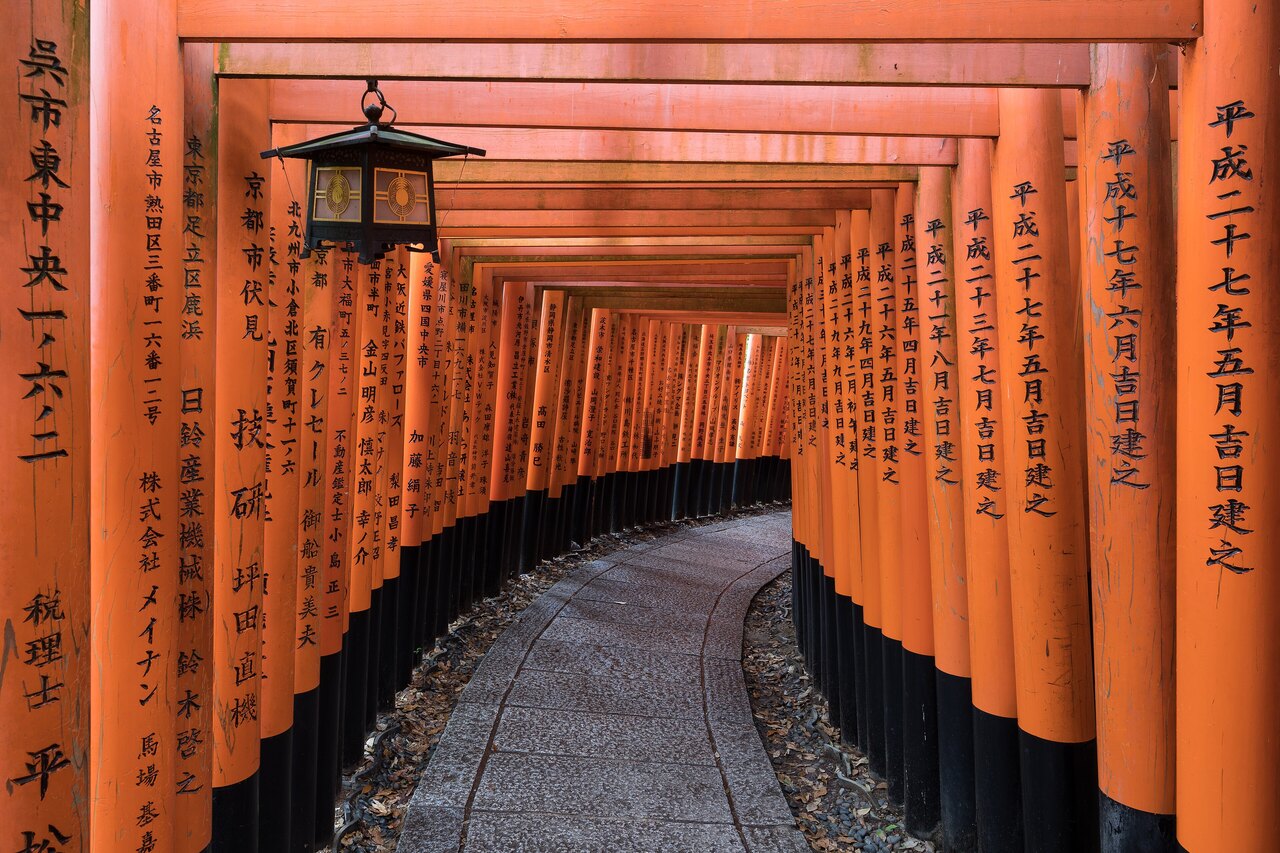
Morning. Take the JR Nara line 5 minutes from Kyoto Station to Inari and start up Fushimi Inari shrine by 7:00. It is free and open 24 hours. The tunnel of thousands of vermilion torii thins out after the Yotsutsuji intersection, about 45 minutes up; the full loop to the summit takes 2-3 hours.
Afternoon. Take the train and bus or a taxi to Kiyomizu-dera (¥500), whose wooden stage stands on 18 pillars over the hillside. Walk down the stone lanes of Sannenzaka and Ninenzaka to Yasaka Shrine.
Evening. Walk through Gion at dusk. Hanamikoji's main street is public, but its side alleys are private, and photographing geiko and maiko without permission is banned there, with fines. Eat in Pontocho, a lantern-lit alley along the Kamo River; kaiseki costs ¥10,000 and more, but small yakitori bars are ¥3,000-5,000.
Trains are faster than Kyoto's crowded buses for Fushimi Inari, Arashiyama and Nara. Use buses only for the north-west temples.
Day 2: The Golden Pavilion and the northern temples
Morning. Kinkaku-ji, the Golden Pavilion (¥500), opens at 9:00 and is busiest from 10:00; get there at opening. Then take a 15-minute bus or walk 20 minutes to Ryoan-ji (¥600) for its rock garden of 15 stones, then Ninna-ji.
Afternoon. Take the bus east to Ginkaku-ji, the Silver Pavilion (¥500), with its raked-sand garden, and walk the 2 km Philosopher's Path along a canal lined with cherry trees to Nanzen-ji, about 40 minutes.
Evening. Visit Nanzen-ji's brick aqueduct before it gets dark, then go for dinner near Sanjo or a ramen bowl (about ¥900-1,200) around Kyoto Station.
Kyoto's buses are packed in peak seasons. The subway-and-bus one-day pass (about ¥1,100) helps; the old bus-only day pass was discontinued.
Day 3: Arashiyama
Morning. Take the JR Sagano line 15 minutes from Kyoto Station to Saga-Arashiyama and be at the bamboo grove by 8:00 (free). Then visit Tenryu-ji (from ¥500), whose 14th-century garden faces the hills, and Okochi Sanso, a film star's villa garden at the end of the grove (about ¥1,000, including tea).
Afternoon. Cross the Togetsukyo Bridge and climb 20 minutes to the Iwatayama Monkey Park for macaques and a view over Kyoto (cash only). Walk north to the quiet temples of Gio-ji, carpeted in moss, and Otagi Nenbutsu-ji with its 1,200 carved stone figures.
Evening. Return to central Kyoto for the Nishiki Market before it closes at around 17:00-18:00: tamagoyaki, pickles, and soy-milk doughnuts, about ¥300-600 a bite.
Eating while walking is discouraged in Nishiki Market; eat at the stall.
Day 4: Day trip to Nara
Morning. Take the Kintetsu line from Kyoto Station to Kintetsu-Nara (about 35-45 minutes). Walk 15 minutes through Nara Park, where about 1,200 sika deer bow for crackers (¥200), to Todai-ji, the largest wooden building of its age, with a 15-metre bronze Buddha.
Afternoon. Walk to Kasuga Taisha, Nara's shrine of 3,000 stone and bronze lanterns, through the primeval forest behind it, then back through Naramachi, the old merchant quarter, for kakinoha-zushi (sushi wrapped in persimmon leaves).
Evening. Back in Kyoto, spend your last evening walking along the Kamo River banks, where locals sit by the water at night, and have dinner in Kiyamachi.
The deer can head-butt and bite when they see food. Show both empty hands once the crackers are gone.
Only have 2 days?
With 2 days, do Day 1 and Day 3. You lose the Golden Pavilion, the Philosopher's Path and Nara.
Got extra days?
For a 5th day, take the train to Himeji Castle (about 1h by Shinkansen), Japan's finest original castle, or go to Osaka (15 minutes by Shinkansen, 30 by JR local) for street food in Dotonbori.
Where to stay in Kyoto
| Budget | Area | Why | Typical double/night |
|---|---|---|---|
| Budget | Around Kyoto Station | Trains to Fushimi Inari, Arashiyama, Nara and the airport. | ¥10,000-16,000 |
| Mid-range | Downtown (Kawaramachi / Karasuma) | Central for restaurants, Nishiki Market and Gion on foot. | ¥16,000-28,000 |
| Mid-range | Higashiyama | Walk to Kiyomizu-dera and Gion in the empty early morning. | ¥18,000-30,000 |
| Comfort | Traditional ryokan | Tatami rooms, kaiseki dinner and breakfast included. | ¥40,000-120,000 |
Getting around
Kyoto Station is the hub. Trains reach Fushimi Inari, Arashiyama and Nara quickly; the subway runs north-south and east-west; buses fill the gaps but are slow and crowded in peak seasons. Use a Suica or ICOCA card everywhere. From Kansai airport, the Haruka express takes about 75 minutes; from Tokyo, the Shinkansen takes about 2h15.
What to eat in Kyoto
Kyoto's cooking is lighter and more seasonal than Tokyo's. Kaiseki, the multi-course meal, starts at about ¥8,000 for lunch and is far cheaper then than at dinner. Try yudofu (simmered tofu) near Nanzen-ji and Arashiyama, obanzai (Kyoto home-style small dishes) in Pontocho, and matcha in every form in Uji, 20 minutes by train, where green tea has been grown for 800 years. Nishiki Market is good for tasting skewers and pickles. Ramen fans should try the rich chicken broth of Kyoto-style ramen, about ¥1,000. Many popular restaurants close one day a week, often Wednesday, and some small places accept cash only, so check before walking across the city.
Best time to visit
Late March to early April for cherry blossom and mid-to-late November for autumn maples, the most beautiful and the most crowded weeks. June is rainy, July and August hot and humid (around 33-34°C). Gion Matsuri fills July with float processions. January and February are cold but quiet.
Month-by-month weather for Kyoto →
What a day costs
| Budget | Mid-range | Comfort | |
|---|---|---|---|
| Bed (per person, sharing a double) | ¥6,000 | ¥11,000 | ¥35,000 |
| Food & drink | ¥3,500 | ¥7,000 | ¥18,000 |
| Temples & tickets | ¥1,500 | ¥2,500 | ¥4,000 |
| Local transport | ¥800 | ¥1,200 | ¥3,500 |
| Total per person, per day | about ¥12,000 | about ¥22,000 | about ¥60,000 |
Approximate 2026 prices in yen. Kyoto charges an accommodation tax per person per night that rises with the room price and has been increased; check your booking's total.
Before you go
Common questions
Is 2 days enough for Kyoto?
For Fushimi Inari, Kiyomizu-dera, Gion and Arashiyama, yes, with early starts. Most people who do 2 days wish they had 4.
Can I photograph geisha in Gion?
Not in the private alleys of Gion, where it is banned and fined. On public streets, never block the way or follow them; ask permission or simply watch.
Do temples take cards?
Many still take cash only. Carry yen for entry fees of ¥400-1,000 and for small restaurants.
Is the JR Pass worth it for Kyoto?
Only as part of a longer route through Japan. Within Kyoto, most travel is by bus, subway or the private Kintetsu and Keihan lines, which the pass does not cover.
How this guide was made
Written by hand, without AI, from experience planning Japan trips. Prices are approximate for 2026 in yen; confirm temple hours and fees on the official temple websites, the Kyoto City Bus & Subway site and JR West before travelling.
Some links on this page are partner links. If you book through them TonyPlan may earn a commission; the price you pay is the same. How we make money.