How many days in Jaipur? 3 days of forts, palaces and the Pink City bazaars
By Tony Panopoulos · travel-agency planner in Greece · Updated
Jaipur, the capital of Rajasthan, is the 'Pink City', painted terracotta pink in 1876 to welcome the Prince of Wales, and one corner of India's 'Golden Triangle' with Delhi and Agra. Three days covers the hilltop Amber Fort, the honeycomb facade of the Hawa Mahal, the City Palace and the astronomical instruments of Jantar Mantar (UNESCO), the forts of Nahargarh and Jaigarh, and the colourful bazaars of textiles, jewellery and block prints. Hire a driver: distances are short but the traffic is intense.
Short answer
Two days covers Amber Fort, the Hawa Mahal, the City Palace and Jantar Mantar. The third adds Nahargarh, the bazaars and a slower pace.
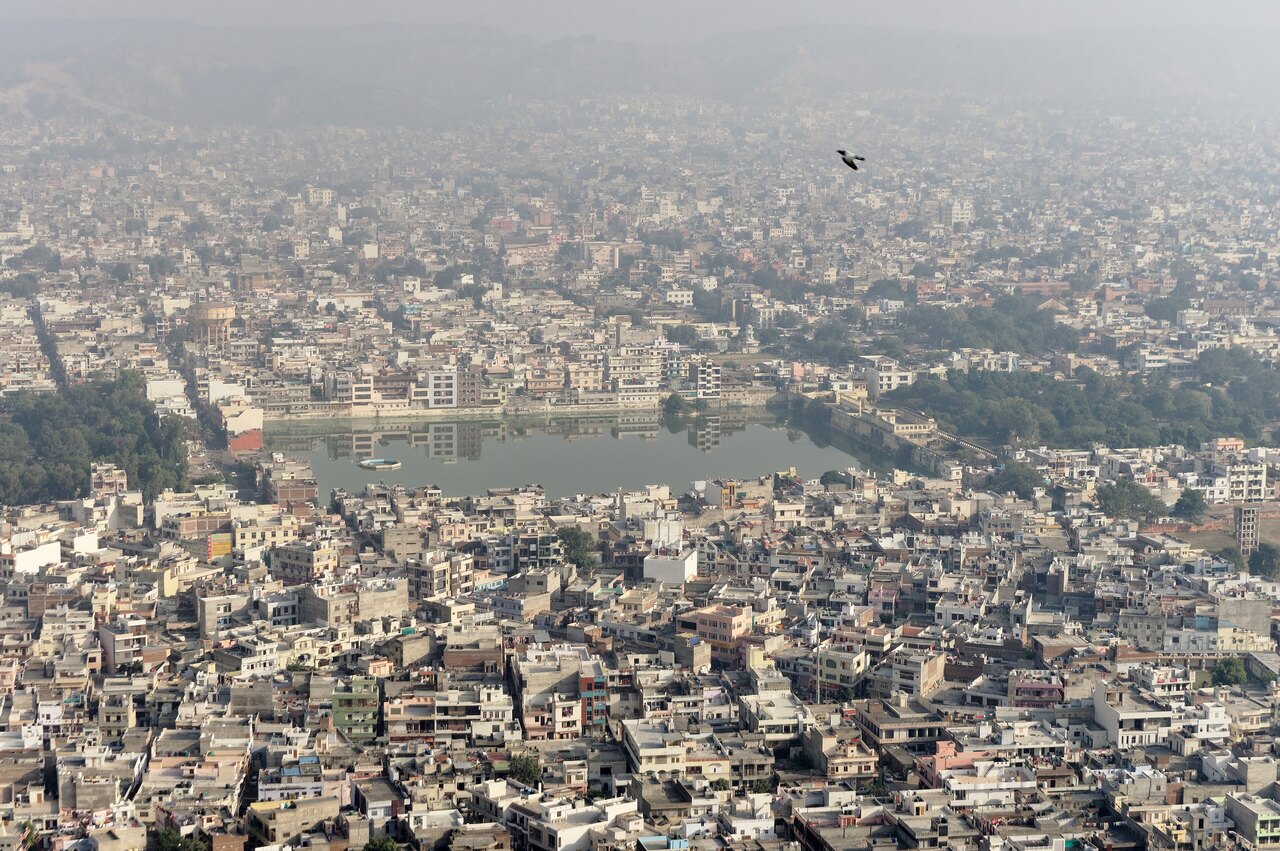
The 3-day plan, day by day
Day 1: Amber Fort and the hills
Morning. Go early to Amber Fort (Amer, about 11 km from the city; about 500-550 rupees for foreigners), a hilltop palace-fort of red sandstone and marble. See the Sheesh Mahal (Mirror Palace), the Ganesh Pol gate and the views over Maota Lake.
Afternoon. Visit the Panna Meena ka Kund, a symmetrical stepwell near Amber, and Jaigarh Fort, with the Jaivana, once the world's largest cannon on wheels. Stop at the Jal Mahal, a palace in the middle of the Man Sagar Lake, for photos.
Evening. Watch the light and sound show at Amber Fort, or have dinner in the city.
Avoid elephant rides to the fort; walk up the ramp or take a jeep.
Day 2: The Pink City
Morning. See the Hawa Mahal (Palace of the Winds, 1799), with 953 small windows through which royal women watched the street. Go early for the morning light on the facade; the view from the cafés opposite is excellent.
Afternoon. Visit the City Palace, still partly the royal family's home, with courtyards, the Peacock Gate and huge silver urns, then Jantar Mantar (UNESCO), an 18th-century observatory with giant stone instruments, including the world's largest stone sundial.
Evening. Shop in the bazaars: Johari Bazaar for jewellery, Bapu Bazaar for textiles and Tripolia Bazaar for brassware and bangles.
A composite ticket (about 1,000 rupees for foreigners, valid 2 days) covers Amber Fort, Hawa Mahal, Jantar Mantar, Nahargarh, Albert Hall and others; the City Palace is separate.
Day 3: Albert Hall, Patrika Gate and Nahargarh
Morning. Visit Patrika Gate, a colourful painted gateway, very popular with photographers, and the Albert Hall Museum, in an Indo-Saracenic building, with an Egyptian mummy and Rajasthani art.
Afternoon. Take a block-printing workshop in Sanganer or Bagru, where cotton is printed by hand with carved wooden blocks, or visit the Galta Ji temple (the 'Monkey Temple') in a gorge.
Evening. Watch the sunset over the city from Nahargarh Fort on the ridge above Jaipur, with drinks at its café.
Shops paid by drivers and guides often add commission; you can shop independently in the bazaars.
Only have 2 days?
With 2 days, do Days 1 and 2.
Got extra days?
With more time, continue to Agra for the Taj Mahal (about 4-5 hours), or explore Rajasthan: Udaipur, Jodhpur and Ranthambore for tigers.
Where to stay in Jaipur
| Budget | Area | Why | Typical double/night |
|---|---|---|---|
| Budget | Hostels / guesthouses near the Pink City | Cheap, rooftop restaurants. | 1,000-2,500 rupees |
| Mid-range | Heritage havelis | Old mansions with courtyards, Rajasthani style. | 3,500-8,000 rupees |
| Mid-range | C-Scheme / Bani Park | Quieter, central, good restaurants. | 3,000-7,000 rupees |
| Comfort | Palace hotels | Real palaces such as the Rambagh Palace. | 20,000-80,000+ rupees |
Getting around
Hire a car with driver for a day (about 2,000-3,000 rupees) or use Uber and Ola, which are cheap and avoid haggling. Auto-rickshaws are for short trips (agree the fare first). The Jaipur Metro is limited. Jaipur Airport is about 30 minutes from the centre; trains link Delhi in about 4.5 hours (or 2.5-3 hours by Vande Bharat).
What to eat in Jaipur
Rajasthani food is rich: try dal baati churma (lentils, baked wheat balls and sweet crumble), laal maas (fiery mutton curry), ghevar (a honeycomb sweet), pyaaz kachori from Rawat Mishthan Bhandar, and a thali at Laxmi Mishthan Bhandar (LMB). Drink lassi from Lassiwala on MI Road. Street food costs 30-100 rupees; a thali 300-700 rupees.
Best time to visit
October to March is best, with sunny days of 22-28°C. April to June is very hot (over 40°C). The monsoon (July-September) brings rain and green landscapes. Festivals include Diwali (October or November), the Jaipur Literature Festival (January), the Kite Festival (14 January) and Holi (March).
Month-by-month weather for Jaipur →
What a day costs
| Budget | Mid-range | Comfort | |
|---|---|---|---|
| Bed (per person, sharing a double) | 600 rupees | 2,500 rupees | 15,000 rupees |
| Food & drink | 500 rupees | 1,200 rupees | 4,000 rupees |
| Sights & activities | 600 rupees | 1,500 rupees | 3,000 rupees |
| Transport | 300 rupees | 1,200 rupees | 3,000 rupees |
| Total per person, per day | about 2,000 rupees | about 6,400 rupees | about 25,000 rupees |
Approximate 2026 prices in Indian rupees. Foreigners pay higher entrance fees than Indian citizens at monuments; UPI payments do not usually work with foreign cards, so carry cash.
Before you go
Common questions
Do I need a visa for India?
Most visitors need an e-Visa, applied for online before travel. Check the official Indian e-Visa website.
Is the composite ticket worth it?
Yes if you visit Amber Fort and two or three other monuments: it is valid for two days and saves money and queues.
Is Jaipur safe?
Generally yes. Watch for touts, gem scams ('buy to resell at home') and overcharging; use app-based taxis.
Should I ride an elephant at Amber Fort?
Animal welfare groups advise against it; walking up the ramp is easy and beautiful.
Is Jaipur good for families?
Yes: forts, colourful bazaars, puppet shows and kite flying. Midday heat can be difficult for children.
What should I wear?
Light, modest clothes covering shoulders and knees, especially in temples. Scarves are useful.
How does Jaipur fit in the Golden Triangle?
Delhi, Agra (Taj Mahal) and Jaipur form a triangle of about 4-5 hours by road between each; a week covers all three.
How long should I spend at Amber Fort?
About two to three hours for the main courtyards, the Sheesh Mahal and the views. Add an hour for Jaigarh Fort, connected by a walkway above. Arrive at opening time (around 8:00) to avoid the heat and the tour groups that arrive from mid-morning.
What should I buy in Jaipur?
Hand block-printed cotton (bedspreads, scarves, clothes), blue pottery, gemstone and silver jewellery, lac bangles, carpets and leather slippers called mojaris. Buy gemstones only from reputable shops with certificates, and avoid anyone who offers a 'resale' deal.
Can I take a train from Delhi to Jaipur?
Yes: the Vande Bharat Express and the Shatabdi Express take about 4-5 hours, and are comfortable. Book on the IRCTC website or through an agent; foreign tourists have a special quota for some trains. The road journey takes 5-6 hours.
Is Jaipur crowded?
The Pink City's bazaars and the Hawa Mahal are busy all day, and traffic is heavy. Mornings are calmer, and the forts on the hills are quieter in the late afternoon. Weekends and Indian holidays bring large domestic crowds.
How this guide was made
Written by hand, without AI, from experience planning India trips. Prices and fees are approximate for 2026; confirm on the official Rajasthan Tourism, Archaeological Survey of India and Indian e-Visa websites before travelling.
Some links on this page are partner links. If you book through them TonyPlan may earn a commission; the price you pay is the same. How we make money.