How many days in Gdańsk? 3 days of the Main Town, Malbork Castle and Sopot
By Tony Panopoulos · travel-agency planner in Greece · Updated
Gdańsk, on Poland's Baltic coast, is a rebuilt Hanseatic port where the Second World War began (at Westerplatte, 1 September 1939) and where the Solidarity movement helped end communism. Its Main Town, almost destroyed in 1945, was rebuilt with tall, colourful merchants' houses. Three days covers the Royal Way, the riverside with the medieval crane, two excellent modern museums, the Gothic Malbork Castle, and the seaside resort of Sopot. It is cheaper than most Western European cities.
Short answer
Two days covers the old town, the museums and Westerplatte. The third adds Malbork Castle, the world's largest brick castle.
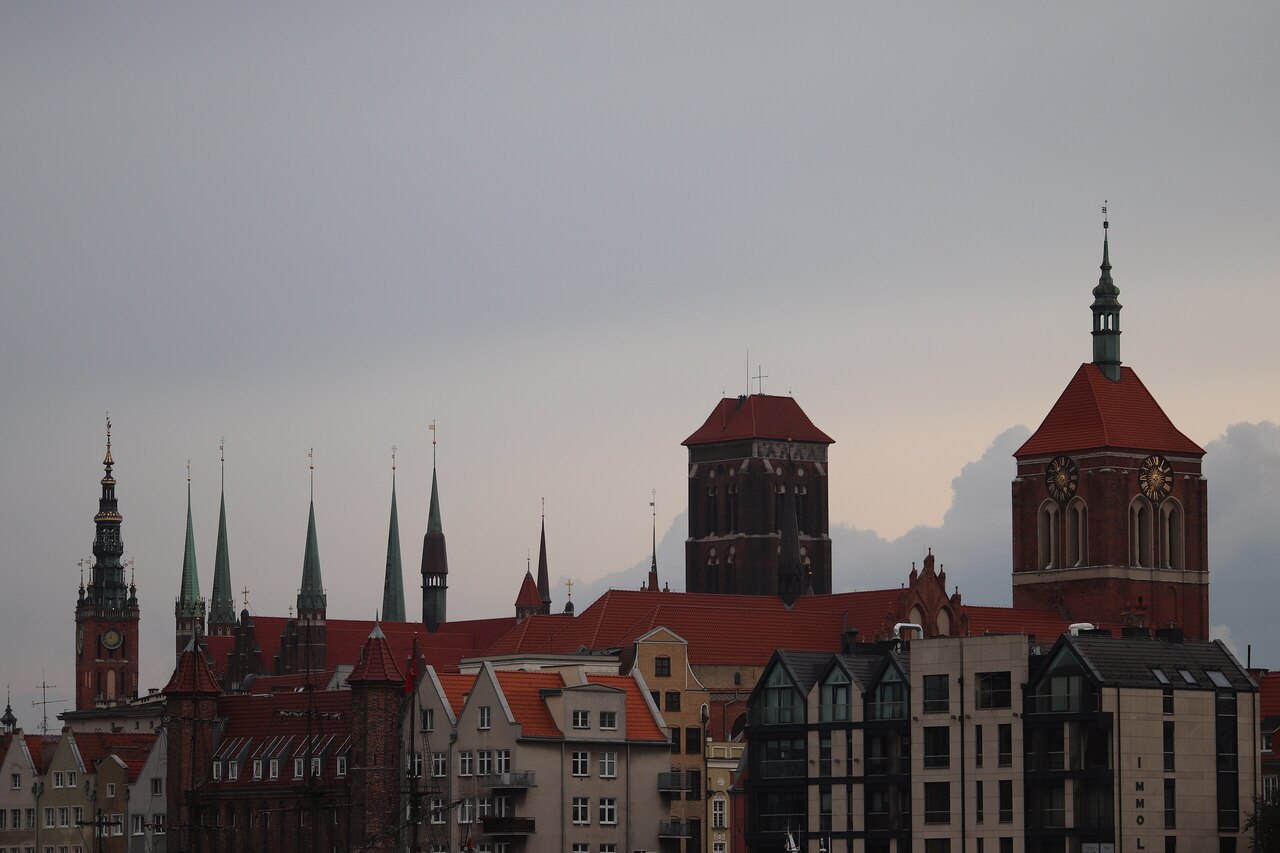
The 3-day plan, day by day
Day 1: The Royal Way and the Main Town
Morning. Enter through the Golden Gate and walk the Royal Way along Długa Street and the Long Market (Długi Targ), with the Neptune Fountain, Artus Court and the Main Town Hall (museum and tower climb).
Afternoon. Visit St. Mary's Church, one of the world's largest brick churches, and climb its tower (409 steps). Walk Mariacka Street, with stone terraces and amber shops, to the riverside and the Żuraw, a 15th-century wooden crane, part of the National Maritime Museum.
Evening. Have dinner along the Motława river and walk to the Granary Island.
Buy amber only in licensed shops; fakes made of plastic or resin are common.
Day 2: War, Solidarity and Westerplatte
Morning. Visit the Museum of the Second World War (about 30-40 złoty, closed on Mondays), one of Europe's best history museums, with reconstructed streets and personal stories. Allow at least 3 hours.
Afternoon. Visit the European Solidarity Centre at the Gdańsk Shipyard, the story of the 1980 strikes led by Lech Wałęsa, with the historic gate and the Monument to the Fallen Shipyard Workers. Then take a boat or bus to Westerplatte, where the first shots of the Second World War were fired.
Evening. Try Polish food: pierogi, żurek and fish from the Baltic.
Boats to Westerplatte (summer) leave from the riverside near the crane and pass the shipyard cranes.
Day 3: Malbork Castle and Sopot
Morning. Take the train to Malbork (about 30-60 minutes) for Malbork Castle (UNESCO, about 70-80 złoty with audio guide), the castle of the Teutonic Knights and the largest brick castle in the world. Allow 3-4 hours.
Afternoon. Return to the Tricity and go to Sopot, a seaside resort, to walk the Sopot Pier, the longest wooden pier in Europe (511 m), and see the Crooked House on Monte Cassino Street.
Evening. Have dinner in Sopot and walk back along the beach, or continue to modern Gdynia.
The SKM local trains connect Gdańsk, Sopot and Gdynia every few minutes.
Only have 2 days?
With 2 days, do Days 1 and 2, or Days 1 and 3.
Got extra days?
With more time, visit the Hel Peninsula, the sand dunes of the Słowiński National Park, or Toruń (Copernicus's birthplace, about 2 hours).
Where to stay in Gdańsk
| Budget | Area | Why | Typical double/night |
|---|---|---|---|
| Budget | Hostels near the Main Town | Central, cheap, walkable. | 200-350 zł |
| Mid-range | Main Town / Granary Island | Riverside, walk to everything. | 400-700 zł |
| Mid-range | Sopot | Beach and pier, 20 minutes by train. | 400-750 zł |
| Comfort | Riverside boutique hotels | Restored granaries and townhouses. | 800-1,500 zł |
Getting around
The Main Town is walkable. SKM trains and trams link the Tricity (Gdańsk, Sopot, Gdynia). Gdańsk Lech Wałęsa Airport is about 25-35 minutes by train or taxi. Trains go to Malbork (about 30-60 minutes) and Warsaw (about 3 hours).
What to eat in Gdańsk
Try pierogi (dumplings), żurek (sour rye soup), herring, smoked Baltic fish, placki ziemniaczane (potato pancakes) and Goldwasser, a herbal liqueur with gold flakes first made in Gdańsk. A milk bar (bar mleczny) meal costs 30-50 złoty; a restaurant dinner 80-150 złoty.
Best time to visit
May to September is best, with long days and beach weather in July and August (20-24°C). The St. Dominic's Fair (late July-August) is one of Europe's oldest fairs. Winter is cold and dark but has a Christmas market.
Month-by-month weather for Gdańsk →
What a day costs
| Budget | Mid-range | Comfort | |
|---|---|---|---|
| Bed (per person, sharing a double) | 120 zł | 270 zł | 650 zł |
| Food & drink | 90 zł | 170 zł | 350 zł |
| Sights & activities | 40 zł | 100 zł | 220 zł |
| Local transport | 15 zł | 40 zł | 120 zł |
| Total per person, per day | about 265 zł | about 580 zł | about 1,340 zł |
Approximate 2026 prices in Polish złoty. Cards are accepted almost everywhere; a small city tax may apply to hotels.
Before you go
Common questions
Is Gdańsk worth visiting?
Yes: it combines a beautiful rebuilt old town, two of Europe's best modern history museums, a beach and Malbork Castle, at lower prices than Western Europe.
Was Gdańsk destroyed in the war?
About 90% of the Main Town was destroyed in 1945. It was rebuilt after the war, using old paintings and plans.
How do I get to Malbork?
By train from Gdańsk Główny, about 30 minutes by express or 50-60 minutes by regional train. The castle is a 10-minute walk from the station.
Is Gdańsk good for families?
Yes: the beach, Sopot pier, boat trips, Malbork Castle and the interactive Hevelianum science centre.
What is the Tricity?
The three neighbouring cities of Gdańsk, Sopot and Gdynia, connected by fast local trains.
Can I swim in the Baltic?
Yes, in July and August, when the water is about 18-20°C. Sopot and Brzeźno have long sandy beaches.
What is amber?
Fossilised tree resin about 40 million years old, washed up on Baltic shores. Gdańsk calls itself the world capital of amber, with an Amber Museum.
Is Gdańsk safe?
Very safe. Take normal care in nightlife areas.
Do I need złoty?
Yes, Poland uses the złoty, not the euro. Cards and contactless payment are widely accepted.
Gdańsk or Kraków?
Kraków has the medieval royal capital and Auschwitz; Gdańsk has the Baltic coast and the Second World War and Solidarity history. Both are excellent.
What is Westerplatte?
A peninsula at the entrance to the port where a small Polish garrison defended a military depot for seven days after the German attack on 1 September 1939. Today it has a monument, ruins of the barracks and an outdoor exhibition.
Are there day trips from Gdańsk besides Malbork?
Yes: the Hel Peninsula (by train or summer ferry), the Kashubian lakes and villages inland, the old town of Toruń (about 2 hours), and the Oliwa Cathedral with its famous organ concerts, in Gdańsk itself.
Is there a Christmas market?
Yes: Gdańsk's Christmas market fills the Targ Węglowy square from late November to late December, with a Ferris wheel, food stalls and crafts.
What is the Oliwa Cathedral?
A Cistercian cathedral in the Oliwa district, about 25 minutes by tram from the centre, famous for its 18th-century organ with moving figures of angels and stars. Short organ recitals are held most days in summer.
How this guide was made
Written by hand, without AI, from experience planning Poland trips. Prices are approximate for 2026; confirm on the official Visit Gdańsk, Museum of the Second World War and Malbork Castle websites before booking.
Some links on this page are partner links. If you book through them TonyPlan may earn a commission; the price you pay is the same. How we make money.