Home › Galapagos Islands › How many days
How many days in the Galapagos? 5 days on land, two islands and one boat day
By Tony Panopoulos · travel-agency planner in Greece · Updated
You do not need a week-long cruise to see the Galapagos. A land-based trip of five days, sleeping in town and taking day boats, shows you sea lions on the beach, marine iguanas, giant tortoises in the wild and blue-footed boobies, for less than half the price of most cruises. The trick is to fly into San Cristobal and out of Baltra (or the reverse), so you never backtrack, and to book the one or two boat trips that reach the uninhabited islands.
Short answer
Four days is the minimum: two on San Cristobal and two on Santa Cruz, with one day boat. Five days adds a second boat trip or a visit to Isabela, and leaves a margin for the weather, which cancels boat trips more often than visitors expect.
The 5-day plan, day by day
Day 1: San Cristobal: sea lions and the town shore
Morning. Fly from Guayaquil to San Cristobal (about 1h45; flights from Quito stop in Guayaquil). Pay the US$200 national park entrance fee in cash at the airport, then take a taxi for about US$2-3 to Puerto Baquerizo Moreno, five minutes away. Sea lions sleep on the benches and boat ramps along the waterfront.
Afternoon. Walk 20 minutes past the free Interpretation Centre, which tells the islands' human and volcanic history, to Cerro Tijeretas. Frigatebirds nest on the hill, and the cove below has clear water for snorkelling with sea lions and turtles.
Evening. Watch the sunset at Playa Mann with the sea lion colony, then eat on the malecon, where a fish main with rice and patacones costs US$12-20.
Keep 2 metres from all animals, even when a sea lion pup walks up to you. Park rangers do fine people who touch wildlife or use drones.
Day 2: Kicker Rock and La Loberia
Morning. Take a full-day boat to Kicker Rock (Leon Dormido), a split volcanic tuff cone about 1 hour from town. You snorkel the channel between the two rocks, where Galapagos sharks, eagle rays and turtles pass below; the tour usually adds a beach stop at Puerto Grande or Cerro Brujo. Expect about US$150-190 with lunch and gear.
Afternoon. Back by mid-afternoon, take a taxi (about US$3) to La Loberia, a beach 2.5 km from town with a resident sea lion colony and marine iguanas on the lava path at the end.
Evening. Rest on the waterfront: the open-water snorkel is tiring. Ceviche and a beer cost around US$15.
Kicker Rock is a deep-water snorkel with current. If you are a weak swimmer, ask for a wetsuit (it adds buoyancy) and stay near the guide.
Day 3: Ferry to Santa Cruz and the giant tortoises
Morning. Take the 7:00 public speedboat to Santa Cruz (about 2-2h30, about US$30-35 one way). It is a fast, bumpy ride: sit at the back if you get seasick. Your bags are checked for food and plants before boarding.
Afternoon. From Puerto Ayora, take a taxi (about US$25-30 return with waiting) into the highlands to El Chato or Rancho Primicias, where wild giant tortoises graze in the fields (entry about US$10). Walk through the lava tunnels on the same farms, then stop at Los Gemelos, two collapsed craters in the Scalesia forest.
Evening. Eat on Calle Charles Binford, the 'kiosk street' that closes to cars at night; grilled lobster in season or a fish plate costs US$15-25.
The highlands are often in mist and drizzle (the garua) from June to November; bring a light rain jacket and closed shoes.
Day 4: Tortuga Bay, the Darwin Station and Las Grietas
Morning. Walk the 2.5 km paved path from the end of Calle Charles Binford to Tortuga Bay (free, open about 6:00-18:00, register at the gate). The long white beach has marine iguanas crossing the sand; swim only at Playa Mansa at the far end, because the main beach has strong currents.
Afternoon. Visit the Charles Darwin Research Station, a 20-minute walk from the centre, for the tortoise breeding programme and the preserved body of Lonesome George. Then take a US$1 water taxi across the bay and walk 15 minutes to Las Grietas, a crevice of brackish water between lava walls, for a swim.
Evening. Visit the fish market on the waterfront around 17:00, when pelicans and a sea lion wait for scraps at the cleaning table.
Book your boat for tomorrow tonight at the latest; agencies in Puerto Ayora sell the last-minute seats on day trips, sometimes with a discount.
Day 5: Day boat to North Seymour or Bartolome, then fly out
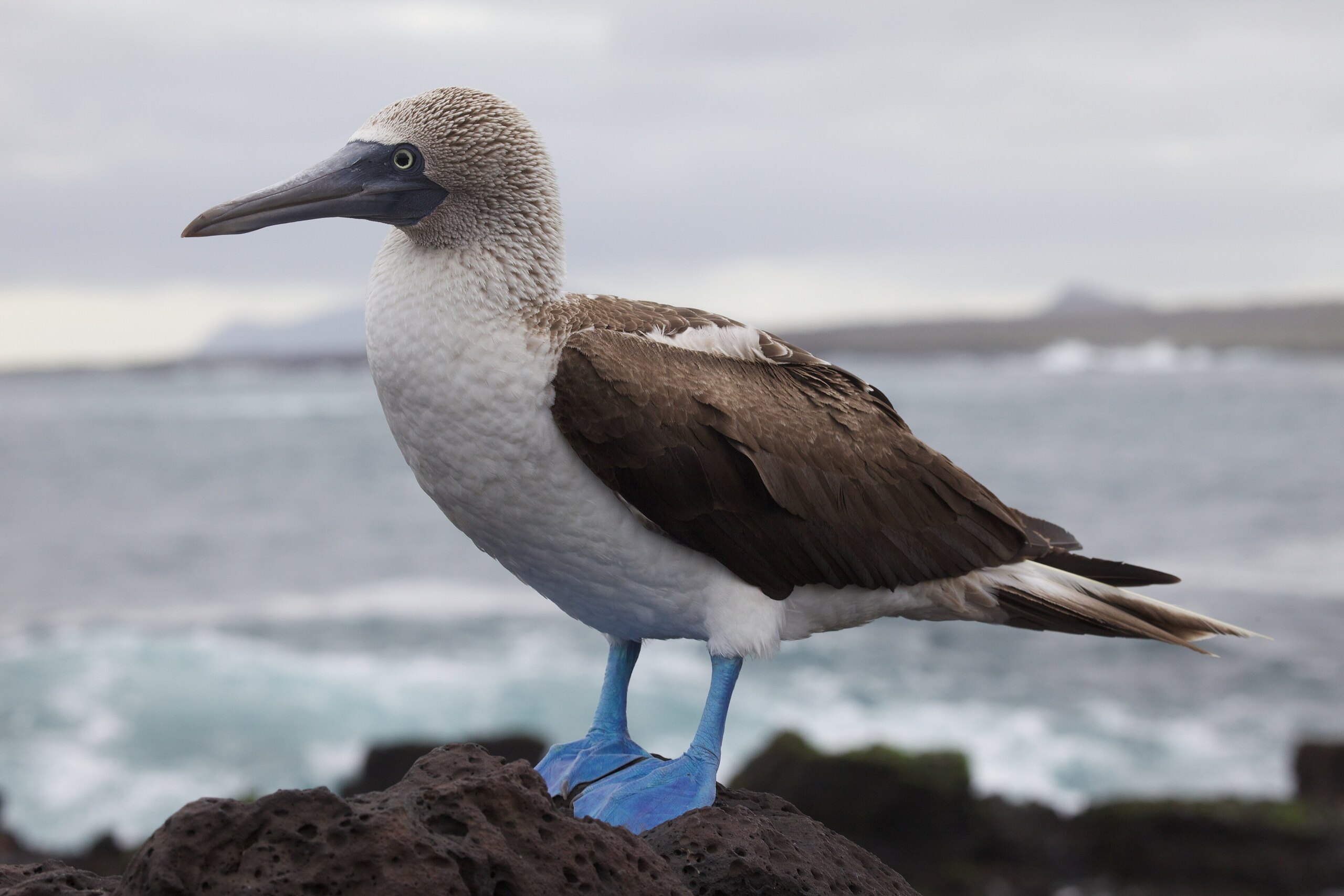
Morning. Take the bus across the island to the Itabaca Channel and board a park-licensed day boat to North Seymour (blue-footed boobies dancing, frigatebirds with red throat pouches, land iguanas) or Bartolome (the pinnacle rock view and penguins). Day trips cost about US$200-300 and sell out in high season.
Afternoon. Back by about 15:00. If your flight is today, choose a morning boat that returns to the channel, which is next to the 10-minute bus ride to Baltra airport; otherwise spend a last night in Puerto Ayora.
Evening. Fly from Baltra to Guayaquil or Quito, or stay and take a sunset kayak on Academy Bay (about US$15 an hour).
The airport-channel transfer is a public bus included in some flight tickets, plus a short ferry for about US$1; leave Puerto Ayora 2.5-3 hours before your flight.
Only have 4 days?
With 4 days, do Day 1 and Day 2 on San Cristobal and Days 3 and 4 on Santa Cruz, and take the North Seymour boat on the morning of Day 4 instead of Tortuga Bay. You lose the Darwin Station and one beach.
Got extra days?
Give extra days to Isabela, the largest island, 2 hours by speedboat from Santa Cruz (about US$30-35 plus a US$10 port fee). Stay in Puerto Villamil two nights: hike the rim of Sierra Negra volcano (about 16 km return), snorkel the lava arches of Los Tuneles with turtles and seahorses, and see penguins at Las Tintoreras.
Where to stay in Galapagos Islands
| Budget | Area | Why | Typical double/night |
|---|---|---|---|
| Budget | Puerto Ayora back streets / Puerto Baquerizo Moreno | Family-run guesthouses with fans or simple air conditioning, 5-10 minutes from the docks. | US$50-90 |
| Mid-range | Puerto Ayora, near Calle Charles Binford | Walk to the water taxis, agencies and restaurants; the most day-trip departures. | US$120-220 |
| Mid-range | San Cristobal malecon | Sea lions outside the door and the shortest ride from the airport. | US$110-200 |
| Comfort | Santa Cruz highlands lodges / Academy Bay hotels | Tented eco-lodges among tortoises, or waterfront hotels with private docks. | US$350-800 |
Getting around
There are no roads between islands: you move by public speedboat (about 2 hours, about US$30-35, usually at 7:00 and 15:00) or by small plane. On Santa Cruz, a bus and a short ferry link Baltra airport with the Itabaca Channel, then it is about 40 minutes by bus or taxi (about US$25-30) to Puerto Ayora. In town, white pickup taxis cost about US$1.50-3, and water taxis across Academy Bay are US$1. Before flying in, buy the US$20 Transit Control Card at Quito or Guayaquil airport.
What to eat in Galapagos Islands
Food is simple and dearer than mainland Ecuador because almost everything is shipped in. Lunch is the bargain: an almuerzo of soup, rice, meat or fish and a juice costs US$6-10 in local cafes. In Puerto Ayora, the grills on Calle Charles Binford serve brujo (scorpionfish), wahoo and, in the open season, spiny lobster for US$15-35. Try ceviche with popcorn and plantain chips, and encocado (fish in coconut sauce). Tap water is not drinkable.
Best time to visit
The Galapagos are a year-round destination with two seasons. December to May is warm (air 26-30°C), with calm seas, clear water for snorkelling and short tropical showers. June to November is cooler and drier with the garua mist, choppier seas and colder water (around 20-22°C), but more marine life and the blue-footed booby courtship. Peak prices are Christmas-New Year, Easter and July-August.
Month-by-month weather for Galapagos Islands →
What a day costs
| Budget | Mid-range | Comfort | |
|---|---|---|---|
| Bed (per person, sharing a double) | US$35 | US$80 | US$250 |
| Food & drink | US$30 | US$50 | US$90 |
| Sights & tickets | US$60 | US$140 | US$220 |
| Local transport | US$15 | US$25 | US$50 |
| Total per person, per day | about US$140 | about US$295 | about US$610 |
Approximate 2026 prices in US dollars, Ecuador's currency; the sights row averages day boats over the stay. Add the one-off US$200 park entrance fee (foreign adults, since August 2024) and the US$20 Transit Control Card, both paid in cash.
Before you go
Common questions
Is a land-based trip as good as a cruise?
For most visitors, nearly. From the inhabited islands you see sea lions, marine iguanas, tortoises, turtles, boobies and frigatebirds. What a cruise adds is the remote western and northern islands, such as Fernandina and Genovesa, and early-morning landings before day boats arrive. If you want those, an 8-day cruise is worth it; for a first visit, land-based is cheaper and more flexible.
Do I need to book tours in advance?
Book the popular day boats, especially North Seymour, Bartolome and Kicker Rock, a few weeks ahead for Christmas, Easter and July-August, when seats are limited by park quotas. In the low season you can usually book a day or two before in Puerto Ayora or Puerto Baquerizo Moreno, and agencies sometimes discount unsold seats. Ferries can be bought the day before at kiosks by the docks.
Can I visit the islands without a guide?
Some town-side sites, yes: Tortuga Bay, Las Grietas, Cerro Tijeretas, La Loberia and the Darwin Station are open to independent visitors during set hours. Every site away from the towns, and every boat trip to the uninhabited islands, requires a park-certified naturalist guide. Rules change, so ask at your hotel or the park office which sites currently need a guide.
What should I pack?
Reef-safe sunscreen, a hat and a long-sleeved rash guard, because the equatorial sun burns in minutes even on cloudy days. Bring a dry bag, motion-sickness tablets for the ferries, closed shoes for lava paths and a light rain jacket for the highlands. Cash in US dollars is important: many small businesses do not take cards, and island ATMs sometimes run out.
How this guide was made
Compiled by TonyPlan from official tourism, transport and attraction sources and on-the-ground travel knowledge. Prices are approximate for 2026 and change with season; anything we could not confirm is marked as approximate.
Some links on this page are partner links. If you book through them TonyPlan may earn a commission; the price you pay is the same. How we make money.