How many days in Fiji? 7 days, from the Coral Coast to the Yasawa Islands
By Tony Panopoulos · travel-agency planner in Greece · Updated
Fiji has more than 300 islands, but almost every visitor lands at Nadi on Viti Levu and spends most of the trip on boats. Give it seven days: two on the main island's west coast, four out on the Mamanuca and Yasawa islands, and a last night near the airport so a delayed ferry does not cost you your flight. The thing that shapes every plan is the Yasawa Flyer catamaran, which runs once a day in each direction.
Short answer
Five days still works: one night in Nadi, three nights on one or two islands in the Mamanucas or southern Yasawas, and a last night back on Viti Levu. Seven lets you add the Coral Coast and go further north to the Blue Lagoon area.
The 7-day plan, day by day
Day 1: Nadi: arrival, gardens and mud pools
Morning. Most long-haul flights from Los Angeles, Sydney and Auckland land at Nadi International Airport early in the morning. Taxis to Wailoaloa Beach or Denarau take 15-25 minutes and cost about FJ$15-35. Drop your bags and have breakfast; check-in is usually not before 14:00.
Afternoon. Drive 20 minutes north to the orchids of the Garden of the Sleeping Giant (about FJ$25). Nearby, the Sabeto mud pools (about FJ$40) offer warm mud followed by thermal pools.
Evening. Visit the Sri Siva Subramaniya Temple in Nadi, the largest Hindu temple in the South Pacific (modest dress, shoes off). Then eat a curry on Main Street for FJ$15-25.
Buy a Vodafone or Digicel tourist SIM at arrivals (about FJ$30-50); island Wi-Fi is slow.
Day 2: Coral Coast and the Sigatoka Sand Dunes
Morning. Take a taxi or the Queens Road bus south (about 1h15 from Nadi) to the Sigatoka Sand Dunes National Park, Fiji's first national park. The loop walk over 60-metre dunes to the beach takes about 1-2 hours; entry is about FJ$10-20. Go early: there is no shade.
Afternoon. Continue to the Coral Coast and snorkel off the reef at Korotogo. Or see the crested iguana at Kula Wild Adventure Park (about FJ$50).
Evening. Many Coral Coast resorts hold a meke and fire-walking show some nights. It usually comes with a lovo meal from an earth oven.
Queens Road buses cost a few dollars; flag them down and pay the driver in cash.
Day 3: Village visit and the Navua River (or a rest day)
Morning. From the Coral Coast, join a day trip to Pacific Harbour and the Navua River, about 1 hour east. Longboats take you upriver past waterfalls to a village, where you are welcomed with a sevusevu ceremony and a bowl of kava (yaqona), the peppery root drink.
Afternoon. Swim under a waterfall and eat a village lunch. Divers instead do the Beqa Lagoon shark dive, known for bull sharks, at around FJ$400-500.
Evening. Return west and sleep near Port Denarau, where the island ferries leave. Marina restaurants charge FJ$30-50 a main.
In villages, cover shoulders and knees, remove hats and never touch anyone's head. Independent visitors bring kava root (about FJ$20 at Nadi market) as a gift.
Day 4: Mamanuca Islands: the classic postcard
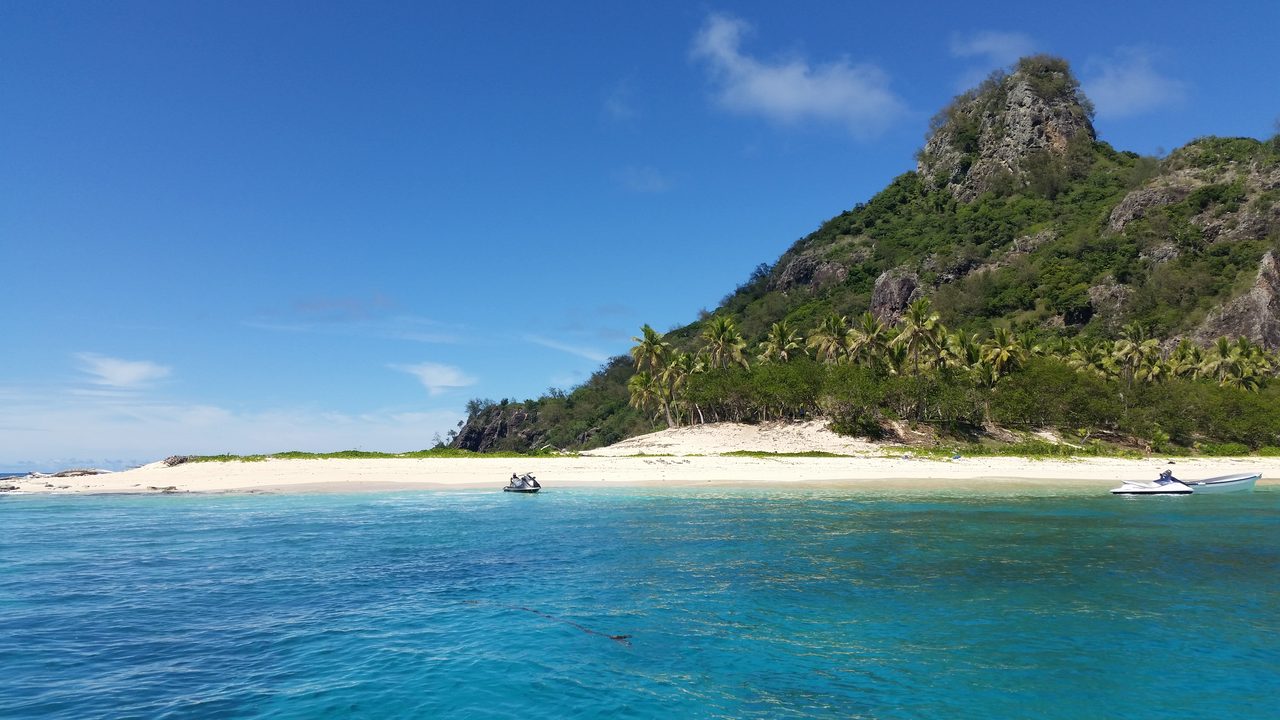
Morning. Board the Yasawa Flyer at Port Denarau at around 8:30. The first stops are the Mamanucas: South Sea Island, Bounty Island and Beachcomber, all 30-60 minutes away. Stay on one of them, or ride on to the southern Yasawas.
Afternoon. Snorkel off the beach, or visit Monuriki, the Cast Away island. Cloud 9, a floating bar on the reef, has a minimum spend of about FJ$100-150.
Evening. Backpacker islands have a compulsory meal plan of about FJ$100-150 a day. There is nowhere else to eat.
The hop-on hop-off Bula Pass for the Yasawa Flyer usually beats single tickets if you stop on two or more islands.
Day 5: Yasawa Islands: Waya and Naviti
Morning. Take the Flyer north into the Yasawa Islands, about 2-3 hours from Port Denarau. Waya has the best hiking: a steep 1-2 hour climb from the village of Nalauwaki gives views over the whole chain.
Afternoon. Move on to Naviti, where from about May to October you can snorkel with manta rays in the channel near Drawaqa. Resorts run boat trips when the mantas are spotted, typically FJ$100-150.
Evening. Join the kava circle many lodges hold for guests and staff. Guitar singing usually follows.
There are no ATMs on the islands, and cards carry a 3-5% surcharge: bring cash.
Day 6: Blue Lagoon and the Sawa-i-Lau caves
Morning. Ride the Flyer to the far north, about 4-5 hours from Denarau, to Nacula and Tavewa around the Blue Lagoon, named after the 1980 film shot nearby. The water inside the reef is calm and clear for snorkelling.
Afternoon. Take a boat to the Sawa-i-Lau caves (about FJ$50-80 with transfer). You swim in a limestone chamber lit from above and duck through an underwater passage into a second cave.
Evening. Watch sunset from the beach on Nacula. Lodges here charge FJ$150-250 per person with meals.
The return Flyer leaves the northern islands around midday and arrives in Denarau around 17:30-18:00. Never book a same-day international flight after an island stay.
Day 7: Back to Viti Levu: Nadi market and departure
Morning. Take the morning Flyer south. A 30-45 minute seaplane to Nadi (about FJ$600-900 per person) shows the reefs from above.
Afternoon. Visit the Nadi Municipal Market for papaya and kava root, and the handicraft market for tapa cloth and carved bowls. A market lunch costs FJ$10-15.
Evening. Spend the last night at Wailoaloa Beach or Denarau. Both are 15-25 minutes from the airport.
Many flights to the USA leave late at night: ask for a late check-out.
Only have 5 days?
With 5 days, skip the Coral Coast and the Navua River: one night in Nadi, then three nights split between a Mamanuca island and Waya or Naviti, and a final night near the airport.
Got extra days?
Extra days go to Taveuni, the 'garden island', for the Bouma waterfalls and the Rainbow Reef soft coral dives (about 1h20 flight from Nadi), or to Savusavu on Vanua Levu. Divers can add Kadavu, home of the Great Astrolabe Reef.
Where to stay in Fiji
| Budget | Area | Why | Typical double/night |
|---|---|---|---|
| Budget | Wailoaloa Beach (Nadi) / Yasawa backpacker lodges | Dorms and simple bures; island lodges include all meals. | FJ$80-200 |
| Mid-range | Coral Coast | Family resorts on the reef with snorkelling from the beach, cheaper than the islands. | FJ$250-450 |
| Mid-range | Denarau Island | Chain resorts next to the ferry port and 20 minutes from the airport. | FJ$350-600 |
| Comfort | Mamanuca or northern Yasawa island resorts | Private bures over white sand, often adults-only. | FJ$900-2,500 |
Getting around
On Viti Levu, taxis are cheap but unmetered outside towns: agree the fare first (Nadi airport to Denarau about FJ$35). Express buses run between Nadi, Sigatoka and Suva (about 4 hours, FJ$20). To the islands, the Yasawa Flyer (Awesome Adventures) and South Sea Cruises catamarans leave from Port Denarau; a one-way ticket to the northern Yasawas is about FJ$200-250. Fiji Link flies to Taveuni, Savusavu and Kadavu.
What to eat in Fiji
The dish to try is kokoda: raw fish cured in lime and served in coconut cream with chilli and tomato, about FJ$15-25. A lovo feast, with pork, chicken, fish and taro wrapped in banana leaves and cooked in an earth oven, is usually served on Sundays and at resort nights. Almost 40% of Fijians are of Indian descent, so curry and roti are everywhere and cheap: a curry plate in Nadi or Suva is FJ$10-20. Try rourou (taro leaves in coconut milk) with cassava. Fiji Bitter and Fiji Gold are the local beers, about FJ$8-12 a bottle in a bar.
Best time to visit
May to October is the dry season, with highs around 26-29°C, lower humidity and the best visibility for snorkelling; it is also when Australians and New Zealanders arrive for school holidays (late June-July and late September-early October). November to April is hot, humid and wet, with highs around 31°C, and is cyclone season, with the highest risk from January to March. Resort prices drop.
Month-by-month weather for Fiji →
What a day costs
| Budget | Mid-range | Comfort | |
|---|---|---|---|
| Bed (per person, sharing a double) | FJ$70 | FJ$200 | FJ$600 |
| Food & drink | FJ$60 | FJ$120 | FJ$250 |
| Sights & tickets | FJ$30 | FJ$90 | FJ$200 |
| Local transport | FJ$40 | FJ$80 | FJ$200 |
| Total per person, per day | about FJ$200 | about FJ$490 | about FJ$1,250 |
Approximate 2026 prices in Fijian dollars, with catamaran fares averaged over the trip; hotels add VAT plus service and environment levies, so check whether a rate is tax-inclusive.
Before you go
Common questions
Mamanuca or Yasawa Islands: which should I choose?
The Mamanucas are closer to Nadi (30-90 minutes by boat), sunnier and drier, with more resorts, day cruises and families. The Yasawas are further (2-5 hours), more rugged and quieter, with village life, hiking and the manta rays, and most of the backpacker lodges. With seven days, do one night in the Mamanucas and two or three in the Yasawas.
Do I need a visa for Fiji?
Citizens of most Western countries, including the USA, UK, EU states, Australia and New Zealand, receive a visitor permit on arrival for up to four months. You need a passport valid for at least six months, a return or onward ticket and proof of accommodation. Check the Fiji Immigration website before travel, as rules can change.
Is the water safe to drink in Fiji?
In Nadi, Suva and most resorts on Viti Levu tap water is generally treated, but many travellers still drink bottled water, and Fiji Water costs only about FJ$2-4 a bottle locally. On the outer islands, water often comes from rain tanks, so drink filtered or bottled water and use a refillable bottle where the lodge provides a filter.
How much cash should I bring to the islands?
There are no ATMs on the Mamanuca or Yasawa islands. Withdraw enough in Nadi or at Port Denarau for activities, drinks and tips, roughly FJ$100-150 per person per day on top of your prepaid meal plan. Cards work at most resorts, usually with a 3-5% surcharge, but village visits and small lodges want cash.
How this guide was made
Compiled by TonyPlan from official tourism, transport and attraction sources and on-the-ground travel knowledge. Prices are approximate for 2026 and change with season; anything we could not confirm is marked as approximate.
Some links on this page are partner links. If you book through them TonyPlan may earn a commission; the price you pay is the same. How we make money.