Home › Chiang Mai › How many days
How many days in Chiang Mai? 4 days of temples, mountains and night markets
By Tony Panopoulos · travel-agency planner in Greece · Updated
Chiang Mai is northern Thailand's calmer, greener capital: more than 300 temples inside and around a moated Old City a mile square, mountains on the edge of town, and the best food markets in the country. Four days gives one to the Old City temples, one to Doi Suthep and the night markets, one to an ethical elephant sanctuary or a cooking class, and one to Doi Inthanon, Thailand's highest mountain. Avoid February to April if you can: crop burning brings heavy smoke.
Short answer
Three days covers the temples, Doi Suthep, a night market and either elephants or cooking. The fourth adds the mountains of Doi Inthanon or the White Temple in Chiang Rai.
The 4-day plan, day by day
Day 1: The Old City temples
Morning. Start at Wat Phra Singh (a small fee for the main hall), with the revered Phra Buddha Sihing and Lanna murals. Walk 5 minutes to Wat Chedi Luang (about 50-100 baht), a massive ruined 14th-century chedi damaged by an earthquake in 1545, and its daily monk chat, where you can talk with novice monks.
Afternoon. Visit Wat Chiang Man, the city's oldest temple (around 1296), with a chedi supported by elephant sculptures, and rest in a café in the Old City. Then the Lanna Folklife Museum for the northern culture.
Evening. On a Sunday, the Walking Street fills Ratchadamnoen Road from Tha Phae Gate with crafts and food from 16:00. On Saturday, Wualai Road's market south of the city, known for silverwork. Other nights, the Night Bazaar on Chang Klan Road.
Cover shoulders and knees in temples and take shoes off before entering the halls. Women should not touch monks or hand things to them directly.
Day 2: Doi Suthep and Nimman
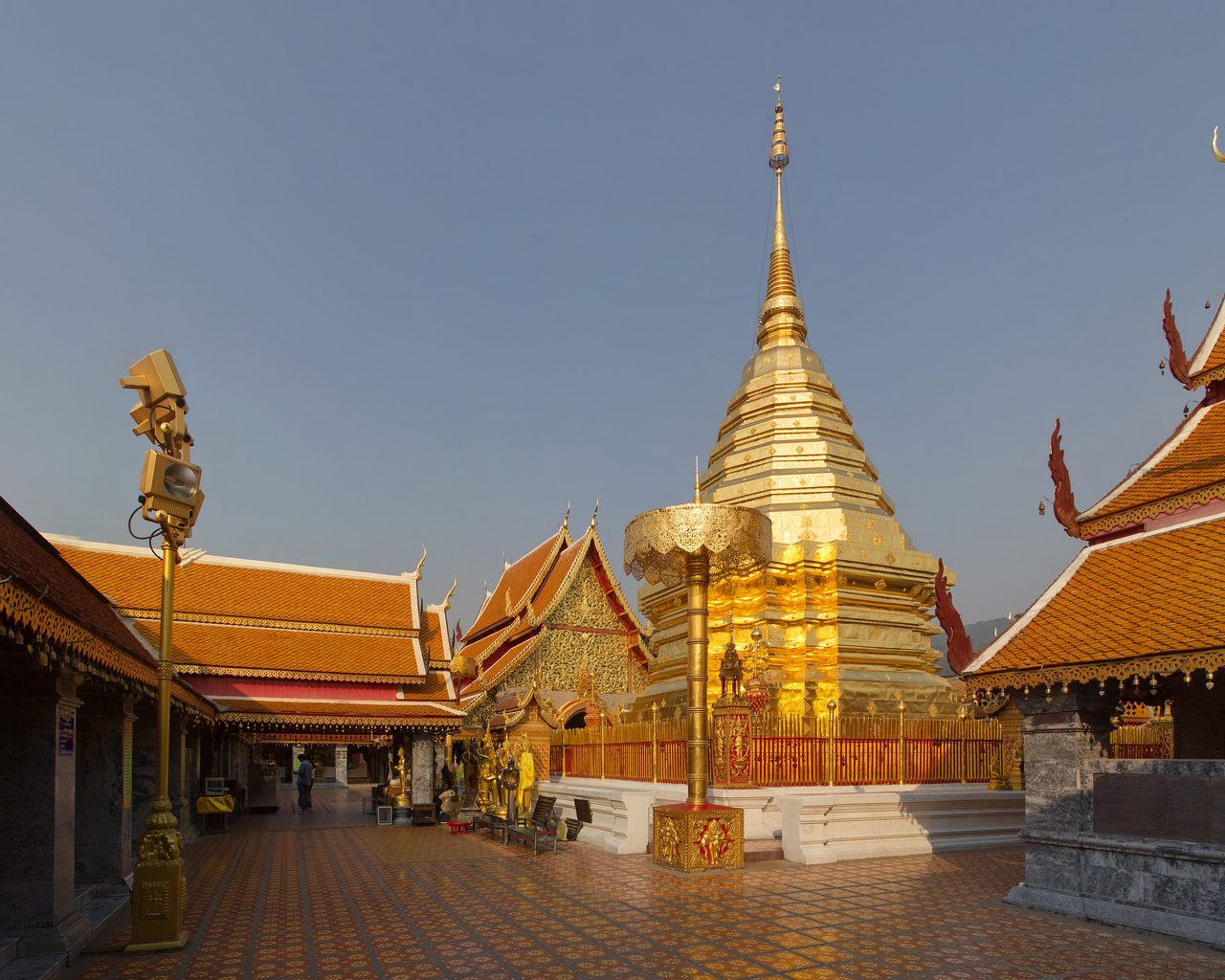
Morning. Walk the Monk's Trail from the end of Suthep Road through forest to Wat Pha Lat, a hidden temple by a waterfall (about 45 minutes), then continue or take a red songthaew up to Wat Phra That Doi Suthep (about 30-50 baht entry), climbing 306 steps flanked by naga serpents, or take the funicular. The view over the city is best before the midday haze.
Afternoon. Come down to the Nimmanhaemin (Nimman) area for cafés, galleries and the One Nimman courtyard, and visit the Maya mall's rooftop.
Evening. Dinner at the Chiang Mai University night market or the food courts around Nimman, then a Muay Thai fight at Thapae Stadium if you like.
The Monk's Trail is steep and marked with orange cloth on trees. Go early and carry water.
Day 3: Elephants or cooking
Morning. Visit an ethical elephant sanctuary (about 2,000-2,800 baht for a half or full day with transfers): choose one with no riding, no bathing shows and no performances, where you observe and feed rescued elephants. The Elephant Nature Park is the best-known.
Afternoon. Or take a Thai cooking class (about 1,000-1,500 baht), most of which start at a local market and are held on organic farms outside the city; you cook and eat 5-6 dishes, including khao soi.
Evening. Have a massage at the women's prison massage centre, run to train inmates for work after release (about 200-300 baht an hour), then dinner in the Old City.
Avoid any elephant camp that offers riding, painting or circus shows; these are signs of harsh training methods.
Day 4: Doi Inthanon
Morning. Drive about 1.5-2 hours to Doi Inthanon National Park (park fee for foreigners about 300 baht), with Thailand's highest summit at 2,565 metres, often cool and misty, and the Wachirathan and Sirithan waterfalls on the way up.
Afternoon. Visit the twin royal chedis, built for the King and Queen's 60th birthdays, surrounded by flower gardens, and walk the Kew Mae Pan nature trail (open roughly November to May, with a local guide required), along a ridge with views.
Evening. Return to Chiang Mai for a final dinner. Alternatively, spend this day in Chiang Rai (3 hours each way) for the White Temple (Wat Rong Khun) and the Blue Temple.
It can be close to freezing at the summit in December and January. Bring a jacket.
Only have 3 days?
With 3 days, do Days 1, 2 and 3. You lose Doi Inthanon.
Got extra days?
With more time, take the winding road (762 bends) to Pai in the mountains (about 3-4 hours), or spend a night in Chiang Rai for the temples and the Golden Triangle.
Where to stay in Chiang Mai
| Budget | Area | Why | Typical double/night |
|---|---|---|---|
| Budget | Old City guesthouses | Walk to the temples and the Sunday market. | 500-1,000 baht |
| Mid-range | Old City / Tha Phae Gate | Boutique hotels with pools, walk to everything. | 1,500-3,000 baht |
| Mid-range | Nimman | Modern area of cafés and restaurants; Doi Suthep nearby. | 1,500-3,000 baht |
| Comfort | Riverside resorts / Mae Rim | Lanna-style resorts by the Ping River or in the hills. | 5,000-15,000 baht |
Getting around
The Old City is walkable. For longer trips, use Grab or the shared red songthaews (about 30-50 baht within the city; agree the price before you get in). Hire a driver for Doi Inthanon. Chiang Mai airport is only 15-20 minutes from the Old City. From Bangkok, flights take about 1h15 and the overnight train about 11-13 hours.
What to eat in Chiang Mai
Northern Thai food is different from Bangkok's. Eat khao soi, a curry noodle soup with crispy noodles on top (about 50-80 baht at places like Khao Soi Khun Yai or Khao Soi Mae Sai), sai ua (herbal pork sausage), nam prik noom (green chilli dip with pork crackling), gaeng hang lay (Burmese-style pork curry) and sticky rice eaten with your hands. Markets such as Warorot and the North Gate night stalls (try the famous khao kha moo, stewed pork leg with rice) serve meals for 40-80 baht.
Best time to visit
November to February is the cool, dry season, with highs of 28-30°C and cool nights; it is also the busiest. The Yi Peng lantern festival, with Loy Krathong, usually falls in November. February to April is the burning season, with smoky haze and some of the worst air quality in Asia; avoid it if you have breathing problems. The rainy season (May to October) is green and quieter.
Month-by-month weather for Chiang Mai →
What a day costs
| Budget | Mid-range | Comfort | |
|---|---|---|---|
| Bed (per person, sharing a double) | 400 baht | 1,100 baht | 4,000 baht |
| Food & drink | 350 baht | 800 baht | 2,000 baht |
| Activities & tours | 300 baht | 1,200 baht | 2,500 baht |
| Local transport | 100 baht | 300 baht | 1,000 baht |
| Total per person, per day | about 1,150 baht | about 3,400 baht | about 9,500 baht |
Approximate 2026 prices in Thai baht. Elephant sanctuary and cooking-class prices include transfers from the city. No hotel tourist tax at the time of writing.
Before you go
Common questions
How do I choose an ethical elephant sanctuary?
No riding, no bathing shows, no tricks, small groups, and elephants free to roam. Reputable places explain where the elephants came from and limit how close visitors get.
When is the lantern festival?
Yi Peng is usually in November, around the full moon of the 12th lunar month, together with Loy Krathong. Mass lantern releases need tickets; the city also releases lanterns on the river.
Is the burning season really that bad?
From about February to April, smoke from crop burning can make the air unhealthy for weeks. Check air-quality apps; if you must travel then, bring masks.
Is Chiang Mai good for families?
Yes: temples, sanctuaries, cooking classes, waterfalls and night markets suit children well, and the city is calm and safe.
Chiang Mai or Chiang Rai?
Chiang Mai is the base for most visitors; Chiang Rai, 3 hours away, is smaller and known for its modern temples. Many visit Chiang Rai on a long day trip or with one night.
How this guide was made
Written by hand, without AI, from experience planning Thailand trips. Prices are approximate for 2026 in baht; confirm temple fees, national-park fees and sanctuary prices with official sources and operators before booking.
Some links on this page are partner links. If you book through them TonyPlan may earn a commission; the price you pay is the same. How we make money.