Home › Budapest › How many days
How many days in Budapest? 3 days on both banks of the Danube
By Tony Panopoulos · travel-agency planner in Greece · Updated
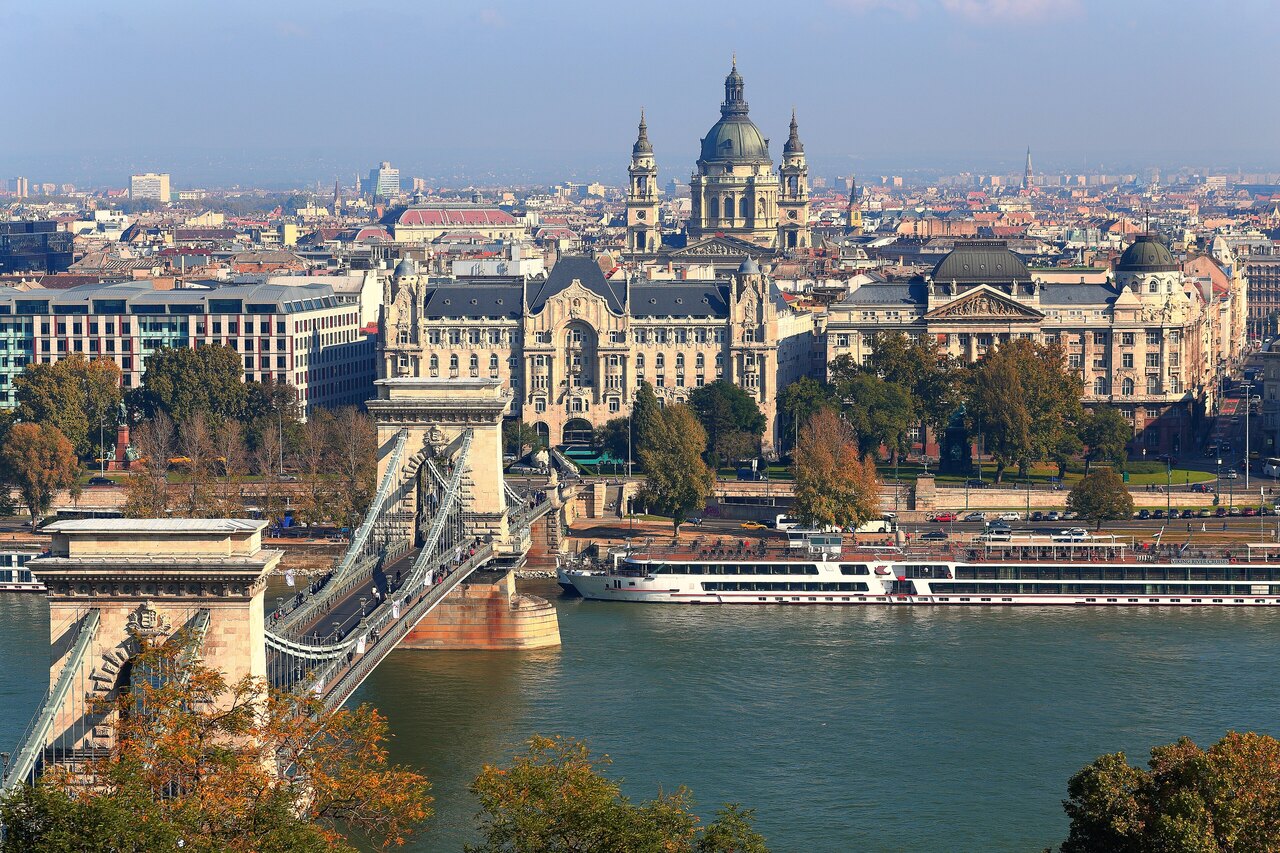
Budapest is two cities joined in 1873: hilly Buda with the castle district, and flat Pest with the Parliament, the grand avenues and the nightlife. Three days gives each side a day and leaves the third for what Budapest does better than anywhere else in Europe, a morning in a thermal bath. The best views are from the bridges at night, when the Parliament and the castle are floodlit.
Short answer
Two days covers the castle, Parliament and one bath, with the ruin bars in the evening. The third day adds Andrássy Avenue, City Park and a slower morning in the water.
The 3-day plan, day by day
Day 1: Buda: the Castle District
Morning. Cross the Chain Bridge on foot and take the Sikló funicular (in operation since 1870) or walk up the steps of the Castle Hill. Arrive at Fisherman's Bastion before 9:00, when the lower terraces are free and empty; the upper turrets charge a small fee in the day. Next door, Matthias Church has a roof of coloured Zsolnay tiles.
Afternoon. Walk through the castle district's lanes to Buda Castle, home of the Hungarian National Gallery, then down through the Castle Garden Bazaar to the river. Cross to Gellért Hill and climb to the Citadella and the Liberty Statue for the widest view over the Danube.
Evening. Walk across the Liberty Bridge to the Great Market Hall (closed on Sundays, and closes in the early evening) for lángos, fried dough with sour cream and cheese, for about HUF 2,000-3,000.
The view of Parliament from the Buda side is best from Batthyány Square at night, a 15-minute walk north of the Chain Bridge.
Day 2: Pest: Parliament and the Jewish Quarter
Morning. Book a Parliament guided tour (about 45 minutes; EU citizens pay less than non-EU visitors) to see the Holy Crown of Hungary under the dome. Then walk 10 minutes south along the river to the Shoes on the Danube Bank, 60 pairs of iron shoes remembering Jews shot here in 1944-45.
Afternoon. Visit St Stephen's Basilica, whose dome terrace (by lift or 364 steps) gives a 360° view, then the Dohány Street Synagogue, the largest in Europe, with its garden memorial (tickets around HUF 9,000-10,000, closed on Saturdays).
Evening. The Jewish Quarter (District VII) is where the ruin bars started: Szimpla Kert, opened in 2002 in a derelict building, is the original. Beer costs HUF 1,000-1,500. Kazinczy Street has street-food courts for dinner.
Take a Danube cruise after dark: the Parliament and the castle are floodlit, and an hour on the river costs from about HUF 5,000-8,000 without dinner.
Day 3: Thermal baths, Andrássy Avenue and City Park
Morning. Go to Széchenyi Baths in City Park at opening (around 7:00), when the outdoor pools steam in the cold air and the chess players are already at their boards. Weekday tickets are cheaper than at weekends. Bring flip-flops and a towel, or rent them.
Afternoon. Walk around Heroes' Square and Vajdahunyad Castle in City Park, then ride the M1 Millennium Underground, continental Europe's oldest metro (1896), back along Andrássy Avenue to the Opera House, which has guided tours in the afternoon.
Evening. Dinner with goulash (a soup in Hungary, not a stew) and paprikás csirke; a main costs about HUF 4,000-6,000. Then a concert at the Liszt Academy or a performance at the Opera House, often cheaper than in Vienna.
The Gellért Baths have had renovation closures; check before you go. Rudas Baths by the Elisabeth Bridge have a 16th-century Turkish dome and a rooftop pool.
Only have 2 days?
With 2 days, do Day 1, then Parliament and the Jewish Quarter on Day 2, with an evening bath at Széchenyi. You lose City Park and Andrássy Avenue.
Got extra days?
On a 4th day, take the HÉV suburban train 40 minutes to Szentendre, an artists' village on the Danube, or a boat or bus trip around the Danube Bend to Visegrád and Esztergom, whose basilica is the largest church in Hungary.
Where to stay in Budapest
| Budget | Area | Why | Typical double/night |
|---|---|---|---|
| Budget | District VII (Jewish Quarter) | Cheapest central beds and the nightlife on the doorstep; loud on weekends. | HUF 25,000-40,000 |
| Mid-range | District V (Belváros) | Walk to Parliament, the Chain Bridge and the Danube promenade. | HUF 45,000-75,000 |
| Mid-range | District VI (Andrássy Avenue) | Elegant boulevards, near the Opera and the M1 to City Park. | HUF 40,000-65,000 |
| Comfort | Riverfront (Pest) or Castle District (Buda) | Grand hotels with Danube or Parliament views. | HUF 90,000-200,000 |
Getting around
Most sights in Pest are walkable, and trams 2 (along the Pest riverbank, one of Europe's most scenic tram rides) and 4/6 (the Grand Boulevard) cover the rest. A single ticket costs about HUF 450, but a 24- or 72-hour travel card is better value; tap contactless cards on newer buses and trams, or use the BudapestGO app. From the airport, the 100E express bus reaches Deák Ferenc tér in about 35-40 minutes for about HUF 2,200.
What to eat in Budapest
Hungarian food is hearty and paprika-red. Goulash (gulyás) is a soup, served with bread; paprikás csirke (chicken in paprika and sour cream) comes with small dumplings called nokedli; töltött káposzta is stuffed cabbage. In the Great Market Hall's upper gallery, simple counters serve these for HUF 3,500-5,000. The classic snack is lángos, fried dough with sour cream and grated cheese. For coffee and cake, the grand cafés such as the New York Café are spectacular but pricey; smaller cukrászdas (pastry shops) serve Dobos torte and Esterházy torte for a third of the price. Try Tokaji sweet wine and pálinka, the fruit brandy, carefully: it is often 50% alcohol.
Best time to visit
April-May and September-October, with highs of 17-23°C. Summer is hot (around 27-28°C) and lively, with outdoor ruin-bar gardens and the Sziget festival in August. The Christmas market at Vörösmarty Square runs from late November. Winter is cold, but it is the best season for the outdoor thermal pools.
Month-by-month weather for Budapest →
What a day costs
| Budget | Mid-range | Comfort | |
|---|---|---|---|
| Bed (per person, sharing a double) | HUF 15,000 | HUF 28,000 | HUF 60,000 |
| Food & drink | HUF 9,000 | HUF 18,000 | HUF 40,000 |
| Sights & baths | HUF 7,000 | HUF 15,000 | HUF 25,000 |
| Local transport | HUF 1,500 | HUF 2,500 | HUF 8,000 |
| Total per person, per day | about HUF 32,500 | about HUF 63,500 | about HUF 133,000 |
Approximate 2026 prices in Hungarian forint (very roughly HUF 400 to €1). Budapest adds a tourist tax of a few percent of the room price.
Before you go
Common questions
Should I pay in forint or euros?
In forint. Euros are accepted in tourist places at a bad rate. If a card machine offers to charge you in euros, choose forint.
Which thermal bath should I choose?
Széchenyi for the famous outdoor pools, Rudas for the Turkish dome and the rooftop pool. Go at opening on weekdays to avoid the crowds.
Is Budapest cheap?
Cheaper than Vienna or Prague for food and drink, but restaurant prices in the centre have risen fast. Eat in neighbourhood places, and check bills for added service charges.
What are the main scams?
Unlicensed taxis (use Bolt or official yellow cabs), restaurants without prices on the menu, and bar invitations from friendly strangers on Váci Street.
How this guide was made
Written by hand, without AI, from experience planning Central Europe trips. Prices are approximate for 2026 in forint; confirm on the official Hungarian Parliament visitor centre, Budapest Baths (Széchenyi, Rudas) and BKK transport websites before booking.
Some links on this page are partner links. If you book through them TonyPlan may earn a commission; the price you pay is the same. How we make money.