How many days in Berlin? 4 days through history and neighbourhoods
By Tony Panopoulos · travel-agency planner in Greece · Updated
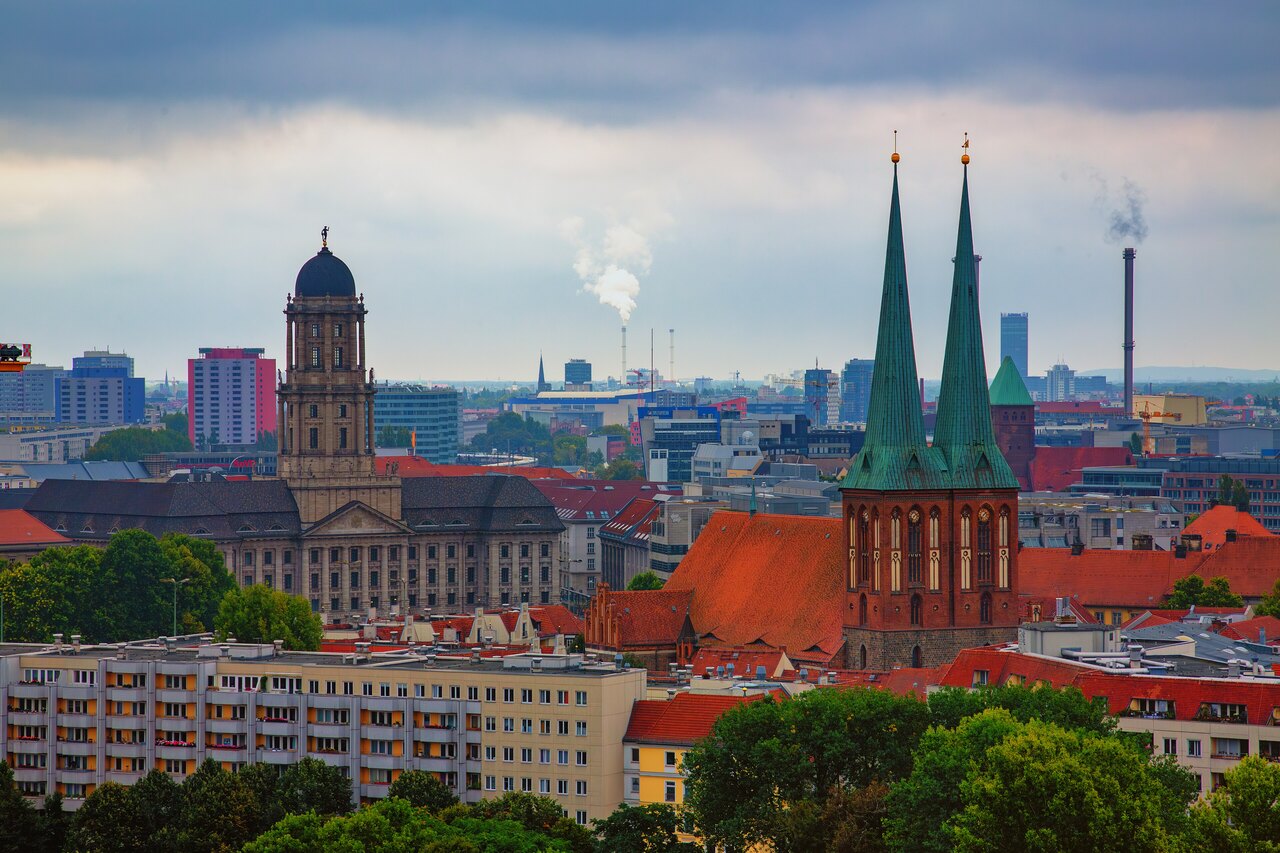
Berlin is spread out and has no single centre, so give it four days and treat it as a set of districts. Mitte has the 20th-century history and Museum Island; Kreuzberg and Neukölln have the food, canals and nightlife; Prenzlauer Berg has the Sunday flea market and the Wall memorial. Much of the most important history is free: the Reichstag dome, the Holocaust Memorial, the Topography of Terror and the Berlin Wall Memorial.
Short answer
Three days covers Mitte, the Wall sites and one museum. The fourth adds Potsdam's palaces or a slower Kreuzberg day, and Berlin's best evenings.
The 4-day plan, day by day
Day 1: Government quarter and the Brandenburg Gate
Morning. Register online in advance for the Reichstag dome (free, with ID; slots go days ahead). The spiral ramp inside Norman Foster's glass dome looks down into the parliament chamber. Then walk 5 minutes to the Brandenburg Gate.
Afternoon. Walk south to the Memorial to the Murdered Jews of Europe, 2,711 concrete slabs of different heights, with an underground information centre (free). Continue to Potsdamer Platz and the Topography of Terror on the site of the Gestapo headquarters (free), with a 200-metre stretch of the Wall outside.
Evening. Walk 10 minutes to Checkpoint Charlie (a reconstructed booth, best seen briefly), then up Friedrichstrasse to Gendarmenmarkt, Berlin's most beautiful square, for dinner.
Bring your passport or ID card to the Reichstag; without it you will not get in, even with a booking.
Day 2: Museum Island and Alexanderplatz
Morning. Museum Island has five museums. The Neues Museum (about €14) holds the bust of Nefertiti; the Pergamon Museum is closed for a long renovation, but its partial panorama exhibition opposite shows the Pergamon Altar. A day ticket for the island covers several museums.
Afternoon. Visit the Berlin Cathedral (dome walk with 270 steps) and walk across to Alexanderplatz. The TV Tower (Fernsehturm) is 368 metres high; tickets for the 203-metre viewing floor cost about €25 and timed slots avoid the queue.
Evening. Have dinner in Hackescher Markt and walk through the Hackesche Höfe, eight connected Art Nouveau courtyards with small cinemas and shops.
Many Berlin museums close on Mondays. Check the day before; Museum Island varies by building.
Day 3: The Wall and Kreuzberg
Morning. Take the S-Bahn to Nordbahnhof for the Berlin Wall Memorial on Bernauer Strasse (free), the only place where the full border strip survives, with a watchtower and a viewing platform. Allow 90 minutes.
Afternoon. Go to the East Side Gallery, 1.3 km of the Wall painted by artists in 1990, including the Brezhnev-Honecker kiss. Cross the Oberbaum Bridge into Kreuzberg.
Evening. Eat in Kreuzberg: Turkish food along Kottbusser Tor and Oranienstrasse, or at Markthalle Neun's Street Food Thursday. The bars around Landwehrkanal and Görlitzer Park stay busy until late.
Berlin's clubs (Berghain, Tresor, Sisyphos) open late on Saturday night and run into Sunday. Door policies are strict and photos are forbidden inside.
Day 4: Prenzlauer Berg, Tempelhof and Neukölln
Morning. On a Sunday, go to the Mauerpark flea market and the open-air karaoke in the park's amphitheatre in the afternoon. On other days, walk the leafy streets of Prenzlauer Berg and Kollwitzplatz.
Afternoon. Take the U-Bahn to Tempelhofer Feld, the former airport where the 1948-49 Berlin Airlift landed. Its runways are now a public park, 300 hectares of open space for cycling and kite-flying.
Evening. Walk into Neukölln for dinner along Weserstrasse and Sonnenallee, then a drink on the rooftop of Klunkerkranich, above a shopping centre car park.
Many smaller Berlin bars and cafés are cash only. Carry some euros even though cards are widely accepted.
Only have 3 days?
With 3 days, do Days 1, 2 and 3. You lose Tempelhof and Neukölln, and can visit Mauerpark only if one of your days is a Sunday.
Got extra days?
On a 5th day, take the S7 or regional train to Potsdam (25-40 minutes) for Sanssouci, Frederick the Great's summer palace and gardens. The Sachsenhausen concentration camp memorial is about 45 minutes north by train.
Where to stay in Berlin
| Budget | Area | Why | Typical double/night |
|---|---|---|---|
| Budget | Friedrichshain | Young, cheaper, near the East Side Gallery and nightlife. | €80-120 |
| Mid-range | Mitte | Walk to the Brandenburg Gate, Museum Island and Hackescher Markt. | €120-200 |
| Mid-range | Kreuzberg | Food, canals, bars; quick U-Bahn to Mitte. | €110-180 |
| Comfort | Unter den Linden / Gendarmenmarkt | Grand hotels by the main sights. | €250-500 |
Getting around
Distances are big, so use the U-Bahn and S-Bahn: a single AB ticket is about €3.80 and a day ticket about €10-11. Validate paper tickets before boarding; plain-clothes inspectors fine €60. From BER airport, the FEX express reaches Hauptbahnhof in about 30 minutes on an ABC ticket. Berlin is flat and has many cycle lanes, so a bike is a good way to see the city.
What to eat in Berlin
Berlin is the döner capital outside Turkey: a kebab costs €6-9, and the queue at Mustafa's Gemüse Kebap is famous. Currywurst, sausage with curry ketchup, is the local invention; try Curry 36 in Kreuzberg or Konnopke's under the U-Bahn tracks in Prenzlauer Berg (about €4-5). Traditional German food means Eisbein (pork knuckle), Königsberger Klopse (meatballs in caper sauce) and Berliner Weisse beer with syrup. Berlin has some of Europe's best Vietnamese food, a legacy of East German contract workers; try the Dong Xuan Center in Lichtenberg. Weekend brunch is a Berlin institution, typically €12-18.
Best time to visit
May to September, with highs of 19-25°C, long evenings, open-air cinemas and lake swimming. Late October and November are grey but cultural life is at its peak. December brings Christmas markets, notably at Gendarmenmarkt and Charlottenburg Palace. January and February are cold, often below freezing.
Month-by-month weather for Berlin →
What a day costs
| Budget | Mid-range | Comfort | |
|---|---|---|---|
| Bed (per person, sharing a double) | €45 | €80 | €170 |
| Food & drink | €25 | €45 | €90 |
| Sights & museums | €10 | €25 | €50 |
| Local transport | €8 | €11 | €25 |
| Total per person, per day | about €90 | about €160 | about €335 |
Approximate 2026 prices. Berlin charges a city tax of a percentage of the room price per night.
Before you go
Common questions
Is the Berlin WelcomeCard worth it?
It covers transport and discounts. Since many key sites are free, it is mostly a transport ticket with extras; compare it with a simple 72-hour transport ticket.
Is the Pergamon Museum open?
The main building is closed for a long renovation planned to last into the second half of the 2020s. A separate panorama exhibition shows the Pergamon Altar meanwhile.
Where can I see the Wall?
The Berlin Wall Memorial on Bernauer Strasse (the complete border strip), the East Side Gallery (the longest stretch) and the Topography of Terror.
Is Berlin safe?
Yes, generally. Watch for pickpockets at Alexanderplatz, on crowded U-Bahn lines and in Görlitzer Park at night.
Which Wall site should I see if I only have time for one?
The Berlin Wall Memorial on Bernauer Strasse. It is the only place where you can see the whole layout of the border: the inner wall, the death strip, the watchtower and the outer wall, with the stories of the people who escaped through tunnels and windows along that street.
How this guide was made
Written by hand, without AI, from experience planning Germany trips. Prices and museum closures are approximate for 2026; confirm on the official Bundestag, Staatliche Museen zu Berlin, Fernsehturm and BVG websites before booking.
Some links on this page are partner links. If you book through them TonyPlan may earn a commission; the price you pay is the same. How we make money.