How many days in Beirut? 3 days, from the National Museum to Byblos
By Tony Panopoulos · travel-agency planner in Greece · Updated
Beirut packs five thousand years, a civil war, a port explosion and one of the best food cultures in the Middle East into a city you can cross by taxi in 20 minutes. Give it three days: two in the city, walking from the Corniche to the old quarters of Gemmayzeh and Mar Mikhael, and one on the coast north to Byblos, one of the oldest continuously inhabited towns in the world. Before booking, check your government's current travel advice for Lebanon, which changes with the regional situation, and follow it.
Short answer
Two days covers the National Museum, Downtown, the Corniche and the evening streets of Mar Mikhael. The third day adds Byblos and the Jeita Grotto, about 40 minutes to an hour north of the city.
The 3-day plan, day by day
Day 1: National Museum, Downtown and the port
Morning. Start at the National Museum of Beirut on Damascus Street (a few US dollars; closed on Mondays), which sat on the civil-war Green Line. Watch the short film on how curators encased the statues in concrete to save them, then see the Phoenician sarcophagi in the basement. Allow 1.5-2 hours.
Afternoon. Take a taxi 10 minutes to Martyrs' Square and the blue-domed Mohammad Al-Amin Mosque, beside the Maronite Saint George Cathedral. Walk through Nejmeh Square and the excavated Roman Baths, then the rebuilt Beirut Souks. From the waterfront you can see the damaged grain silos at the port, left standing after the explosion of 4 August 2020.
Evening. Walk 15 minutes east into Gemmayzeh along Rue Gouraud, with its French-era houses and stairways such as the Saint Nicolas Stairs, and continue to Mar Mikhael on Armenia Street for bars and dinner. Mezze for two with arak costs about US$40-60.
Photography near the port, army posts and government buildings can lead to questions from soldiers. Ask before you raise your camera.
Day 2: Corniche, Pigeon Rocks, Hamra and the Sursock
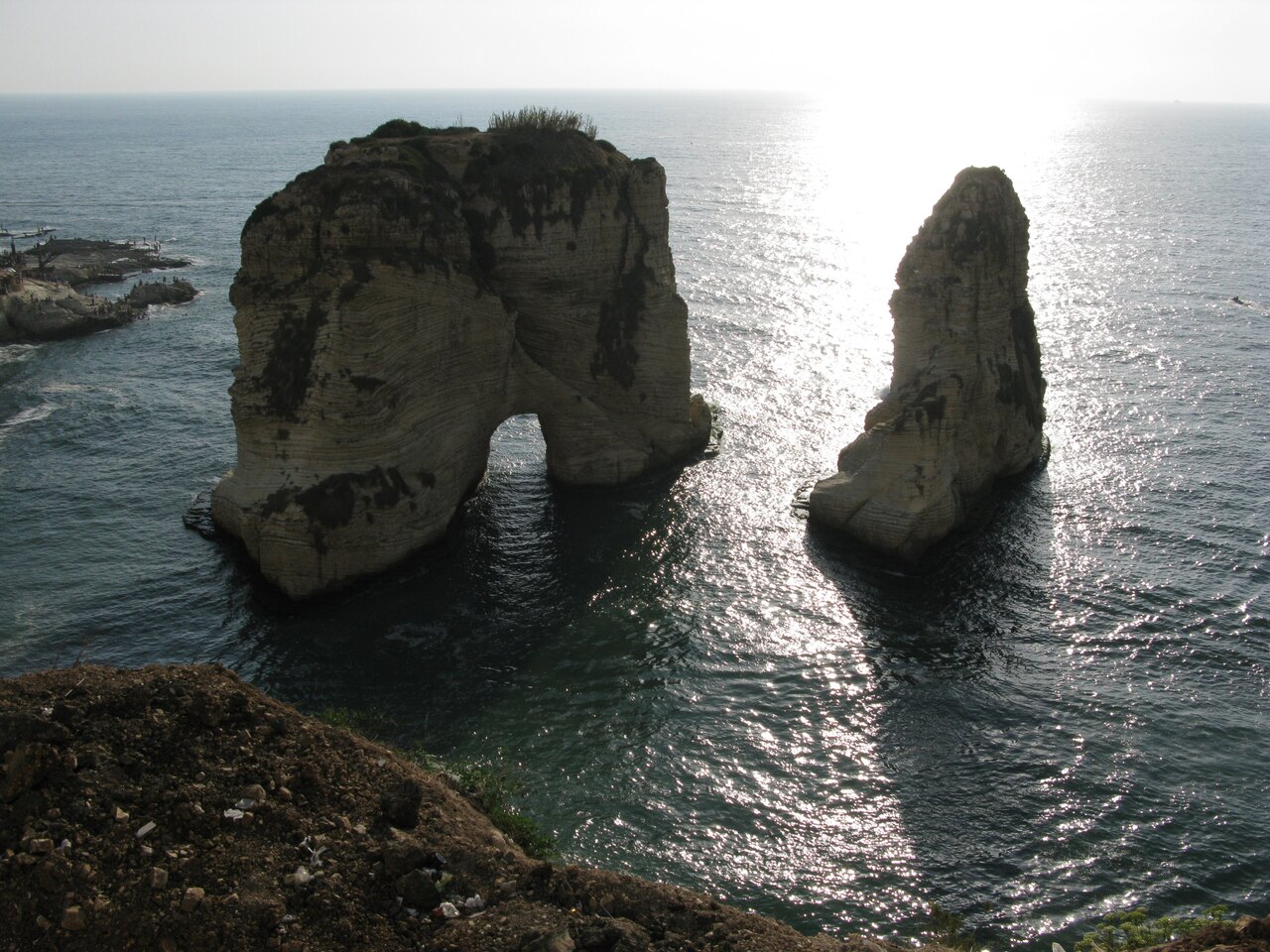
Morning. Walk the Corniche from the Ain el-Mreisseh lighthouse area west to Raouche (about 45-60 minutes), alongside joggers, fishermen and coffee sellers. At the end are the Pigeon Rocks, two sea arches; small boats take you round them for about US$10-15 per person in good weather.
Afternoon. Walk inland to the campus of the American University of Beirut (AUB), founded in 1866, where visitors can often enter with ID to see its small archaeological museum and gardens above the sea. Then follow Hamra Street for bookshops, old cafés and lunch: a manoushe (flatbread with za'atar) is about US$1-3.
Evening. Take a taxi to Achrafieh for the Sursock Museum, a white 1912 mansion of modern Lebanese art, restored after the port blast (check opening days and hours). Eat in nearby Sassine or back in Mar Mikhael.
Sundays the Corniche fills with families from late afternoon; for an empty walk, go before 9:00.
Day 3: Day trip: Jeita Grotto and Byblos
Morning. Drive about 30-40 minutes north to the Jeita Grotto (about US$20 per person), two limestone caves: the upper gallery on foot and the lower one by small boat. The lower cave closes in winter when the river is high, and photography is not allowed inside.
Afternoon. Continue 30 minutes to Byblos (Jbeil). The archaeological site (a few US dollars) layers a Crusader castle over Phoenician temples, Roman columns and royal tombs, with a view over the small fishing harbour. Then walk through the old souk to Saint John the Baptist Church, built by the Crusaders in the 12th century.
Evening. Eat fish by the harbour in Byblos (priced by weight, about US$25-40 per person with mezze) and drive back in about an hour, more in the evening traffic at Jounieh.
On the way, the Teleferique cable car from Jounieh climbs to Harissa and the statue of Our Lady of Lebanon, with the whole bay below; it adds about 2 hours.
Only have 2 days?
With 2 days, do Day 1 as written and combine the Corniche, Pigeon Rocks and Hamra on Day 2. You lose Byblos, Jeita and the Sursock Museum.
Got extra days?
A 4th day can go to the cedars and monasteries of the Qadisha Valley (about 2.5 hours), to Batroun for beaches and lemonade, or to the Chouf for Beiteddine Palace. Baalbek and its Roman temples are the great site of Lebanon, but read the current travel advice for the Bekaa Valley first.
Where to stay in Beirut
| Budget | Area | Why | Typical double/night |
|---|---|---|---|
| Budget | Hamra | Guesthouses and older hotels, cheap food, walkable to the Corniche and AUB. | US$40-80 |
| Mid-range | Gemmayzeh / Mar Mikhael | Boutique hotels in old houses, in the middle of the evening scene. | US$90-160 |
| Mid-range | Achrafieh | Quieter, residential, close to the Sursock Museum and Sassine. | US$90-150 |
| Comfort | Downtown / Ain el-Mreisseh seafront | Large hotels facing the sea or the marina. | US$180-400 |
Getting around
Beirut has no metro. Use ride-hailing apps (Uber and local apps work), with most rides in the city costing US$3-8, or taxis; agree the price before you get in. Service taxis (shared, on fixed routes) are much cheaper but take patience. Walking is fine within Hamra, Downtown or Gemmayzeh, but pavements are uneven and traffic is chaotic. From Rafic Hariri airport to Hamra or Gemmayzeh is about 20-30 minutes, US$15-25. For Byblos and Jeita, hire a driver for the day (about US$60-90) or take a tour.
What to eat in Beirut
Lebanese food is built around mezze: hummus, moutabal, tabbouleh heavy with parsley, fattoush, raw kibbeh nayyeh, and warm manakish for breakfast from neighbourhood ovens. Street food is cheap: a chicken shawarma or a falafel sandwich costs about US$2-5. In Hamra, try old institutions like Barbar for sandwiches at any hour. For sweets, knafeh with cheese for breakfast and maamoul filled with dates or pistachio. Drink arak, the anise spirit, with mezze, and taste wine from the Bekaa estates such as Ksara or Kefraya. A full mezze dinner is US$20-40 per person.
Best time to visit
April to June and September to November, with highs of 22-28°C and swimming from May. July and August are humid at 30-32°C, and the city empties into the mountains. Winter (December-February) is mild at 15-18°C but rainy, and there is snow in the mountains an hour away. Ramadan changes daytime opening hours, and evenings come alive after iftar.
Month-by-month weather for Beirut →
What a day costs
| Budget | Mid-range | Comfort | |
|---|---|---|---|
| Bed (per person, sharing a double) | US$30 | US$60 | US$150 |
| Food & drink | US$20 | US$40 | US$80 |
| Sights & tickets | US$5 | US$20 | US$40 |
| Local transport | US$5 | US$20 | US$50 |
| Total per person, per day | about US$60 | about US$140 | about US$320 |
Approximate 2026 prices in US dollars, which are widely accepted alongside the Lebanese pound; the economic crisis means prices can change quickly, so check before you go.
Before you go
Common questions
Is Beirut safe to visit?
It depends on the regional situation at the time of your trip, which has changed several times in recent years. Check your government's travel advice before you book and again before you fly, and take out travel insurance that covers Lebanon. In the city, petty crime is low; the main daily risks are traffic and occasional demonstrations, which you should avoid.
Should I bring cash?
Yes. Since the 2019 financial crisis, many places prefer cash in US dollars, and foreign cards do not always work in shops or ATMs. Bring clean, recent US$ notes in small denominations. You will receive change in Lebanese pounds at a market rate. Larger hotels and restaurants take cards, but always ask first.
Can I visit Byblos without a tour?
Yes. Buses and minibuses run north from the Charles Helou station and from the Dora roundabout, and ride-hailing cars cost about US$20-30 each way. A private driver for the day, about US$60-90, lets you add Jeita Grotto and the Harissa cable car, which are awkward by public transport. Byblos itself is small and walkable.
What should I wear?
Beirut is relaxed and fashionable; shorts and T-shirts are normal in Hamra, Gemmayzeh and on the Corniche. Cover shoulders and knees for mosques and churches; women should bring a scarf for the Mohammad Al-Amin Mosque, where robes may be provided at the entrance. In rural and conservative areas, dress more modestly.
How this guide was made
Compiled by TonyPlan from official tourism, transport and attraction sources and on-the-ground travel knowledge. Prices are approximate for 2026 and change with season; anything we could not confirm is marked as approximate.
Some links on this page are partner links. If you book through them TonyPlan may earn a commission; the price you pay is the same. How we make money.