Home › Barcelona › How many days
How many days in Barcelona? 4 days of Gaudí, old town and beach
By Tony Panopoulos · travel-agency planner in Greece · Updated
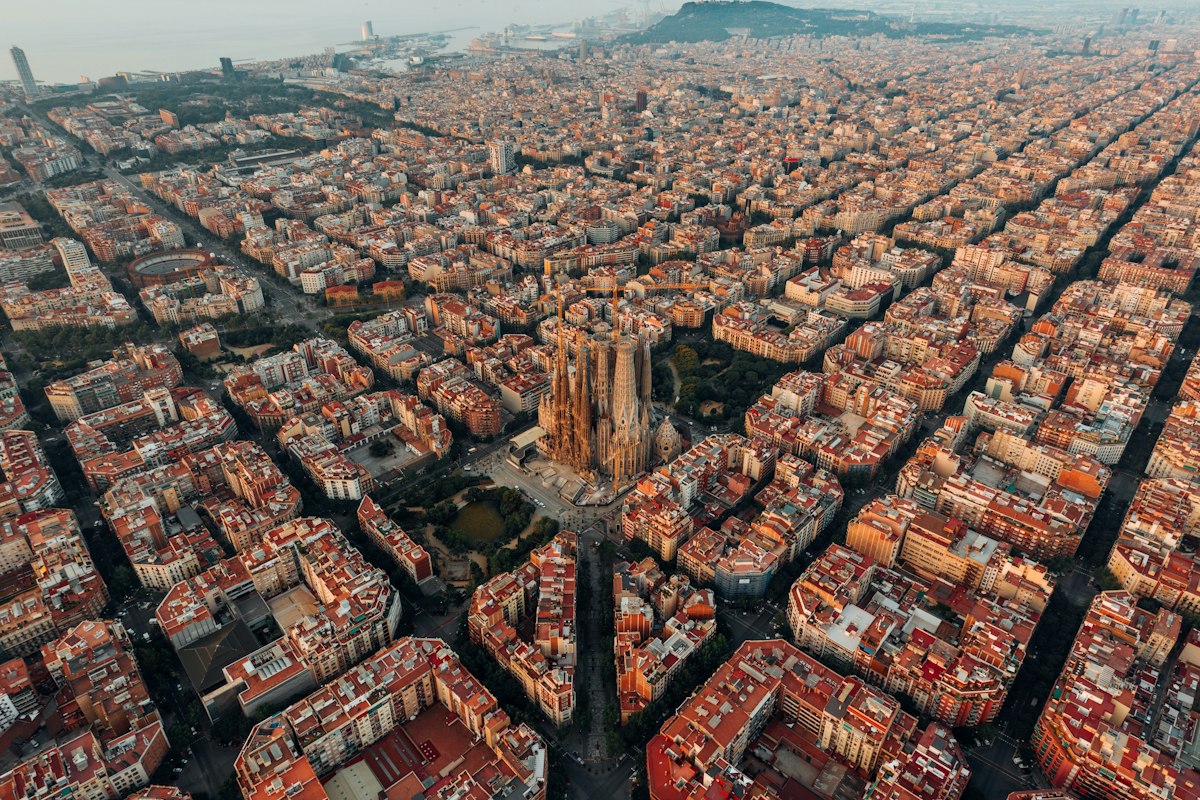
Four days fits Barcelona's three layers: Gaudí's buildings, which all need timed tickets; the medieval Ciutat Vella (Gothic Quarter, El Born, El Raval); and the sea and hills, Barceloneta and Montjuïc. Book the Gaudí sights for mornings, keep afternoons for walking, and remember that Barcelona eats late: lunch at 14:00, dinner after 21:00.
Short answer
Three days is enough for the Sagrada Família, Park Güell, one Gaudí house and the old town. The fourth day adds Montjuïc and a slow beach afternoon, or a half-day trip to Montserrat.
The 4-day plan, day by day
Day 1: Sagrada Família and the Eixample
Morning. Book the first Sagrada Família slot at 9:00 (about €26, or about €36 with a tower). The morning sun lights the east-facing Nativity façade and the green and blue windows. Allow 90 minutes plus a tower if you booked one.
Afternoon. Walk 25 minutes down Avinguda de Gaudí and Passeig de Sant Joan, or take Metro L5 two stops to Diagonal, for Passeig de Gràcia. Choose one Gaudí house: Casa Batlló (from about €35, the more theatrical inside) or La Pedrera-Casa Milà (about €30, the rooftop chimneys). Both are on the same street, 5 minutes apart.
Evening. Have vermouth and tapas in the Eixample: Bar Mut on Carrer de Pau Claris or the cheaper bars along Carrer d'Enric Granados, a quiet, half-pedestrianised street. Expect €4-8 a tapa.
Shoulders and knees must be covered inside the Sagrada Família, and security turns people away. Arrive 15 minutes early: entry times are strict.
Day 2: Gothic Quarter and El Born
Morning. Start at La Boqueria market on La Rambla at 8:30, before the tour groups (closed on Sundays); a juice is €3-4 at the stalls further in. Then cross into the Barri Gòtic: Barcelona Cathedral (entry fee for the roof), Plaça Sant Felip Neri and Plaça del Rei, all within 10 minutes of each other.
Afternoon. Walk 10 minutes east into El Born. The Picasso Museum on Carrer de Montcada (about €15, free on Thursday evenings and the first Sunday of the month, booking required) holds his early work from his Barcelona years. Then visit Santa Maria del Mar, the 14th-century Catalan Gothic church.
Evening. El Xampanyet, across from the Picasso Museum, has served house cava and anchovies since 1929. Eat dinner in El Born after 21:00; the Passeig del Born is busiest at 22:00.
La Rambla is the city's pickpocket hotspot. Keep bags zipped and in front of you, and never put a phone on a café table.
Day 3: Park Güell and Gràcia
Morning. Park Güell's monumental zone, with the mosaic bench and the dragon, needs a timed ticket (about €18). Take bus V19 or 24, or Metro L3 to Lesseps followed by a steep 20-minute walk. Book the first slot at 9:30, because by 11:00 it is hard to take a photo.
Afternoon. Walk downhill 15 minutes into Gràcia, a former village with small squares: Plaça del Sol, Plaça de la Virreina. This is where Barcelona locals have lunch; a menú del día of three courses with wine is €14-18 on weekdays.
Evening. Head up to the Bunkers del Carmel, a former anti-aircraft battery with a 360° view (free, 25 minutes on foot or bus V17 from Gràcia), for sunset. Access hours have been restricted in recent years, so check before you go.
Combine Park Güell with Casa Vicens, Gaudí's first house, on Carrer de les Carolines in Gràcia, a short walk on your way down.
Day 4: Montjuïc and Barceloneta
Morning. Take Metro L3 to Paral·lel and the funicular up Montjuïc (included in a metro ticket), then walk to the Fundació Joan Miró (about €15). The castle at the top has the view across the port.
Afternoon. Walk down through the gardens to Poble-sec. Quimet & Quimet on Carrer del Poeta Cabanyes is a tiny standing-room bar known for montaditos; its hours are short, so check before you go. Then Metro L3 and L4 to Barceloneta for the beach: go past the first crowded stretch towards Nova Icària for more space.
Evening. Paella is a lunch dish in Spain, so have it on the seafront at Barceloneta before 16:00 if you want one. In the evening, the Magic Fountain of Montjuïc runs a light show on certain evenings, roughly Thursday to Sunday in summer; it has been suspended during droughts, so check the schedule.
Restaurants on the Barceloneta seafront with photos on the menu are aimed at tourists. Walk two streets inland into the old fishermen's grid for better prices.
Only have 3 days?
With 3 days, keep Day 1 and Day 2, and do Park Güell in the morning of Day 3 followed by a Barceloneta afternoon. You lose Montjuïc and the Picasso Museum's free evening.
Got extra days?
On a 5th day, take the R5 train from Plaça Espanya and the rack railway (about 1h15 total) to Montserrat, the mountain monastery with its Black Madonna. Or take a 35-minute train south to the beach town of Sitges.
Where to stay in Barcelona
| Budget | Area | Why | Typical double/night |
|---|---|---|---|
| Budget | Poble-sec / Sant Antoni | Local bars, a metro at Paral·lel, a 15-minute walk to La Rambla, cheaper than the old town. | €90-140 |
| Mid-range | Eixample | Walk to Passeig de Gràcia, the Gaudí houses and the Gothic Quarter; wide, safe streets. | €140-230 |
| Mid-range | El Born | Atmospheric medieval lanes and great food; rooms are small and noisy at weekends. | €140-220 |
| Comfort | Passeig de Gràcia / Barceloneta seafront | Design hotels on the grand avenue, or sea views by the beach. | €250-450 |
Getting around
The old town is all walkable: the Cathedral to the Picasso Museum is 8 minutes. For longer hops, the metro is quick and the T-casual card (10 journeys for about €12-13) is far cheaper than single tickets (about €2.55). From the airport, the Aerobús reaches Plaça de Catalunya in about 35 minutes for around €7; the L9 Sud metro is slower and needs a special airport ticket.
Best time to visit
May, June, September and early October are ideal, with highs of 21-27°C and warm sea. July and August are hot and humid (around 29°C) and very crowded. The city's biggest festival, La Mercè, is around 24 September. Winter is mild (highs around 14°C) but too cold for the beach.
Month-by-month weather for Barcelona →
What a day costs
| Budget | Mid-range | Comfort | |
|---|---|---|---|
| Bed (per person, sharing a double) | €50 | €95 | €190 |
| Food & drink | €25 | €50 | €100 |
| Sights & tickets | €20 | €45 | €70 |
| Local transport | €3 | €6 | €20 |
| Total per person, per day | about €100 | about €195 | about €380 |
Approximate 2026 prices. Barcelona raised its tourist tax in 2024-2025: expect several euros per person per night depending on hotel category, charged at the hotel.
Before you go
Common questions
How far ahead should I book the Sagrada Família?
In spring and summer, 2-4 weeks ahead for a morning slot, longer if you want a tower. Buy only on the official site or an authorised partner; resellers outside the gate charge more for the same ticket.
Is Barcelona safe?
Violent crime is rare, but Barcelona has some of Europe's busiest pickpockets, especially on La Rambla, the L3 metro and at the beach. Use a zipped bag and do not leave anything on the sand while you swim.
Can I swim in Barcelona?
Yes, from late May to October. The sea is around 23-25°C in August. Barceloneta is the busiest beach; Nova Icària and Bogatell further north are calmer.
What time do people eat?
Lunch from 13:30 to 15:30 and dinner from 21:00. Many kitchens are closed between 16:00 and 20:00; in the gap, eat tapas in a bar.
How this guide was made
Written by hand, without AI, from experience planning Barcelona trips. Prices, opening times and the Magic Fountain schedule are approximate for 2026; confirm on the official Sagrada Família, Park Güell, Casa Batlló, La Pedrera and TMB websites before booking.
Some links on this page are partner links. If you book through them TonyPlan may earn a commission; the price you pay is the same. How we make money.
