Home › Barcelona › Where to stay
Where to stay in Barcelona
Barcelona is anchored by the dense, medieval Gothic Quarter, flowing outward into the structured, grid-like Eixample and the coastal districts. Choosing your base depends entirely on your tolerance for street noise and your desire for beach access versus architectural immersion. Public transport is efficient, but staying centrally in districts like Eixample or Gràcia allows you to walk to the majority of major sights, bypassing the city’s complex metro connections for most daily exploration.
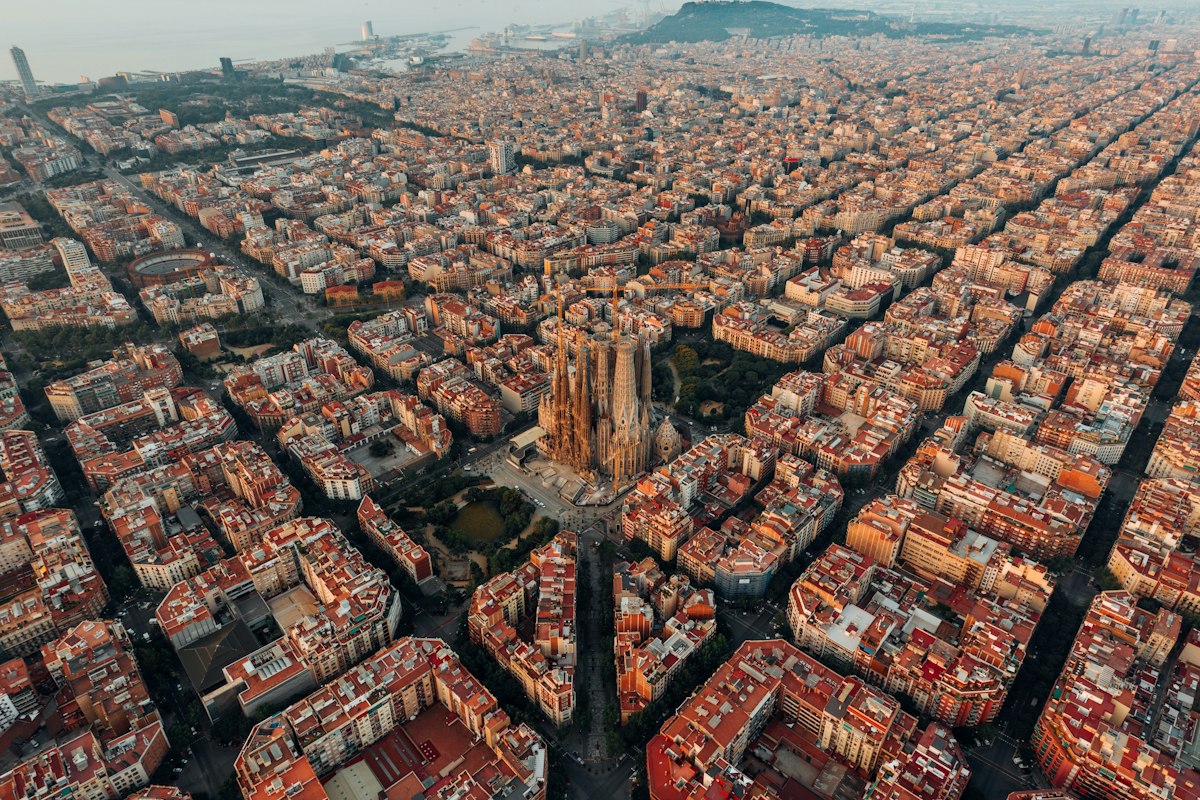
Eixample
This is the city's rational heart, characterized by wide boulevards and octagonal street corners. It feels organized and elegant compared to the cramped Old City. You can walk to Casa Batlló and Casa Milà easily. The neighborhood is filled with upscale boutiques, refined dining, and proximity to the main metro interchanges, making it the most practical base for short stays.
Gràcia
Gràcia feels like a separate town with its own identity, centered around vibrant plazas like Plaça de la Virreina. It is highly walkable with narrow, pedestrian-friendly streets, independent galleries, and local taverns. You are a short walk from Park Güell. It avoids the chaotic foot traffic of the city center, offering a relaxed local pace that feels lived-in rather than manufactured.
El Born
Tucked between the park and the cathedral, El Born is a dense maze of history that feels kinetic and nocturnal. It is entirely walkable, leading you directly into the Picasso Museum or the Santa Maria del Mar basilica. The streets are narrow and crowded, creating an intense, creative energy that defines the neighborhood’s appeal for those who want action right outside their doorstep.
Poblenou
Once the city's industrial hub, Poblenou now pairs renovated factories with tech offices and wide, accessible beaches like Bogatell. It is remarkably walkable along the Rambla del Poblenou, a pedestrian street lined with cafes that leads straight to the sea. It offers a much more spacious, airy environment than the Gothic Quarter, ideal for visitors who value proximity to the Mediterranean.
Barri Gòtic
The Gothic Quarter is the quintessential historic core, a labyrinthine tangle of stone alleys and hidden squares. It is undeniably tourist-heavy but puts you in the middle of everything, from the Cathedral of Barcelona to the remnants of the Roman wall. It is best suited for those who don't mind navigating tight, bustling crowds and want the city's oldest layers as their home base.
Rent a car in Barcelona
Compare rental cars from local and international companies, with free cancellation on most bookings.
Compare car rentals in BarcelonaOne thing to think about
Avoid booking accommodation directly on or adjacent to La Rambla. It is a sensory overload of constant noise, pickpocketing risks, and overpriced, mediocre dining. You will be far from the city's true charm and trapped in a relentless bottleneck of day-trippers and street performers at all hours.
Other places to stay in Spain: lastminute.com · htop Hotels · B-Hotel Barcelona · NN Hotels · Megabon
Once you have a bed
The things that sell out first in Barcelona are the small-group tours and the skip-the-line tickets.
Top tours & activities in Barcelona
Common questions
Is it easy to get from the airport to the city center?
Yes, the Aerobús is the most efficient link, dropping passengers at Plaça de Catalunya in about 35 minutes. It runs 24 hours a day. Alternatively, the R2 Nord train connects to the Sants station, or you can take a taxi, which is convenient but significantly more expensive depending on your final destination.
Do I need to speak Catalan to get around?
Not at all. While Catalan is the primary local language, Spanish is spoken fluently by everyone, and English is widely understood in the hospitality and tourism sectors. Most menus, transport signs, and informational placards are presented in at least three languages, including English, so navigating the city without local language skills is perfectly straightforward.
When is the best time to visit for fewer crowds?
Aim for late autumn in November or early spring in March. You avoid the peak summer heat and the massive influx of cruise ship passengers. While the weather may be cooler, you will find shorter queues at major attractions like the Sagrada Família and much more space to wander through the streets of the old city.
Hotel links go to Booking.com. If you book through them TonyPlan earns a small commission — the price you pay is exactly the same.