Home › Bahrain › How many days
How many days in Bahrain? 3 days: Dilmun forts, the Pearling Path and Manama's souq
By Tony Panopoulos · travel-agency planner in Greece · Updated
Bahrain is often treated as a weekend escape from Saudi Arabia or a long airport layover, yet it holds three UNESCO sites and 4,000 years of history from the Dilmun civilisation. The main island is only about 50 km long, so three days are enough to see Manama, the old pearling town of Muharraq and the desert south without rushing. Plan outdoor sights for early morning and late afternoon; museums and malls are for the midday heat.
Short answer
Two days covers Manama, the National Museum, the Pearling Path and Qal'at al-Bahrain. The third day adds the burial mounds, the Tree of Life and the Sakhir desert.
The 3-day plan, day by day
Day 1: Manama: souq, museum and Bahrain Bay
Morning. Start at Bab al-Bahrain, the 1940s gateway that once stood on the shoreline before land reclamation, and walk into the Manama Souq behind it: gold shops, spice sellers, perfume oils (oud) and textile alleys. Have tea and a cheap breakfast at Haji's Café, a lane-side institution where eggs, beans and bread cost about BD 1-2.
Afternoon. Take a 10-minute taxi to the Bahrain National Museum (about BD 1), which explains Dilmun burial customs, pearl diving and traditional trades in a clear modern building. The Bahrain National Theatre next door has striking architecture, and the waterfront promenade links to Bahrain Bay and the Four Seasons tower.
Evening. Eat in Block 338 in Adliya, a grid of streets with cafés, Lebanese, Indian and modern Gulf restaurants, where mains cost BD 4-10. Many hotel bars serve alcohol; licensed restaurants are clearly marked.
The Bahraini weekend is Friday and Saturday. On Friday the souq opens late, after midday prayers, so do the market on another day if you can.
Day 2: Muharraq's Pearling Path and Al Fateh Mosque
Morning. Cross the bridge to Muharraq, 15 minutes by taxi, and follow the Pearling Path, a UNESCO site (2012) of 17 restored buildings linked by a 3.5 km route. See Siyadi House, a pearl merchant's home with carved wooden screens, the Shaikh Isa bin Ali House with its wind towers (about BD 1), and the visitor centre explaining how divers brought up oysters from the seabed reefs.
Afternoon. Try halwa, the sticky saffron and rosewater sweet, at Showaiter's shop in Muharraq, then go to the Al Fateh Grand Mosque in Juffair, one of the largest in the world, holding about 7,000 worshippers. Free guided tours run most days outside prayer times; women are lent an abaya and headscarf.
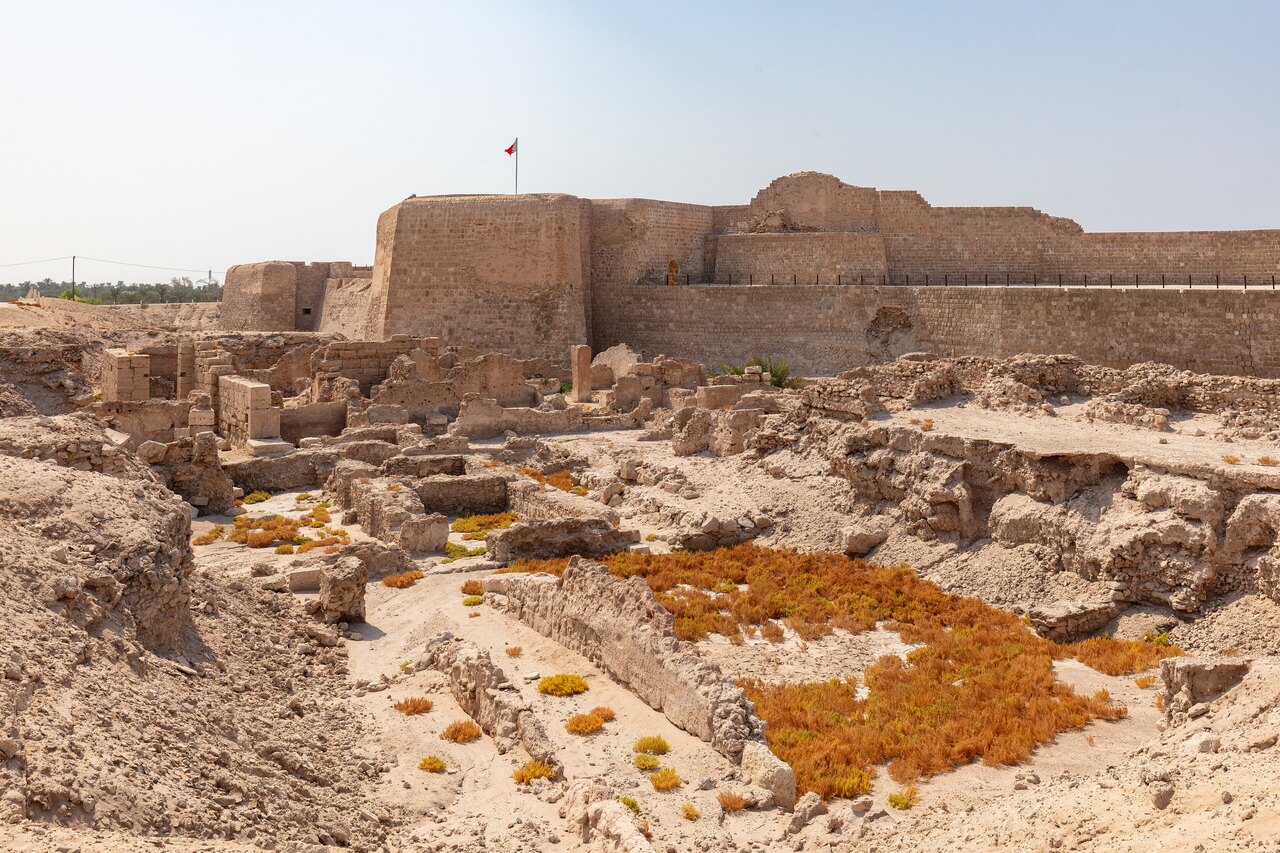
Evening. Drive 20 minutes west to Qal'at al-Bahrain, the Portuguese-era fort built on a tell layered with 4,000 years of settlement, a UNESCO site since 2005. Entry to the fort is free, and it is floodlit after sunset; the site museum costs about BD 2. The beachside café serves fresh juice with a view of the walls.
Dress modestly for the mosque and the old quarters: shoulders and knees covered. Shorts are fine at hotel pools and beach clubs.
Day 3: Burial mounds, the Tree of Life and Sakhir
Morning. Drive to A'ali, about 20 minutes south of Manama, to see the Dilmun Burial Mounds, UNESCO-listed since 2019. Thousands of mounds from about 2200-1750 BC once covered this part of the island; the 'royal mounds' at A'ali are up to 15 metres high, and potters in the village still make clay pots nearby. Continue to the Barbar Temple, a Dilmun temple with a sacred spring.
Afternoon. Head into the southern desert to the Tree of Life (Shajarat-al-Hayat), a mesquite tree said to be about 400 years old that survives alone on a sandy ridge with no visible water source. On the way, pass the Bahrain International Circuit at Sakhir, which hosts the Formula 1 Grand Prix in spring and offers driving and karting experiences.
Evening. Back in the north, watch sunset at Amwaj Islands or along the Marassi Al Bahrain beachfront in Diyar Al Muharraq, then have dinner at one of the seafood restaurants on the water (BD 8-15).
Public buses do not reach the Tree of Life. Hire a car for this day (about BD 15-25) or book a taxi for a half-day; Careem and Uber also work.
Only have 2 days?
With 2 days, do Day 1 as written and Day 2 with Qal'at al-Bahrain at sunset. Swap the National Museum for the burial mounds if ancient history matters most to you. You lose the desert south.
Got extra days?
A 4th day can go by boat to the Hawar Islands or Jarada, a sandbank that appears at low tide, or be spent at a beach club. Some visitors combine Bahrain with the Saudi city of Al Khobar, 25 km away over the King Fahd Causeway (visa needed).
Where to stay in Bahrain
| Budget | Area | Why | Typical double/night |
|---|---|---|---|
| Budget | Manama Souq area | Older hotels within walking distance of Bab al-Bahrain and cheap cafés. | BD 20-35 |
| Mid-range | Juffair | Many hotels, restaurants and serviced apartments, close to Al Fateh Mosque. | BD 35-60 |
| Mid-range | Seef / Adliya | Next to the malls and the Block 338 restaurant streets. | BD 40-65 |
| Comfort | Bahrain Bay / beach resorts | Five-star towers on the water or resorts with private beaches. | BD 90-220 |
Getting around
Bahrain is built for cars. Taxis and the Careem and Uber apps are the easiest way around; most rides across Manama cost BD 2-4, and Muharraq to Qal'at al-Bahrain about BD 5-6. Public buses run on main routes with a GO card or contactless payment at roughly 250-300 fils a ride, but they are slow for sightseeing. Bahrain International Airport is on Muharraq, 10-15 minutes from central Manama by taxi (about BD 5-7). A rental car costs BD 12-25 a day, and fuel is cheap.
What to eat in Bahrain
The national dish is machboos: spiced rice cooked with chicken, lamb or fish such as hamour, eaten at lunch. Muhammar is sweet rice with dates or sugar, usually served with fried fish. Breakfast is balaleet (sweet vermicelli with an omelette on top) and khubz bread from the clay oven. Halwa Showaiter in Muharraq has made halwa since the mid-1800s. Fresh juice bars sell avocado and mango shakes for under BD 1. Traditional restaurants charge BD 3-6 for a big plate; international restaurants in Adliya and Seef BD 8-20. Coffee is served with cardamom in tiny cups, often with dates.
Best time to visit
November to March, with daytime highs of 20-26°C and pleasant evenings. April and October are warm (30-35°C), and from June to September temperatures pass 40°C with heavy humidity. The Formula 1 Grand Prix, usually in early spring, fills hotels and doubles prices. Ramadan changes opening hours, and eating in public by day is not appropriate during it.
Month-by-month weather for Bahrain →
What a day costs
| Budget | Mid-range | Comfort | |
|---|---|---|---|
| Bed (per person, sharing a double) | BD 13 | BD 25 | BD 70 |
| Food & drink | BD 6 | BD 14 | BD 30 |
| Sights & tickets | BD 2 | BD 4 | BD 10 |
| Local transport | BD 3 | BD 8 | BD 18 |
| Total per person, per day | about BD 24 | about BD 51 | about BD 128 |
Approximate 2026 prices in Bahraini dinars (BD 1 = about US$2.65; 1 dinar = 1,000 fils). Hotels add 10% VAT and a tourism levy of a few dinars per room per night, usually shown at checkout.
Before you go
Common questions
Can I drink alcohol in Bahrain?
Yes. Bahrain is more relaxed than most of its neighbours. Alcohol is served in licensed hotel bars and many restaurants, and some licensed shops sell it to non-Muslims. Do not drink in public places or drive after drinking. During Ramadan alcohol service is restricted and may stop entirely in some venues, so check before planning a night out.
Do I need a visa for Bahrain?
Many nationalities can get a visa on arrival or an eVisa online, often valid for two weeks, and residents of other Gulf countries usually have easy entry. Rules change, so check the official Bahrain eVisa portal for your passport before you book. You need a return or onward ticket and a passport valid for at least six months.
Is Bahrain worth visiting on a long layover?
Yes, if you have at least 8-10 hours. The airport is close to Muharraq and Manama, so in half a day you can walk part of the Pearling Path, visit Bab al-Bahrain and the souq and see Qal'at al-Bahrain at sunset. Check whether your passport needs a visa to leave the airport, and allow time for security on the way back.
What should I wear in Bahrain?
Light, loose clothing that covers shoulders and knees in the souq, old quarters and government buildings. Women do not need to cover their hair except inside mosques, where abayas are provided at Al Fateh. Swimwear is for beaches and pools only. Bring a light layer, because malls, taxis and museums are strongly air-conditioned.
How this guide was made
Compiled by TonyPlan from official tourism, transport and attraction sources and on-the-ground travel knowledge. Prices are approximate for 2026 and change with season; anything we could not confirm is marked as approximate.
Some links on this page are partner links. If you book through them TonyPlan may earn a commission; the price you pay is the same. How we make money.