How many days in Tirana? 3 days: bunkers, Blloku cafés and a day in Krujë or Berat
By Tony Panopoulos · travel-agency planner in Greece · Updated
Tirana was one of the most closed capitals in Europe until 1991, and its museums tell that story better than any guidebook: nuclear bunkers turned into galleries, a secret-police house of files, a dictator's quarter turned into the cafe district. Give it three days: two for the city and the Dajti mountain at its edge, one for a day trip to Krujë, Skanderbeg's castle town 45 minutes away, or to Berat, the UNESCO 'city of a thousand windows'.
Short answer
Two days covers Skanderbeg Square, the Bunk'Art museums, the House of Leaves, the Pyramid, Blloku and the Dajti cable car. The third day goes to Krujë or Berat, which show the Ottoman Albania that Tirana has mostly lost.
The 3-day plan, day by day
Day 1: Skanderbeg Square, the mosque and the Communist past
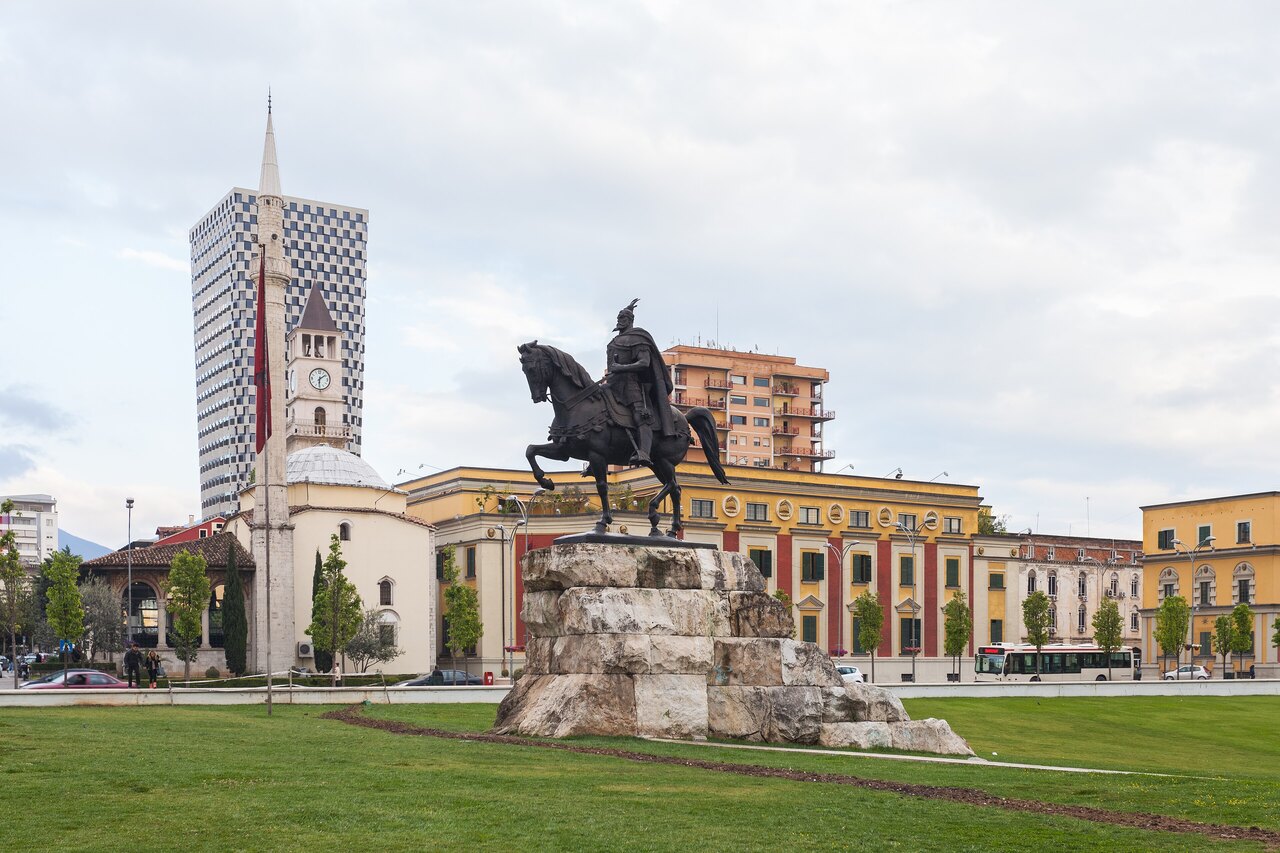
Morning. Start on Skanderbeg Square, the vast paved square around the hero's equestrian statue, with the mosaic of the National History Museum on its north side (check whether it has reopened after renovation). Visit the Et'hem Bey Mosque (free, cover shoulders and knees), finished around 1823, with frescoes of trees and waterfalls rare in Islamic art, then climb the Clock Tower next door.
Afternoon. Walk 5 minutes east to Bunk'Art 2 (about ALL 700-800), a bunker of the interior ministry turned into a museum of the Sigurimi secret police and the labour camps. Then see the House of Leaves (about ALL 700), the former surveillance centre, with its microphones hidden in everyday objects.
Evening. Walk south along the Lana river to the Pyramid of Tirana, built as a museum for Enver Hoxha and reopened in 2023 as a tech centre; you can climb the steps to the top for free. Dinner in the old Kalaja e Tiranës castle lanes costs about ALL 1,200-2,000 for a main.
Albania mostly runs on cash outside hotels and larger restaurants. Take lek from bank ATMs (avoid the Euronet ones with high fees) and keep small notes for buses and cafés.
Day 2: Bazaar, Bunk'Art 1, Dajti and Blloku
Morning. Have coffee at the New Bazaar (Pazari i Ri), the restored market square where farmers sell cheese, olives, honey and raki, and walk 10 minutes to the Ottoman Tanners' Bridge. Then take a bus or taxi (about 20 minutes) to Bunk'Art 1 (about ALL 1,000), Hoxha's five-storey nuclear bunker under a hill, with over 100 rooms.
Afternoon. From Bunk'Art 1 it is a short ride to the Dajti Ekspres cable car (about ALL 1,000-1,200 return), one of the longest in the Balkans at about 4.3 km; the ride takes 15 minutes up to about 1,000 metres. Walk the forest paths on Mount Dajti and look down over the whole city to the coast on a clear day.
Evening. Return to Blloku, the gated quarter of the Communist leaders until 1991, now the city's café and bar district; Hoxha's villa still stands on Rruga Ismail Qemali. Cocktails cost about ALL 600-900, and many restaurants stay open after 23:00.
The Grand Park (Parku i Madh) and its artificial lake are 10 minutes' walk south of Blloku; locals jog and walk there at sunset, and the lakeside cafés are a cheap stop.
Day 3: Day trip: Krujë (or Berat)
Morning. Buses to Krujë leave from the north of the city, near the Zogu i Zi roundabout, roughly every 30-60 minutes, take 45-60 minutes and cost about ALL 200-300; a taxi is about ALL 3,000-4,000 each way. Walk up the cobbled old bazaar of wooden shops selling carpets, felt and copper to the castle gate.
Afternoon. Inside the walls, the Skanderbeg Museum (about ALL 500) tells the story of the 15th-century lord who held off the Ottomans for 25 years from this castle. The Ethnographic Museum next door (about ALL 400) is a fully furnished 18th-century merchant house, with its own hammam and olive press.
Evening. Eat on a terrace below the castle, with fërgesë and lamb cooked in clay, for about ALL 1,000-1,800, before the bus back to Tirana. For a slower dinner in the city, try Mullixhiu near the Grand Park, where traditional Albanian dishes are cooked with stone-ground flour.
For Berat instead, buses from the South-North terminal take about 2-2.5 hours (about ALL 500); leave by 8:00 to see the Mangalem quarter, the castle and the Onufri icon museum, and return on an afternoon bus.
Only have 2 days?
With 2 days, do Day 1 and Day 2 as written and swap the Dajti cable car for Krujë if the weather is clear. You lose either the mountain or the castle town.
Got extra days?
A 4th day can go to Berat if you chose Krujë, or to the Roman amphitheatre and beach of Durrës, about 45 minutes by bus. With a week, head south on the Riviera to Gjirokastër, Butrint and Ksamil, about 4-5 hours away.
Where to stay in Tirana
| Budget | Area | Why | Typical double/night |
|---|---|---|---|
| Budget | Around the New Bazaar | Hostels and guesthouses in old houses, walk to the centre in 10 minutes. | ALL 3,000-6,000 |
| Mid-range | Blloku | Cafés, restaurants and nightlife on the doorstep; 15 minutes' walk to Skanderbeg Square. | ALL 7,000-12,000 |
| Mid-range | Near Skanderbeg Square | Central for the museums and the airport bus, busier traffic. | ALL 7,000-13,000 |
| Comfort | International hotels on Rruga e Kavajës / Grand Park | Towers with pools and city views, quiet rooms. | ALL 15,000-28,000 |
Getting around
Central Tirana is easy on foot: Skanderbeg Square to Blloku is 15 minutes. City buses cost about ALL 40-50 a ride, paid in cash to the conductor. Taxis are cheap but often unmetered; agree the price first or use a local app such as Speed Taxi, and expect ALL 400-800 within the centre. From Tirana International Airport, 17 km away, the Rinas Express bus runs to the National History Museum about every hour for around ALL 400, and a taxi costs about ALL 2,500. Intercity buses leave from the North-South terminal on the western edge of town.
What to eat in Tirana
Albanian food mixes Ottoman, Italian and mountain cooking at prices that are still low. Try byrek (filo pie with cheese, spinach or meat, about ALL 100-150 at a bakery), tavë kosi (lamb baked with yoghurt and egg), fërgesë (peppers, tomatoes and cottage cheese), qofte meatballs and grilled lamb. Breakfast is byrek with yoghurt or a glass of dhallë (salted yoghurt drink). Coffee culture is serious: an espresso costs about ALL 100-150 and people sit for an hour. Finish with raki, often homemade, and trileçe cake. A full dinner with wine costs about ALL 1,500-3,000.
Best time to visit
April to June and September to October, with highs of 20-28°C. July and August are hot (often 33-38°C) and many locals leave for the coast. Winter is mild in the city (10-14°C) but wet, and Mount Dajti can have snow from December to February. Late September and October are a good compromise: warm days, sea still swimmable at Durrës, and fewer tour groups.
Month-by-month weather for Tirana →
What a day costs
| Budget | Mid-range | Comfort | |
|---|---|---|---|
| Bed (per person, sharing a double) | ALL 2,000 | ALL 5,000 | ALL 11,000 |
| Food & drink | ALL 1,800 | ALL 3,500 | ALL 7,000 |
| Sights & tickets | ALL 600 | ALL 1,700 | ALL 3,500 |
| Local transport | ALL 200 | ALL 800 | ALL 2,500 |
| Total per person, per day | about ALL 4,600 | about ALL 11,000 | about ALL 24,000 |
Approximate 2026 prices in Albanian lek (roughly ALL 95-100 to the euro, and many hotels quote in euros); hotels may add a small city tourist tax per person per night.
Before you go
Common questions
Can I pay in euros in Tirana?
Often, but at a poor rate. Many hotels, tour operators and some restaurants quote and accept euros, while buses, bakeries, markets and small cafés want lek. Pay in lek where you can, and ask for the price in lek before you pay in euros. Cards work in hotels, supermarkets and larger restaurants, but carry cash for everything else.
Is Tirana safe?
Yes. Tirana is one of the safer capitals in Europe for visitors, with little street crime. The real danger is traffic: drivers rarely stop at crossings and pavements are often blocked by parked cars, so cross carefully. Watch your belongings in crowded buses and bars in Blloku at night, as in any city.
Is Krujë or Berat the better day trip?
Krujë is closer, 45 minutes away, and easy to fit into half a day, with the castle, the Skanderbeg Museum and the bazaar. Berat is a longer journey of about 2-2.5 hours, but the town of white Ottoman houses on the hillside, the inhabited castle and the icon museum are more beautiful. If you can only do one and have a full day, choose Berat.
Do I need a visa for Albania?
Citizens of the EU, the UK, the US, Canada, Australia and many other countries can visit Albania without a visa for at least 90 days in a 180-day period (US citizens longer), and EU citizens can enter with a national ID card. Albania is not in the Schengen area, so days here do not count towards Schengen limits. Check the rules for your passport before you fly.
How this guide was made
Compiled by TonyPlan from official tourism, transport and attraction sources and on-the-ground travel knowledge. Prices are approximate for 2026 and change with season; anything we could not confirm is marked as approximate.
Some links on this page are partner links. If you book through them TonyPlan may earn a commission; the price you pay is the same. How we make money.