Home › San Francisco › How many days
How many days in San Francisco? 4 days: the bridge, Alcatraz, hills and neighbourhoods
By Tony Panopoulos · travel-agency planner in Greece · Updated
San Francisco is compact (about 11 km across) but built on more than 40 hills, so plan with the cable cars, the Muni buses and your legs. Four days covers the waterfront and Alcatraz, the Golden Gate Bridge by bike, the old neighbourhoods of Chinatown and North Beach, the murals and burritos of the Mission, Golden Gate Park, and a day north to the redwoods of Muir Woods or the vineyards of Napa. Bring layers: summer fog keeps July afternoons around 18°C.
Short answer
Three days covers Alcatraz, the bridge, the cable cars and the main neighbourhoods. The fourth adds the redwoods or wine country.
The 4-day plan, day by day
Day 1: Alcatraz and the waterfront
Morning. Take the Alcatraz ferry from Pier 33 (about US$45-50 with the audio tour, booked weeks ahead in summer). The cellhouse audio tour, narrated by former guards and inmates, is excellent. Allow 3 hours.
Afternoon. Walk along the Embarcadero to Pier 39 to see the sea lions on the floating docks, then to the Ferry Building Marketplace for oysters, cheese and bread, especially at the Saturday farmers' market.
Evening. Ride a cable car (about US$8 a ride) on the Powell-Hyde line from Union Square over Nob Hill and Russian Hill down to the bay, with views of Alcatraz. Dinner in North Beach.
Alcatraz sells out days or weeks in advance; buy only from the official operator (Alcatraz City Cruises). The night tour adds areas closed by day.
Day 2: The Golden Gate Bridge by bike
Morning. Rent a bike near Fisherman's Wharf (about US$40-60 a day) and ride along the bay through Crissy Field to the Golden Gate Bridge. Cross it (about 2.7 km) to the viewpoints at Vista Point and Battery Spencer in the Marin Headlands.
Afternoon. Continue downhill to Sausalito, a waterfront town of houseboats, and take the ferry back to the city with the bikes.
Evening. Visit the Palace of Fine Arts, built for the 1915 exposition, then dinner in the Marina or Cow Hollow.
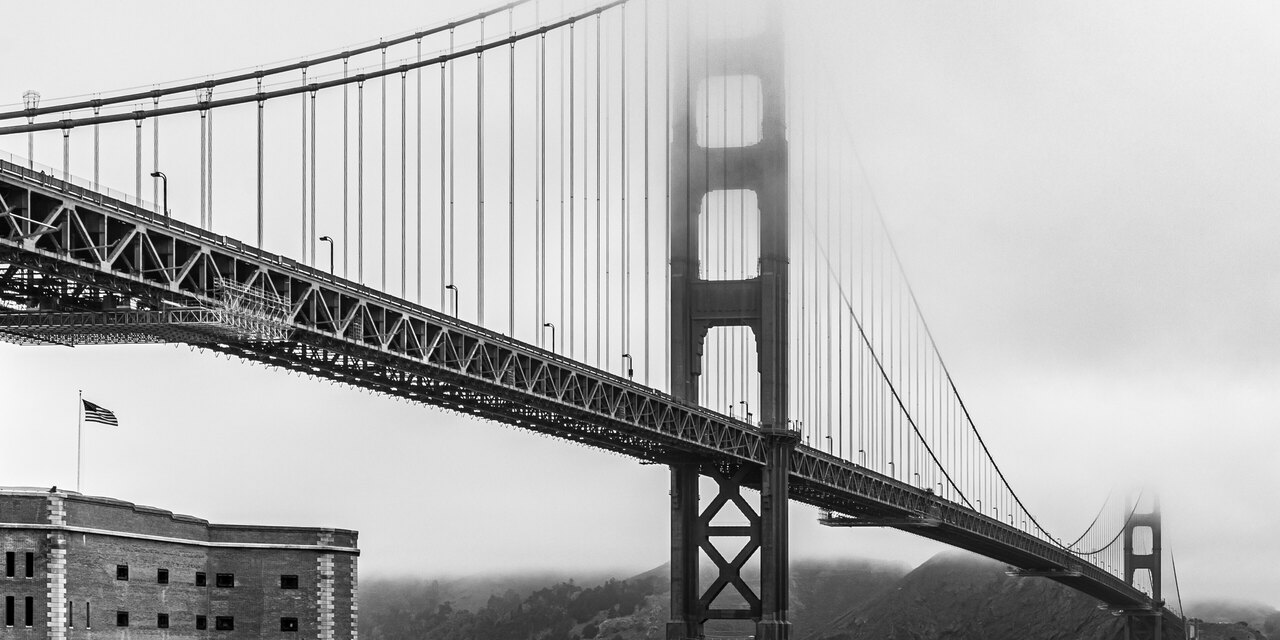
The bridge is often in fog. Check the webcams and go when it is clear; mornings and late afternoons are often better than midday in summer.
Day 3: Chinatown, North Beach and Telegraph Hill
Morning. Enter Chinatown through the Dragon Gate on Grant Avenue, one of the oldest Chinatowns in North America. Visit the Tin How Temple, the Golden Gate Fortune Cookie Factory in Ross Alley, and have dim sum.
Afternoon. Walk into North Beach, the Italian quarter and home of the Beat writers: City Lights Bookstore and Vesuvio Café. Climb Telegraph Hill to Coit Tower (elevator to the top about US$10) for 1930s murals and views, and walk down the Filbert Steps through gardens with wild parrots.
Evening. See the 'painted ladies' Victorian houses at Alamo Square, then dinner in Hayes Valley.
Many of San Francisco's best views are free: Twin Peaks, Ina Coolbrith Park, Lands End and the top of the Filbert Steps.
Day 4: The Mission, Golden Gate Park and Muir Woods
Morning. Drive or take a tour about 40-60 minutes north to Muir Woods (reservation required for parking or the shuttle; entry fee about US$15), a forest of coastal redwoods up to 80 metres tall. Walk the main loop and the Hillside trail.
Afternoon. Back in the city, walk around Golden Gate Park: the Japanese Tea Garden, the de Young Museum (its tower is free) and the California Academy of Sciences, with a rainforest dome and a living roof.
Evening. Go to the Mission District for the murals of Balmy Alley and Clarion Alley, a Mission-style burrito (about US$12-15), and sunset at Dolores Park.
For wine instead of redwoods, Napa and Sonoma are about 1-1.5 hours north; a driver or tour is best for tastings.
Only have 3 days?
With 3 days, do Days 1, 2 and 3, and fit the Mission into an evening. You lose Muir Woods and Golden Gate Park.
Got extra days?
With more time, drive south along Highway 1 to Half Moon Bay, Monterey and Carmel (about 2.5 hours), or east to Yosemite National Park (about 4 hours).
Where to stay in San Francisco
| Budget | Area | Why | Typical double/night |
|---|---|---|---|
| Budget | Tenderloin edges / SoMa | Cheaper hotels, central, but some streets are rough at night. | US$140-220 |
| Mid-range | Union Square / Nob Hill | Cable cars, shops, walk to Chinatown and North Beach. | US$220-380 |
| Mid-range | Fisherman's Wharf | Waterfront, near Alcatraz ferries and bike rentals. | US$220-360 |
| Comfort | Embarcadero / Nob Hill hotels | Bay or city views, historic grand hotels. | US$400-900 |
Getting around
Walk, ride the cable cars and Muni buses and streetcars, and use BART for the airport and the East Bay. Pay with a Clipper card or contactless. Parking is expensive and car break-ins are common, so avoid renting a car until your day trip. From SFO, BART reaches downtown in about 30 minutes.
What to eat in San Francisco
San Francisco's classics are sourdough bread (and clam chowder in a sourdough bowl at the Wharf), Dungeness crab in season (winter), the Mission burrito, dim sum in Chinatown and the Richmond District, and cioppino, the Italian-American fish stew, in North Beach. The Ferry Building has artisan food, and the city has some of the most expensive restaurants in the US. A casual meal costs US$20-35; tip 18-20%.
Best time to visit
September and October are the warmest, sunniest months, with highs of 21-24°C. Summer is often foggy and cool, especially near the ocean. Spring is mild and green. Winter brings rain but few crowds. Pack layers in every season.
Month-by-month weather for San Francisco →
What a day costs
| Budget | Mid-range | Comfort | |
|---|---|---|---|
| Bed (per person, sharing a double) | US$85 | US$150 | US$350 |
| Food & drink (with tips) | US$45 | US$90 | US$200 |
| Sights & activities | US$25 | US$70 | US$150 |
| Local transport | US$10 | US$20 | US$60 |
| Total per person, per day | about US$165 | about US$330 | about US$760 |
Approximate 2026 prices in US dollars. Hotels add San Francisco's occupancy tax (around 14%) and sometimes a tourism fee; prices exclude sales tax.
Before you go
Common questions
How far ahead should I book Alcatraz?
In summer and holidays, 2-4 weeks ahead; in winter, a few days may be enough. The night tour sells out first.
Is San Francisco safe?
Most tourist areas are safe by day. Car break-ins are very common, so never leave anything in a car. Some areas, such as parts of the Tenderloin and SoMa, are best avoided at night.
Should I walk or bike across the Golden Gate Bridge?
Biking lets you continue to Sausalito and return by ferry; walking is fine if you only want the views, about 30 minutes each way.
Are the cable cars worth it?
Yes, at least once, on the Powell-Hyde line. Queues at the Powell Street turnaround are long; board at a stop further along the line or ride early or late.
Do I need a car?
Not in the city. Rent one only for day trips to the redwoods, Napa or the coast.
How this guide was made
Written by hand, without AI, from experience planning USA trips. Prices are approximate for 2026 in US dollars; confirm on the official Alcatraz City Cruises, Muir Woods (NPS), SFMTA and BART websites before booking.
Some links on this page are partner links. If you book through them TonyPlan may earn a commission; the price you pay is the same. How we make money.