Home › Salvador › How many days
How many days in Salvador? 4 days in Brazil's first capital
By Tony Panopoulos · travel-agency planner in Greece · Updated
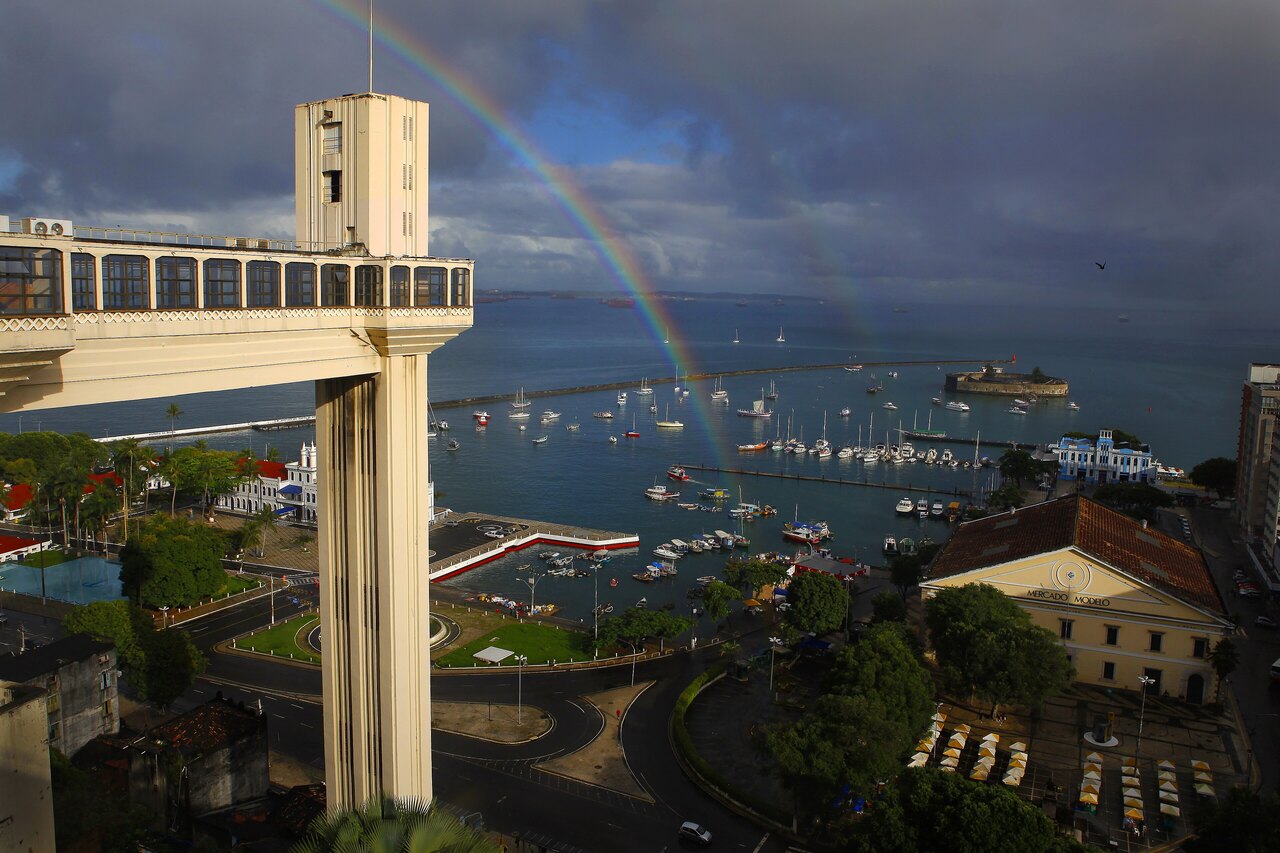
Salvador was Brazil's capital from 1549 to 1763 and the main port of the Atlantic slave trade, and its Afro-Brazilian culture shapes everything from the food to the drums. The city sits on two levels: the Cidade Alta of churches and the Pelourinho, and the Cidade Baixa by the bay, joined by the Elevador Lacerda. Give it four days: two for the old town and its churches, one for the beaches and the Bonfim church, one on an island across the Bay of All Saints.
Short answer
Three days covers the Pelourinho, Bonfim and Barra. The fourth adds a boat trip to Itaparica or a night on Morro de São Paulo, and a slower evening in Rio Vermelho.
The 4-day plan, day by day
Day 1: Pelourinho and the Cidade Alta
Morning. Start at Terreiro de Jesus and walk 2 minutes to the Igreja e Convento de São Francisco (about R$10-15), its interior covered in gilded carved wood and Portuguese blue-and-white tiles. Then walk down the sloping Largo do Pelourinho to the blue Igreja de Nossa Senhora do Rosário dos Pretos, built by and for enslaved Africans.
Afternoon. Visit the Casa de Jorge Amado foundation on the Largo and the Museu Afro-Brasileiro in the old medical school (both a few reais). Walk 10 minutes south to Praça Municipal for the bay view.
Evening. On Tuesday evenings the Olodum drum group often rehearses in the Pelourinho, and on many nights capoeira circles form in the squares. Dinner of moqueca costs R$80-150 for two.
Stay on the main lit streets of the Pelourinho at night, where tourist police are posted, and take an app car rather than walking down the steep side streets to the Cidade Baixa.
Day 2: Elevador Lacerda, Mercado Modelo and Santo Antônio
Morning. Ride the art-deco Elevador Lacerda, 72 metres down the cliff in about 30 seconds for about R$0.50. At the bottom, the Mercado Modelo sells crafts, berimbaus and cachaça; bargain politely.
Afternoon. Take a car 10 minutes to Solar do Unhão, a colonial sugar estate on the water that houses the Museu de Arte Moderna da Bahia, with a sculpture garden over the bay.
Evening. Walk the quieter Santo Antônio Além do Carmo neighbourhood, 10 minutes north of the Pelourinho, with small guesthouses and bars looking over the bay from the Largo de Santo Antônio. On Saturdays at the MAM, the jam sessions at sunset are popular.
Many guided tours of the Pelourinho include a short history of the pelourinho itself, the whipping post that gave the square its name; it is worth hearing that history from a local guide.
Day 3: Bonfim, Barra and Rio Vermelho
Morning. Take a car about 20 minutes to the Igreja do Senhor do Bonfim on its hill. Tie a coloured fitinha ribbon to the railings with three knots and three wishes; the room of ex-votos holds wax limbs offered for healing. The nearby Sorveteria da Ribeira has sold ice cream since 1931.
Afternoon. Head to Barra and the Farol da Barra, the lighthouse fort at the mouth of the bay; the nautical museum inside costs about R$15-20. Swim at Porto da Barra, a calm bay beach with chair rental for about R$10-20.
Evening. Stay on Barra for sunset, when crowds clap as the sun drops behind Itaparica. Then go to Rio Vermelho, the bohemian neighbourhood, for acarajé at the stalls of the Largo de Santana and live music in the bars.
On 2 February, Rio Vermelho holds the Festa de Iemanjá, when thousands take flowers to the sea for the goddess of the waters.
Day 4: Day trip across the bay
Morning. Take the ferry-boat from São Joaquim terminal (about 45-60 minutes) or the catamaran from beside the Mercado Modelo to Itaparica, the large island across the bay. Swim at the calm beaches near Mar Grande.
Afternoon. Many schooner tours (about R$100-150) also stop at Ilha dos Frades and its white beach. If you have more time, Morro de São Paulo is 2-2.5 hours by catamaran from the Mercado Modelo pier (about R$150-200 one way), a car-free village with numbered beaches; stay the night.
Evening. Back in Salvador, eat in the Pelourinho or Santo Antônio and watch a show of the Balé Folclórico da Bahia at the Teatro Miguel Santana (about R$60-80), with orixá, samba de roda and capoeira dances.
The catamaran to Morro crosses open sea and can be very rough; take seasickness tablets, or choose the longer route by ferry, bus and boat via Valença.
Only have 3 days?
With 3 days, do Days 1 and 3 in full and combine the Elevador Lacerda and Mercado Modelo with Santo Antônio on Day 2. You lose the boat trip.
Got extra days?
Extra days fit a night on Morro de São Paulo or Boipeba, the beach villages of Praia do Forte and its turtle project (about 1.5 hours north), or the canyons and waterfalls of Chapada Diamantina around Lençóis (about 6-7 hours by bus).
Where to stay in Salvador
| Budget | Area | Why | Typical double/night |
|---|---|---|---|
| Budget | Pelourinho / Santo Antônio | Hostels in colonial houses, close to the sights and music. | R$120-250 |
| Mid-range | Barra | Beach, sunset and restaurants on foot, about 15 minutes by car to the old town. | R$300-550 |
| Mid-range | Santo Antônio Além do Carmo | Quieter boutique guesthouses with bay views. | R$300-600 |
| Comfort | Rio Vermelho / Cidade Alta palaces | Design hotels near the nightlife, or converted colonial mansions. | R$800-1,800 |
Getting around
Use Uber or 99 apps for most trips; Barra to the Pelourinho is about R$15-25 and 15 minutes. The metro runs from the airport to the bus station and centre (line 2, about R$5), and a car from the airport to Barra takes 40-60 minutes for about R$70-100. The Elevador Lacerda and the Plano Inclinado Gonçalves funicular link the upper and lower towns. Walking in daylight is fine in the Pelourinho, Barra and Rio Vermelho.
What to eat in Salvador
Bahian food is African, Portuguese and indigenous at once, cooked with dendê (red palm oil) and coconut milk. Moqueca baiana is fish or prawn stew served bubbling in a clay pot with rice and farofa; one serves two for R$100-180. Acarajé is a black-eyed pea fritter fried in dendê and filled with vatapá and prawns, about R$15-20 from a baiana in white at the Largo de Santana. Try bobó de camarão, caruru (okra) and cocadas for dessert. A prato feito lunch costs R$25-40. Dendê is rich; go easy on the first day.
Best time to visit
September to March is the drier, sunnier season, with highs around 29-31°C. Carnival (February or March) is one of the biggest street parties on Earth: prices triple and the circuits through Barra and Ondina are packed. April to July is the rainy season, still warm at about 26-28°C. Festivals: Bonfim washing in January, Iemanjá on 2 February, São João in June.
Month-by-month weather for Salvador →
What a day costs
| Budget | Mid-range | Comfort | |
|---|---|---|---|
| Bed (per person, sharing a double) | R$80 | R$200 | R$550 |
| Food & drink | R$70 | R$150 | R$300 |
| Sights & tickets | R$20 | R$60 | R$150 |
| Local transport | R$15 | R$50 | R$120 |
| Total per person, per day | about R$185 | about R$460 | about R$1,120 |
Approximate 2026 prices in Brazilian reais; restaurants usually add a 10% service charge to the bill, and Carnival-week rates can be three times higher.
Before you go
Common questions
Is Salvador safe for tourists?
Take it seriously but do not stay away. Keep valuables out of sight, carry a cheap phone or keep yours in a pocket on the street, and use app cars after dark instead of walking between neighbourhoods. Barra, Rio Vermelho and the central Pelourinho are fine in daytime; avoid empty streets and beaches at night.
Do people speak English in Salvador?
Less than in Rio or São Paulo. Hotel staff and some guides speak English, but taxi drivers, market traders and most restaurant staff speak only Portuguese. Download an offline translation app and learn a few phrases. A licensed local guide for the Pelourinho is useful and costs about R$150-300 for a half day.
Where can I see capoeira?
Street circles form in the Terreiro de Jesus and near the Mercado Modelo, and performers expect a few reais if you photograph them. For real training, visit a traditional academy in the Forte de Santo Antônio, where several capoeira angola groups hold evening classes that visitors can watch.
Is Carnival a good time to visit?
Only if you want Carnival. For about a week, trio elétrico trucks and afro blocs fill the Barra-Ondina and Campo Grande circuits day and night. Book rooms months ahead and expect minimum stays. Buy an abadá shirt to join a bloco or watch from a camarote stand.
How this guide was made
Compiled by TonyPlan from official tourism, transport and attraction sources and on-the-ground travel knowledge. Prices are approximate for 2026 and change with season; anything we could not confirm is marked as approximate.
Some links on this page are partner links. If you book through them TonyPlan may earn a commission; the price you pay is the same. How we make money.