How many days in Prague? 3 days, plus a day trip if you can
By Tony Panopoulos · travel-agency planner in Greece · Updated
Three days is right for Prague. The two banks of the Vltava divide the city neatly: the Castle and Malá Strana on the hill, and the Old Town, Josefov and New Town on the flat side, joined by the Charles Bridge. One day each, plus a third for the viewpoints and beer gardens locals actually use, Vyšehrad and Letná. A fourth day buys Kutná Hora.
Short answer
Two days covers the Castle, the bridge and the Old Town at a brisk pace. The third day is where Prague stops being a postcard: Vyšehrad, Letná and Žižkov.
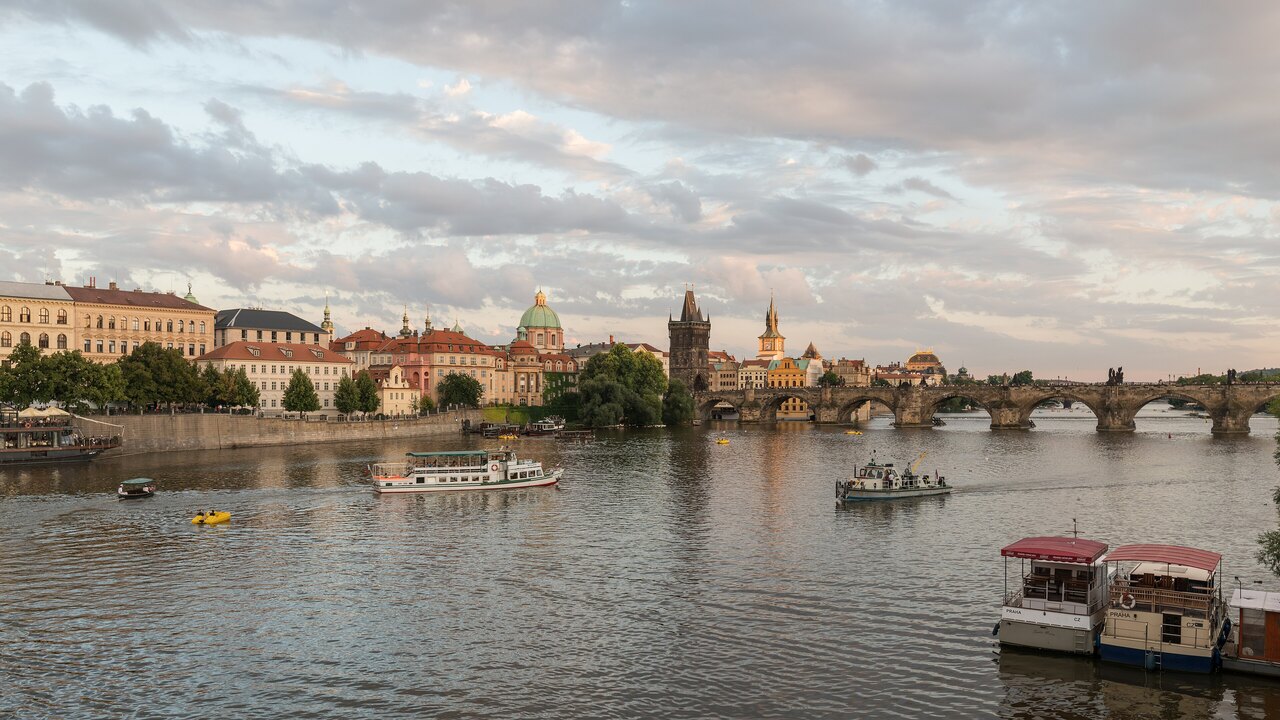
The 3-day plan, day by day
Day 1: Prague Castle and Malá Strana
Morning. Take tram 22 up to Pražský hrad stop and enter the Castle from the north, avoiding the climb. The main circuit ticket (roughly 450-500 CZK) covers St Vitus Cathedral, the Old Royal Palace, St George's Basilica and Golden Lane. Grounds open at 6:00; the buildings from 9:00. Allow 3 hours.
Afternoon. Walk 10 minutes uphill to the Strahov Monastery library halls (around 150-200 CZK), then down through the Petřín gardens or by the funicular into Malá Strana: the Lennon Wall, Kampa Island and St Nicholas Church.
Evening. Have dinner in Malá Strana, then cross the Charles Bridge after 22:00, when the crowds of the day have gone and the statues are lit.
The changing of the Castle guard happens every hour at the main gate, with the full ceremony at noon.
Day 2: Old Town and the Jewish Quarter
Morning. Walk the Charles Bridge at 7:00 for the only quiet hour of the day, then into Old Town Square for the Astronomical Clock, whose figures parade on the hour from 9:00. The Old Town Hall tower has the best view over the square (a few hundred koruna).
Afternoon. Walk 5 minutes north into Josefov, the Jewish Quarter. One Jewish Museum ticket covers the Pinkas Synagogue (with the names of 78,000 Czech Holocaust victims), the Old Jewish Cemetery, and the Spanish Synagogue. It is closed on Saturdays and Jewish holidays. Allow 2-3 hours.
Evening. Eat Czech food at a big beer hall such as Lokál on Dlouhá Street: svíčková (beef in cream sauce) costs about 250-300 CZK and a half-litre of tank Pilsner about 70-90 CZK.
Trdelník, the chimney cake sold everywhere in Old Town, is a recent tourist invention, not a Czech tradition. Try a koláč from a bakery instead.
Day 3: Vyšehrad, New Town and Letná
Morning. Take the metro C to Vyšehrad, the city's other castle, on a cliff over the river (grounds free). The Vyšehrad Cemetery holds Dvořák, Smetana and Mucha. Walk down along the river embankment to the Dancing House, 20 minutes away.
Afternoon. Walk 10 minutes to Wenceslas Square, the stage of the 1989 Velvet Revolution, and the National Museum at its top. Nearby, the Lucerna Passage has David Černý's upside-down horse statue.
Evening. Take tram 17 to Letná Park for the view of the bridges at sunset and a beer at the Letná beer garden (open roughly April to October), where a plastic cup of beer costs well under €3.
On Saturday mornings, the farmers' market on the Náplavka riverbank by the Dancing House has local food and coffee.
Only have 2 days?
With 2 days, do Day 1, then cover Old Town Square and the Jewish Quarter in the morning of Day 2 and Letná at sunset. You lose Vyšehrad and the New Town.
Got extra days?
A 4th day is best spent at Kutná Hora, about 1 hour by train, for the Sedlec Ossuary decorated with the bones of some 40,000 people and the Gothic St Barbara's Cathedral. Český Krumlov, the fairy-tale town in South Bohemia, is about 3 hours away and best with an overnight stay.
Where to stay in Prague
| Budget | Area | Why | Typical double/night |
|---|---|---|---|
| Budget | Žižkov / Vinohrady | Local pubs, trams to the centre in 10 minutes, much cheaper. | 1,800-2,800 CZK |
| Mid-range | Old Town (Staré Město) | Walk to everything, including the Castle via the bridge in 25 minutes. | 3,000-5,000 CZK |
| Mid-range | New Town (Nové Město) | Central and cheaper than Old Town, good metro links. | 2,500-4,000 CZK |
| Comfort | Malá Strana | Baroque palaces turned hotels below the Castle; romantic and quiet at night. | 5,000-10,000 CZK |
Getting around
The centre is walkable, but trams save the climbs: tram 22 to the Castle and tram 17 along the river. Tickets cover the metro, trams, buses and the Petřín funicular; a short single ticket is around 30-40 CZK and a 24-hour pass around 120 CZK. Tap a contactless card at the tram validators or buy tickets in the PID Lítačka app. From the airport, bus 119 to Nádraží Veleslavín and the green metro line A reaches the centre in about 45 minutes on a normal ticket.
What to eat in Prague
Czech food is designed for beer. Svíčková is beef sirloin in a creamy vegetable sauce with bread dumplings and cranberries; vepřo knedlo zelo is roast pork with dumplings and sauerkraut; guláš here is a thick stew rather than a soup. Pubs serve nakládaný hermelín, a pickled soft cheese, and utopenec, pickled sausages, as beer snacks. Lunch menus (denní menu) on weekdays are the best deal, with soup and a main for 180-250 CZK. Pilsner Urquell from the tank (tankové pivo) is the local pride, served with a thick head of foam. For something sweet, try a koláč pastry or a větrník cream puff from a cukrárna.
Best time to visit
May, June and September are best, with highs of 19-24°C. July and August are warmer and very crowded. The Christmas markets in Old Town Square and Wenceslas Square run from late November to early January. January and February are cold (around 0-3°C) but the cheapest, with the Castle sometimes under snow.
Month-by-month weather for Prague →
What a day costs
| Budget | Mid-range | Comfort | |
|---|---|---|---|
| Bed (per person, sharing a double) | 1,100 CZK | 2,000 CZK | 4,000 CZK |
| Food & drink | 600 CZK | 1,200 CZK | 2,500 CZK |
| Sights & tickets | 400 CZK | 800 CZK | 1,300 CZK |
| Local transport | 120 CZK | 120 CZK | 500 CZK |
| Total per person, per day | about 2,200 CZK | about 4,100 CZK | about 8,300 CZK |
Approximate 2026 prices in Czech koruna (about 25 CZK to €1). Prague charges a city tax of about 50 CZK per person per night.
Before you go
Common questions
Should I pay in euros or koruna?
In koruna. Many places accept euros at a poor rate. When a card terminal or ATM offers to charge you in euros, refuse and pay in CZK, and avoid the independent cash machines and exchange booths around the Old Town.
Is 2 days enough for Prague?
For the main sights, yes, at a quick pace. The city is compact. Three days makes it a pleasure rather than a checklist.
When is the Charles Bridge empty?
Before 7:30 and after 22:30. From 10:00 to 20:00 it is one of the busiest pedestrian spaces in Europe.
Is Prague Castle free?
The courtyards and gardens are free. The cathedral beyond the entrance area, the palace and Golden Lane need the circuit ticket.
How this guide was made
Written by hand, without AI, from experience planning Central Europe trips. Prices are approximate for 2026 in koruna; confirm on the official Prague Castle, Jewish Museum in Prague and PID (transport) websites before booking.
Some links on this page are partner links. If you book through them TonyPlan may earn a commission; the price you pay is the same. How we make money.