How many days in Poland? 8 days, Warsaw, Kraków and Gdańsk by train
By Tony Panopoulos · travel-agency planner in Greece · Updated
Poland's three great cities tell three different stories. Warsaw was destroyed in 1944 and rebuilt brick by brick from paintings and drawings. Kraków escaped the war almost intact, and around it lie the salt mine of Wieliczka and the former German camp at Auschwitz-Birkenau. Gdańsk, the Hanseatic port on the Baltic, is where the Second World War began and where Solidarity began to end communism. Give it eight days, linked by fast PKP Intercity trains of 2.5-3 hours, and book the Auschwitz and Wieliczka visits well ahead.
Short answer
Six days covers Kraków (three days, with Auschwitz and Wieliczka) and Warsaw (two), with one travel day. Eight days adds Gdańsk and Malbork Castle in the north.
The 8-day plan, day by day
Day 1: Warsaw: the Old Town and the Royal Castle
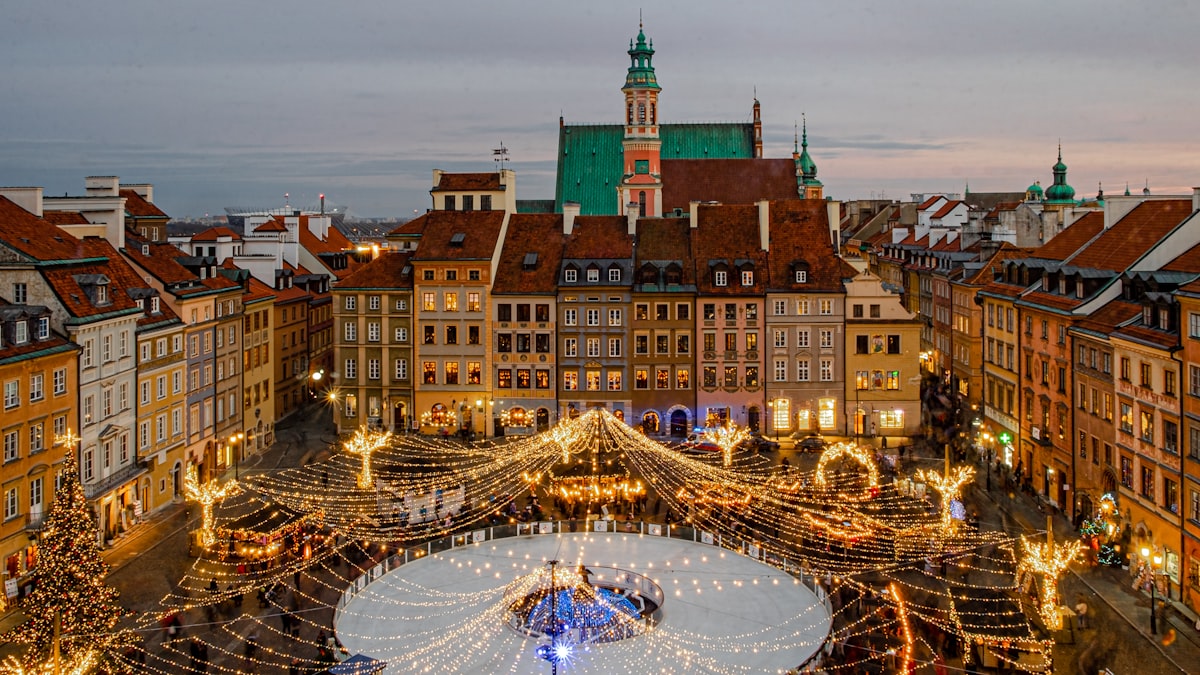
Morning. Start at Castle Square with Sigismund's Column, then tour the Royal Castle (about zł 40-50), rebuilt in the 1970s-80s from rubble. Walk the Old Town Market Square, a UNESCO site precisely because of its reconstruction, and the defensive Barbican.
Afternoon. Follow the Royal Route south along Krakowskie Przedmieście past the university and the church where Chopin's heart is kept, to Nowy Świat.
Evening. Go up to the 30th-floor terrace of the Palace of Culture and Science (about zł 30-40), Stalin's gift to the city, then eat pierogi in a bar mleczny (milk bar) for zł 25-40.
Buy a 24-hour or 72-hour public transport ticket, or tap a contactless card on board; rides are cheap and frequent.
Day 2: Warsaw: the Uprising Museum, POLIN and Łazienki
Morning. Visit the Warsaw Rising Museum (about zł 35-40, closed Tuesdays), which tells the story of the 63-day uprising of 1944 with a full-size replica B-24 bomber and sewers to crawl through.
Afternoon. Spend 2-3 hours at POLIN, the Museum of the History of Polish Jews (about zł 35-45), on the site of the wartime ghetto, opposite the Ghetto Heroes Monument.
Evening. Walk in Łazienki Park, with the Palace on the Isle; from May to September there are free Chopin concerts at the Chopin monument on Sundays at 12:00 and 16:00.
Both big museums deserve a morning each; if you are short of time, choose one.
Day 3: Train to Kraków and the Main Square
Morning. Take an Express InterCity Premium (Pendolino) train to Kraków Główny (about 2 hours 20 minutes, zł 60-200).
Afternoon. Walk to the Rynek Główny, one of the largest medieval squares in Europe, and the Cloth Hall (Sukiennice), with the underground museum of medieval Kraków beneath it.
Evening. Listen for the hejnał, the trumpet call played every hour from the tower of St Mary's Basilica, which breaks off mid-note. Inside, see Veit Stoss's carved wooden altarpiece, opened at 11:50 daily.
Buy train tickets on the PKP Intercity site or app; prices rise as seats sell, so book a week or more ahead.
Day 4: Kraków: Wawel and Kazimierz
Morning. Climb Wawel Hill for the Royal Castle and the Cathedral where Polish kings were crowned and buried (tickets per exhibition, about zł 30-60 each; book on the official site). Climb to the Sigismund Bell, then go down to the Dragon's Den by the river.
Afternoon. Walk 15 minutes to Kazimierz, the old Jewish district, for the Old Synagogue, the Remuh Synagogue and its cemetery, and the streets used in the filming of Schindler's List.
Evening. Eat a zapiekanka (open baguette) at Plac Nowy for zł 15-25, then a drink in the candle-lit bars around Szeroka Street.
Oskar Schindler's Enamel Factory museum (about zł 40-50) across the river in Podgórze sells out; book a timed ticket online.
Day 5: Auschwitz-Birkenau
Morning. Travel about 1.5 hours by bus or a pre-booked tour to the Auschwitz-Birkenau Memorial and Museum. Entry is free with a booked time card, but most daytime slots from April to October are for guided visits only (about zł 100-150); book on the official site weeks ahead.
Afternoon. After about 3.5 hours across Auschwitz I and Birkenau (3 km apart, linked by a free shuttle), return to Kraków.
Evening. Keep the evening quiet; dinner in the Old Town.
Bags larger than about 30 x 20 x 10 cm are not allowed on site, and there is a paid left-luggage point.
Day 6: Wieliczka salt mine, then to Gdańsk
Morning. Take a train or bus 30 minutes to the Wieliczka Salt Mine (about zł 140-160 for a foreign-language tour), a UNESCO site with chapels, chandeliers and statues carved from rock salt, including the vast Chapel of St Kinga 100 metres underground.
Afternoon. Return to Kraków and fly to Gdańsk (about 1 hour) or take the train (about 5-6 hours, through Warsaw).
Evening. Arrive in Gdańsk and walk to the Motława riverfront for dinner.
The standard Wieliczka route has around 800 steps, mostly down; you return to the surface by lift.
Day 7: Gdańsk: the Long Market and Solidarity
Morning. Walk the Royal Way from the Golden Gate along Długa and Długi Targ (Long Market) to the Neptune Fountain and the Town Hall. Stop at the medieval Żuraw crane on the river.
Afternoon. Visit the European Solidarity Centre (about zł 30-40) at the Gdańsk Shipyard, where Lech Wałęsa led the 1980 strikes, or the large Museum of the Second World War (about zł 30-40, closed Mondays).
Evening. Have dinner on Mariacka Street, lined with amber shops and stone terraces, and try pierogi or Baltic herring.
Take bus or boat to Westerplatte, where the first shots of the war were fired on 1 September 1939.
Day 8: Day trip: Malbork Castle
Morning. Take a train 30-45 minutes to Malbork for the Teutonic Knights' castle, the largest brick castle in the world (about zł 70-80 with audio guide).
Afternoon. Return to Gdańsk and go to the Oliwa Cathedral, where organ recitals are held most days, or the beach at Sopot, with Europe's longest wooden pier.
Evening. Final dinner in Gdańsk or Sopot.
Gdańsk airport is about 30 minutes from the centre by train or taxi.
Only have 6 days?
With 6 days, skip Gdańsk: two days in Warsaw and four in Kraków, with Auschwitz and Wieliczka on separate days.
Got extra days?
Extra days fit the Tatra Mountains around Zakopane (about 2-2.5 hours from Kraków), Wrocław with its market square and bronze dwarfs, or Toruń, the Gothic hometown of Copernicus.
Where to stay in Poland
| Budget | Area | Why | Typical double/night |
|---|---|---|---|
| Budget | Kraków Kazimierz / Warsaw Śródmieście hostels | Central hostels and apartments, walking distance to the sights. | zł 200-350 |
| Mid-range | Kraków Old Town | Inside the Planty ring, steps from the Main Square. | zł 400-700 |
| Mid-range | Gdańsk Main Town / Granary Island | New hotels on the river, across from the old crane. | zł 400-700 |
| Comfort | Warsaw Royal Route / Kraków luxury hotels | Historic grand hotels near the Old Town and the Rynek. | zł 900-1,800 |
Getting around
Take PKP Intercity trains: Warsaw-Kraków about 2 hours 20 minutes, Warsaw-Gdańsk about 2 hours 45 minutes. Book on the PKP Intercity app, which is in English. Each city has cheap trams and buses (single tickets about zł 4-6); use contactless cards or apps like Jakdojade. Bolt and Uber are cheap: most city rides cost zł 20-40. Kraków's airport train reaches the centre in about 20 minutes, Warsaw's in about 25.
What to eat in Poland
Polish food is filling and seasonal. Eat pierogi (dumplings with potato and cheese, meat or berries), żurek (sour rye soup with sausage and egg), bigos (hunter's stew) and gołąbki (cabbage rolls). In Kraków, buy an obwarzanek, a ring-shaped bread sold from carts for zł 3-4. Milk bars serve cheap canteen meals for zł 25-40; a restaurant dinner costs zł 70-140. Try paczki (doughnuts) and flavoured vodkas such as żubrówka with apple juice, but do not drink in public spaces, which is illegal.
Best time to visit
May to September, with highs of 20-25°C, long evenings and outdoor cafés; July and August are the busiest. September is excellent. Winter is cold, often below 0°C, but Kraków's Christmas market on the Rynek runs from late November. Spring arrives in April. On 1 November (All Saints) and around Easter, many places close.
Month-by-month weather for Poland →
What a day costs
| Budget | Mid-range | Comfort | |
|---|---|---|---|
| Bed (per person, sharing a double) | zł 120 | zł 250 | zł 600 |
| Food & drink | zł 90 | zł 170 | zł 350 |
| Sights & tickets | zł 50 | zł 100 | zł 180 |
| Local transport | zł 40 | zł 70 | zł 140 |
| Total per person, per day | about zł 300 | about zł 590 | about zł 1,270 |
Approximate 2026 prices in Polish złoty (zł); transport averages intercity trains across the trip, and some towns, including Gdańsk and Sopot, charge a small local visitor fee per night.
Before you go
Common questions
How far ahead should I book Auschwitz?
As early as possible, ideally 4-8 weeks ahead in summer. Entry is free, but you need a time-specific entry card from the official visit.auschwitz.org site, and most slots in the busy season are guided-only. Tours from Kraków include transport and are easier if official slots have gone. Allow at least 3.5 hours on site plus 1.5 hours each way.
Is Poland expensive?
Less than Western Europe, though prices have risen. A milk bar lunch costs zł 25-40, a beer about zł 15-20, and a city hotel room zł 400-700. Museums are cheap and many have a free day each week. Kraków's Main Square and Gdańsk's Long Market are the priciest places to eat; walk one street away to save.
Do I need to speak Polish?
No. Most young people in cities speak good English, and signs, ticket machines and train apps are in English. Older people and rural areas may speak little English, so learn a few words: dzień dobry (hello), dziękuję (thank you) and proszę (please). Some museum audio guides are available in many languages.
Can I pay by card in Poland?
Yes, almost everywhere, including small shops, trams and taxis; Poland is one of the most cashless countries in Europe. Carry a little złoty for market stalls and toilets. If a machine offers to charge you in your home currency, decline and pay in złoty to get a better rate. Poland does not use the euro.
How this guide was made
Compiled by TonyPlan from official tourism, transport and attraction sources and on-the-ground travel knowledge. Prices are approximate for 2026 and change with season; anything we could not confirm is marked as approximate.
Some links on this page are partner links. If you book through them TonyPlan may earn a commission; the price you pay is the same. How we make money.