How many days in Panama? 7 days: canal, islands, highlands and Caribbean
By Tony Panopoulos · travel-agency planner in Greece · Updated
Panama is small on the map but slow to cross: about 480 km of highway separate Panama City from David, and the islands need a boat. Give it seven days: the capital and the canal, a night on the San Blas islands run by the Guna people, the coffee highlands of Boquete, and the Caribbean archipelago of Bocas del Toro. The currency is the US dollar.
Short answer
Six days covers Panama City, San Blas and Bocas del Toro if you fly between them. Seven lets you add the Boquete highlands, which most visitors say was the surprise of the trip.
The 7-day plan, day by day
Day 1: Panama City: Casco Viejo and the Amador Causeway
Morning. Start in Casco Viejo, the 1673 old town on its peninsula, a UNESCO site. Walk from Plaza de la Independencia and the cathedral to the golden altar of Iglesia de San José and the sea wall of Plaza de Francia, about 2 hours.
Afternoon. Taxi 10 minutes (US-8) along the Amador Causeway, built from rock dug out of the canal, to Frank Gehry’s Biomuseo (about US-22), which explains how the isthmus rose from the sea.
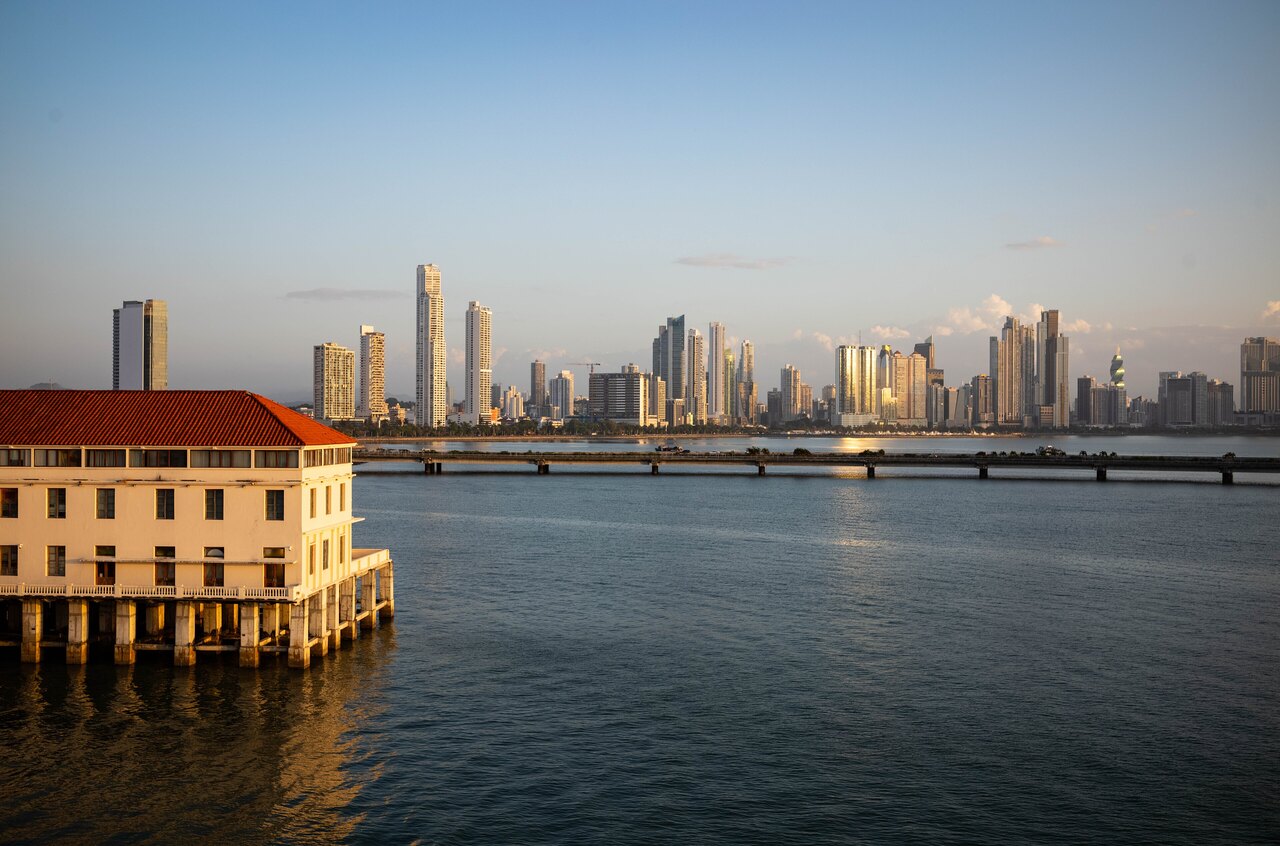
Evening. Back in Casco Viejo, watch sunset from a rooftop on Avenida A or Calle 3, with the Cinta Costera and the skyscrapers of Punta Paitilla across the bay. Dinner of ceviche and corvina costs US$15-30.
Stay inside the restored grid of Casco Viejo after dark; the streets towards El Chorrillo on its western edge are not safe.
Day 2: The Panama Canal and Panamá Viejo
Morning. Reach the Miraflores Locks visitor centre by about 9:00 (about US-20). From the terraces you watch a 300-metre ship drop some 16 metres in two steps.
Afternoon. Taxi 30 minutes east to Panamá Viejo, the ruins of the first city, founded in 1519 and burned during Henry Morgan's raid in 1671 (about US$15). Climb the cathedral tower for the view across the mudflats to the modern skyline.
Evening. Eat at the Mercado de Mariscos fish market by the Cinta Costera, where a cup of ceviche is US$3-5 and a fried whole fish US$10-15, then walk the waterfront promenade back towards Casco.
Check the day’s transit schedule on the Panama Canal Authority website; on slow days there are long gaps between ships.
Day 3: San Blas: a night in Guna Yala
Morning. A 4x4 shuttle collects you around 5:00-5:30 for the 2.5-3 hour drive to the port of Carti; pay the Guna Yala fee of about US-22 in cash at the checkpoint.
Afternoon. A launch runs 20-60 minutes to one of the 365 islands. Overnight packages (about US-250 with transport, meals and a basic cabin) stop at the Piscina Natural sandbank for starfish and at Isla Perro for snorkelling over a sunken boat.
Evening. Dinner is fish or lobster caught that day, with rice and plantain; power is often solar and limited, so bring a torch. Next morning, swim before the day-trippers arrive; the launch and 4x4 have you back in Panama City around 15:00-17:00.
Guna Yala is self-governed: ask before photographing people (often US a photo) and buy molas, the layered textile panels, from the women who sew them. Book onward flights for the following morning, as the road back is often slow.
Day 4: Fly to David, up to Boquete
Morning. Fly about 1 hour from Albrook airport to David, or take the overnight bus (about 7 hours, US-25). From David, a bus climbs 40 km in 45 minutes to Boquete, at about 1,200 metres.
Afternoon. Book a coffee farm tour: Boquete grows geisha coffee, among the priciest beans sold at auction. Tours of 2-3 hours cost about US-50 with a tasting.
Evening. Boquete is cool, around 15-18°C at night. Eat trout or a steak in town around the central park and turn in early if you plan to climb tomorrow.
The night climb of Volcán Barú (3,474 m) starts around midnight for sunrise views of both oceans; it is a hard 6-8 hours, so take a guide.
Day 5: Cloud forest and hot springs
Morning. Walk the Pipeline Trail or the Sendero de los Quetzales area in the cloud forest above town; early morning gives the best chance of a resplendent quetzal, most often seen from February to May.
Afternoon. Cross the hanging bridges of the Boquete Tree Trek (about US-60), or drive 30 minutes to the simple stone pools of the Caldera hot springs (a few dollars).
Evening. Return to town for dinner. In the dry season, a fine misty rain called the bajareque often blows over Boquete late in the day and leaves rainbows over the valley.
Wear proper shoes: the trails are muddy most of the year, and the rainy season (May to November) brings heavy afternoon storms.
Day 6: Across the mountains to Bocas del Toro
Morning. Shuttle vans (about US, 3.5-4 hours) cross the Fortuna pass to Almirante, where water taxis take 25 minutes to Isla Colón. Or fly via the capital (about 1 hour each way).
Afternoon. Take a bike or the bus (about US$2-3) 30 minutes to Playa Bluff for a wild surf beach, or the bus to Boca del Drago and walk to Playa Estrella, known for starfish in clear shallow water.
Evening. Bocas Town on Isla Colón has wooden houses on stilts, bars over the water and the cheapest beds in Panama. Grilled fish with coconut rice is about US$12-18.
Do not lift the starfish from the water at Playa Estrella; rangers and local guides ask visitors to leave them in place.
Day 7: Bocas: dolphins, Zapatilla and snorkelling
Morning. Join a full-day boat tour (about US$30-40, plus park fees) to Dolphin Bay, where bottlenose dolphins are often seen, and Cayo Coral for snorkelling over reef.
Afternoon. The tour usually stops at the uninhabited Cayos Zapatilla inside Bastimentos Island National Marine Park (park entry about US$10-20), a beach of white sand and palms with a short forest trail.
Evening. Cross to Isla Bastimentos by water taxi (about US$3-5) for dinner in Old Bank, or stay in Bocas Town for a last night. Fly to Panama City the next morning (about 1 hour).
Water taxis between islands stop running around sunset; agree the price and return time before you go.
Only have 6 days?
With 6 days, keep Panama City (2 days), San Blas overnight and Bocas del Toro, and fly both ways between the capital and Bocas. You lose Boquete and the cloud forest.
Got extra days?
Extra days fit diving at Isla Coiba, the Pearl Islands (about 2 hours by ferry), the surf town of Santa Catalina, or El Valle de Antón, a village in an extinct crater 2.5 hours from the capital.
Where to stay in Panama
| Budget | Area | Why | Typical double/night |
|---|---|---|---|
| Budget | Bocas Town / El Cangrejo | Hostels and simple guesthouses near restaurants and buses. | US$25-60 |
| Mid-range | Casco Viejo, Panama City | Walk to the old town's squares, rooftops and restaurants. | US$110-200 |
| Mid-range | Boquete town / coffee farms | Lodges and farm stays in cool air, a short drive from trailheads. | US$80-160 |
| Comfort | Casco Viejo boutique / Bocas over-water lodges | Restored colonial hotels, or bungalows on stilts over the Caribbean. | US$220-450 |
Getting around
Domestic flights from Albrook airport (not Tocumen, the international one) reach David and Bocas del Toro in about 1 hour for roughly US-150 one way. Long-distance buses leave from the Albrook bus terminal next door; David is about 7 hours. In Panama City the Metro costs about US.35-1 with a rechargeable card, and Uber runs US-8 in the centre. A taxi from Tocumen to Casco Viejo is about US-35. Shuttle vans connect Boquete and Bocas daily.
What to eat in Panama
Panama’s national dish is sancocho, a chicken soup with yam, coriander and corn. At breakfast, try hojaldras (fried dough) and carimañolas (stuffed cassava fritters). Ceviche of corvina comes in cups at the Mercado de Mariscos for US-5. A fonda (canteen) serves rice, beans, plantain and stewed meat for US-7; dinner in Casco Viejo runs US-50. On the Caribbean side, try rondón, a seafood coconut stew. The local beers are Balboa and Atlas.
Best time to visit
Mid-December to April is the dry season on the Pacific side, with 30-33°C in Panama City. May to November brings heavy afternoon rain but lower prices. Bocas del Toro is often driest in September-October and February-March. Boquete stays at 18-25°C by day all year.
Month-by-month weather for Panama →
What a day costs
| Budget | Mid-range | Comfort | |
|---|---|---|---|
| Bed (per person, sharing a double) | US$20 | US$55 | US$140 |
| Food & drink | US$20 | US$40 | US$80 |
| Sights & tickets | US$15 | US$35 | US$70 |
| Local transport | US$10 | US$25 | US$50 |
| Total per person, per day | about US$65 | about US$155 | about US$340 |
Approximate 2026 prices in US dollars, which Panama uses alongside its own balboa coins; hotels add about 10% tax, and San Blas trips need cash for the Guna Yala fees.
Before you go
Common questions
Do I need to change money in Panama?
No. Panama has used the US dollar since 1904; the local balboa exists only as coins, which match the size and value of US coins. Bring small notes, because shops and taxis often refuse US$50 and US$100 bills. Cards work in the city, but carry cash for San Blas, buses and small islands.
Is the San Blas trip worth the early start?
Yes, if you stay at least one night. A day trip spends about six hours in a 4x4 for a few hours on the islands. Overnight, you see the archipelago at dawn and dusk without the crowds. Accept basic conditions: shared bathrooms, sand floors and limited power on many islands.
Is Panama safe for travellers?
The main routes are generally safe. In Panama City, stay in the restored part of Casco Viejo, El Cangrejo, Marbella or Punta Paitilla after dark, and use Uber at night. Avoid El Chorrillo and Curundú. The Darién jungle near Colombia is off-limits for independent travel.
Can I see a ship pass through the canal?
Usually yes. At Miraflores, southbound ships tend to pass in the morning and northbound ones in the afternoon, though the schedule changes daily. The Agua Clara visitor centre near Colón shows the newer, larger locks. Partial-transit boat tours of about five hours sail through the locks themselves.
How this guide was made
Compiled by TonyPlan from official tourism, transport and attraction sources and on-the-ground travel knowledge. Prices are approximate for 2026 and change with season; anything we could not confirm is marked as approximate.
Some links on this page are partner links. If you book through them TonyPlan may earn a commission; the price you pay is the same. How we make money.