Home › Pakistan › How many days
How many days in Pakistan? 9 days, Lahore's Mughal city and the Hunza Valley
By Tony Panopoulos · travel-agency planner in Greece · Updated
Pakistan holds two trips in one. In the plains, Lahore is the cultural capital, with Mughal mosques, a fort and gardens and the best food in the country. In the far north, the Karakoram Highway climbs through some of the highest mountains on earth to the Hunza Valley, with apricot orchards beneath peaks over 7,000 metres. Give it nine days: one in Islamabad, three in and around Lahore, and five in Hunza. Weather decides the trip to the north, so leave a spare day for cancelled flights, and check your government's travel advice, which warns against some regions of the country.
Short answer
Seven days covers Lahore (two days) and Hunza (four), with flights through Islamabad. Nine days adds Islamabad itself and the drive to the Khunjerab Pass on the Chinese border.
The 9-day plan, day by day
Day 1: Islamabad: Faisal Mosque and the Margalla Hills
Morning. Visit the Faisal Mosque, the vast tent-shaped mosque at the foot of the Margalla Hills, designed by the Turkish architect Vedat Dalokay and opened in 1986 (free; non-Muslims are welcome outside prayer times).
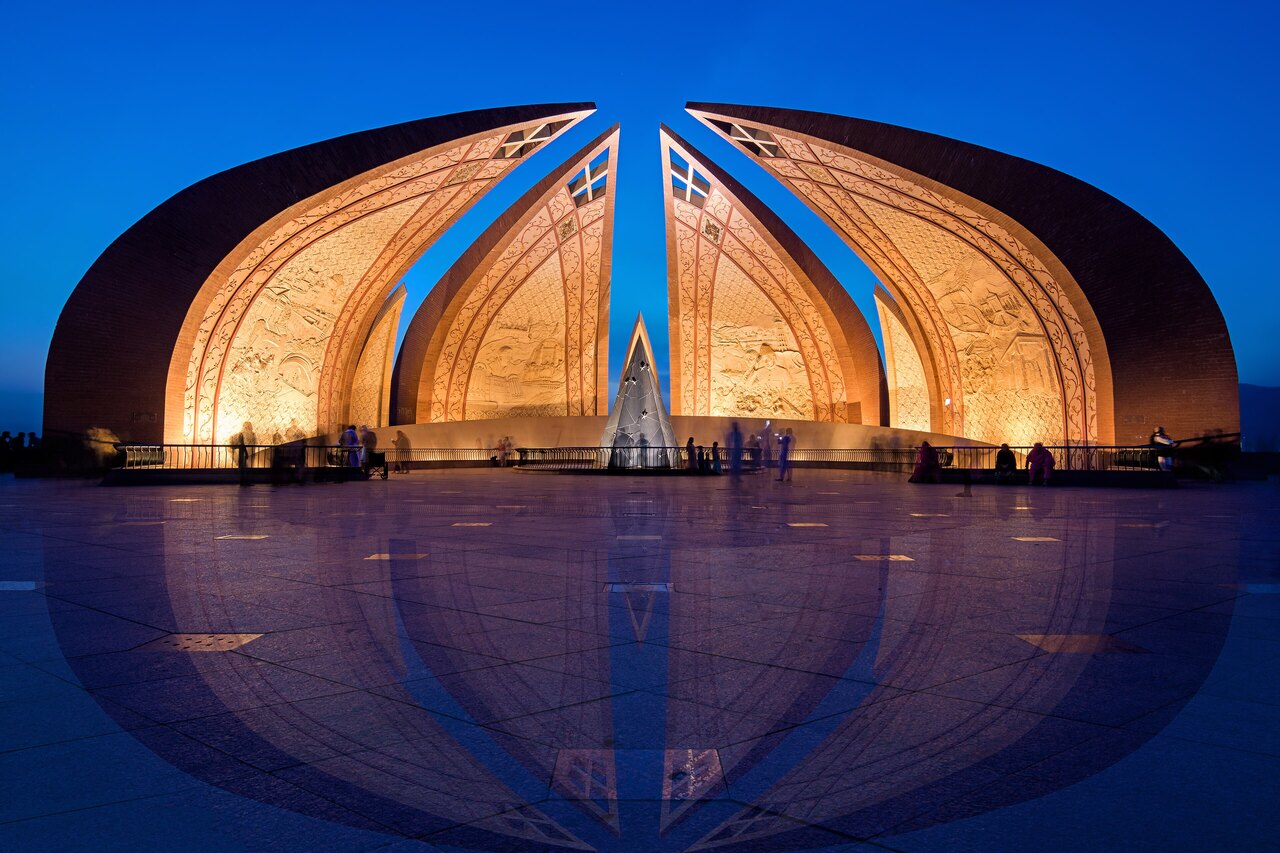
Afternoon. See the Pakistan Monument, a granite flower whose four petals represent the provinces, and its museum (a few hundred rupees), then walk Trail 3 or Trail 5 in the Margalla Hills.
Evening. Go up to the Daman-e-Koh viewpoint for the city lights, then dinner in F-6 Super Market or Kohsar Market.
Use Careem or inDrive apps for cars; most rides in Islamabad cost Rs 400-1,000.
Day 2: To Lahore and the Wagah border ceremony
Morning. Take the Daewoo Express coach on the M2 motorway (about 4.5-5 hours) or the Green Line train to Lahore.
Afternoon. Check in and rest, then drive about 45 minutes east to the Wagah border.
Evening. Watch the flag-lowering ceremony before sunset, when Pakistani and Indian soldiers stamp, kick and stare each other down in front of cheering crowds (free; foreigners often have a separate seating area, bring your passport). Return to Lahore for dinner.
Arrive at Wagah at least 1.5 hours before sunset; security checks are thorough and stands fill early.
Day 3: Lahore: Badshahi Mosque, the Fort and the Walled City
Morning. Begin at the Badshahi Mosque, built by Aurangzeb in 1673, one of the largest mosques in the world, with a courtyard for tens of thousands. Cross to Lahore Fort, a UNESCO site, for the Sheesh Mahal palace of mirrors and the Picture Wall of tile mosaics (foreigner ticket about Rs 1,000-1,500).
Afternoon. Walk into the Walled City through Delhi Gate to the Wazir Khan Mosque, covered in 17th-century Kashi tilework, and the restored Shahi Hammam bath.
Evening. Eat on Fort Road Food Street, where restaurants on old rooftops face the floodlit Badshahi Mosque; a mutton karahi for two is about Rs 3,000-5,000.
Take shoes off in mosques and cover legs and shoulders; women should bring a headscarf.
Day 4: Lahore: Shalimar Gardens and Anarkali
Morning. Visit the Shalimar Gardens, laid out by Shah Jahan in 1641 in three terraces with fountains (foreigner ticket about Rs 500-1,000). Then see Jahangir's Tomb across the Ravi in Shahdara.
Afternoon. Browse the Lahore Museum on The Mall, whose collection of Gandharan Buddhist sculpture includes the famous Fasting Buddha, and Zamzama, the cannon of Kipling's Kim outside. Walk through Anarkali Bazaar.
Evening. Fly to Islamabad (about 1 hour) or take an evening coach, ready for the northern flight.
Breakfast like a Lahori on halwa puri and lassi at a stall in the old city, about Rs 400-700.
Day 5: Fly to Gilgit and drive to Hunza
Morning. Take the morning flight from Islamabad to Gilgit (about 1 hour), which flies past Nanga Parbat, 8,126 metres, when the sky is clear. Flights are often cancelled in bad weather.
Afternoon. Drive about 2.5 hours up the Karakoram Highway to Karimabad, the main town of Hunza, with a stop at the Rakaposhi viewpoint.
Evening. Watch sunset on Rakaposhi and Ultar Sar from your guesthouse terrace.
If the flight is cancelled, the road from Islamabad takes 14-18 hours, or about 2 days with a night in Chilas or Naran (summer only).
Day 6: Karimabad: Baltit and Altit forts
Morning. Visit Baltit Fort, the 700-year-old palace of the Mirs of Hunza above Karimabad, restored with the Aga Khan Trust for Culture (foreigner ticket about Rs 1,000-1,500 with a guide).
Afternoon. Walk 30-40 minutes through the orchards to Altit Fort, even older, perched over the Hunza river, and the royal garden.
Evening. Drive up to Eagle's Nest in Duikar for sunset over Hunza's peaks.
Most people in Hunza are Ismaili Muslims; the region is relaxed and very safe, but dress modestly.
Day 7: Attabad Lake, Passu and the suspension bridges
Morning. Drive 30 minutes to Attabad Lake, formed by a landslide in 2010 that blocked the river; boat rides cost about Rs 1,500-3,000.
Afternoon. Continue to Gulmit and Passu, with the jagged Passu Cones above the road, and cross the swaying Hussaini suspension bridge (a small fee).
Evening. Stay in Passu or Gulmit and try chapshuro (meat-filled bread) for dinner.
The Hussaini bridge is not for those afraid of heights; plank gaps are wide.
Day 8: Khunjerab Pass
Morning. Drive about 2.5-3 hours from Passu up to the Khunjerab Pass, about 4,693 metres, the border with China and one of the highest paved border crossings in the world (park fee for foreigners about Rs 3,000-5,000).
Afternoon. Look for Marco Polo sheep, ibex and marmots in the Khunjerab National Park on the way down, and stop in Sost.
Evening. Return to Karimabad for the night.
The pass is usually open from May to November. Take it slowly at altitude.
Day 9: Back to Gilgit and Islamabad
Morning. Drive back to Gilgit (about 2.5 hours) for the return flight to Islamabad.
Afternoon. In Islamabad, visit the Lok Virsa heritage museum or the Saidpur village on the Margalla slopes.
Evening. Have a farewell dinner of nihari or chapli kebab.
Book a flexible ticket home, ideally a day after you expect to return from the north.
Only have 7 days?
With 7 days, skip Islamabad sightseeing and the Khunjerab Pass: two days in Lahore, then fly north for four days in Hunza.
Got extra days?
Extra days go to Skardu and the Deosai Plains, the Fairy Meadows trek for Nanga Parbat views, or the Gandhara ruins of Taxila, 45 minutes from Islamabad.
Where to stay in Pakistan
| Budget | Area | Why | Typical double/night |
|---|---|---|---|
| Budget | Lahore Walled City guesthouses / Karimabad hostels | Simple rooms with mountain or old-city views, run by local families. | Rs 4,000-8,000 |
| Mid-range | Islamabad F-6 / F-7 sectors | Quiet, central sectors near markets and the airport road. | Rs 12,000-22,000 |
| Mid-range | Lahore Gulberg / Karimabad hotels | Modern hotels near restaurants, or terraces facing the Hunza peaks. | Rs 10,000-20,000 |
| Comfort | Lahore and Islamabad international hotels / Hunza Serena-style lodges | Secure, full-service hotels in the cities and polished lodges in the mountains. | Rs 30,000-60,000 |
Getting around
Fly the long distances: Islamabad-Gilgit about 1 hour (weather permitting), and Lahore-Islamabad about 1 hour. Between Lahore and Islamabad, Daewoo Express coaches on the M2 motorway take 4.5-5 hours. In cities, use Careem, inDrive or Yango apps. In the north, hire a car with driver (about Rs 15,000-25,000 a day with fuel), arranged through your hotel or a local agency; roads are good on the Karakoram Highway but slow in places.
What to eat in Pakistan
Pakistani food is rich and meat-heavy. In Lahore, try nihari (slow-cooked beef stew), paye (trotters) for breakfast, karahi cooked in a wok, Lahori fish fried in spiced batter, and sweet lassi. In Peshawar style, chapli kebab. Hunza has its own food: chapshuro, buckwheat bread, apricot oil and soups, and walnut cake at Café de Hunza in Karimabad. A street meal costs Rs 400-1,000, a restaurant meal Rs 2,000-4,000. Alcohol is not sold publicly.
Best time to visit
For the north, April to October: cherry and apricot blossom in early April, green summers at 25-30°C, and gold poplars in late October and early November. For Lahore and Islamabad, October to March is best, with highs of 18-25°C; summer in the plains is extremely hot, often above 40°C, and smog can be severe in Lahore from November to January.
Month-by-month weather for Pakistan →
What a day costs
| Budget | Mid-range | Comfort | |
|---|---|---|---|
| Bed (per person, sharing a double) | Rs 3,000 | Rs 8,000 | Rs 20,000 |
| Food & drink | Rs 2,000 | Rs 4,000 | Rs 8,000 |
| Sights & tickets | Rs 1,000 | Rs 2,000 | Rs 4,000 |
| Local transport | Rs 3,000 | Rs 7,000 | Rs 14,000 |
| Total per person, per day | about Rs 9,000 | about Rs 21,000 | about Rs 46,000 |
Approximate 2026 prices in Pakistani rupees (Rs); transport averages domestic flights and a shared driver in the north, and foreigners often pay higher entry fees than locals at historic sites.
Before you go
Common questions
Is Pakistan safe for tourists?
Lahore, Islamabad and the Hunza Valley are visited by growing numbers of independent travellers, and Hunza is regarded as very safe. Some regions, especially parts of Khyber Pakhtunkhwa near the Afghan border and much of Balochistan, are under strict travel warnings. Check your government's advice, which may affect your insurance, and register with your embassy if recommended.
Do I need a visa for Pakistan?
Yes, for most nationalities. Apply online for an e-visa on the official Pakistan online visa system; a tourist visa is usually processed within a few days to a few weeks. Many nationalities are eligible, and fees vary by country. Some also qualify for a free or simplified visa. Carry printed copies of your visa and passport, as police checkpoints may ask for them.
What if my flight to Gilgit is cancelled?
It happens often, as the route flies through mountain valleys and needs clear weather. Airlines rebook you on the next flight, which may be full for days. The alternative is the road: about 14-18 hours via the Karakoram Highway, or a two-day drive via the Babusar Pass in summer. Build at least one spare day into your trip.
How should I dress in Pakistan?
Modestly. Both men and women should cover legs and shoulders; many visitors wear a loose shalwar kameez, which is comfortable and cheap to buy in any bazaar. Women should carry a scarf for mosques and conservative areas. Hunza is more relaxed, but dressing modestly is still appreciated. Ask before photographing people, especially women.
How this guide was made
Compiled by TonyPlan from official tourism, transport and attraction sources and on-the-ground travel knowledge. Prices are approximate for 2026 and change with season; anything we could not confirm is marked as approximate.
Some links on this page are partner links. If you book through them TonyPlan may earn a commission; the price you pay is the same. How we make money.