Home › Netherlands › How many days
How many days in the Netherlands? 7 days, Amsterdam plus four cities by train
By Tony Panopoulos · travel-agency planner in Greece · Updated
The Netherlands is small and flat, and its trains run every 10-15 minutes between cities that are 30-60 minutes apart. That makes seven days a full country trip from just two bases. Spend three nights in Amsterdam, with a day out to the windmills and Haarlem, then move to Utrecht or Rotterdam and fan out to the national park, the modern port city, Kinderdijk, Delft and The Hague. Book the big museums ahead: tickets in Amsterdam sell out weeks before.
Short answer
Four days covers Amsterdam, a windmill morning and one other city. Seven adds Utrecht, the Kröller-Müller's Van Goghs in a forest, Rotterdam's architecture and the Vermeer towns of the south.
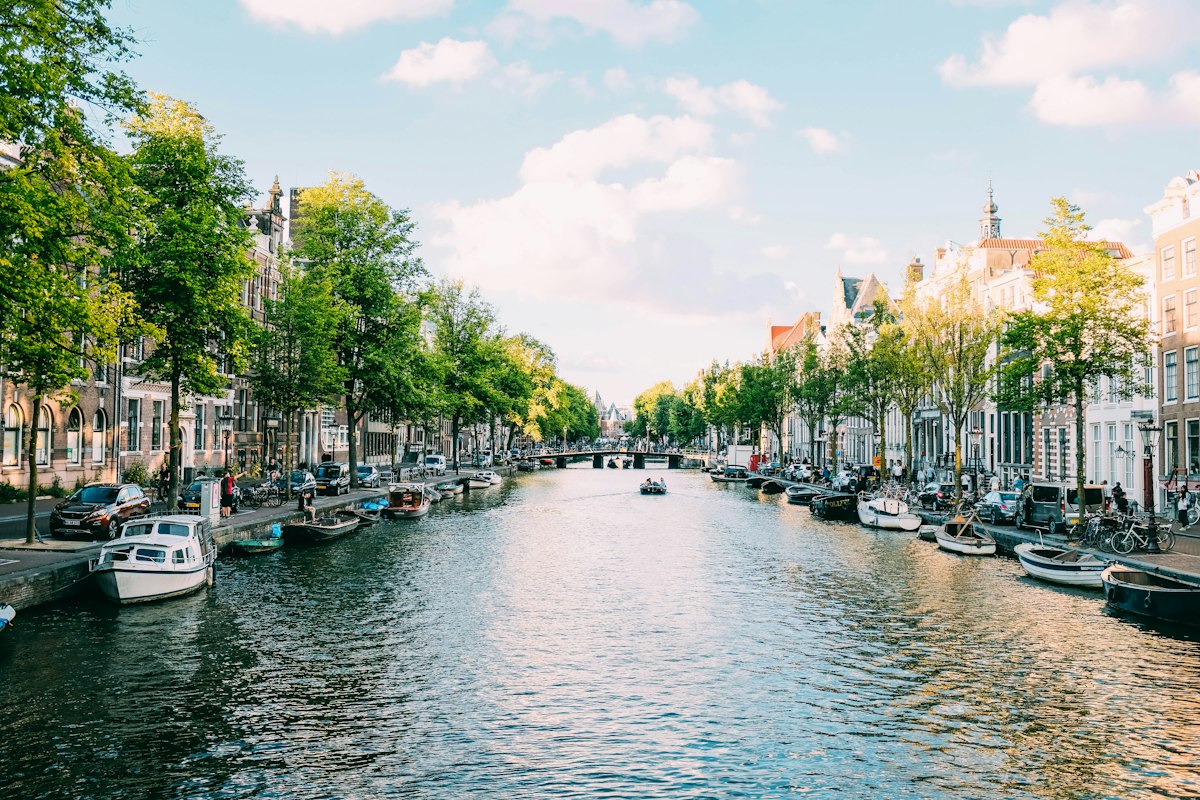
The 7-day plan, day by day
Day 1: Amsterdam: canals and the Rijksmuseum
Morning. Enter the Rijksmuseum at 9:00 (about €25) for Rembrandt's Night Watch and Vermeer's Milkmaid; allow 2.5-3 hours. Then walk across Museumplein to the Vondelpark.
Afternoon. Walk 20 minutes north to the Nine Streets (De 9 Straatjes), small shopping lanes between the main canals of the Grachtengordel, a UNESCO-listed ring dug in the 17th century. Take a 1-hour canal cruise (about €18-25) from near the Rijksmuseum or Central Station.
Evening. Eat in the Jordaan, the old working-class district of narrow canals, and drink jenever or a local beer in a brown café such as Café 't Smalle; a beer costs €5-7.
Bikes have priority in Amsterdam. Never walk on the red bike lanes, and look both ways twice before crossing.
Day 2: Amsterdam: Anne Frank House and Van Gogh
Morning. Visit the Anne Frank House (about €16) on the Prinsengracht, where the Frank family hid for two years behind a bookcase; tickets go on sale online about six weeks ahead and are not sold at the door.
Afternoon. Take tram 2 or 12 to the Van Gogh Museum (about €22-25, timed entry), with the world's largest collection of his work, including Sunflowers and The Bedroom. Then walk through De Pijp and the Albert Cuyp Market for stroopwafels made fresh (about €3-4).
Evening. Take the free ferry behind Central Station across the IJ to NDSM or the A'DAM Lookout tower (about €16-18) for the city at sunset, then an Indonesian rijsttafel dinner for €30-45.
Trams and metros in Amsterdam accept contactless bank cards: tap in and out with the same card, or buy a GVB day ticket (about €9-10).
Day 3: Zaanse Schans windmills and Haarlem
Morning. Take the train 17 minutes to Zaandijk Zaanse Schans and walk 10 minutes to Zaanse Schans, a village of green wooden houses and working windmills that grind spices, paint pigments and oil; entry to the area is free, and each mill costs a few euros or about €20-25 for the Zaanse Schans card.
Afternoon. Return via Amsterdam to Haarlem (15 minutes), a smaller, calmer Amsterdam. Visit the Grote Kerk on the Grote Markt (about €4) with its 5,000-pipe organ, and the Frans Hals Museum (about €18).
Evening. Eat on the Grote Markt or the lanes around it, then return to Amsterdam, or stay in Haarlem, which is 15 minutes from Amsterdam and cheaper.
From late March to mid-May, swap this day for Keukenhof (about €20-25, timed entry), the tulip gardens 35 minutes from Haarlem by bus, and cycle past the bulb fields.
Day 4: Utrecht: Dom Tower and the canal wharves
Morning. Take the train 27 minutes to Utrecht. Climb the Dom Tower (about €12-14, guided only), at 112 metres the tallest church tower in the country, 465 steps up for a view of the whole province.
Afternoon. Walk the Oudegracht, where canal-level wharf cellars have become cafés by the water. Visit the Centraal Museum (about €15-18) or the Miffy Museum with children, then the Rietveld Schröder House, a 1924 De Stijl icon (booking needed).
Evening. Eat on the wharves of the Oudegracht at dusk, where a main costs about €18-28, and stay the night in Utrecht as the base for the next days.
Utrecht Centraal is the country's main rail hub: Rotterdam, Arnhem and Amsterdam are all 25-45 minutes away, making it a good base.
Day 5: Hoge Veluwe National Park and the Kröller-Müller
Morning. Take the train to Ede-Wageningen (about 30 minutes) and a bus into Hoge Veluwe National Park. At the entrance, pick up a free white bicycle and ride through heath, forest and sand dunes; the park ticket costs about €14-16.
Afternoon. Cycle to the Kröller-Müller Museum in the middle of the park (combined ticket about €28-30), home to around 90 Van Gogh paintings and drawings, and its sculpture garden, one of the largest in Europe.
Evening. Return to Utrecht for dinner, or drive or take the train 1 hour to Rotterdam to stay there for Day 6.
Many visitors prefer this museum to the Van Gogh Museum in Amsterdam: smaller crowds, and the paintings are hung in natural light.
Day 6: Rotterdam and the windmills of Kinderdijk
Morning. Take the train to Rotterdam Centraal (about 40 minutes). Visit the Markthal, a horseshoe-shaped market hall with a huge painted ceiling, and the tilted yellow Cube Houses next door, then walk to the Erasmus Bridge.
Afternoon. Take the Waterbus from Erasmusbrug pier to Kinderdijk (about 30-40 minutes), a UNESCO site of 19 windmills built around 1740 to drain the polders (about €17-20; walking the dikes is free).
Evening. Back in Rotterdam, go up the Euromast tower (about €12-18) for the port lit at night, then dinner on the Witte de Withstraat.
Rotterdam was flattened in 1940 and rebuilt with modern architecture; the Depot Boijmans Van Beuningen, a mirrored art storehouse, has a free rooftop garden.
Day 7: Delft and The Hague
Morning. Take the train 13 minutes to Delft, a canal town of brick houses where Vermeer lived. Climb the Nieuwe Kerk tower on the Markt and visit Royal Delft (about €18), the last original Delft Blue pottery factory.
Afternoon. Take the tram or train 15 minutes to The Hague and the Mauritshuis (about €19-20) for Vermeer's Girl with a Pearl Earring and The Goldfinch. The Binnenhof parliament complex next door is wrapped for a long renovation.
Evening. Ride tram 1 to the beach at Scheveningen for sunset over the North Sea and seafood on the pier, then take the train to Schiphol (about 30 minutes) or back to Amsterdam.
The Hague's centre is quiet on Sundays and lively on Thursday evenings, when shops stay open late.
Only have 4 days?
With 4 days, spend two days in Amsterdam, one on Zaanse Schans and Haarlem, and one in Rotterdam or Utrecht. You lose the national park, Kinderdijk and the Vermeer towns.
Got extra days?
Add Giethoorn, a car-free village of thatched houses and canals about 1.5-2 hours from Amsterdam, the medieval city of Maastricht in the far south (2.5 hours by train), or the island of Texel for dunes, seals and cycling.
Where to stay in Netherlands
| Budget | Area | Why | Typical double/night |
|---|---|---|---|
| Budget | Amsterdam Noord / Haarlem / Utrecht hostels | Free ferry from Noord; Haarlem and Utrecht are cheaper and 15-30 minutes away. | €80-140 |
| Mid-range | Amsterdam canal ring | Walk to the museums, the Jordaan and the Nine Streets. | €180-300 |
| Mid-range | Utrecht or Rotterdam centre | Central rail hubs for day trips, cheaper than Amsterdam. | €120-200 |
| Comfort | Canal-house hotels, Amsterdam | 17th-century merchants' houses with canal views. | €350-700 |
Getting around
Trains run by NS link all the cities in this plan every 10-30 minutes; tap in and out with a contactless bank card (OVpay). Sample fares: Amsterdam-Utrecht about €9, Utrecht-Rotterdam about €12. Schiphol airport is 15-20 minutes from Amsterdam Centraal. In cities, rent a bike (about €12-20 a day) or use trams. Driving is unnecessary and parking is expensive.
What to eat in Netherlands
Dutch food is simple and good on the go. Try raw herring with onions from a street stall (about €3-4), bitterballen (fried meat ragout balls) with mustard in a café, kibbeling (fried cod), poffertjes (small pancakes) and warm stroopwafels. In winter, eat stamppot (mashed potatoes with kale and sausage) and erwtensoep (pea soup). Indonesian rijsttafel is a legacy of colonial history. Cheese markets run in Alkmaar and Gouda in summer. A café lunch costs €12-18.
Best time to visit
April to May brings tulips and King's Day on 27 April, when Amsterdam turns orange; June to September has long days of 18-23°C and the best cycling. October and November are rainy and windy. Winter is grey at 3-7°C, with Christmas markets and light festivals. Rain is possible all year, so bring a jacket.
Month-by-month weather for Netherlands →
What a day costs
| Budget | Mid-range | Comfort | |
|---|---|---|---|
| Bed (per person, sharing a double) | €55 | €100 | €220 |
| Food & drink | €35 | €60 | €110 |
| Sights & tickets | €20 | €40 | €70 |
| Local transport | €15 | €25 | €45 |
| Total per person, per day | about €125 | about €225 | about €445 |
Approximate 2026 prices in euros; Amsterdam charges a tourist tax of 12.5% of the room price, the highest in Europe, while other cities charge less.
Before you go
Common questions
How far ahead should I book the Anne Frank House?
Tickets are only sold online and released about six weeks ahead, usually on Tuesdays, for timed entry. Spring and summer slots sell out quickly, so book as soon as your dates are fixed. A few tickets may come back through cancellations on the day. There are no tickets at the door.
Is a rail pass worth it?
Usually not. Dutch train fares are cheap and you can pay with a contactless bank card, so a pass rarely pays off. If you travel every day, look at NS day tickets or off-peak discounts. Avoid rush hours (about 7:00-9:00 and 16:00-18:30), when trains are crowded and cost more on some tickets.
Can I cycle as a visitor?
Yes, and it is the best way to see the countryside. Rent from hire shops or take an OV-fiets at stations (requires a Dutch account). In Amsterdam's centre, traffic is heavy and locals ride fast, so start in a park or a smaller city like Utrecht or Haarlem. Always lock the bike to a fixed rack.
Where can I see windmills?
Zaanse Schans, 17 minutes from Amsterdam, has working mills open inside. Kinderdijk near Rotterdam has 19 mills in a row along the dikes, a UNESCO site. Many towns have a single historic mill, such as De Adriaan in Haarlem. In spring, Keukenhof combines a windmill with the tulip gardens.
How this guide was made
Compiled by TonyPlan from official tourism, transport and attraction sources and on-the-ground travel knowledge. Prices are approximate for 2026 and change with season; anything we could not confirm is marked as approximate.
Some links on this page are partner links. If you book through them TonyPlan may earn a commission; the price you pay is the same. How we make money.