Home › Mauritius › How many days
How many days in Mauritius? 6 days around the island
By Tony Panopoulos · travel-agency planner in Greece · Updated
Mauritius is more than a beach resort: a volcanic island of sugar-cane fields, mountains, waterfalls and a mixed Indian, African, French, Chinese and Creole culture, ringed by a coral reef and turquoise lagoons. Six days gives time for the south-west (Chamarel, the Black River Gorges, Le Morne), the capital and the north, the east coast with Île aux Cerfs, and the south-east lagoon of Blue Bay, plus beach days. The island is only about 65 km long, but roads are slow; rent a car or hire a driver for the touring days.
Short answer
Four days covers one day of touring in the south-west, Île aux Cerfs and two beach days. Six days lets you see the whole island and still relax.
The 6-day plan, day by day
Day 1: Arrival and the beach
Morning. Arrive at SSR International Airport in the south-east. Transfer to your hotel (about 30 minutes to the east coast, 1 hour or more to the west or north).
Afternoon. Rest and swim in the lagoon. Mauritius' beaches are protected by the reef, so the water inside is usually calm.
Evening. Have dinner at your hotel or a nearby beach restaurant.
The west coast has the best sunsets and the calmest weather in the southern winter; the east coast is cooler and breezier.
Day 2: Chamarel and the Black River Gorges
Morning. Drive to the Black River Gorges National Park viewpoints (free), with forested valleys and endemic birds such as the Mauritius kestrel. Visit the Alexandra Falls viewpoint.
Afternoon. Visit the Seven Coloured Earths at Chamarel (about Rs 300-400), dunes of red, brown, violet and yellow volcanic soil, with the Chamarel waterfall (about 100 m) next to them, and the Rhumerie de Chamarel for rum tasting.
Evening. Watch the sunset from the coast road below Le Morne, then dinner in Flic en Flac or Tamarin.
Stop at Grand Bassin (Ganga Talao), a sacred crater lake with a 33-metre statue of Shiva, on the way; it is the centre of the Hindu Maha Shivaratri pilgrimage.
Day 3: Le Morne
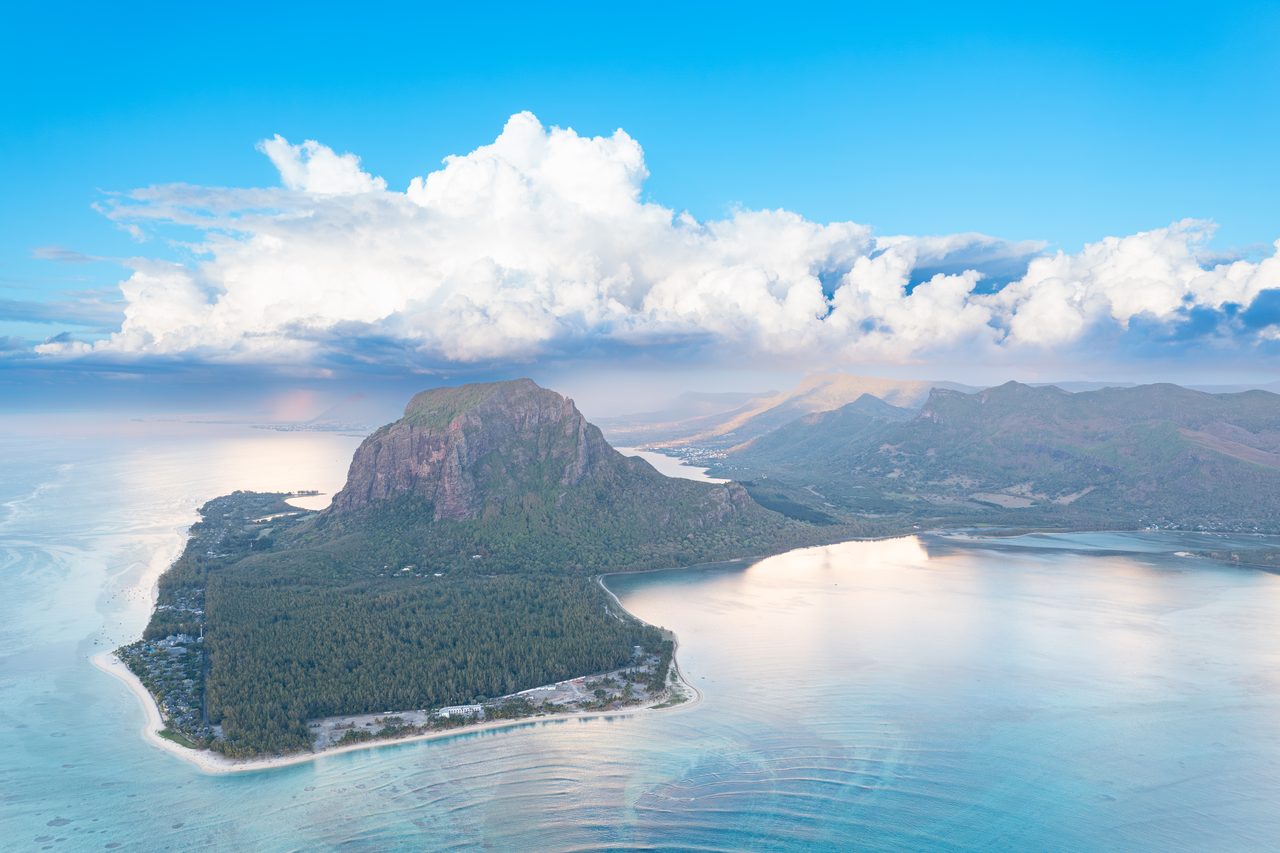
Morning. Hike Le Morne Brabant (UNESCO), a basalt mountain where escaped slaves hid in the 19th century (about 3-4 hours return; the last section is steep and best with a guide). The view from the top over the lagoon is one of the island's most famous.
Afternoon. Swim at Le Morne beach, one of the best on the island, or kitesurf at the 'One Eye' spot.
Evening. Take a catamaran sunset cruise from Tamarin or Black River, sometimes with dolphins at the start of the day.
The famous 'underwater waterfall' illusion off Le Morne can only be seen from the air: by seaplane or helicopter flight (expensive).
Day 4: Port Louis and the north
Morning. Visit Port Louis: the Central Market with spices and street food, the Aapravasi Ghat (UNESCO), where indentured labourers from India arrived from 1834, and the Caudan Waterfront. See the Blue Penny Museum, with the rare Mauritius stamps.
Afternoon. Visit the Sir Seewoosagur Ramgoolam Botanical Garden at Pamplemousses (about Rs 300), with giant Victoria water lilies, then the L'Aventure du Sucre museum in an old sugar factory.
Evening. Have dinner in Grand Baie, the north's lively resort town, or watch the sunset at Pointe aux Canonniers.
Try dholl puri from a street stall in Port Louis: a thin bread with split peas, filled with curry and chutney, for a few rupees.
Day 5: Île aux Cerfs and the east
Morning. Take a boat or catamaran (about Rs 1,500-3,500) from Trou d'Eau Douce to Île aux Cerfs, an island of white beaches and a lagoon, with water sports. Stop at the Grande Rivière Sud-Est waterfall on the way.
Afternoon. Swim, snorkel or play golf on the island, then return to the mainland.
Evening. Have dinner in the east, at Belle Mare or Trou d'Eau Douce.
Île aux Cerfs is busy at midday; the earliest boats and the far beaches of the island are quieter.
Day 6: Blue Bay and Île aux Aigrettes
Morning. Snorkel in the Blue Bay Marine Park, a protected lagoon with coral gardens, from a glass-bottom boat or from the shore.
Afternoon. Visit Île aux Aigrettes, a nature reserve where conservationists have restored native forest, with giant Aldabra tortoises and rare pink pigeons (guided visits only, about Rs 1,000-1,500).
Evening. Have a last dinner at Mahébourg, a historic fishing town, before the short drive to the airport.
Blue Bay is only 10 minutes from the airport, ideal for your last day.
Only have 4 days?
With 4 days, do Day 2 (south-west), Day 5 (Île aux Cerfs) and two beach days.
Got extra days?
With more time, take a day trip to Rodrigues island (1.5-hour flight), go deep-sea fishing, or simply spend more days at your beach.
Where to stay in Mauritius
| Budget | Area | Why | Typical double/night |
|---|---|---|---|
| Budget | Guesthouses in Flic en Flac, Grand Baie or Mahébourg | Apartments and guesthouses, local restaurants. | Rs 3,000-5,500 |
| Mid-range | West coast (Flic en Flac, Tamarin) | Sunsets, calm weather, near the south-west sights. | Rs 7,000-14,000 |
| Mid-range | North (Grand Baie, Trou aux Biches) | Restaurants, nightlife, calm lagoons. | Rs 7,000-14,000 |
| Comfort | East coast and Le Morne resorts | Luxury all-inclusive resorts on wide beaches. | Rs 20,000-60,000 |
Getting around
Rent a car (driving is on the left) or hire a driver for the day (about Rs 3,000-4,500). Buses connect the main towns cheaply but slowly. The new Metro Express light rail links Port Louis with the central plateau. Taxis are not metered; agree the fare first.
What to eat in Mauritius
Mauritian food reflects its mixed population. Try dholl puri and roti with curry, gateaux piments (chilli fritters), mine frite (fried noodles), rougaille (a Creole tomato sauce with fish, sausage or octopus), vindaye (pickled fish with mustard and turmeric), and alouda, a sweet milky drink with basil seeds and agar. Try the island's rum, from sugar cane, at Chamarel or Saint Aubin. Street food costs Rs 50-200; restaurant meals Rs 600-1,500.
Best time to visit
May to December is the cooler, drier season (highs of 24-28°C), best for hiking and touring; September to November is especially good. January to March is hot, humid and the cyclone season. The west and north coasts are calmer in the southern winter (June to August), when the east and south coasts are windy.
Month-by-month weather for Mauritius →
What a day costs
| Budget | Mid-range | Comfort | |
|---|---|---|---|
| Bed (per person, sharing a double) | Rs 1,800 | Rs 5,000 | Rs 20,000 |
| Food & drink | Rs 900 | Rs 2,000 | Rs 6,000 |
| Excursions & sights | Rs 600 | Rs 1,800 | Rs 5,000 |
| Car (share) or driver | Rs 800 | Rs 1,800 | Rs 4,500 |
| Total per person, per day | about Rs 4,100 | about Rs 10,600 | about Rs 35,500 |
Approximate 2026 prices in Mauritian rupees (roughly Rs 50-53 to €1). Many resorts quote in euros. Hotels add VAT and some charge a tourist fee per night.
Before you go
Common questions
Which coast should I stay on?
West for sunsets and the south-west sights, north for restaurants and calm lagoons, east for long beaches and luxury resorts, south-east for Blue Bay and quiet villages.
Do I need a car in Mauritius?
For touring days, a car or driver makes it much easier. On beach days, you will not need one.
Is swimming with dolphins ethical?
Boats crowding wild dolphins off Tamarin and Le Morne have been criticised. If you go, choose operators that respect distances and limit boats, or watch from the boat.
When is cyclone season?
From about January to March. Most days are still fine, but a cyclone can bring a few days of heavy rain and wind; travel insurance is wise.
Is Mauritius good for families?
Very: calm lagoons, tortoises, waterfalls and family-friendly resorts.
What languages are spoken?
Mauritian Creole in daily life, French widely, and English as an official language. Communication is easy.
Can I see the 'underwater waterfall'?
Only from the air, by seaplane or helicopter flight from the west coast: it is an optical illusion caused by sand and silt flowing off the shelf near Le Morne.
How this guide was made
Written by hand, without AI, from experience planning Indian Ocean trips. Prices are approximate for 2026 in rupees; confirm on the official Mauritius Tourism Promotion Authority, National Parks and operators' websites before booking.
Some links on this page are partner links. If you book through them TonyPlan may earn a commission; the price you pay is the same. How we make money.