How many days in Malawi? 8 days of lake, river safari and highland plateaus
By Tony Panopoulos · travel-agency planner in Greece · Updated
Malawi is a narrow country wrapped around Lake Malawi, a freshwater lake 580 km long with more fish species than any other lake on Earth. It is small, friendly and much quieter than its neighbours, but roads are slow and fuel can be short, so plan short daily drives. Give it eight days on a southern loop from Lilongwe: two in Liwonde National Park, one on the Zomba Plateau, three on the lake at Cape Maclear and Mumbo Island, and two in transit with stops along the way.
Short answer
Six days covers Liwonde and Cape Maclear with long drives between them. Eight days adds the cool Zomba Plateau and a night on an island in the lake, and makes the drives bearable.
The 8-day plan, day by day
Day 1: Lilongwe
Morning. Arrive at Kamuzu International Airport, about 30 minutes from the city. Visit the Lilongwe Wildlife Centre (about US$10-15), a rescue sanctuary for primates and other animals, with guided tours.
Afternoon. Walk the Old Town market around Kamuzu Procession Road, with stalls of chitenje cloth, dried fish and tin crafts.
Evening. Eat grilled chambo fish with nsima at a local restaurant, about MK10,000-20,000, or at a lodge garden restaurant in Area 3.
Buy a local SIM (Airtel or TNM) at the airport and withdraw kwacha at bank ATMs in Lilongwe; cash is hard to find later.
Day 2: Drive to Liwonde via Dedza
Morning. Leave by 7:00 south on the M1 to Dedza, about 1h30. Stop at Dedza Pottery for coffee and its ceramics, and ask about a guided visit to the Chongoni rock art shelters, a UNESCO site of Chewa paintings.
Afternoon. Continue to Liwonde National Park, about 3-4 more hours, on the Shire River. Park entry for foreigners is roughly US$25-35 per day.
Evening. Take a sunset boat safari on the Shire from your lodge, past pods of hundreds of hippos, crocodiles and elephants drinking at the bank.
Drive only by day. Potholes, unlit vehicles and livestock make night driving dangerous outside cities.
Day 3: Liwonde National Park
Morning. Go on a dawn game drive or guided walk (about US$40-60 per person). African Parks, which runs the reserve, has reintroduced cheetahs, lions and black rhino.
Afternoon. Rest at the lodge in the heat, then a second boat trip upriver for fish eagles, kingfishers and the endemic Lilian's lovebird.
Evening. Night drives may spot servals, genets and hyenas. Most lodges here are full board.
Bring binoculars. More than 400 bird species have been recorded in Liwonde.
Day 4: Zomba Plateau
Morning. Drive about 1h30 to Zomba, the colonial capital, and up the steep road to the Zomba Plateau, a forested massif at about 1,800 metres.
Afternoon. Hike with a local guide to Chingwe's Hole, Queen's View and Emperor's View, and walk around the Mulunguzi Dam. Buy strawberries from roadside sellers in season.
Evening. Sleep in a forest cottage or lodge on the plateau; nights are cool, around 10°C in June and July. Eat in Zomba town, below the plateau.
Hire an official guide at the plateau; trails are unsigned and robberies have happened on isolated paths.
Day 5: To Cape Maclear
Morning. Drive about 3 hours north via Mangochi to Cape Maclear (Chembe village) inside Lake Malawi National Park, a UNESCO site. The last stretch is narrow but paved.
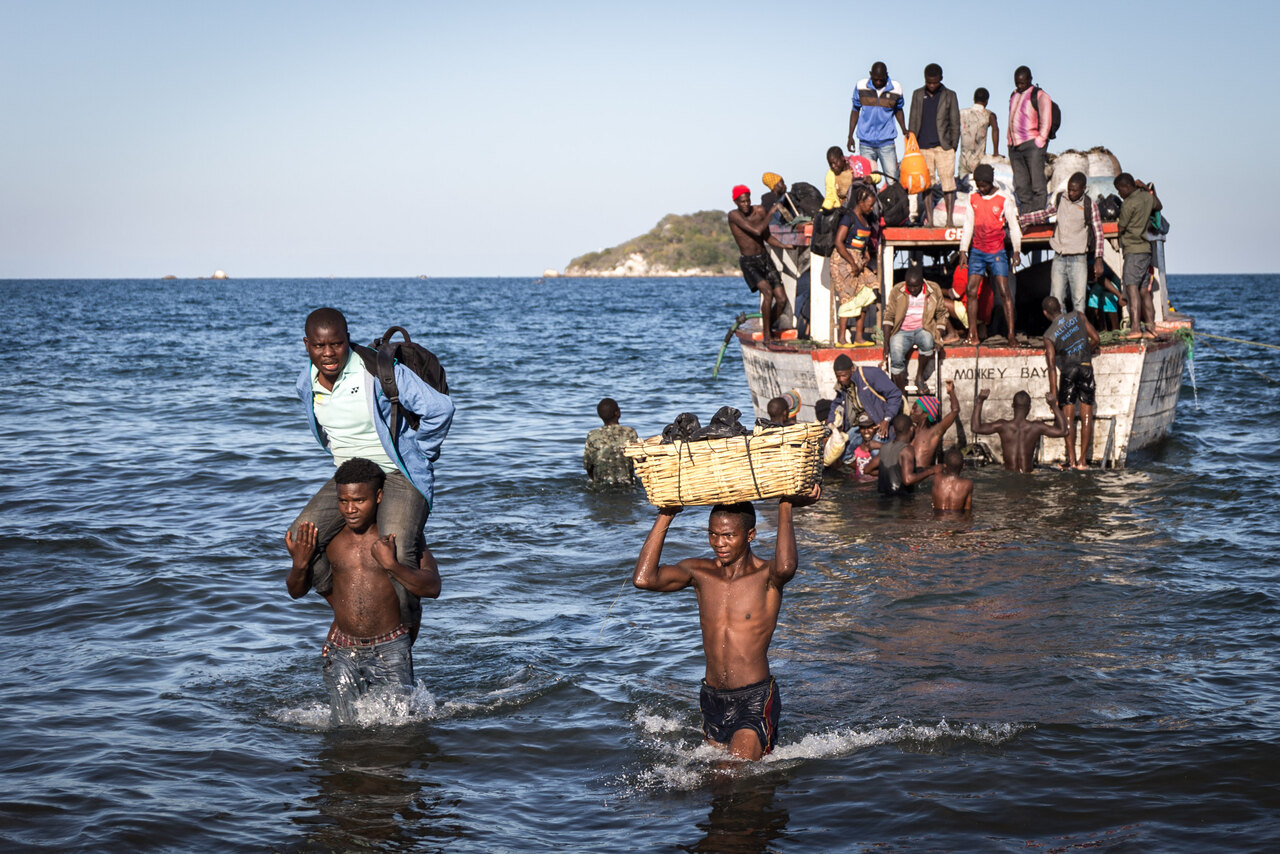
Afternoon. Swim from the beach or walk the fishing village, where boats come in with usipa, small sardine-like fish, dried on wooden racks.
Evening. Watch the sunset over the lake from a lodge bar; beers cost about MK3,000-5,000.
Lake Malawi carries a bilharzia risk, especially near reeds and villages. Many travellers take a single dose of praziquantel after leaving; ask a travel clinic.
Day 6: Snorkelling and kayaking at Cape Maclear
Morning. Take a boat (about US$20-30 per person) to Otter Point and Thumbi West Island to snorkel among mbuna, brightly coloured cichlid fish, many found nowhere else.
Afternoon. Paddle a kayak, try a discovery scuba dive in fresh water, or join a fish-eagle feeding trip where boatmen throw fish to the birds.
Evening. Join the beach barbecue offered by local boatmen: grilled fish, rice and vegetables on an island beach, about US$15-25.
Lake water is 24-28°C, so a thin wetsuit is enough even in July.
Day 7: Mumbo Island
Morning. Kayak or take the boat 10 km to Mumbo Island, an uninhabited granite island with a small eco-camp of tents on platforms.
Afternoon. Snorkel off the rocks, walk the island trail and kayak around the coves.
Evening. Dinner by lamplight on the deck; the camp runs on solar power with bucket showers.
Mumbo is usually open from about May to December; book through the operator in advance.
Day 8: Back to Lilongwe
Morning. Return to Cape Maclear by boat and drive about 4-5 hours to Lilongwe via Monkey Bay and Salima, or via Dedza if you missed the pottery.
Afternoon. In Lilongwe, buy crafts at the market by the Crossroads area, then rest before your flight.
Evening. Final dinner in Area 47 or Area 10, where the restaurants serve Indian, Malawian and grills.
Many international flights leave in the morning. Spend the last night in Lilongwe, not at the lake.
Only have 6 days?
With 6 days, drop Zomba and Mumbo Island: two nights in Liwonde and three at Cape Maclear, with Lilongwe at each end.
Got extra days?
Add Mount Mulanje in the south for a 2-3 day hike on Sapitwa (3,002 metres) and the tea estates of Thyolo; the northern lake town of Nkhata Bay; Likoma Island; or the high grasslands of Nyika National Park.
Where to stay in Malawi
| Budget | Area | Why | Typical double/night |
|---|---|---|---|
| Budget | Backpacker lodges in Cape Maclear and Lilongwe Area 3 | Dorms, camping and simple rooms, often with kitchens. | US$25-60 |
| Mid-range | Cape Maclear beach lodges | Rooms on the sand, boat trips from the door. | US$80-180 |
| Mid-range | Zomba Plateau | Forest lodges and cottages in cool mountain air. | US$70-150 |
| Comfort | Liwonde safari lodges | Full board with drives, boats and walks included. | US$400-900 |
Getting around
The easiest way is a hired car with driver (about US$100-150 a day plus fuel) or a 4x4 self-drive. AXA coaches and minibuses link the towns cheaply but slowly, and do not reach the parks. Fuel shortages happen, so fill up whenever you can. Distances look short but roads are slow: Lilongwe to Cape Maclear is about 4-5 hours, and Lilongwe to Liwonde about 4-5 hours.
What to eat in Malawi
Malawi's staple is nsima, a stiff maize porridge eaten by hand with relish: beans, greens such as mpiru, or stewed chicken. From the lake, eat chambo, a tilapia grilled whole, and usipa, small dried fish. Roadside stalls sell roast maize, mandazi doughnuts and samosas. A local lunch costs about MK5,000-15,000; a lodge meal US$12-25. Drink Malawi's Carlsberg (brewed locally, known as 'Greens') and the local Kuche Kuche beer, and try Malawi gin with tonic.
Best time to visit
May to October is the dry season, best for travel and wildlife. June to August is cool at 20-25°C by day, with chilly nights in the hills; September and October are hot at 30-35°C but the best for game, which gathers at the river. The rains, November to April, make dirt roads hard and close some lodges.
Month-by-month weather for Malawi →
What a day costs
| Budget | Mid-range | Comfort | |
|---|---|---|---|
| Bed (per person, sharing a double) | US$20 | US$60 | US$300 |
| Food & drink | US$15 | US$30 | US$60 |
| Sights & tickets | US$15 | US$45 | US$90 |
| Local transport | US$10 | US$55 | US$90 |
| Total per person, per day | about US$60 | about US$190 | about US$540 |
Approximate 2026 prices; lodges, parks and tours price in US dollars while daily spending is in kwacha (MK), which has lost much value. Mid-range and comfort transport assumes a shared car and driver, and comfort beds include full board.
Before you go
Common questions
Is Malawi safe for tourists?
Malawi is known as the Warm Heart of Africa and is generally calm and friendly. Petty theft happens in cities and on beaches, so do not leave bags unattended, and avoid walking in towns after dark. Road safety is the bigger risk: avoid night driving and choose a careful driver.
Do I need a visa?
Malawi removed the visa requirement for many nationalities in recent years, including most of Europe, the UK and the US, but rules change. Check the official immigration website before travelling. You may be asked for proof of yellow fever vaccination if you arrive from a country with yellow fever risk.
Can I swim in Lake Malawi?
Yes, millions of people do, but there is a bilharzia risk, highest near reeds, river mouths and villages. Swim from boats in open water when possible, dry off quickly, and consider a test or a dose of praziquantel after your trip. Crocodiles and hippos stay away from busy beaches like Cape Maclear.
How much cash should I carry?
Bring US dollars in recent, clean notes for lodges and parks, and withdraw kwacha from bank ATMs in Lilongwe, Zomba or Mangochi; they can be empty or offline. Cards work in larger lodges and some supermarkets, often with a fee. Budget kwacha for markets, tips and fuel.
How this guide was made
Compiled by TonyPlan from official tourism, transport and attraction sources and on-the-ground travel knowledge. Prices are approximate for 2026 and change with season; anything we could not confirm is marked as approximate.
Some links on this page are partner links. If you book through them TonyPlan may earn a commission; the price you pay is the same. How we make money.