Home › Lebanon › How many days
How many days in Lebanon? 7 days from Beirut to the Cedars and Baalbek
By Tony Panopoulos · travel-agency planner in Greece · Updated
Lebanon is roughly the size of Cyprus, so seven days reach almost every highlight from a base in Beirut and one or two nights in the north. In a single week you can see Phoenician Byblos, the Crusader souks of Tripoli, the cedar forests at 2,000 metres and the Roman temples of Baalbek. Before booking, check your government's travel advice: since the 2024 conflict, parts of the south, the Bekaa and Beirut's southern suburbs carry warnings, and these change quickly.
Short answer
Five days covers Beirut, Byblos, Jeita, Tripoli and the Cedars. Seven adds the Chouf mountains and either Baalbek or Sidon, and lets you eat long lunches, which is half the point of Lebanon.
The 7-day plan, day by day
Day 1: Beirut: the Corniche, Downtown and the National Museum
Morning. Start at the National Museum of Beirut on Damascus Road (a few US dollars' entry, closed Mondays), whose Phoenician sarcophagi survived the civil war encased in concrete. Allow 1.5 hours.
Afternoon. Take a taxi 10 minutes to Downtown: the blue-domed Mohammad al-Amin Mosque, the Maronite Cathedral of St George beside it, and the Roman baths. Then stroll the Corniche west to the Pigeon Rocks at Raouche.
Evening. Watch sunset from a cafe at Raouche, then eat in Hamra, the old university district, where a mezze dinner costs about US$20-30.
Lebanon runs on US dollars in cash. Bring clean, undamaged notes; cards work in many hotels and restaurants, but not in taxis or small shops.
Day 2: Beirut: Sursock, Gemmayzeh and Mar Mikhael
Morning. Visit the Sursock Museum in Achrafieh, a white 1912 villa of modern Lebanese art, restored after the 2020 port explosion. Then walk the Saint Nicolas Stairs down towards Gemmayzeh.
Afternoon. Explore Gemmayzeh and Mar Mikhael on foot: old houses on Rue Gouraud and design shops. For lunch, try a man'oushe (flatbread with za'atar) for US$2-4.
Evening. Mar Mikhael's Armenia Street is Beirut's bar strip, busy from about 22:00. Restaurants in the area serve modern Lebanese food at US$25-45 per person.
Use Uber or a reliable taxi app in Beirut; most rides within the city cost US$5-10. Agree the price first with street taxis (servees).
Day 3: Jeita Grotto, Harissa and Byblos
Morning. Drive 20 km north (about 40 minutes) to Jeita Grotto (about US$20). Walk through the upper gallery of stalactites, then ride a small boat on the underground river of the lower cave.
Afternoon. Take the teleferique cable car from Jounieh up to Our Lady of Lebanon at Harissa (about US$10-15 return) for the view over the bay. Continue 25 minutes north to Byblos (Jbeil), one of the oldest continuously inhabited towns in the world.
Evening. Walk the old souk and the small fishing harbour, then eat fish at a harbour restaurant (about US$30-45 per person). Sleep in Byblos or Batroun.
Jeita Grotto usually closes on Mondays and part of winter when the river runs high; confirm before driving out.
Day 4: Byblos citadel, Batroun and Tripoli
Morning. Visit the Byblos archaeological site (about US$5-10), with a 12th-century Crusader castle overlooking Phoenician temples, a Roman theatre and the royal tombs. Then drive 20 minutes to Batroun to see the Phoenician sea wall and the old souk.
Afternoon. Continue 45 minutes to Tripoli. Climb to the Citadel of Raymond de Saint-Gilles, then walk down into the Mamluk souks: the Khan al-Saboun soap caravanserai, the Great Mosque and the gold souk.
Evening. Buy sweets at Rafaat Hallab before returning to Batroun's seaside bars.
Tripoli is conservative; dress modestly in the souks and mosques, with shoulders and knees covered.
Day 5: The Kadisha Valley and the Cedars of God
Morning. Drive up into the mountains (about 1.5 hours from Batroun) to Bcharre, at the head of the Kadisha Valley, where hermits carved monasteries into the cliffs. Walk down to the Monastery of Qozhaya or Deir Mar Elisha (1-2 hours on foot).
Afternoon. Visit the Gibran Museum (about US$5-8) in the old hermitage where the poet Khalil Gibran is buried. Then continue 15 minutes higher to the Cedars of God, a UNESCO-listed grove of ancient cedars at about 2,000 metres.
Evening. Return to Beirut (about 2.5-3 hours), or stay in a mountain guesthouse in Bcharre or Ehden for a cool night.
The Cedars are cold on summer evenings and snowy from about December to April.
Day 6: The Chouf: Deir el-Qamar and Beiteddine
Morning. Drive about 1 hour south-east of Beirut to Deir el-Qamar, a stone village of the old emirs around the square of the 15th-century Fakhreddine Mosque. Continue 10 minutes to Beiteddine Palace (about US$5-10), with its courtyards, Byzantine mosaics and painted reception halls.
Afternoon. Walk among the cedars of the Shouf Biosphere Reserve at Barouk or Maasser el-Chouf (entry about US$5), the largest nature reserve in Lebanon, with easy trails of 1-2 hours.
Evening. Return to Beirut, stopping at a Chouf mountain restaurant for mezze and grilled meat.
Beiteddine hosts a summer music festival in July and August; buy tickets early if you are visiting then.
Day 7: Baalbek and Ksara, or Sidon
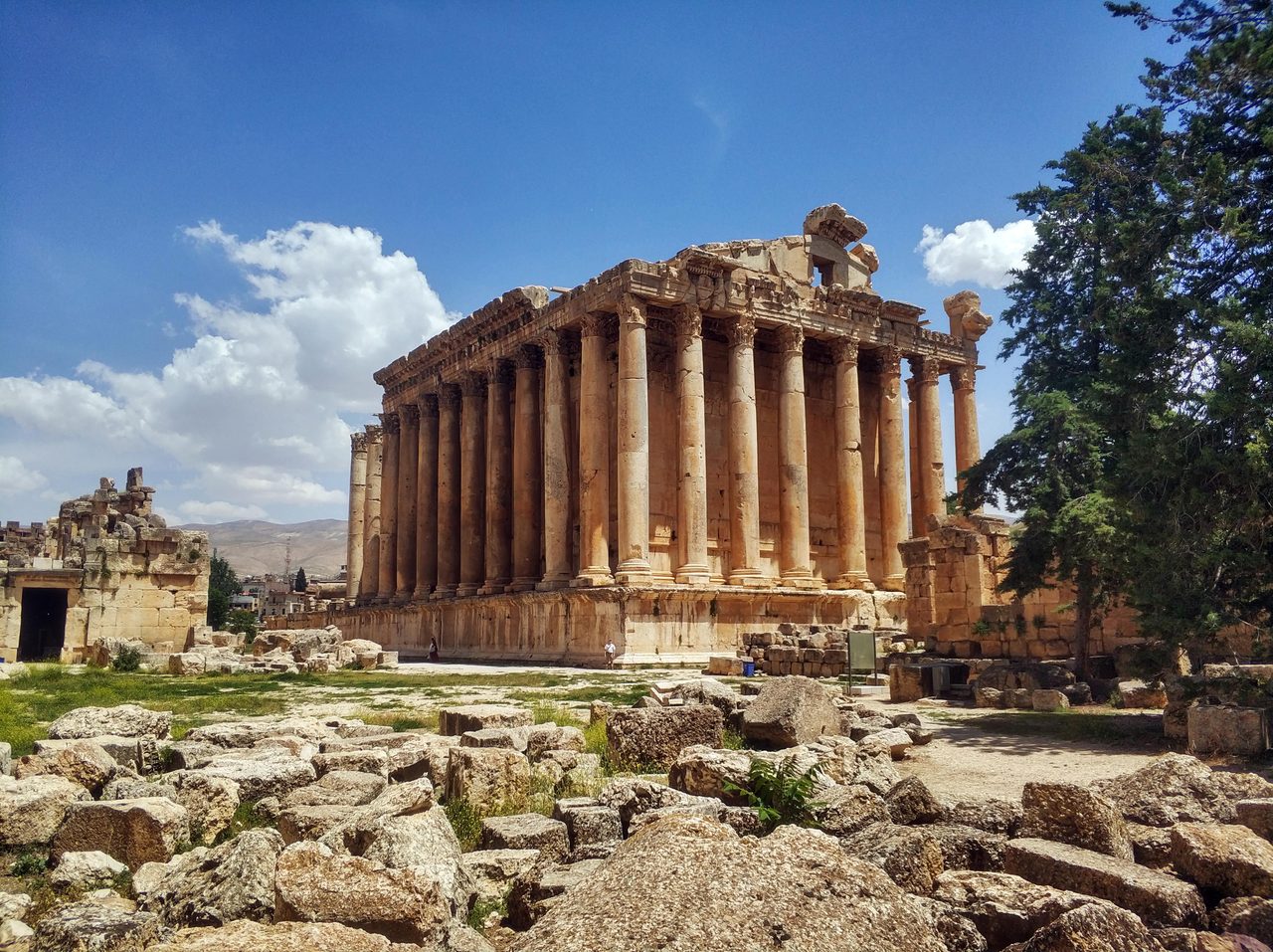
Morning. If advisories allow travel to the Bekaa, drive over the mountains (about 2 hours) to Baalbek, whose Temple of Jupiter columns and almost intact Temple of Bacchus are among the largest Roman remains anywhere (about US$10-15). Go with a local driver who follows the security situation day by day.
Afternoon. On the way back, stop at Chateau Ksara, Lebanon's oldest winery, for a tasting in Roman-era caves, or at the Umayyad ruins of Anjar.
Evening. If the Bekaa is off-limits, go south instead to Sidon (Saida), about 45 minutes from Beirut: the Sea Castle, the old souk and the Soap Museum. Finish in Beirut.
Check the latest advice on the morning itself; drivers and guesthouse owners usually know quickly if a road is unsafe.
Only have 5 days?
With 5 days, keep Days 1, 3, 4 and 5, and fit Gemmayzeh and Mar Mikhael into the evenings. You lose the Chouf and Baalbek or Sidon.
Got extra days?
Extra days can go to Ehden and the Horsh Ehden reserve, a night in Batroun's beach bars, the waterfalls of Baatara Gorge (spring to autumn), or wine tasting in the West Bekaa. Tyre's Roman hippodrome is outstanding, but check whether travel to the south is advised.
Where to stay in Lebanon
| Budget | Area | Why | Typical double/night |
|---|---|---|---|
| Budget | Hamra / Mar Mikhael hostels | Walk to cafes and bars; guesthouses with shared kitchens. | US$40-80 |
| Mid-range | Achrafieh / Gemmayzeh | Boutique hotels in old houses, near the bars and Downtown. | US$100-180 |
| Mid-range | Byblos / Batroun | Small seaside hotels as a base for the north and the Cedars. | US$80-160 |
| Comfort | Beirut Downtown seafront / Chouf country hotels | Pool hotels by the Zaitunay Bay marina, or restored mansions in the mountains. | US$250-500 |
Getting around
Distances are short but traffic is slow. Most visitors hire a car with a driver (about US$80-130 per day) or rent a car (US$35-60 per day) and drive defensively. Minibuses run north from Beirut's Charles Helou station to Byblos and Tripoli for a few dollars, and south from the Cola junction. In Beirut, Uber and local apps work well. From Rafic Hariri International Airport, a taxi to Hamra or Achrafieh costs about US$25-35 and takes 20-40 minutes.
What to eat in Lebanon
Lebanese food is the best reason to slow down. A table of mezze comes in waves: hummus, moutabbal (smoky aubergine), tabbouleh heavy with parsley, fattoush, kibbeh (bulgur and meat, also raw as kibbeh nayyeh) and sambousek, followed by grilled meat or fish. Breakfast is a man'oushe with za'atar or cheese from the oven, US$1-4. For sweets, try knafeh with cheese in a sesame bun, and drink arak cut with water. Budget meals start at US$5-8; full mezze dinners are US$25-45.
Best time to visit
April to June and September to October are best, with 20-28°C on the coast and green mountains in spring. July and August are humid on the coast (30-32°C) but pleasant in the mountains. Winter brings coastal rain and snow on the peaks, with skiing at Mzaar and the Cedars.
Month-by-month weather for Lebanon →
What a day costs
| Budget | Mid-range | Comfort | |
|---|---|---|---|
| Bed (per person, sharing a double) | US$30 | US$70 | US$180 |
| Food & drink | US$20 | US$45 | US$90 |
| Sights & tickets | US$10 | US$20 | US$40 |
| Local transport | US$10 | US$45 | US$80 |
| Total per person, per day | about US$70 | about US$180 | about US$390 |
Approximate 2026 prices in US dollars, which are used alongside the Lebanese pound (about 89,500 pounds to the dollar); mid-range transport assumes a shared private driver. Hotels and restaurants usually include 11% VAT; a service charge of 10-15% is common.
Before you go
Common questions
Is Lebanon safe to visit?
It depends on the current situation, which changes quickly. Since the 2024 conflict and the ceasefire of November 2024, many governments advise against travel to the south near the Israeli border, to parts of the Bekaa including Baalbek, and to Beirut's southern suburbs, while central Beirut, the north coast and the mountains have been visited normally. Check your government's advice before booking and before each day trip, and confirm that your insurance covers you.
Do I need a visa for Lebanon?
Citizens of many countries, including the EU, UK, US, Canada and Australia, have usually been able to get a free visa on arrival at Beirut airport for up to one month, with proof of a hotel booking and a return ticket. Rules change, so check with the Lebanese General Security or your embassy. Passports containing Israeli stamps or visas may be refused entry.
Can I pay by card?
Card payments in Lebanon are less common than in Europe. Since the 2019 banking crisis, the economy runs largely on US dollars in cash, and many shops and taxis accept only cash. Upmarket hotels and restaurants take foreign cards. Bring enough clean US dollar notes; bank ATMs can dispense dollars, but fees are high.
Do I need a driver, or can I use public transport?
Minibuses and servees (shared taxis) connect Beirut with the coast cheaply, but have no fixed timetables and barely reach Jeita, the Cedars or Beiteddine. For one week, a local driver for the mountain days and Uber in Beirut works best; drivers also know which roads to avoid on a given day.
How this guide was made
Compiled by TonyPlan from official tourism, transport and attraction sources and on-the-ground travel knowledge. Prices are approximate for 2026 and change with season; anything we could not confirm is marked as approximate.
Some links on this page are partner links. If you book through them TonyPlan may earn a commission; the price you pay is the same. How we make money.