Home › Glasgow › How many days
How many days in Glasgow? 3 days: free museums, Mackintosh and the West End
By Tony Panopoulos · travel-agency planner in Greece · Updated
Glasgow is Scotland's biggest city and its least polished, and that is the point: Victorian sandstone, giant street murals, a serious live-music scene and some of the best free museums in Britain. Three days gives you the old East End around the Cathedral, the elegant West End with Kelvingrove, the river and the Burrell Collection in Pollok Park. Pack a raincoat, not an umbrella; it is often windy.
Short answer
Two days covers the city centre, the Cathedral and Necropolis, Kelvingrove and the West End. The third day adds the Riverside Museum and the Burrell Collection.
The 3-day plan, day by day
Day 1: Cathedral, Necropolis and the Merchant City
Morning. Start at Glasgow Cathedral (free), the only medieval cathedral on mainland Scotland to survive the 1560 Reformation almost intact, with a vaulted lower church around St Mungo's tomb. Cross the 'Bridge of Sighs' to the Necropolis, a Victorian cemetery on a hill with 50,000 burials and the best view over the city. Across the road, Provand's Lordship (free), built in 1471, is the oldest house in Glasgow.
Afternoon. Walk 15 minutes down High Street into the Merchant City, the 18th-century tobacco lords' quarter, and follow the City Centre Mural Trail: giant paintings such as St Mungo with his robin on High Street. See George Square and the marble halls of the City Chambers (free tours on weekdays, often at 10:30 and 14:30).
Evening. Eat in the Merchant City, where mains cost £15-25, and then go to a gig: King Tut's Wah Wah Hut on St Vincent Street, where Oasis were signed in 1993, or the Barrowland Ballroom in the East End.
Glasgow's subway is a single loop of 15 stations; a single costs about £1.95 and an all-day ticket about £4.50. It is the quickest way between the centre and the West End.
Day 2: Kelvingrove and the West End
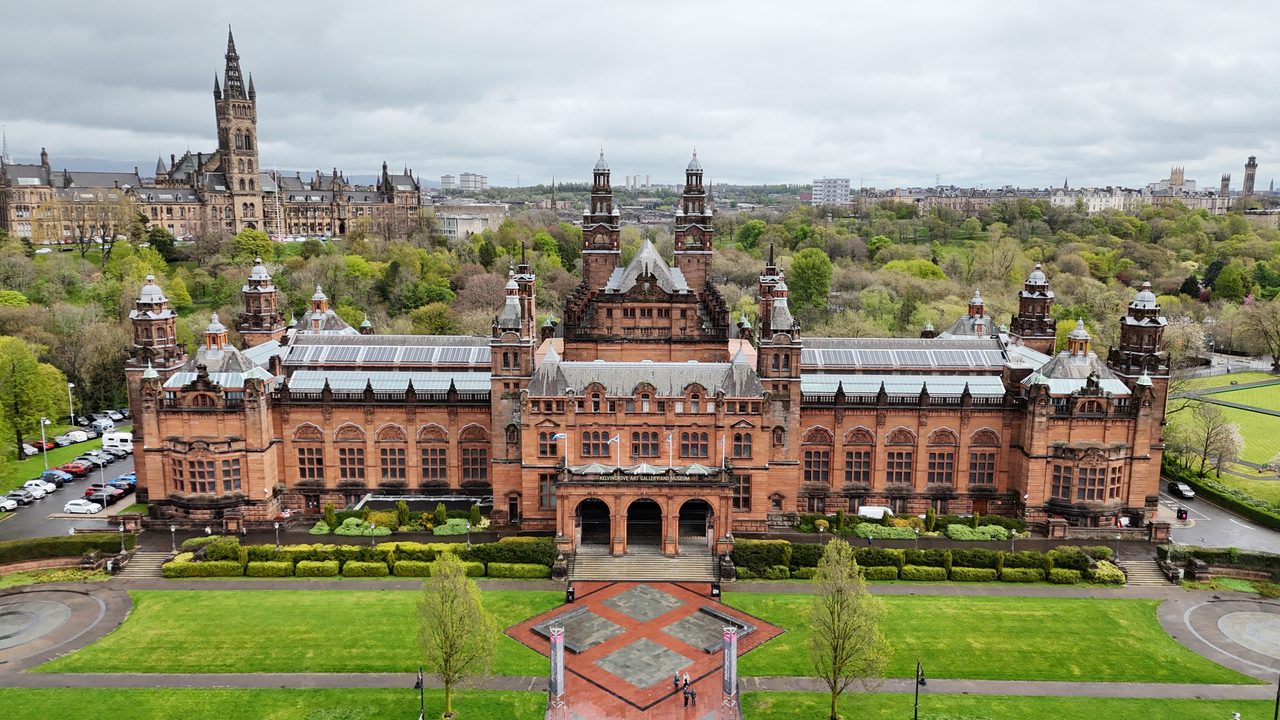
Morning. Take the subway to Kelvinhall for the Kelvingrove Art Gallery and Museum (free), with Salvador Dalí's 'Christ of St John of the Cross', a Spitfire hanging in the West Court and the Floating Heads installation. Arrive for the free organ recital at 13:00 (11:00 on Sunday), or explore first and stay for it.
Afternoon. Walk 10 minutes uphill to the University of Glasgow, whose Gothic cloisters and quadrangles look like a film set, and the Hunterian Museum (free) inside. Then stroll Byres Road and the Botanic Gardens, with the glass Kibble Palace greenhouse (free).
Evening. Have dinner on Ashton Lane, a cobbled lane of bars and restaurants with fairy lights, such as the Ubiquitous Chip, a Glasgow institution since 1971 (mains £18-30), or on the Finnieston strip on Argyle Street for seafood and small plates.
For tea, go to Mackintosh at the Willow on Sauchiehall Street, the 1903 tea rooms designed by Charles Rennie Mackintosh and restored in 2018 (afternoon tea about £30).
Day 3: The Clyde, the Riverside Museum and the Burrell
Morning. Walk or take a bus to the Riverside Museum (free), Zaha Hadid's zigzag building on the Clyde, with trams, locomotives, cars and a reconstructed Glasgow street. Outside, board the Glenlee, a tall ship built in 1896 (free, donations welcome).
Afternoon. Take the train from Glasgow Central to Pollokshaws West (about 10 minutes) and walk into Pollok Country Park for the Burrell Collection (free), reopened in 2022 after a long renovation: medieval tapestries, Chinese ceramics, Degas and Rodin in a glass building facing the woods. Look for the shaggy Highland cattle in the park fields.
Evening. Have a final dinner on the Southside in Shawlands or back in the centre. For a curry, the Shish Mahal on Park Road claims to have invented chicken tikka masala in the 1970s.
The Barras Market in the East End is open at weekends from about 10:00 to 16:00; it is rough round the edges but very Glaswegian, next to the Barrowland.
Only have 2 days?
With 2 days, do Day 1 as written and combine Kelvingrove, the University and Ashton Lane with a quick visit to the Riverside Museum on Day 2. You lose the Burrell Collection and Pollok Park.
Got extra days?
A 4th day can go to Loch Lomond: trains from Glasgow Queen Street reach Balloch in about 45 minutes for lake cruises. Stirling castle is 30-45 minutes by train, and Edinburgh about 50 minutes, with trains every 15 minutes.
Where to stay in Glasgow
| Budget | Area | Why | Typical double/night |
|---|---|---|---|
| Budget | City centre near Sauchiehall Street | Hostels and budget chains next to the subway and train stations. | £60-100 |
| Mid-range | Merchant City | Walk to the Cathedral, George Square and the restaurants and bars. | £100-170 |
| Mid-range | West End / Finnieston | Townhouse hotels near Kelvingrove, Byres Road and the best food streets. | £110-180 |
| Comfort | Blythswood Square | Elegant Georgian square with spa hotels in the city centre. | £200-350 |
Getting around
The centre is walkable: George Square to the Cathedral is 15 minutes. The Subway loop links the centre with the West End (Hillhead, Kelvinbridge) and the Southside. First Bus routes cover the rest, and trains from Glasgow Central and Queen Street reach the suburbs. From Glasgow Airport, the Airport Express bus (route 500) takes about 15-25 minutes to the centre for about £10; a taxi costs £25-35.
What to eat in Glasgow
Try a full Scottish breakfast with black pudding, tattie scones and Lorne (square) sausage, for £9-14. Haggis, neeps and tatties is on many menus and very good at places like the Ubiquitous Chip. Glasgow is also famous for curry, with dozens of Indian and Pakistani restaurants. For a cheap lunch, a hot pie or a fish supper costs £8-12. Drink Tennent's lager, brewed at the Wellpark Brewery near the Cathedral since 1885 (tours available), or a dram of Scotch at the Pot Still, a pub on Hope Street with hundreds of whiskies.
Best time to visit
May to September, with highs of 15-19°C and long evenings: in June it stays light until after 22:00. Rain is possible at any time, about 170 days a year. Celtic Connections, the winter folk and roots music festival, fills the city in late January. December brings Christmas markets in George Square and St Enoch Square.
Month-by-month weather for Glasgow →
What a day costs
| Budget | Mid-range | Comfort | |
|---|---|---|---|
| Bed (per person, sharing a double) | £35 | £70 | £140 |
| Food & drink | £25 | £45 | £85 |
| Sights & tickets | £5 | £15 | £40 |
| Local transport | £5 | £8 | £25 |
| Total per person, per day | about £70 | about £140 | about £290 |
Approximate 2026 prices in pounds sterling; most big museums are free. Since 26 January 2026, Glasgow charges a **5% visitor levy** on the price of overnight accommodation.
Before you go
Common questions
Glasgow or Edinburgh?
Both, if you can: they are only 50 minutes apart by train. Edinburgh has the castle, the Royal Mile and the postcard views; Glasgow has more of a working city's energy, better live music, cheaper food and drink, and world-class free museums. Many visitors stay in one and day-trip to the other, but each deserves at least two nights.
Can I see Glasgow School of Art?
Charles Rennie Mackintosh's original School of Art building was badly damaged by fires in 2014 and 2018 and is being rebuilt, so it is not open inside. You can see his work at Mackintosh at the Willow tea rooms, the Hunterian's Mackintosh House reconstruction and Scotland Street School Museum. Check the school's site for any exterior tours.
Is Glasgow safe?
Yes, for a big city. The centre, West End and Merchant City are busy and generally safe day and night. As in any city, be careful late at night around some parts of the city centre after the clubs close, and watch for bags in crowded bars. Football match days, especially Celtic against Rangers, are loud and tense near the grounds.
What is there to do in Glasgow at night?
Live music is the city's strength, with gigs most nights at King Tut's, the Barrowland, the Garage and many smaller venues. Ashton Lane, Finnieston and the Merchant City are the main bar areas, and traditional pubs like the Pot Still offer whisky. Theatres such as the King's and the Citizens show plays, comedy and pantomime in winter.
How this guide was made
Compiled by TonyPlan from official tourism, transport and attraction sources and on-the-ground travel knowledge. Prices are approximate for 2026 and change with season; anything we could not confirm is marked as approximate.
Some links on this page are partner links. If you book through them TonyPlan may earn a commission; the price you pay is the same. How we make money.