Home › Denmark › How many days
How many days in Denmark? 7 days: Copenhagen, the castles of Zealand, Odense and Aarhus
By Tony Panopoulos · travel-agency planner in Greece · Updated
Denmark is small and flat, and its trains cross it from Copenhagen to Aarhus in about three hours, so seven days covers the capital and the best of the country without a car. Spend three days in Copenhagen, one on the north coast of Zealand for Louisiana and Kronborg castle, then ride west via Roskilde to Odense on Funen and finish in Aarhus in Jutland. It is expensive, but the cities are compact, and many of the best things, from harbour swimming to cycling, are free.
Short answer
Five days covers Copenhagen and one day trip north. Seven adds the train journey west to Odense and Aarhus, the country's second city.
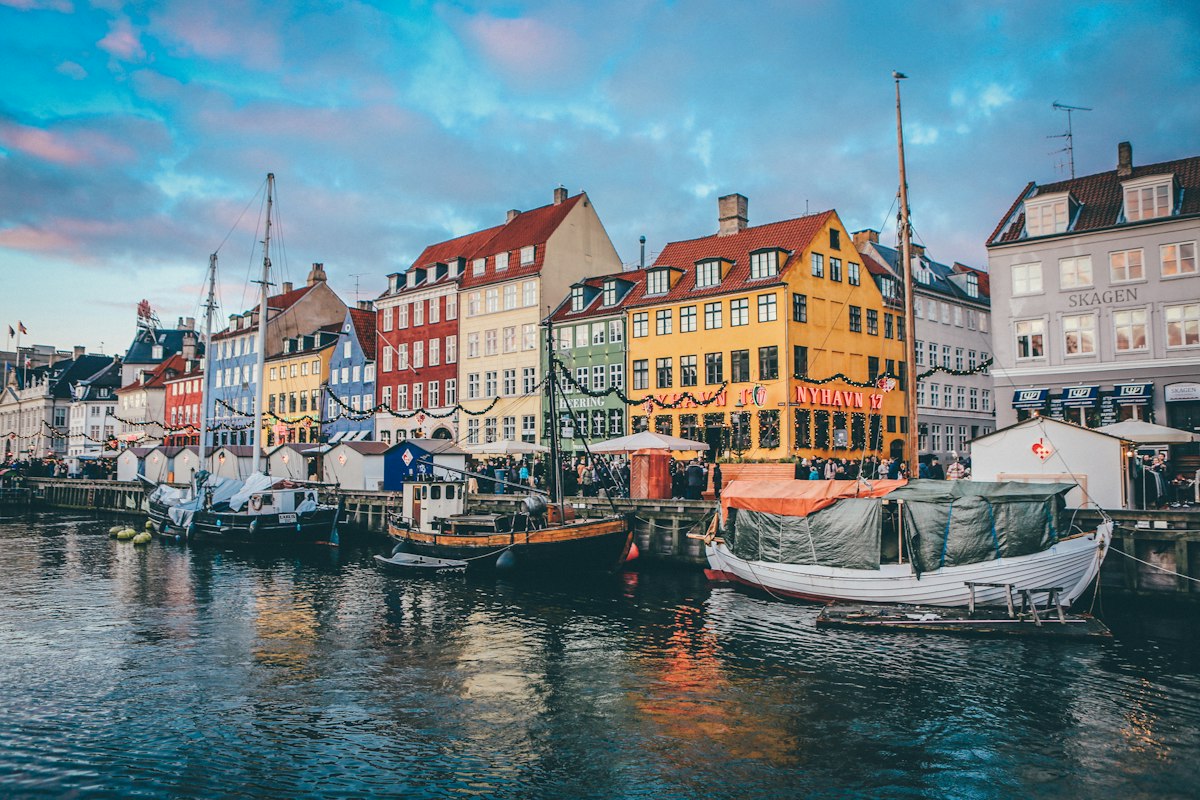
The 7-day plan, day by day
Day 1: Copenhagen: Nyhavn and the royal quarter
Morning. Start at Nyhavn, the 17th-century canal of painted townhouses, and take a canal tour (about DKK 120-150, 1 hour) for an overview from the water. Walk 5 minutes to Amalienborg, the royal palace, where the guard changes at 12:00.
Afternoon. See the marble dome of Frederik's Church across from the palace, walk through the star-shaped Kastellet fortress and on to the Little Mermaid, smaller than people expect.
Evening. Eat in Nyhavn for the setting or in the side streets for value; a smørrebrød lunch plate or a casual dinner costs DKK 150-250.
Rent a bike or use the city bikes: Copenhagen has over 380 km of bike lanes.
Day 2: Copenhagen: castles, markets and Tivoli
Morning. Visit Rosenborg Castle (about DKK 140), the Renaissance palace with the crown jewels in its basement, and walk through the King's Garden. Cross to Torvehallerne, the glass market halls, for coffee and smørrebrød.
Afternoon. Walk Strøget, one of Europe's longest pedestrian streets, and climb the spiral ramp of the Round Tower (about DKK 40). Go up the tower of Christiansborg Palace, the parliament, for a free view over the rooftops.
Evening. Spend the evening at Tivoli Gardens (entry about DKK 165-200, rides extra), the 1843 pleasure garden opposite the central station, lit up after dark.
Tivoli is closed for parts of the year between seasons; check the dates for summer, Halloween and Christmas.
Day 3: Copenhagen: Christianshavn and the harbour
Morning. Climb the outside spiral of the Church of Our Saviour spire in Christianshavn (about DKK 75; 400 steps), then walk into Christiania, the self-governing free town founded in 1971. Do not take photos on Pusher Street.
Afternoon. Eat at Reffen, the street-food market on Refshaleøen, then swim at a harbour bath such as Islands Brygge (free in summer). Or ski or walk the roof of CopenHill, the power plant with a slope on top.
Evening. Go to Vesterbro and the Kødbyen (Meatpacking District) for bars and restaurants in old butcher halls, dinner about DKK 250-400.
The Copenhagen Card covers transport and around 80 sights; it pays off only if you visit three or more paid sights a day.
Day 4: Louisiana and Kronborg Castle
Morning. Take the coastal train 35 minutes north to Humlebæk for the Louisiana Museum of Modern Art (about DKK 165), with sculptures in a garden over the Øresund strait.
Afternoon. Continue 10 minutes to Helsingør for Kronborg Castle (about DKK 140-190), Shakespeare's Elsinore in Hamlet, with casemates under the walls. Next door, the Maritime Museum of Denmark is built in a dry dock.
Evening. Return to Copenhagen (about 45 minutes) for dinner in Nørrebro, where Jægersborggade has small restaurants.
Ferries cross from Helsingør to Helsingborg in Sweden in 20 minutes if you want a second country on the same day.
Day 5: Roskilde's Viking ships, then Odense
Morning. Take the train 25 minutes west to Roskilde for the Viking Ship Museum (about DKK 160-190), with five ships sunk around 1070 to block the fjord. Then see Roskilde Cathedral, burial place of the Danish monarchs.
Afternoon. Continue about an hour by train over the Great Belt bridge to Odense, the main city on Funen.
Evening. Walk the cobbled lanes of the old quarter around Hans Jensens Stræde, then eat in the Brandts area.
Book DSB train tickets in the app; cheaper Orange tickets sell out on popular routes.
Day 6: Odense, then Aarhus
Morning. Visit H.C. Andersen's House (about DKK 175), the museum by Kengo Kuma around the writer's birthplace, with a fairy-tale garden.
Afternoon. Take the train about 1h30 to Aarhus. Go up to ARoS (about DKK 180), the art museum topped by Your Rainbow Panorama, Olafur Eliasson's circular walkway in coloured glass.
Evening. Eat in the Latin Quarter or at Aarhus Street Food by the bus station, dishes DKK 80-140.
Aarhus is very walkable; the station, ARoS and the Latin Quarter are within 15 minutes of each other.
Day 7: Aarhus old town and Moesgaard
Morning. Walk through Den Gamle By (about DKK 160-200), an open-air museum of houses moved from all over Denmark, with streets from the 1600s, 1920s and 1970s.
Afternoon. Take bus 18 (about 25 minutes) to Moesgaard Museum, with the 2,000-year-old Grauballe Man from a bog, under a sloping grass roof you can walk on.
Evening. Take the train back to Copenhagen (about 2h50) or fly from Aarhus or Billund.
On the way, Billund has LEGO House (book ahead); it is about 1h30 from Aarhus by bus.
Only have 5 days?
With 5 days, do Days 1-4 and use the fifth for Roskilde, returning to Copenhagen. You lose Odense and Aarhus.
Got extra days?
With 9 days, continue north from Aarhus to Skagen (about 3h30 by train via Frederikshavn), where the North Sea and the Baltic meet at Grenen, or add LEGO House in Billund and the Viking town of Ribe, Denmark's oldest.
Where to stay in Denmark
| Budget | Area | Why | Typical double/night |
|---|---|---|---|
| Budget | Copenhagen Vesterbro hostels / Aarhus centre | Design hostels with private rooms near the central stations. | DKK 600-900 |
| Mid-range | Indre By (Copenhagen) | Walk to Nyhavn, Strøget and Tivoli; metro to the airport. | DKK 1,200-1,900 |
| Mid-range | Odense / Aarhus Latin Quarter | Smaller hotels steps from the station and the old streets. | DKK 1,000-1,600 |
| Comfort | Nyhavn / Kongens Nytorv | Historic harbour hotels and grand hotels in the old centre. | DKK 2,500-4,500 |
Getting around
DSB InterCity trains link Copenhagen, Odense (about 1h15) and Aarhus (about 2h50) roughly every 30 minutes; book in the DSB app. In Copenhagen, the metro runs 24 hours and the M2 line reaches the airport in 15 minutes. A single ticket in the city is about DKK 30; buy in the DOT app. Bikes are the local way to move.
What to eat in Denmark
Lunch is smørrebrød, open sandwiches on rye with herring, egg and shrimp, or roast pork, DKK 80-150 a piece in restaurants. Try a hot dog from a pølsevogn stand (about DKK 40), stjerneskud (fried fish with shrimp), and a kanelsnegl (cinnamon swirl) from a bakery. New Nordic cooking started in Copenhagen; tasting menus cost DKK 1,500-3,500. Street-food halls such as Reffen keep costs down. A beer costs DKK 60-80 in a bar.
Best time to visit
May to September for long days (up to 17 hours of light in June), 18-23°C, harbour swimming and outdoor cafés. Late June has Midsummer bonfires (Sankthans, 23 June). Winter is dark and grey, around 0-4°C, but December brings Christmas markets and Tivoli's lights.
Month-by-month weather for Denmark →
What a day costs
| Budget | Mid-range | Comfort | |
|---|---|---|---|
| Bed (per person, sharing a double) | DKK 400 | DKK 800 | DKK 1,700 |
| Food & drink | DKK 300 | DKK 550 | DKK 1,000 |
| Sights & tickets | DKK 100 | DKK 200 | DKK 350 |
| Local transport | DKK 100 | DKK 180 | DKK 300 |
| Total per person, per day | about DKK 900 | about DKK 1,730 | about DKK 3,350 |
Approximate 2026 prices in Danish kroner, averaged with the train trips; Denmark has no city tourist tax, and all prices include 25% VAT.
Before you go
Common questions
Is Denmark expensive?
Yes, one of the costliest countries in Europe, especially for eating out and alcohol. Save with smørrebrød or street-food lunches, supermarket breakfasts, free sights such as Christiansborg tower and the harbour baths, and bikes instead of taxis. Cards are accepted everywhere, even for small amounts.
Do I need a car?
No. Trains link all the cities in this itinerary, and the Copenhagen metro and S-trains reach Roskilde, Humlebæk and Helsingør. A car is useful only for the countryside, the west coast of Jutland or the islands south of Zealand, such as Møn and its white cliffs.
Can I visit Sweden from Copenhagen?
Easily. Trains cross the Øresund Bridge to Malmö in about 35 minutes, every 20 minutes or so. Or take the 20-minute ferry from Helsingør to Helsingborg. Bring your passport or ID, because Sweden sometimes runs border checks on arrival. Malmö's Turning Torso and old squares fill an easy half-day.
Is the Copenhagen Card worth it?
Only if you plan three or more paid sights a day. It includes public transport in the capital region, including the airport, Roskilde and Helsingør, plus around 80 museums and attractions. For a slower trip with cycling and free sights, single tickets work out cheaper.
How this guide was made
Compiled by TonyPlan from official tourism, transport and attraction sources and on-the-ground travel knowledge. Prices are approximate for 2026 and change with season; anything we could not confirm is marked as approximate.
Some links on this page are partner links. If you book through them TonyPlan may earn a commission; the price you pay is the same. How we make money.