Home › Copenhagen › How many days
How many days in Copenhagen? 3 days by bike, boat and on foot
By Tony Panopoulos · travel-agency planner in Greece · Updated
Copenhagen is small, flat and made for walking and cycling, so three days is enough to see it properly. Spend one day on the royal city (Rosenborg, Amalienborg, Nyhavn and the canals), one on the alternative city (Christiansborg, Christiania, the harbour baths and street food), and one outside town at the Louisiana Museum or Kronborg Castle, Hamlet's Elsinore. It is one of Europe's most expensive cities, so the free things matter: the harbour, the parks and the views.
Short answer
Two days covers the royal centre, a canal tour, Tivoli and Christiania. The third day goes north along the coast to Louisiana and Kronborg.
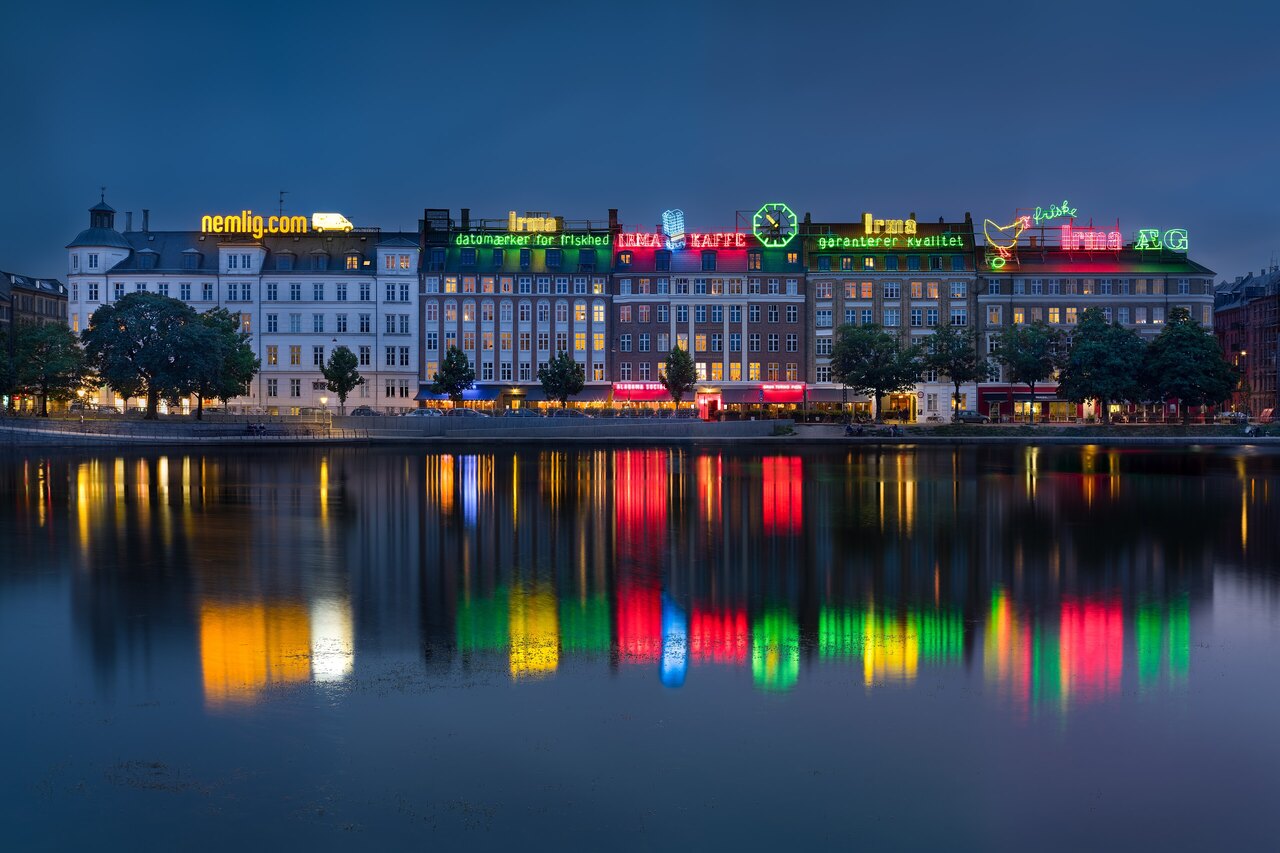
The 3-day plan, day by day
Day 1: Royal Copenhagen and the canals
Morning. Start at Rosenborg Castle (about DKK 145) in the King's Garden for the crown jewels in the basement treasury. Walk 15 minutes to Amalienborg, four identical palaces around an octagonal square, where the changing of the guard takes place at 12:00 daily. Step into the Marble Church opposite.
Afternoon. Walk to Nyhavn, the 17th-century harbour lined with coloured houses (Hans Christian Andersen lived at numbers 18, 20 and 67), and take a canal tour (about DKK 120-150, 1 hour) past the Opera House and the Black Diamond library.
Evening. Walk along the harbour to Kastellet, the star-shaped fortress, and the Little Mermaid statue, small and best seen at dusk without the crowds. Have dinner in Nørrebro, where Jægersborggade has small restaurants and wine bars.
Nyhavn's quayside restaurants are expensive. Buy drinks in a shop and sit on the quay edge with everyone else; it is allowed.
Day 2: Christiansborg, Christiania and the harbour
Morning. Christiansborg Palace houses the parliament, the Supreme Court and royal reception rooms (tickets for the Royal Reception Rooms and ruins). Its tower is free and the tallest in the city. Then climb the Round Tower (Rundetaarn, about DKK 40), a 17th-century observatory with a spiral ramp instead of stairs.
Afternoon. Cross to Christianshavn, with its canals and the corkscrew spire of the Church of Our Saviour, 400 steps with the last 150 outside. Walk into Freetown Christiania, the self-governing hippie community founded in 1971; respect the residents' rules, especially about photos.
Evening. Take the harbour bus or walk across the bridges to Reffen, a street-food market in old shipyard buildings on Refshaleøen (open in the warmer months), with stalls from all over the world at DKK 100-150 a dish.
In summer, swim in the harbour baths at Islands Brygge or Kalvebod Bølge: the water is clean and the baths are free.
Day 3: Torvehallerne, Tivoli and Vesterbro
Morning. Go to Torvehallerne, two glass market halls near Nørreport station, for smørrebrød, coffee and Danish pastries. Then visit the National Gallery of Denmark (SMK) or the Ny Carlsberg Glyptotek, with its palm-filled winter garden.
Afternoon. Spend the late afternoon at Tivoli Gardens (entry about DKK 165-200, rides extra), the 1843 amusement park in the city centre. It is open in seasons (summer, Halloween and Christmas), so check dates.
Evening. Stay for Tivoli after dark, when the lights come on, then walk 10 minutes to Vesterbro and the Meatpacking District (Kødbyen) for dinner and bars.
If you are in Copenhagen in the cold months, the Christmas season at Tivoli and Nyhavn is one of the best in Europe.
Only have 2 days?
With 2 days, do Day 1, and combine Christiansborg, Christiania and Tivoli on Day 2. You lose the museums and Reffen.
Got extra days?
On a 4th day, take the coastal train north: Louisiana Museum of Modern Art in Humlebæk (about 35 minutes), with sculptures in a park over the Øresund, and Kronborg Castle in Helsingør (about 45-50 minutes), Shakespeare's Elsinore.
Where to stay in Copenhagen
| Budget | Area | Why | Typical double/night |
|---|---|---|---|
| Budget | Vesterbro / Nørrebro | Cheapest central areas, lively, near the station or the lakes. | DKK 900-1,400 |
| Mid-range | Indre By (centre) | Walk to Nyhavn, Rosenborg and Tivoli. | DKK 1,500-2,500 |
| Mid-range | Christianshavn | Canals and quiet streets, metro to the airport. | DKK 1,400-2,200 |
| Comfort | Nyhavn / harbourfront | Hotels in old warehouses with harbour views. | DKK 2,500-5,000 |
Getting around
Walk or cycle: Copenhagen has more bikes than cars and cycle lanes everywhere; bike rental is about DKK 150-200 a day. The metro runs 24 hours, and the M2 reaches the airport in about 15 minutes. Tickets are zone-based; a single central ticket is about DKK 30, and the Copenhagen Card or a 24-72 hour City Pass covers all transport, including the airport.
What to eat in Copenhagen
Smørrebrød, open sandwiches on rye bread topped with pickled herring, roast beef with remoulade or egg and shrimp, are the classic lunch: DKK 70-150 a piece at Aamanns or in Torvehallerne. Try a hot dog (pølse) from a pølsevogn cart, about DKK 40-50, frikadeller (pork meatballs) and stegt flæsk (crispy pork belly with parsley sauce). Danish pastries are called wienerbrød, Viennese bread; try a cinnamon kanelsnegl at Juno or Hart Bageri. Copenhagen is the city of New Nordic cuisine, with world-famous restaurants costing several thousand kroner a head, but casual places in Nørrebro and Vesterbro serve the same local ingredients for much less.
Best time to visit
May to September, with highs of 17-22°C and very long days around midsummer (sunset after 22:00). Midsummer's Eve (Sankt Hans, 23 June) has bonfires along the harbour. Winter is cold and dark by 16:00, but Christmas markets and hygge make December special.
Month-by-month weather for Copenhagen →
What a day costs
| Budget | Mid-range | Comfort | |
|---|---|---|---|
| Bed (per person, sharing a double) | DKK 500 | DKK 1,000 | DKK 2,000 |
| Food & drink | DKK 300 | DKK 600 | DKK 1,200 |
| Sights & activities | DKK 150 | DKK 350 | DKK 600 |
| Local transport / bike | DKK 80 | DKK 150 | DKK 300 |
| Total per person, per day | about DKK 1,030 | about DKK 2,100 | about DKK 4,100 |
Approximate 2026 prices in Danish kroner (about DKK 7.5 to €1). Denmark has no tourist tax at the time of writing. Restaurant prices include service.
Before you go
Common questions
Is the Copenhagen Card worth it?
It includes all transport, Rosenborg, a canal tour, Tivoli entry and over 80 attractions. With three paid sights a day it saves money; with one, it does not.
Is Copenhagen expensive?
Yes, among the most expensive cities in Europe. Save with smørrebrød or street food at lunch, supermarket breakfasts and free sights like the harbour, parks and churches.
Should I tip?
Not required: service is included. Rounding up for good service is appreciated.
Can I visit Malmö too?
Yes: the train across the Øresund Bridge reaches Malmö in Sweden in about 35-40 minutes. Bring your passport.
Is it easy to cycle in Copenhagen as a visitor?
Yes, if you follow local rules: ride on the right in the cycle lane, signal with your hand before stopping or turning, and do not ride on pavements. At big junctions, turning left is done in two stages. Bike-share bikes and rentals usually come with lights; use them after dark, as police do fine unlit cyclists.
How this guide was made
Written by hand, without AI, from experience planning Scandinavia trips. Prices are approximate for 2026 in kroner; confirm on the official Rosenborg, Tivoli, Christiansborg, DOT (transport) and Louisiana websites before booking.
Some links on this page are partner links. If you book through them TonyPlan may earn a commission; the price you pay is the same. How we make money.