Home › Casablanca › How many days
How many days in Casablanca? 3 days, with the mosque, the medina and Rabat
By Tony Panopoulos · travel-agency planner in Greece · Updated
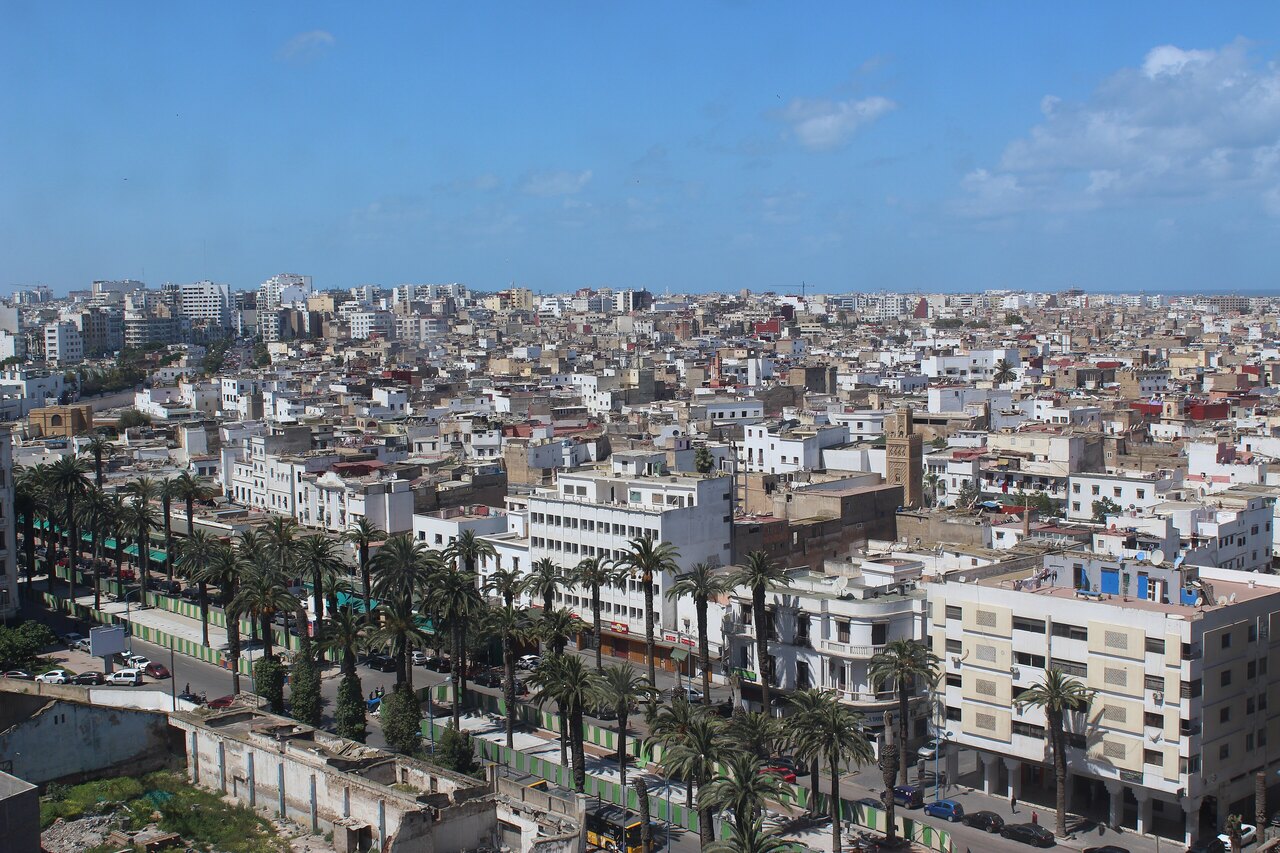
Most travellers land at Casablanca and leave the same afternoon for Marrakech or Fes. That misses Morocco's modern face: a working Atlantic city of more than 3 million people with one of the world's largest mosques, a district of 1930s Art Deco buildings and the best seafood in the country. Give it three days, the third as a train trip to Rabat, the capital, 1 hour away. The rule that matters: book the Hassan II Mosque tour for the morning, and use the tram and red petit taxis rather than walking long distances.
Short answer
Two days covers the mosque, the medina, the Habous quarter, the Art Deco centre and the corniche. The third day adds Rabat's kasbah, the Hassan Tower and the Chellah ruins.
The 3-day plan, day by day
Day 1: Hassan II Mosque, the old medina and the corniche
Morning. Take the guided tour of the Hassan II Mosque, completed in 1993 on a platform over the ocean. It is one of the few mosques in Morocco that non-Muslims may enter; tours of about 45-60 minutes run several times a day except Friday morning, costing about MAD 140. The minaret rises 210 metres, and the prayer hall holds 25,000 people.
Afternoon. Walk 15 minutes east into the Old Medina, smaller and calmer than those of Fes or Marrakech, and stop at La Sqala, an 18th-century bastion with a garden restaurant, for mint tea. Continue to the Marché Central on Boulevard Mohammed V for its fish stalls.
Evening. Take a petit taxi (about MAD 20-30) to the Ain Diab corniche for the sunset walk along the ocean, then eat at the seafood restaurants near the El Hank lighthouse or at the stalls of the Marché Central earlier, where grilled fish costs MAD 80-150.
Dress modestly for the mosque, with shoulders and knees covered; shoes are carried in a bag provided at the entrance.
Day 2: Art Deco Casablanca and the Habous quarter
Morning. Start at Place Mohammed V, with the law courts and the main post office in the 'Mauresque' style of the French protectorate. Walk Boulevard Mohammed V and the streets around the Marché Central, where 1920s-1950s Art Deco facades such as the Hotel Lincoln and the Cinéma Rialto line the route. Casamémoire, a local heritage group, runs guided walks.
Afternoon. Take a taxi 10 minutes to the Quartier Habous (New Medina), built by the French in the 1930s as a traditional-style Moroccan quarter. Browse olive and spice stalls, buy almond pastries at Pâtisserie Bennis, and see the bookshops near the Royal Palace gates. Then visit the Museum of Moroccan Judaism in Oasis (about MAD 50), the only Jewish museum in the Arab world.
Evening. Dinner in Maarif, the district of restaurants and shops, where a tagine costs MAD 80-130. For a film-inspired drink, Rick's Café, opened in 2004 in an old mansion by the medina wall, recreates the bar from *Casablanca* (the film was shot entirely in Hollywood).
The Sacré-Cœur Cathedral in the Parc de la Ligue Arabe, built in 1930 and now a cultural venue, sometimes opens for exhibitions; check whether it is open as you pass.
Day 3: Day trip to Rabat
Morning. Take the train from Casa-Voyageurs or Casa-Port to Rabat-Ville (about 1 hour on the Al Atlas trains, roughly MAD 45-60 in second class; the Al Boraq high-speed train is faster to Rabat-Agdal). Walk to the Hassan Tower, the unfinished 12th-century minaret, and the marble Mausoleum of Mohammed V guarded by horsemen (free).
Afternoon. Walk 20 minutes along the river to the Kasbah des Oudayas, a fortified village of blue-and-white lanes above the mouth of the Bou Regreg, with the Andalusian Gardens and a café looking over to Salé. Then take a taxi to the Chellah (about MAD 70), Roman and Merinid ruins where storks nest on the minarets.
Evening. Return to Casablanca by train (trains run about every 30 minutes into the evening) and finish with dinner on the corniche or a final mint tea in the Habous.
Rabat has its own tram, which links the Rabat-Ville station area with the medina and the river; a single ride costs about MAD 6-8.
Only have 2 days?
With 2 days, do Day 1 as written and combine the Art Deco walk with the Habous quarter on Day 2. You lose Rabat.
Got extra days?
Extra days go to El Jadida (about 1.5 hours south by train or bus) for the UNESCO Portuguese cistern, to Azemmour for its medina on the river, or onward by Al Boraq to Tangier (about 2h15). Marrakech is about 2h40 by train.
Where to stay in Casablanca
| Budget | Area | Why | Typical double/night |
|---|---|---|---|
| Budget | Centre-ville (Boulevard Mohammed V) | Older hotels near the tram and the Marché Central. | MAD 400-700 |
| Mid-range | Gauthier / Maarif | Safe, walkable, full of cafes and restaurants, tram on the doorstep. | MAD 800-1,400 |
| Mid-range | Casa-Port / medina edge | Close to the mosque and the station for Rabat trains. | MAD 800-1,300 |
| Comfort | Ain Diab corniche | Sea-view hotels with pools, close to the beach clubs. | MAD 1,800-4,000 |
Getting around
The tram (lines T1 and T2, plus newer lines and busways) crosses the city from the corniche to the centre; a single ride is about MAD 8. Red petit taxis are metered and cheap: most trips cost MAD 15-40, and the meter rate rises at night. Insist on the meter, and expect shared rides. Careem and inDrive apps also operate. From Mohammed V Airport, the train to Casa-Voyageurs takes about 35-40 minutes (about MAD 50), and a grand taxi costs about MAD 300-350 by fixed price. Use Casa-Port station for the medina and the mosque.
What to eat in Casablanca
Casablanca is Morocco's seafood city. At the Marché Central, buy fish at a counter and have it grilled at the next stall for MAD 80-150. Try tagines with lamb, prunes and almonds, couscous on Fridays, and pastilla, a pastry filled with pigeon or chicken, almonds and cinnamon. For breakfast, eat msemen (layered flatbread) with honey and bissara (bean soup). Street mint tea costs MAD 8-15, a café lunch MAD 60-100, and dinner at a good restaurant MAD 200-400. Alcohol is served in licensed hotels, bars and some restaurants only.
Best time to visit
April to June and September to November, with highs of 20-26°C. The Atlantic keeps Casablanca mild all year: summer rarely tops 28°C, though it is humid, and winters are around 17-18°C with rain between November and March. During Ramadan, opening hours shift, many cafes close in the day and the evenings come alive after the fast breaks.
Month-by-month weather for Casablanca →
What a day costs
| Budget | Mid-range | Comfort | |
|---|---|---|---|
| Bed (per person, sharing a double) | MAD 250 | MAD 550 | MAD 1,400 |
| Food & drink | MAD 150 | MAD 300 | MAD 650 |
| Sights & tickets | MAD 70 | MAD 160 | MAD 300 |
| Local transport | MAD 40 | MAD 90 | MAD 250 |
| Total per person, per day | about MAD 510 | about MAD 1,100 | about MAD 2,600 |
Approximate 2026 prices in Moroccan dirhams; hotels add a city tourist tax of roughly MAD 15-50 per person per night, depending on the hotel class.
Before you go
Common questions
Is Casablanca worth visiting?
Yes, for two or three days. It lacks the medieval medinas of Fes and Marrakech, but the Hassan II Mosque is one of the finest modern buildings in the Islamic world, the Art Deco centre is unique in Africa, and the seafood and cafe life show everyday modern Morocco.
Can non-Muslims enter the Hassan II Mosque?
Yes, on the official guided tours, which run in several languages through the day, except during Friday prayers. Tickets are sold at the entrance or online. Cover shoulders and knees, and allow about one hour, including the ablution halls in the basement.
Is Casablanca safe?
Generally yes. Watch for pickpockets in the medina, the Marché Central and on crowded trams, and take a taxi rather than walking through the medina or near the port after dark. Women travelling alone may get comments on the street; walking with confidence and ignoring them is the usual answer.
How do I get from Casablanca to Marrakech?
By train from Casa-Voyageurs, about 2h40, with departures roughly every one to two hours; first class costs a little more and guarantees a seat. CTM and Supratours buses take about 3-3.5 hours. Book ahead on the ONCF website or app at weekends and holidays.
How this guide was made
Compiled by TonyPlan from official tourism, transport and attraction sources and on-the-ground travel knowledge. Prices are approximate for 2026 and change with season; anything we could not confirm is marked as approximate.
Some links on this page are partner links. If you book through them TonyPlan may earn a commission; the price you pay is the same. How we make money.