Home › Buenos Aires › How many days
How many days in Buenos Aires? 4 days of tango, steak and grand avenues
By Tony Panopoulos · travel-agency planner in Greece · Updated
Buenos Aires has the boulevards of Paris, the cafés of Madrid and a rhythm all of its own: people dine at 22:00 and dance tango until dawn. Four days covers the historic centre around Plaza de Mayo, the Sunday market of San Telmo and the painted houses of La Boca, the cemetery and mansions of Recoleta, the parks and bars of Palermo, and a day out to the river delta of Tigre or across the river to Colonia del Sacramento in Uruguay. Plan your money carefully: Argentina's exchange rates change fast.
Short answer
Three days covers the centre, San Telmo, La Boca, Recoleta and Palermo. The fourth adds Tigre or Colonia, or simply more time for long lunches.
The 4-day plan, day by day
Day 1: Plaza de Mayo, Avenida de Mayo and the Teatro Colón
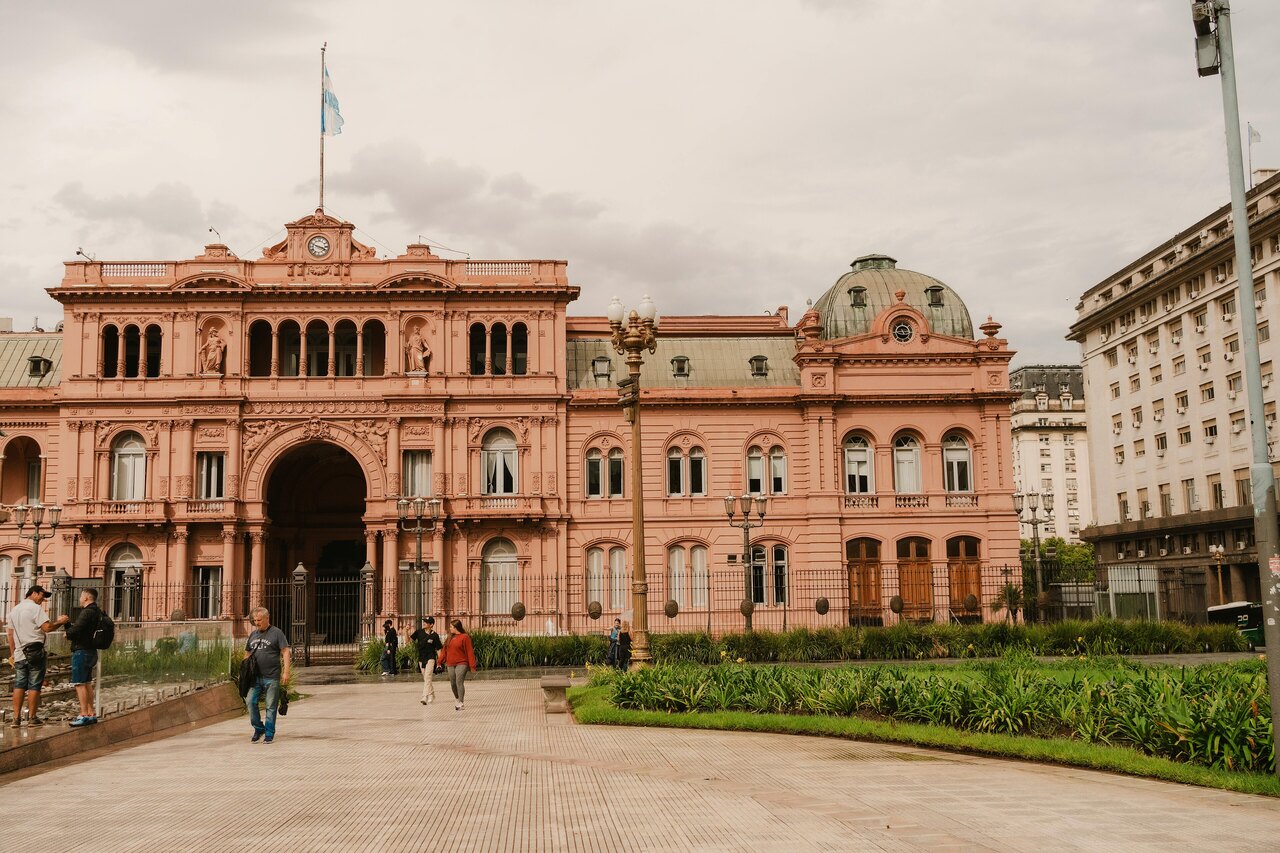
Morning. Start at Plaza de Mayo, the political heart of Argentina: the pink Casa Rosada presidential palace (free guided tours, usually on weekends, booked online), the Cabildo, where the 1810 revolution began, and the Metropolitan Cathedral with the tomb of General San Martín.
Afternoon. Walk Avenida de Mayo past the Palacio Barolo, inspired by Dante's Divine Comedy (guided tours), to the Congress. Have coffee at Café Tortoni (1858). Then take a guided tour of the Teatro Colón, one of the world's great opera houses (tours about US$20-30 for foreigners).
Evening. See a tango show: dinner shows cost about US$80-150. For something more local, go to a milonga, a tango dance hall, such as La Catedral or El Beso, where locals dance and you can take a beginners' class first.
Book a ticket for an opera, ballet or concert at the Teatro Colón if you can: seats in the upper tiers are cheap, and the acoustics are famous.
Day 2: San Telmo and La Boca
Morning. On Sunday, the Feria de San Telmo stretches along Calle Defensa from Plaza Dorrego: antiques, crafts, street tango and musicians. On other days, visit the Mercado de San Telmo (1897) and the old colonial streets.
Afternoon. Take a taxi to La Boca, the old port neighbourhood of Italian immigrants: Caminito, a short street of houses painted in bright colours, and La Bombonera, the stadium of Boca Juniors (museum and tour). Stay on the main tourist streets; the surrounding area is unsafe.
Evening. Return to San Telmo for dinner at a parrilla (steakhouse) and a drink in its bars.
Go to La Boca by taxi or Uber in the daytime and leave before dark.
Day 3: Recoleta and Palermo
Morning. Visit the Recoleta Cemetery (ticket for foreigners), a city of 4,700 marble mausoleums, including the Duarte family tomb where Eva Perón (Evita) is buried. Then the Basílica del Pilar next door and the Museo Nacional de Bellas Artes (free).
Afternoon. Visit El Ateneo Grand Splendid, a bookshop in a former 1919 theatre, then walk into Palermo: the Bosques de Palermo parks and rose garden, the Japanese Garden and MALBA, the museum of Latin American art (Frida Kahlo, Diego Rivera).
Evening. Have dinner in Palermo Soho or Palermo Hollywood, the city's trendiest areas for restaurants and bars. Nightlife starts around midnight.
Restaurants open for dinner at about 20:00 but fill only after 21:30; book popular parrillas such as Don Julio weeks ahead.
Day 4: Tigre or Colonia del Sacramento
Morning. Take the train (about 1 hour) to Tigre, at the start of the Paraná Delta, a maze of rivers and islands where people live in houses on stilts, reached only by boat. Take a launch (lancha colectiva) into the delta.
Afternoon. Visit the Puerto de Frutos market and the Museo de Arte Tigre in a former club on the river, then return to the city.
Evening. Alternatively, take a ferry (about 1-1.25 hours) across the Río de la Plata to Colonia del Sacramento in Uruguay, a UNESCO-listed colonial town of cobbled streets and a lighthouse. Bring your passport.
Book Colonia ferries early in summer and on holidays; return on the last boat and allow time for passport control on both sides.
Only have 3 days?
With 3 days, do Days 1, 2 and 3. You lose Tigre and Colonia.
Got extra days?
With more time, fly to Iguazú Falls (about 2 hours), one of the world's great waterfalls, or to Mendoza for vineyards below the Andes, or south to Patagonia.
Where to stay in Buenos Aires
| Budget | Area | Why | Typical double/night |
|---|---|---|---|
| Budget | San Telmo | Characterful, cheaper, near the Sunday market. | US$40-80 |
| Mid-range | Palermo Soho | Safe, leafy, restaurants and bars on every corner. | US$80-150 |
| Mid-range | Recoleta | Elegant streets, near the cemetery and museums. | US$90-160 |
| Comfort | Recoleta / Puerto Madero | Palace hotels and modern towers on the docks. | US$250-600 |
Getting around
Use the Subte (metro) and buses with a rechargeable SUBE card, or Uber and Cabify, which are cheap. Neighbourhoods are spread out, but each is walkable. From Ezeiza international airport, the trip to the centre takes about 45-60 minutes by car or the Tienda León bus; Aeroparque domestic airport is 15 minutes from Palermo.
What to eat in Buenos Aires
Argentina is the land of beef: at a parrilla, order bife de chorizo (sirloin), ojo de bife (rib eye), vacío (flank) and provoleta (grilled cheese), with chimichurri and a bottle of Malbec. Snack on empanadas, choripán (sausage sandwich) and milanesa (breaded cutlet), have medialunas (sweet croissants) with coffee for breakfast, and eat Italian-style helado (ice cream) and anything with dulce de leche. Prices change with inflation; a parrilla dinner is still good value by European standards. Tip about 10% in cash.
Best time to visit
March to May (autumn) and September to November (spring, with purple jacaranda trees), with highs of 18-26°C. Summer (December to February) is hot and humid (around 30°C), and many locals leave for the coast in January. Winter (June-August) is cool (about 14°C) but good for theatre and tango.
Month-by-month weather for Buenos Aires →
What a day costs
| Budget | Mid-range | Comfort | |
|---|---|---|---|
| Bed (per person, sharing a double) | US$25 | US$60 | US$180 |
| Food & drink | US$25 | US$50 | US$120 |
| Sights & shows | US$10 | US$40 | US$120 |
| Local transport | US$3 | US$10 | US$40 |
| Total per person, per day | about US$65 | about US$160 | about US$460 |
Approximate 2026 prices, given in US dollars because the Argentine peso changes quickly. Check the current rules on paying by foreign card, which often get a favourable exchange rate.
Before you go
Common questions
Should I pay with cash or card?
Foreign cards are now usually charged at an exchange rate close to the parallel market rate, making them convenient. Some places still give discounts for cash. Check the latest situation before you travel, as rules change often.
Is Buenos Aires safe?
Palermo, Recoleta and Puerto Madero are generally safe. Watch for pickpockets and phone snatching on the Subte and in busy areas, and avoid La Boca and parts of San Telmo and Constitución at night.
When do people eat dinner?
Late: 21:30-23:00 is normal. Many restaurants are empty at 20:00.
Can I learn tango in a few days?
You can learn the basics. Many milongas offer a beginners' class in the hour before the dance; private lessons are inexpensive.
Do I need a visa for Uruguay?
Many nationalities do not need one for a short visit, but take your passport for the ferry and check the rules for your nationality.
How this guide was made
Written by hand, without AI, from experience planning South America trips. Prices are approximate for 2026 and given in US dollars because of inflation; confirm on the official Teatro Colón, Casa Rosada, Recoleta Cemetery and ferry operators' websites before booking.
Some links on this page are partner links. If you book through them TonyPlan may earn a commission; the price you pay is the same. How we make money.