Home › Austria › How many days
How many days in Austria? 7 days, Vienna to the Alps by train
By Tony Panopoulos · travel-agency planner in Greece · Updated
Austria is small enough to cross by train in an afternoon, and its rail network is among the best in Europe, so seven days gets you from imperial Vienna to the high Alps without a car. Spend two days in Vienna, one on the Danube in the Wachau, then follow the Westbahn line to Salzburg, Hallstatt and Innsbruck. The rule that matters: book the ÖBB Railjet fares early, and visit Hallstatt before 9:00 or after 17:00, when the tour buses are gone.
Short answer
Five days covers Vienna, Salzburg and Hallstatt at a brisk pace. Seven adds the Wachau wine valley and two Alpine days around Innsbruck, with time for coffee houses and lakes.
The 7-day plan, day by day
Day 1: Vienna: the Ringstrasse and the old centre
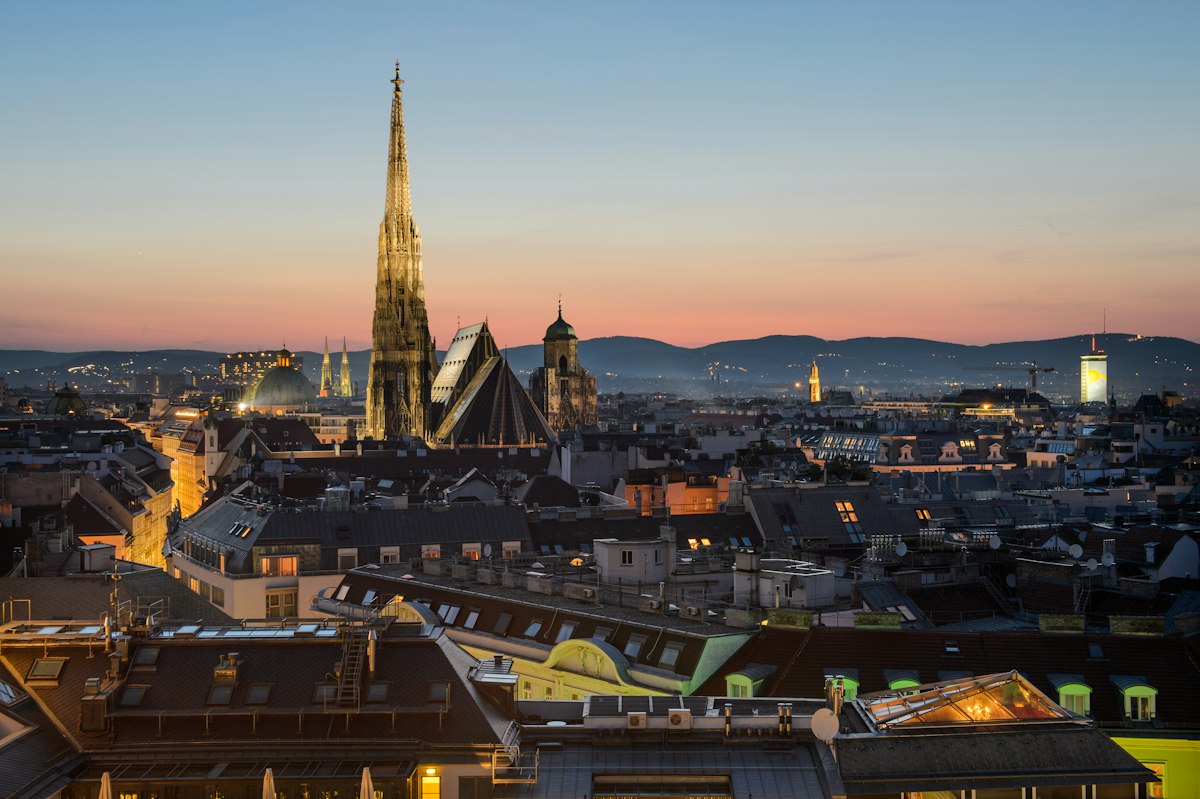
Morning. Start at St Stephen's Cathedral (Stephansdom) when it opens; the climb of 343 steps up the South Tower costs about €6. Walk 10 minutes along the Graben and Kohlmarkt to the Hofburg, where one ticket (about €20) covers the Imperial Apartments, the Sisi Museum and the Silver Collection.
Afternoon. Cross the Heldenplatz to the Kunsthistorisches Museum (about €22), with the world's largest collection of Bruegel paintings, then rest in a classic coffee house such as Café Central or Café Sperl over a Melange and apple strudel (about €10-12).
Evening. Buy a standing-room ticket at the Vienna State Opera for a few euros (sold online and at the side entrance shortly before performances), or hear a concert at the Musikverein. Dinner at a Beisl (traditional tavern) in the centre: Wiener schnitzel for €18-26.
Many Vienna museums are closed on Mondays, but not the Hofburg or the cathedral; plan the order of your two days around that.
Day 2: Vienna: Schönbrunn, Belvedere and a wine tavern
Morning. Take metro line U4 15 minutes to Schönbrunn Palace, the Habsburg summer residence. The Grand Tour of 40 rooms costs about €35-40 with a timed slot; the gardens and the climb to the Gloriette are free.
Afternoon. Go to the Upper Belvedere (about €17-20) for Klimt's *The Kiss*, then walk 15 minutes to the Naschmarkt, 1.5 km of food stalls along the Wienzeile (closed on Sundays).
Evening. Take tram D or bus 38A out to Grinzing or Heiligenstadt for a Heuriger, a wine tavern serving the producer's own new wine (about €4-5 a quarter-litre) with a cold buffet.
A 24-hour Vienna transport ticket costs about €8-9 and is valid on the metro, trams and buses; a 72-hour ticket is better value for two full days.
Day 3: The Wachau: Melk Abbey and the Danube
Morning. Take the train from Wien Westbahnhof or Hauptbahnhof to Melk (about 1h15 with a change at St Pölten). Melk Abbey, a golden Baroque Benedictine monastery above the river, costs about €16 and has a library of 100,000 volumes.
Afternoon. Board the DDSG Blue Danube or Brandner boat downstream to Dürnstein (about 1.5 hours, roughly €25-30 one way, April-October). Climb 20 minutes to the ruined castle where Richard the Lionheart was held captive in 1192, then taste Grüner Veltliner and apricot liqueur in the village.
Evening. Take the local bus 10 minutes to Krems and the train back to Vienna (about 1 hour), or stay overnight in a Wachau guesthouse among the vineyards.
Boats run only from spring to late October; out of season, cycle the flat Danube path from Melk to Krems (about 36 km) on a rented bike instead.
Day 4: Salzburg: the old town and the fortress
Morning. Take the Railjet from Vienna to Salzburg (about 2h20; advance Sparschiene fares from about €20). Walk the Getreidegasse with its wrought-iron shop signs to Mozart's Birthplace at number 9 (about €15).
Afternoon. Visit Salzburg Cathedral, then ride the funicular up to Hohensalzburg Fortress (about €18-20 return with entry), one of the largest medieval castles in Europe, with views to the Untersberg.
Evening. Cross the Salzach to the Mirabell Gardens, where scenes of *The Sound of Music* were filmed, and drink beer from stone mugs in the Augustiner Bräu monastery beer hall in Mülln, open since 1621.
The Salzburg Card (from about €30 for 24 hours) includes the fortress, Mozart's houses and public transport, and pays off if you visit three sights.
Day 5: Hallstatt and the salt mine
Morning. Take the train from Salzburg to Hallstatt via Attnang-Puchheim (about 2-2.5 hours), or the post bus 150 to Bad Ischl and bus 542/543 onward. From Hallstatt station, the little ferry crosses the lake to the village in 10 minutes (about €3).
Afternoon. Ride the funicular to Salzwelten Hallstatt, the world's oldest salt mine, worked for 7,000 years; the tour with the funicular costs about €40 and includes a wooden miners' slide. Step out onto the Skywalk viewing platform 360 metres above the village.
Evening. Stay the night if you can, and walk the lakeside after the day visitors leave. Grilled Reinanke (lake whitefish) costs about €20-26.
Hallstatt has fewer than 800 residents and up to 10,000 visitors on peak days; keep out of private gardens and do not fly drones.
Day 6: Innsbruck: the Golden Roof and the Nordkette
Morning. Take the train from Salzburg to Innsbruck (about 1h50 on the Railjet, through the Inn valley). Walk the old town to the Goldenes Dachl, the Golden Roof with 2,657 gilded copper tiles, and the Hofkirche with its 28 bronze statues around Emperor Maximilian's tomb.
Afternoon. Take the Hungerburgbahn funicular, designed by Zaha Hadid, and the cable cars to Hafelekar at 2,256 metres (about €50-60 return), 20-25 minutes from the city centre to the high Alps.
Evening. Eat Tyrolean Kaspressknödel (cheese dumplings) and Gröstl (pan-fried potatoes with bacon) at an inn in the old town for €14-20, and walk along the Inn for the view of the painted houses in Mariahilf.
If clouds cover the Nordkette, check the summit webcams before you buy; the ride is pointless in fog.
Day 7: Tyrol: Swarovski Crystal Worlds or a mountain valley
Morning. Take the shuttle bus from Innsbruck to Swarovski Kristallwelten in Wattens (about 30 minutes; entry about €25), art installations under a grass-covered giant head. Or take the train 10 minutes to Hall in Tirol, a medieval mint town.
Afternoon. For walking, take the train to Seefeld (about 35 minutes), with lake and meadow trails at 1,200 metres, or the bus into the Stubai Valley.
Evening. Return to Innsbruck for a last dinner. Trains to Munich (about 1h45) and Zurich (about 3h30) leave from the main station if you continue onward.
Many Innsbruck hotels give guests a free Welcome Card with local buses and some guided walks; ask at check-in.
Only have 5 days?
With 5 days, do two days in Vienna, then go straight to Salzburg, with Hallstatt as a day trip on Day 4 and a fifth day in Salzburg or the lakes of the Salzkammergut. You lose the Wachau and Innsbruck.
Got extra days?
With 9-10 days, add Graz (about 2h40 from Vienna) and its Schlossberg, a night in Zell am See for the Grossglockner high alpine road (open May to October), or a lake day at St Wolfgang with the rack railway up the Schafberg.
Where to stay in Austria
| Budget | Area | Why | Typical double/night |
|---|---|---|---|
| Budget | Vienna Neubau / Mariahilf | Hostels and simple hotels near the U3 metro, 10 minutes to the centre. | €80-130 |
| Mid-range | Vienna Innere Stadt edge / Salzburg Neustadt | Walk to the main sights and to the stations for the next train. | €140-230 |
| Mid-range | Hallstatt / Obertraun guesthouses | Lake-view rooms; Obertraun across the lake is cheaper and calmer. | €150-260 |
| Comfort | Ringstrasse hotels / Salzburg old town | Grand historic hotels and palace-style rooms. | €280-600 |
Getting around
Trains do almost everything: the ÖBB Railjet runs Vienna-Salzburg every 30-60 minutes (about 2h20) and Salzburg-Innsbruck in about 1h50. Book Sparschiene saver fares on the ÖBB app weeks ahead, or use the private Westbahn between Vienna and Salzburg. In Vienna, a single ticket costs about €3 and covers metro, tram and bus; Salzburg has trolleybuses and Innsbruck trams. A car only helps for the Grossglockner road and remote valleys; motorways need a vignette.
What to eat in Austria
Austrian food is hearty and seasonal. Try Wiener schnitzel (veal by tradition; 'Wiener Art' means pork), Tafelspitz (boiled beef with apple-horseradish, best at Plachutta in Vienna), goulash and Käsespätzle in the west. Vienna's coffee houses are an institution: one Melange lets you stay for hours, and Sachertorte, strudel and Kaiserschmarrn (shredded pancake) cost €5-10. A Würstelstand serves a Käsekrainer sausage for about €5-6, and lunch menus in inns cost €12-16. Drink Grüner Veltliner, Stiegl beer and Almdudler, the herbal lemonade.
Best time to visit
May to June and September to early October are best, with highs of 18-25°C and the mountain cable cars running. July and August are busiest, with the Salzburg Festival and Alpine thunderstorms. Christmas markets open from mid-November (around 0-5°C), and the Tyrol ski season runs from December to April.
Month-by-month weather for Austria →
What a day costs
| Budget | Mid-range | Comfort | |
|---|---|---|---|
| Bed (per person, sharing a double) | €45 | €90 | €200 |
| Food & drink | €35 | €60 | €110 |
| Sights & tickets | €20 | €40 | €60 |
| Local transport | €15 | €30 | €55 |
| Total per person, per day | about €115 | about €220 | about €425 |
Approximate 2026 prices, with transport averaged to include the intercity trains; Vienna, Salzburg and the Tyrol all add a local tourist tax per person per night (a percentage of the room rate in Vienna, a few euros elsewhere).
Before you go
Common questions
Do I need a car in Austria?
No, not for this route. Vienna, Melk, Salzburg, Hallstatt and Innsbruck are all on the rail network, with buses and boats filling the gaps. A car is useful only for the Grossglockner road, remote ski valleys or touring the Salzkammergut lakes freely. If you drive, buy the motorway vignette before entering the motorways.
Is Hallstatt worth it with the crowds?
Yes, if you time it well. Most tour groups arrive between about 10:00 and 16:00, so come early, stay late, or spend the night. The salt mine, the Skywalk and the lakeside path to Obertraun are the real reasons to come.
Is Vienna or Salzburg better for classical music?
Vienna has more choice: the State Opera, the Musikverein and the Konzerthaus run almost nightly from September to June, and opera standing places cost a few euros. Salzburg centres on Mozart, with peak prices in festival season. Costumed sellers on the street mostly sell tourist shows.
Should I buy the Klimaticket?
No. The Klimaticket is an annual pass for all Austrian public transport and costs over €1,000, so it never pays off for a one-week trip. Booked Sparschiene train fares plus local day passes in each city are far cheaper.
How this guide was made
Compiled by TonyPlan from official tourism, transport and attraction sources and on-the-ground travel knowledge. Prices are approximate for 2026 and change with season; anything we could not confirm is marked as approximate.
Some links on this page are partner links. If you book through them TonyPlan may earn a commission; the price you pay is the same. How we make money.