Home › Austria › Where to stay
Where to stay in Austria
Austria is anchored by Vienna’s imperial grid, Salzburg’s baroque compact core, and the jagged Alpine terrain of the Tyrol region. Choosing where to stay depends on whether you prioritize high-culture museum proximity, Alpine hiking access, or train station connectivity. Because the country features a reliable, efficient rail network, staying near transit hubs provides the best flexibility to experience both dense urban centers and remote mountain valleys without needing a car.
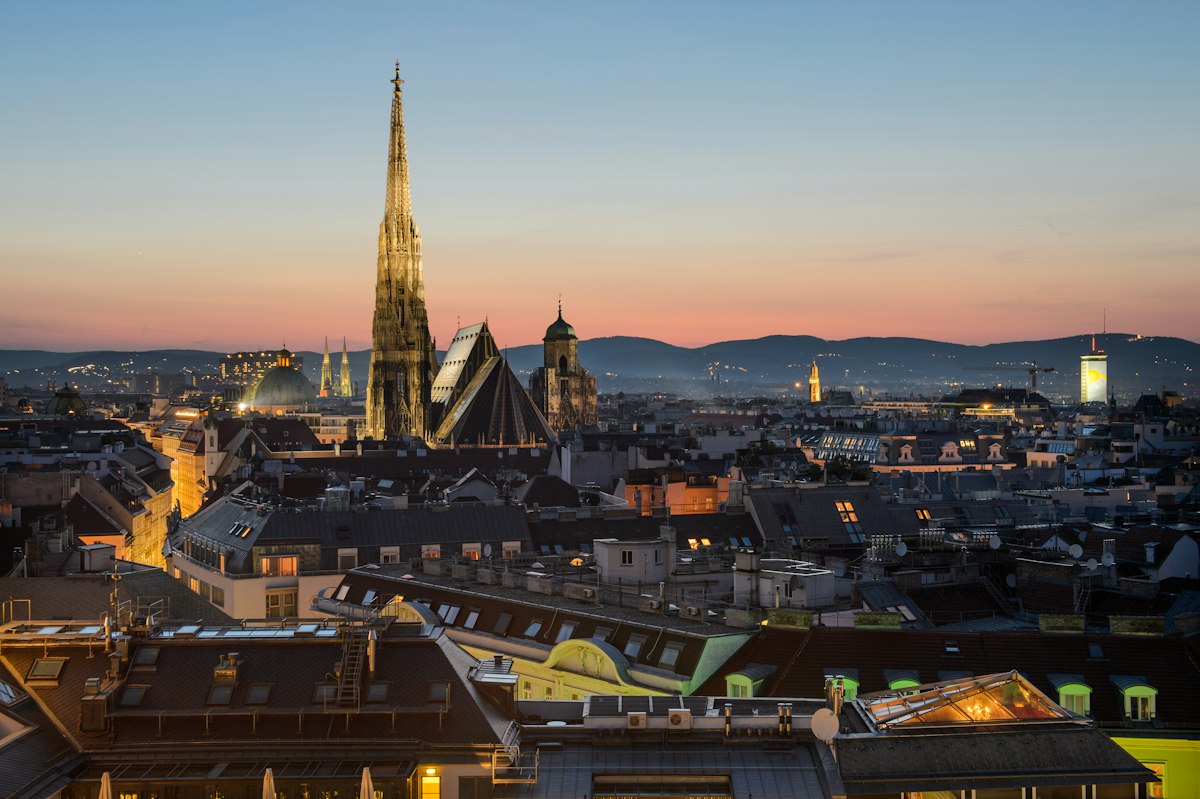
Innere Stadt, Vienna
This is the city's medieval heart, surrounded by the Ringstraße. You are within a ten-minute walk of St. Stephen’s Cathedral, the Hofburg Palace, and the luxury boutiques of Graben. The atmosphere is formal and polished, defined by grand squares and historic coffee houses. It is the most expensive district, but it keeps you central to all primary transit and sightseeing.
Altstadt, Salzburg
The area consists of narrow, winding medieval streets that are almost entirely pedestrianized. It feels intimate and historic, dominated by the Getreidegasse shopping street and the Salzburg Cathedral. Everything is tightly clustered; you can walk from the funicular base to the major churches and squares in under five minutes. Expect high foot traffic during the summer festival season.
Innsbruck City Centre
The city is narrow and pinned between massive mountain ranges. From the historic Old Town with its Golden Roof, you can walk directly to the Nordkette cable car station in under fifteen minutes. It blends Tirolean tradition with modern transit. It is exceptionally efficient for those who want to reach high-altitude hiking or ski slopes without commuting from the suburbs.
Rent a car in Austria
Compare rental cars from local and international companies, with free cancellation on most bookings.
Compare car rentals in AustriaOne thing to think about
Avoid booking accommodation directly inside or adjacent to the immediate vicinity of Vienna’s Prater amusement park if you are a light sleeper. While convenient for family thrills, the constant noise from the Ferris wheel and late-night crowds can disrupt rest. Furthermore, avoid hotels located exclusively near the outer city highway bypasses, as they distance you from the rail network and require tedious tram commutes into the actual city centers.
Other places to stay in Austria: lastminute.com · Megabon
Once you have a bed
The things that sell out first in Austria are the small-group tours and the skip-the-line tickets.
Top tours & activities in Austria
Common questions
Do I need a rental car to see Austria?
You absolutely do not. Austria possesses one of the world's most reliable rail systems, the ÖBB. Trains connect major cities like Vienna, Salzburg, and Innsbruck with clockwork precision. Unless you are specifically planning to visit remote, high-altitude mountain huts in the Zillertal or isolated rural villages, the trains and local Postbus network are faster, cheaper, and significantly less stressful.
When is the best time to visit Austria for a balanced experience?
May and September offer the ideal compromise. You avoid the oppressive heat and intense cruise ship crowds of mid-summer, as well as the icy, unpredictable conditions of mid-winter. During these shoulder months, the mountain cable cars are generally operational, the city museums are fully staffed, and you can enjoy outdoor cafe culture in Vienna or hiking in the Tyrol without needing heavy winter gear.
Are there specific etiquette rules I should know for local dining?
In traditional Austrian restaurants, don't wait to be seated; in busy beer halls, it is common to share large tables with strangers if space is limited. Always greet staff with 'Grüß Gott' upon entering. Tipping is customary but modest; rounding the bill up by 5-10 percent is sufficient. Also, ensure you carry cash, as many traditional guesthouses still refuse credit cards.
Hotel links go to Booking.com. If you book through them TonyPlan earns a small commission — the price you pay is exactly the same.